April 29, 2024
Updated June 11, 2025
19 minute read

Embarking on a Career as a Vue.js Developer
A Vue.js Developer is a specialized frontend web developer who utilizes the Vue.js framework to build user interfaces and single-page applications. Vue.js is a progressive JavaScript framework known for its approachability, versatility, and performance. Developers in this role focus on creating the visual elements that users interact with in a web application, ensuring a seamless and engaging experience. They work with a component-based architecture, meaning they build encapsulated and reusable pieces of code that make up the user interface.
Working as a Vue.js Developer can be quite engaging. You'll often find yourself translating design mockups and wireframes into functional, responsive web pages. This involves not just writing code, but also thinking critically about user experience and interaction design. Furthermore, the collaborative nature of modern web development means you'll frequently work alongside backend developers, UI/UX designers, and project managers, making communication and teamwork key aspects of the role. The ever-evolving nature of web technologies also ensures that learning and adapting are continuous, which many find to be a stimulating part of the job.
Introduction to Vue.js Development
712ky8|
Find a path to becoming a Vue.js Developer. Learn more at:
OpenCourser.com/career/712ky8/vue
Reading list
We've selected some books
that we think will supplement your
learning. Use these to
develop background knowledge, enrich your coursework, and gain a
deeper understanding of the topics covered in
Vue.js Developer.
This official guide from the Nuxt.js team provides comprehensive documentation and best practices for building Nuxt.js applications. It covers everything from installation to deployment, making it an invaluable resource for developers of all levels.
Juho Vepsäläinen delivers the definitive deep dive into Webpack 5, covering module federation, asset optimization, loader pipelines, and custom plugin authoring. Essential for frontend engineers seeking mastery over bundle splitting, tree shaking, and production build performance.
Covers the latest version of Nuxt.js, providing a comprehensive guide to building modern and performant single-page applications. It includes practical examples, best practices, and in-depth explanations of the framework's features.
This online book and companion website offer a comprehensive and interactive guide to JavaScript. It covers a wide range of topics, from the basics to advanced concepts.
Mohamed Bouzid walks step by step from zero configuration to production-ready Webpack setups, demystifying entry points, loaders, plugins, CSS extraction, and dev servers. Ideal for developers transitioning away from opaque starter templates to own their build pipeline.
Ilya Grigorik explains HTTP/2, TCP, TLS, and browser resource loading mechanics that dictate why asset bundling, code splitting, and HTTP caching strategies in Webpack matter. Understanding transport-layer bottlenecks transforms arbitrary config tweaks into principled performance engineering.
Luca Mezzalira explores scalable micro-frontend architectures, independent team deployments, and runtime integration patterns powered by Webpack Module Federation. Equips senior frontend architects to decompose monolithic single-page apps into cohesive, separately bundled verticals.
Provides a detailed overview of the ECMAScript 6 specification, which is the foundation for the latest JavaScript features that Babel supports. It is an excellent resource for developers who want to learn more about the language and how it is evolving.
Michael Geers demonstrates practical micro-frontend composition using shared dependencies, client-side routing, and build-time versus run-time integration. Directly complements Webpack Module Federation workflows for multi-team web applications.
Provides a deep dive into the good parts of JavaScript, including the parts that Babel helps developers use. It is an excellent resource for developers who want to learn more about the language and how to use it effectively.
Provides a fast-paced overview of JavaScript, including the latest features that Babel supports. It is an excellent resource for developers who want to learn more about the language and how to use it effectively.
Tejas Kumar dissects modern React rendering, server components, and bundler integration, showing how module graphs, code splitting, and asset pipelines shape real-world user experience. Keeps Webpack practitioners current with 2024 React build-tool expectations.
Dan Vanderkam's updated 2024 edition clarifies TypeScript compiler options, module resolution, and declaration generation that interact directly with Webpack ts-loader and babel-loader pipelines. Prevents subtle type-checking and tree-shaking pitfalls in typed codebases.
Addy Osmani bridges classic software design patterns with modern ES modules, dynamic imports, and bundle-splitting strategies. Shows how architectural choices like lazy loading and observer patterns translate into leaner Webpack output chunks.
Mykyta Chernenko guides full-stack engineers through TypeScript 5 project configuration, module bundling, and end-to-end deployment workflows. Provides a contemporary 2024 perspective on wiring modern TypeScript codebases into production build pipelines.
Provides a thorough introduction to Node.js, a popular runtime environment for JavaScript. It covers topics such as server-side programming, asynchronous I/O, and web application development.
Axel Rauschmayer provides a rigorous 2025 reference to TypeScript's type system, ECMAScript modules, and compilation targets. Helps Webpack engineers configure clean module resolution, source maps, and strict ESM interoperability across large monorepos.
Tom Owens covers Webpack 5 fundamentals including asset modules, persistent caching, CSS preprocessing, and environment-specific production builds. A concise hands-on reference for configuring reliable frontend asset pipelines from scratch.
Vinci J Rufus walks through building independently deployable React 18 micro-frontends with Webpack 5 Module Federation, shared state, and cross-app routing. Practical for teams scaling enterprise React applications across autonomous squads.
Alan Alickovic details production-grade React architecture, covering folder structure, environment configuration, bundle optimization, and CI/CD deployment. Grounded guidance for keeping complex bundled applications maintainable as teams grow.
Focused coverage of Core Web Vitals, JavaScript payload reduction, critical CSS, and lazy loading techniques. Directly informs how developers tune Webpack splitChunks, compression plugins, and asset budgets for fast page loads.
Provides a comprehensive overview of DevOps. It is an excellent resource for developers who want to learn more about how to work effectively in a DevOps environment.
Provides a comprehensive overview of software development best practices. It is an excellent resource for developers who want to learn more about how to write effective code.
Provides a comprehensive overview of software construction best practices. It is an excellent resource for developers who want to learn more about how to write effective code.
Provides a collection of essays on software engineering. It is an excellent resource for developers who want to learn more about the challenges of software development.
Provides a comprehensive overview of site reliability engineering. It is an excellent resource for developers who want to learn more about how to design, build, and operate reliable systems.
Provides a comprehensive overview of software testing. It is an excellent resource for developers who want to learn more about how to test their code effectively.
Provides a detailed overview of Vue.js, a progressive JavaScript framework for building user interfaces. It covers topics such as reactivity, component-based architecture, and state management.
Focuses on optimizing the performance of JavaScript applications. It covers topics such as caching, optimization techniques, and best practices.
Provides a comprehensive overview of the human factors involved in software development. It is an excellent resource for developers who want to learn more about how to work effectively in teams.
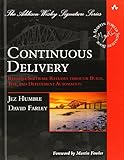
Provides a comprehensive overview of continuous delivery. It is an excellent resource for developers who want to learn more about how to deliver software quickly and reliably.
Takes a hands-on approach to learning Nuxt.js. It guides readers through building a complete e-commerce application, covering topics such as data fetching, authentication, and payment processing.
Hands-on techniques for image optimization, font loading, script bundling, and HTTP caching that pair naturally with Webpack asset pipelines. Helps frontend engineers measure and eliminate render-blocking bundle bloat.
Micah Godbolt examines how frontend architecture, CSS methodologies, and automated build tooling support scalable enterprise design systems. Offers valuable context on why repeatable asset compilation and versioning matter.
Alex Banks and Eve Porcello explain React fundamentals alongside JSX transpilation, Babel, and Webpack bundling basics. Useful for learners who want to see how modern component libraries rely on module bundlers under the hood.
Tal Ater teaches service workers, offline caching, and app manifest generation that integrate directly with Webpack Workbox plugins. Extends bundler skills into resilient, installable progressive web applications.
Frank Zammetti surveys TypeScript, React, Node.js, and Webpack together in cohesive full-stack projects. Illustrates how client-side module bundling fits into end-to-end JavaScript application delivery.
Introduces D3.js, a powerful JavaScript library for data visualization. It covers topics such as data binding, scales, and transitions.
Robin Wieruch introduces component-based React development alongside practical Babel and Webpack build setup for single-page applications. Seeing how a real-world React project wires up JSX transpilation and production bundling anchors Webpack concepts in day-to-day UI work.
Explores the use of JavaScript in web design. It covers topics such as interactive web pages, user experience design, and web accessibility.
Is designed for beginners who want to get started with Nuxt.js. It provides a gentle introduction to the framework's core concepts, features, and development workflow.
For more information about how these books relate to this course, visit:
OpenCourser.com/career/712ky8/vue

 Save