Data Management Specialist
April 13, 2024
Updated April 20, 2025
18 minute read

Data Management Specialist: Shaping the Future of Information
A Data Management Specialist is a professional responsible for overseeing an organization's data assets. Their primary role involves ensuring data accuracy, accessibility, security, and compliance throughout its lifecycle. They design, implement, and maintain systems and processes to manage data effectively, turning raw information into a reliable resource for decision-making.
Working in data management can be intellectually stimulating. Specialists often tackle complex challenges, like integrating disparate data sources or developing governance frameworks for emerging technologies. The field offers opportunities to collaborate across departments, influencing how an entire organization leverages its most valuable asset: information. Furthermore, the role is critical in safeguarding sensitive data, fulfilling a vital ethical and regulatory function in today's digital world.
Understanding the Role of a Data Management Specialist
i52dzg|
Find a path to becoming a Data Management Specialist. Learn more at:
OpenCourser.com/career/i52dzg/data
Reading list
We've selected some books
that we think will supplement your
learning. Use these to
develop background knowledge, enrich your coursework, and gain a
deeper understanding of the topics covered in
Data Management Specialist.
Practical guide to relational database design. It provides step-by-step instructions on how to design and implement a relational database, from gathering requirements to creating tables and indexes. It valuable resource for both beginners and experienced database designers who want to improve their skills.
Focused on effective communication of data insights, this book teaches readers how to create compelling data visualizations and narratives. It is highly relevant for undergraduate students, graduate students, and working professionals who need to present data findings persuasively. It emphasizes the practical aspects of data interpretation and communication in a business context.
Focuses on combining data, narrative, and visuals to create compelling data stories that can influence decisions. It is highly relevant for professionals and graduate students who need to communicate data insights effectively to a non-technical audience. It builds upon data visualization by adding the crucial element of storytelling.
Classic in the field of relational database design. It provides a comprehensive overview of the entity-relationship model, which popular data modeling technique. It valuable resource for database designers and developers who want to learn how to design and implement relational databases using the entity-relationship model.
A seminal work in data visualization, this book provides timeless principles for creating effective and accurate graphical displays of quantitative data. It is essential for anyone serious about presenting data clearly and honestly, making it valuable for undergraduate students through working professionals. critical reference for understanding best practices in visual data interpretation.
Equips readers with the tools to identify and call out misleading uses of data and statistics. It is highly relevant in today's data-saturated world for all audiences, fostering a healthy skepticism and critical thinking about data-based claims. It directly addresses contemporary challenges in data interpretation.
Provides a non-technical introduction to statistical thinking and how to interpret data in the context of real-world problems. It is suitable for all audiences and is particularly good for building statistical literacy and a critical approach to data presented in the media and elsewhere. It emphasizes understanding the story behind the data.
Focuses on the statistical concepts and methods that are most relevant to data scientists. It provides a practical approach to understanding and applying statistics for data interpretation in a data science context. It is valuable for undergraduate students, graduate students, and professionals entering or working in data science.
Exposes the gender data gap and its impact on women, highlighting how data collection and interpretation can be skewed by inherent biases. It is crucial for all audiences to understand the societal implications of biased data and the importance of inclusive data practices for accurate interpretation. It sheds light on a critical contemporary issue in data.
Covers the principles and techniques for creating effective data visualizations, focusing on how to represent data accurately and clearly. It's valuable for students and professionals who want to deepen their understanding of visualization best practices for data interpretation. It provides a solid foundation in the theory and practice of data visualization.
Provides a clear and concise introduction to relational database design and implementation. It covers all aspects of relational database design, from data modeling to query optimization. It valuable resource for beginners who want to learn the fundamentals of relational database design in a clear and organized manner.
Provides a comprehensive overview of relational database design and implementation using SQL Server 2012. It covers all aspects of relational database design, from data modeling to query optimization. It valuable resource for database designers and developers who want to learn how to design and implement high-performance relational databases on SQL Server.
Provides a practical guide to creating informative data visualizations using R and ggplot2. It is suitable for undergraduate and graduate students, as well as professionals, who want to develop hands-on data visualization skills for interpreting and presenting data. It serves as a useful reference for applying visualization principles.
Explores the challenges of making predictions in a data-rich world and emphasizes the importance of probability and uncertainty in data interpretation. It's a thought-provoking read for all audiences interested in understanding the limitations and nuances of data analysis in forecasting. It provides valuable context for interpreting probabilistic data.
This foundational book that provides an accessible introduction to common statistical misuses and how to identify misleading data presentations. It is particularly useful for high school and undergraduate students to build a critical perspective on data they encounter daily. While not a comprehensive textbook, it serves as an excellent starting point for understanding the potential pitfalls in data interpretation and is considered a classic in the field.
Offers a straightforward and accessible introduction to statistical concepts and techniques, focusing on understanding and interpreting statistical results. It is excellent for high school and undergraduate students, or anyone needing a clear and simple explanation of basic statistics for data interpretation. It serves as a great resource for building foundational statistical literacy.
This handbook provides practical guidance and examples for creating various types of data visualizations to explore and present data. It is suitable for a wide audience, including students and professionals, who want to improve their data visualization skills for better interpretation and communication. It offers hands-on techniques for visual data analysis.
Focuses on understanding causality in data, a critical aspect of drawing meaningful conclusions from data analysis. It is particularly relevant for graduate students and researchers interested in moving beyond correlation to establish causal relationships. It addresses a contemporary and challenging topic in data interpretation.
Guide to designing and building data-intensive applications. It covers topics such as data modeling, data storage, and data processing. It valuable resource for software engineers who want to learn how to design and build scalable and efficient data-intensive applications.
Offers an intuitive and engaging introduction to statistical concepts without relying heavily on complex math. It's ideal for high school and undergraduate students seeking to gain a broad understanding of statistics and how they are used and interpreted in the real world. It helps demystify statistical ideas, making them accessible to a wider audience.
Is the definitive guide to creating visualizations using ggplot2 in R, a powerful tool for data exploration and interpretation through graphics. It is essential for anyone using R for data analysis and visualization, from undergraduate students to professionals. It key reference for generating high-quality visualizations for interpretation.
Details common statistical errors and how they can lead to incorrect conclusions. It is valuable for students and professionals who want to avoid common pitfalls in their own data analysis and interpretation. It serves as a cautionary guide to ensure more accurate and reliable data interpretation.
While not strictly a data interpretation book, this work on behavioral economics and psychology is crucial for understanding the cognitive biases that can affect how we interpret data and make decisions. It offers valuable insights for all audiences on the human element in data analysis. It provides important context for recognizing potential biases in interpretation.
Provides a unified framework for data analysis using a model comparison approach, which helps in understanding and interpreting the results of statistical models. It is suitable for advanced undergraduate and graduate students. It offers a structured approach to interpreting the outcomes of statistical analyses.
Identifies and explains common SQL antipatterns. It provides clear and concise advice on how to avoid these antipatterns and write more efficient and effective SQL queries. This book must-read for anyone who wants to improve the quality of their SQL code.
A comprehensive and advanced textbook covering a wide range of statistical learning methods. While demanding, it key resource for graduate students and researchers looking to deepen their understanding of the statistical underpinnings of many data analysis techniques. It's a valuable reference for advanced topics in data interpretation.
While focused on predictive modeling, this book provides a strong foundation in data analysis techniques and understanding model outputs, which is crucial for interpreting the results of predictive models. It is best suited for graduate students and professionals in data science and related fields. It offers practical insights into a key area of data interpretation.
Presents a comprehensive view of probability theory as a framework for reasoning and inference, which is fundamental to data interpretation. It challenging read, best suited for graduate students and researchers with a strong mathematical background. It provides a deep theoretical foundation for understanding uncertainty in data.
Provides a comprehensive overview of Apache Spark. It covers a wide range of topics, including data processing, machine learning, and data streaming. This book valuable resource for anyone who wants to learn more about Apache Spark.
Provides a comprehensive overview of Elasticsearch. It covers a wide range of topics, including data modeling, query processing, and data storage. This book valuable resource for anyone who wants to learn more about Elasticsearch.
Provides a comprehensive overview of Cassandra. It covers a wide range of topics, including data modeling, query processing, and data storage. This book valuable resource for anyone who wants to learn more about Cassandra.
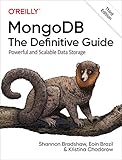
Provides a comprehensive overview of MongoDB. It covers a wide range of topics, including data modeling, query processing, and data storage. This book valuable resource for anyone who wants to learn more about MongoDB.
Provides a comprehensive overview of SQL injection attacks and defense techniques. It covers a wide range of topics, including attack vectors, prevention techniques, and detection methods. This book must-read for anyone who wants to protect their database from SQL injection attacks.
Provides a practical guide to using SQL for data analysis. It covers a wide range of topics, including data wrangling, data visualization, and statistical analysis. This book is an excellent resource for anyone who wants to learn how to use SQL for data analysis.
For more information about how these books relate to this course, visit:
OpenCourser.com/career/i52dzg/data

 Save