April 29, 2024
3 minute read

With the growing landscape of augmented reality (AR) technology, the role of an AR Marketing Specialist has emerged as a coveted career path for individuals seeking to blend creativity, technology, and marketing expertise. This comprehensive guide will delve into the intricacies of this profession, exploring its responsibilities, career trajectory, and the invaluable knowledge that can be gained through online courses.
Understanding the Role of an AR Marketing Specialist
AR Marketing Specialists are responsible for developing, executing, and measuring marketing campaigns that leverage AR technology. Their primary focus is to create immersive experiences that engage customers and foster meaningful connections with brands. These experiences can range from interactive product demonstrations and virtual store tours to educational games and personalized advertisements.
Career Path and Skills Required
Aspiring AR Marketing Specialists typically possess a combination of skills in marketing, technology, and design. A strong understanding of marketing principles, digital marketing channels, and user experience (UX) design is essential. Additionally, proficiency in AR development platforms and tools is crucial for creating compelling AR content.
jfpa9n|
Find a path to becoming a AR Marketing Specialist. Learn more at:
OpenCourser.com/career/jfpa9n/ar
Reading list
We've selected some books
that we think will supplement your
learning. Use these to
develop background knowledge, enrich your coursework, and gain a
deeper understanding of the topics covered in
AR Marketing Specialist.
Coauthored by pioneering researchers Dieter Schmalstieg and Tobias Hollerer, this foundational volume systematically explains optical and video see-through displays, visual SLAM tracking, calibration, and spatial interaction. Engineers and graduate students rely on its rigorous treatment of computer vision registration and 3D user interfaces.
Building cross-platform mobile AR applications for ARKit and ARCore requires a unified scene architecture in Unity. Jonathan Linowes guides developers through plane detection, raycasting, image tracking, face meshes, and light estimation using hands-on C-sharp and AR Foundation projects.
Bringing together twenty-six spatial computing practitioners, Erin Pangilinan, Steve Lukas, and Vasanth Mohan bridge interaction design and engineering for AR and VR. Chapters explore spatial audio, volumetric capture, multimodal hand-and-gaze ergonomics, and real-world deployment in healthcare and retail.
Connecting human visual perception to head-mounted display optics, sensors, and industrial use cases, Steve Aukstakalnis provides a comprehensive engineering survey of AR systems. Case studies examine surgical navigation, aerospace assembly, haptic feedback, and human factors evaluation.
Examining how spatial computing and smart glasses reshape transportation, manufacturing, retail, and enterprise workflows, Irena Cronin and Robert Scoble map the commercial AR ecosystem. Product leaders gain a clear framework for 5G edge rendering, spatial cloud anchors, and AI-driven computer vision.
Shared fundamentals of 6DoF head tracking, stereoscopic depth cues, motion-to-photon latency, and 3D manipulation underpin both virtual and augmented reality hardware. William Sherman and Alan Craig provide clear engineering explanations of immersive display pipelines and human perceptual constraints.
Drawing from a decade of enterprise XR delivery, Annie Eaton breaks down how organizations scope, staff, and ship augmented and virtual reality applications beyond gaming. Product managers and technical leads gain a structured lifecycle covering discovery, 3D asset pipelines, user testing, and post-launch iteration.
Because the majority of commercial AR headsets and mobile apps are built on the Unity engine, fluency in C-sharp scripting, shaders, physics, and 3D asset pipelines is essential. Joseph Hocking's third edition builds strong real-time 3D engineering habits before developers layer on AR Foundation or OpenXR.
Analyzing how multimodal artificial intelligence converges with augmented reality, computer vision, and wearable optics, Cathy Hackl and Irene Cronin chart the post-smartphone landscape. Strategists and builders learn how spatial agents, digital twins, and contextual 3D interfaces transform industry workflows.
Structured as a university course text, Ralf Doerner and coauthors cover coordinate transformations, markerless tracking, illumination registration, and empirical user study design for mixed reality. Exercises and architectural diagrams help students transition from theory to working prototypes.
Every AR tracking engine depends on projective geometry, camera calibration matrices, epipolar constraints, and bundle adjustment to anchor virtual objects in physical space. Richard Hartley and Andrew Zisserman provide the definitive mathematical foundation behind visual-inertial odometry and SLAM.
Centering accessibility, ethics, and universal design in extended reality, Regine Gilbert and Doug North Cook connect HCI history, neuroscience, and spatial affordances. Students and UX practitioners gain concrete evaluation activities for designing inclusive augmented environments centered on diverse human bodies.
Updated in its second edition with deep neural networks and neural radiance fields, Richard Szeliski's text explains feature matching, dense depth estimation, 3D reconstruction, and SLAM. AR perception engineers use these algorithms to build occlusion-aware scene understanding.
Pairing print chapters with live AR triggers, industry analyst Charlie Fink surveys mobile AR platforms, smart glasses, volumetric video, and camera-first social commerce. Designers and entrepreneurs gain accessible insights into how camera overlays transform consumer media and brand storytelling.
Blending memoir with fifty-one philosophical definitions of immersive media, virtual reality pioneer Jaron Lanier reflects on embodiment, sensorimotor perception, and cognitive ethics. Spatial computing creators gain a humane perspective on how perceptual overlays alter human agency.
Focusing on non-visual spatial computing, Matias Harju investigates headphone-based audio augmented reality using six-degrees-of-freedom head tracking and binaural rendering. Interaction designers and researchers explore how location-anchored virtual soundscapes enrich museums, heritage walks, and mixed-reality narratives.
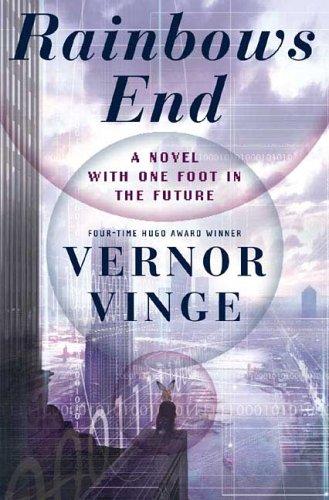
Hugo Award-winning science fiction novelist Vernor Vinge envisions a near-future society wearing ubiquitous contact-lens augmented reality, collaborative spatial layers, and haptic clothing. Generations of AR hardware and interface researchers credit this novel with inspiring modern mixed-reality ecosystems.
For more information about how these books relate to this course, visit:
OpenCourser.com/career/jfpa9n/ar

 Save