We may earn an affiliate commission when you visit our partners.
Course image
TetraNoodle Team and Manuj Aggarwal

This online DevOps course will teach you how to build sophisticated continuous integration and continuous delivery pipelines using Jenkins and many of its plugins. Especially the pipeline plugins.

This course is designed to teach you the ins and outs of Jenkins and setting up DevOps pipelines, even if you have little to no experience with it, to help implement these DevOps practices which will streamline your development processes.

Master Jenkins and pipeline plugins. Get familiar with advanced DevOps techniques and take your DevOps career to the next level.

Read more

This online DevOps course will teach you how to build sophisticated continuous integration and continuous delivery pipelines using Jenkins and many of its plugins. Especially the pipeline plugins.

This course is designed to teach you the ins and outs of Jenkins and setting up DevOps pipelines, even if you have little to no experience with it, to help implement these DevOps practices which will streamline your development processes.

Master Jenkins and pipeline plugins. Get familiar with advanced DevOps techniques and take your DevOps career to the next level.

While there are plenty of DevOps courses that focus on generic continuous integration and continuous delivery practices - it's hard to find a comprehensive course like this one, which focuses on using some of the most useful plugins in the Jenkins ecosystem.

This course is designed for all levels of DevOps practitioners who want to improve their skills, implement automation in their environments, and continue to be in great demand as DevOps engineers.

Just a few of the things you'll learn:

  • Understand What Jenkins Is All About
  • How To Install, Configure And Operationalize Jenkins
  • How To Build Projects Automatically Using Maven
  • How To Build Projects Automatically Using Gradle
  • How To Manage Your Build Artifacts Using Artifactory
  • How To Manage Your Relational Database Schema Using Sqitch

Improve Your DevOps Skills, Become More Marketable, And Make More Money

Regardless of what your level of experience is; whether you work in a small startup or large corporation - this in-depth course is designed to provide you with everything you need to take your DevOps skills to the next level.

Whether you are you using Java, Python, Node.JS or any other stack - a seasoned engineer photographer knows how to design, build and run advanced build and deployment systems which can perform build, test and analysis steps - all automatically. Jenkins is a tried and test automation tool written in Java - which provides all the bells and whistles necessary to implement these processes with ease. Not only that, Jenkins is very robust and scalable system which can scale to hundreds of nodes building many projects in a multi-user and multi-team environments.

By honing these skills, you will be chased by recruiters and companies who are looking to hire professionals with experience on Jenkins. This course shows you how.

Contents and Overview

This course aims at teaching software, IT and DevOps engineers what it takes to improve your skills, experience, and techniques to earn more money.

You will start with the basics and tackle how to install Jenkins. You will get familiar with the Jenkins plugin ecosystem and install a bunch of very useful plugins into the Jenkins instance. You'll then dive into the different hands-on exercises to implement advanced build and deployment pipelines using various build tools in conjunction with Jenkins, Artifactory, shell scripting, etc.

You'll learn about various other tools which work very well with Jenkins like Maven, Gradle, Sqitch, etc. You'll use these tools to master how to properly design an end to end build and deployment pipeline, which:

  • Builds the source code
  • Keeps the relational database schema in sync with the latest source code
  • Manages the artifacts in a robust manner
  • Helps you visualize the entire pipeline in a graphical format
  • Helps you diagnose your DevOps pipelines by providing detailed diagnostic logs

By the end of this master course, your confidence as a DevOps engineer will soar. You'll have a thorough understanding of Jenkins and various other DevOps tools, and you can use them to their fullest potential to take small to large, simple to complex DevOps pipelines and be a part of this DevOps revolution and take your career to the next level.

Enroll now

What's inside

Learning objectives

  • You will get introduced to continuous integration (ci) and learn what it is all about.
  • Learn why continuous integration is important (especially in fast paced agile environment)
  • In any real world software project - databases are a key component. you will learn how to maintain and version control database schema in an automated fashion via roundhouse
  • You will learn how to build an automated continuous integration (ci) pipeline with jenkins and its various plugins
  • Build ci and cd pipelines using jenkins, gradle, maven, artifactory and corresponding plugins
  • You will learn how to configure, secure and extend jenkins
  • The continuous integration (ci) pipeline will integrate the automated builds with git repositories hosted in github​
  • You will also learn how to manage the build artifacts which are produced by the continuous integration (ci) builds

Syllabus

Welcome And Introduction
Introduction
Becoming an Online Instructor
Course overview
Read more

Traffic lights

Read about what's good
what should give you pause
and possible dealbreakers
Explores topics covered in Java, Python, Node.js, and other stacks
Covers a range of topics for all levels of DevOps practitioners
Taught by seasoned engineers and photographers
Well-suited for those working in a small startup or large corporation
In-depth theoretical background provided to real-world software project implementation
Requires students to come in with little to no experience with DevOps

Save this course

Create your own learning path. Save this course to your list so you can find it easily later.
Save

Reviews summary

Practical jenkins ci/cd with build tools

According to students, this course provides a solid foundation for building CI/CD pipelines with Jenkins, integrating effectively with tools like Maven and Gradle. Learners frequently praise its hands-on approach and practical examples, which are particularly helpful for those looking to apply skills directly. While largely positive, a consistent concern noted by some reviewers is the potential for outdated content or tool versions, requiring learners to adapt. The course is seen as highly beneficial for DevOps professionals seeking to enhance their automation capabilities, although some prior familiarity with development concepts may be beneficial.
Covers Jenkins extensively alongside Maven, Gradle, Artifactory, and Sqitch.
"Excellent course for understanding CI/CD with Jenkins; I really liked the focus on pipeline syntax and related tools."
"I gained a thorough understanding of Jenkins and various other DevOps tools, which was exactly what I needed."
"It's a solid introduction to Jenkins and its ecosystem, covering many essential plugins effectively."
Emphasizes practical application with detailed labs and examples.
"The hands-on labs were super helpful, especially for Maven and Gradle. I really valued the practical experience."
"This course helped me transition my work processes to proper CI/CD. The Jenkins pipeline examples were invaluable."
"I appreciated the modules on Artifactory and Sqitch, as they made setting up my own pipelines much easier."
Best for those with some development background, might be fast for absolute beginners.
"I found it useful for basic understanding, but I had to do a lot of external research to get things working."
"It felt too basic for experienced users, but also a bit too fast for absolute beginners without prior context."
"I believe some prior familiarity with development concepts would be highly beneficial for a smoother learning experience."
Some parts may be outdated, requiring learners to adapt to newer versions.
"The content is generally good, but some parts of the course feel a bit outdated, particularly around plugin versions."
"I encountered a few minor issues with deprecated commands, but I could usually fix them with a quick search online."
"Some instructions didn't work anymore due to older content; it would benefit from a complete refresh."

Activities

Be better prepared before your course. Deepen your understanding during and after it. Supplement your coursework and achieve mastery of the topics covered in DevOps: CI/CD with Jenkins pipelines, Maven, Gradle with these activities:
Review foundational concepts in Java, Maven, and Gradle
Strengthen your understanding of the essential tools and technologies used in Jenkins pipelines, ensuring a solid foundation for your learning.
Browse courses on Java
Show steps
  • Revisit tutorials or documentation on Java fundamentals.
  • Practice writing simple Java programs to reinforce your understanding.
  • Review Maven and Gradle concepts, including dependency management and build automation.
Organize and expand your notes, assignments, and study materials
Enhance your understanding and retention by organizing and expanding your course materials, creating a valuable reference for future use.
Show steps
  • Gather all your notes, assignments, and any other relevant materials.
  • Review the materials and identify areas where you can add more details or examples.
  • Create a structured system for organizing your materials, such as using folders or a digital note-taking app.
Find an experienced DevOps engineer or CI/CD expert to guide you
Gain valuable insights and support from an experienced professional in the field, accelerating your DevOps journey.
Show steps
  • Identify potential mentors through industry networks, LinkedIn, or online forums.
  • Reach out to candidates, expressing your interest and explaining your learning goals.
  • Schedule regular meetings to discuss your progress, challenges, and career aspirations.
Four other activities
Expand to see all activities and additional details
Show all seven activities
Follow advanced tutorials on Jenkins plugins and best practices
Enhance your knowledge and skills by delving deeper into specific Jenkins plugins and industry best practices through guided tutorials.
Show steps
  • Identify reputable online platforms or blogs that offer advanced tutorials.
  • Select tutorials that align with your learning goals and skill level.
  • Follow the instructions carefully and practice the techniques demonstrated.
Build and deploy multiple CI/CD pipelines using different codebases
Solidify your hands-on skills by practicing building and deploying pipelines for various projects, enhancing your proficiency.
Show steps
  • Select codebases from different programming languages and frameworks.
  • Set up CI/CD pipelines for each codebase using Jenkins and its plugins.
  • Test the pipelines thoroughly and troubleshoot any issues that arise.
Attend workshops on advanced DevOps topics or Jenkins certification
Accelerate your learning through immersive workshops led by industry experts, gaining practical insights and enhancing your credibility.
Show steps
  • Select workshops that align with your career goals and learning objectives.
  • Research upcoming workshops related to DevOps or Jenkins.
  • Register for the workshops and actively participate in the sessions.
Share your knowledge and mentor junior DevOps engineers
Reinforce your understanding of DevOps concepts by mentoring others, contributing to their growth while solidifying your own knowledge.
Show steps
  • Identify opportunities to mentor junior DevOps engineers through online forums or local meetups.
  • Share your knowledge and experience, guiding them through technical challenges.
  • Encourage them to ask questions and engage in discussions.

Career center

Learners who complete DevOps: CI/CD with Jenkins pipelines, Maven, Gradle will develop knowledge and skills that may be useful to these careers:

Reading list

We've selected 50 books that we think will supplement your learning. Use these to develop background knowledge, enrich your coursework, and gain a deeper understanding of the topics covered in DevOps: CI/CD with Jenkins pipelines, Maven, Gradle.
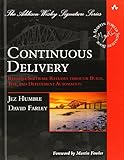
This classic book provides a comprehensive overview of Continuous Delivery, covering the principles, practices, and tools involved. It is highly recommended for anyone looking to implement Continuous Delivery in their organization.
Benjamin Muschko delivers the definitive guide to Gradle's build lifecycle, dependency management, multi-project builds, and custom plugin authoring. Developers learn how to automate testing, continuous integration, and JVM deployment pipelines with idiomatic Groovy DSL scripts.
Presents the results of a four-year study of high-performing technology organizations. It identifies the key factors that drive success, and it provides a roadmap for organizations that want to improve their performance.
Berglund focuses on advanced build engineering techniques including file operations, custom task types, dynamic task rules, Ant and Maven migration hooks, and dependency resolution strategies across complex repositories.
Often referred to as the 'Bible' of CI/CD, this book extends the principles of Continuous Integration to Continuous Delivery. It provides a detailed guide to building, testing, and deploying software in a reliable and automated manner. is crucial for gaining a deep understanding of the technical practices and cultural changes required for effective continuous delivery, which direct evolution of CI. It widely referenced book in the field.
Save
Provides a practical introduction to Jenkins 2, focusing on the features that enable defining pipelines as code. It's excellent for understanding the fundamental shift in Jenkins towards pipeline-centric automation. It serves as a solid starting point for those new to modern Jenkins practices and useful reference for migrating older Jenkins jobs.
Published in 2024, this book provides a comprehensive and up-to-date guide to Apache Maven, covering everything from basics to advanced topics like plugins, dependency management, and integration with CI/CD. It's suitable for both beginners and experienced developers looking to deepen their understanding and apply Maven effectively in modern development workflows. strong candidate for a current reference or textbook.
Focuses on integrating Jenkins with Docker to build effective CI/CD pipelines. It covers essential concepts of containerization and how to leverage Docker within a Jenkins workflow. This is highly relevant for understanding contemporary CI/CD practices and is valuable for both beginners and those looking to deepen their understanding of this integration.
This hands-on guide specifically addresses dependency management in Maven, a crucial aspect of project management. It takes a tutorial-based approach, progressing from basic to advanced concepts. is highly relevant for developers who need to master managing project dependencies effectively with Maven.
Pelgrims demystifies the Android Gradle Plugin (AGP), demonstrating how mobile teams configure build types, product flavors, signing configs, ProGuard shrinking, and multi-module Android Studio builds.
Dabir and Abhinandan provide a concise, hands-on introduction to Gradle's initialization, configuration, and execution phases, showing Java developers how to manage transitive dependencies, run tests, and integrate CI pipelines.
This handbook provides a step-by-step guide to implementing DevOps in your organization. It covers all aspects of DevOps, from planning to implementation to measurement, and it valuable resource for anyone looking to get started with DevOps.
This cookbook offers practical, hands-on recipes for tackling various Maven tasks and real-world scenarios, including multi-module builds and best practices. It's a great resource for developers looking for solutions to specific problems and gaining practical experience with Maven's features and plugins. is valuable as a reference tool for common configurations and tasks.
This practical guide covers the cultural and technical aspects of DevOps, with a focus on Continuous Delivery. It provides valuable insights and case studies from leading DevOps practitioners.
Focuses on building end-to-end CI/CD pipelines with Jenkins, integrating various tools like Docker, Git, and Selenium. It provides practical solutions for setting up these processes. It is suitable for those looking for hands-on guidance in creating complete pipelines.
This guide is aimed at Jenkins administrators, covering installation, management, and scaling of Jenkins instances. It discusses setting up Jenkins in various environments and implementing best practices for a production-grade setup. This is particularly useful for professionals responsible for maintaining Jenkins infrastructure.
This recent book offers a practical and jargon-free guide to understanding and implementing continuous delivery pipelines. It focuses on the design and purpose of CD systems, making it accessible for developers and pipeline designers. It's a good resource for contemporary practices in CI/CD, offering clear examples and a tool-agnostic approach.
Delves into more advanced topics in Jenkins, focusing on scaling, configuration, and implementing complex CI/CD solutions. It is suitable for users who have a basic understanding of Jenkins and wish to deepen their knowledge. This good resource for advanced undergraduates, graduate students, and professionals.
Co-authored by Tim Berglund and Matthew McCullough, this concise O'Reilly guide introduces convention-over-configuration builds, task dependencies, and automated testing workflows for JVM projects.
Understanding the Java Platform Module System (JPMS), bytecode compilation, and modern JVM toolchains equips build engineers to configure Gradle Java toolchains and modular classpaths accurately.
Aimed at beginners, this book introduces the core concepts of Continuous Integration and Continuous Delivery using Jenkins 2. It provides a gentle introduction to the key features and helps establish a foundational understanding. This is an excellent resource for high school and early undergraduate students or those new to the topic.
This resource, potentially a video course or book, aims to take learners from beginner to expert in Apache Maven. It likely covers a wide range of topics from installation and basic concepts to more advanced usage. It would be helpful for a structured learning path for individuals or as a supplementary resource for a course.
Is considered a foundational text on Continuous Integration, laying out the core principles and practices. It provides a comprehensive overview of how CI can transform the integration process from a painful event to a routine activity. While published in 2007, the fundamental concepts remain highly relevant and provide essential background knowledge for anyone new to CI or seeking to solidify their understanding. This book is more valuable as foundational reading rather than a reference for the latest tools.
Given the frequent mention of Kubernetes in the course titles, this book is highly relevant for understanding the environment where Jenkins is often used for deploying applications. It provides a comprehensive introduction to Kubernetes concepts and practices. It's essential for those integrating Jenkins with container orchestration.
Provides a comprehensive guide to deployment automation, a key part of the DevOps process. It covers the tools, techniques, and best practices for automating deployments, and it valuable resource for anyone looking to improve their deployment process.
Serves as a quick-start tutorial for beginners to understand the core concepts of Maven, including dependency management and project structure. It's ideal for those new to build automation and Maven, providing a gentle introduction to get started with basic Maven projects. This book is most helpful for providing foundational knowledge.
Java Champion Ken Kousen offers targeted O'Reilly recipes for customizing Android manifest merges, configuring build variants, running unit and Espresso instrumentation tests, and optimizing Gradle daemon memory.
Because Gradle Kotlin DSL (build.gradle.kts) is now the default build language for Gradle 8+ and Android projects, mastering Kotlin's type-safe builders, lambdas with receivers, and multiplatform Gradle configuration is essential.
Likely focuses on best practices and effective strategies for using Maven. It would be beneficial for developers looking to optimize their Maven usage and avoid common pitfalls. It can serve as a guide for improving productivity and build efficiency.
Evans, Clark, and Martijn Verburg compare modern Gradle and Maven build architectures in depth, demonstrating how Gradle handles Java modules, polyglot JVM compilation (Java, Kotlin, Clojure), and containerized builds.
Provides a practical guide to implementing Continuous Delivery for Java applications using Jenkins, Maven, and Docker. It is suitable for Java developers looking to adopt Continuous Delivery practices.
Provides a comprehensive guide to implementing Continuous Delivery for .NET applications. It covers the tools, techniques, and best practices for automating the build, test, and deployment process.
Focuses on implementing Continuous Delivery in the AWS cloud. It covers the setup, configuration, and best practices for building, testing, and deploying serverless applications.
While focused on Java, this book covers DevOps tools and practices, including Jenkins, in the context of a Java development workflow. It provides practical examples of integrating Jenkins with other tools commonly used in Java projects. Useful for Java developers and teams using Jenkins.
Provides a guide to site reliability engineering (SRE), a set of practices that helps organizations build and operate reliable systems. SRE key part of DevOps, and this book provides a valuable introduction to the field.
Peter Späth and Felipe Gutierrez demonstrate building Spring Boot 3 microservices with Kotlin and Gradle Kotlin DSL. Readers configure multi-module builds, custom Gradle plugins, native GraalVM images, and automated testing pipelines for modern JVM backends.
As containerization and Kubernetes are prevalent in modern deployments, this book provides valuable insights into building and deploying applications in such environments. It covers how CI/CD fits into a Kubernetes workflow, offering practical guidance for those working with cloud-native applications.
This guide offers a fast-paced introduction to getting started with Maven. It's suitable for developers who need to quickly understand the basics and set up their first Maven projects. It can serve as a helpful initial resource before diving into more comprehensive books.
Known in the community as mrhaki, Hubert Klein Ikkink shares practical recipes for multi-project JVM builds, custom plugins in Groovy and Java, publishing artifacts to Maven/Ivy repositories, and continuous integration.
Provides a broader understanding of Infrastructure as Code (IaC), a practice that complements CI/CD and is often orchestrated by Jenkins. It covers managing infrastructure through code and automation. It's valuable for understanding the larger ecosystem in which Jenkins operates.
Thomas Künneth walks Android engineers through building declarative UIs with Jetpack Compose, anchored by modern Android Gradle Plugin configurations. Readers learn how Gradle version catalogs, Kotlin compiler plugins, and build variants streamline mobile delivery.
Provides a guide to lean software development, a set of practices that helps organizations deliver software more quickly and efficiently. Lean software development key part of DevOps, and this book provides a valuable introduction to the field.
Provides a practical guide to implementing Continuous Integration using Jenkins, a popular CI tool. It covers the concepts of CI/CD methodologies and how to apply them within the Jenkins ecosystem. This book is particularly useful for those who want to gain hands-on experience with a widely used CI tool and understand its specific features and workflows.
Chapters on hermetic build systems, diamond dependency conflicts, and remote build caching illuminate why modern enterprise Gradle builds adopt strict version catalogs, convention plugins, and remote build caches.
Microservices architecture often goes hand-in-hand with CI/CD. delves into the design and implementation of microservices, covering topics like testing, deployment, and monitoring in a distributed environment. While not solely focused on CI, it provides crucial context for implementing CI/CD pipelines in a microservices setting.
Offers a prescriptive guide to implementing DevOps practices, including CI/CD, with a focus on practical application. It walks through creating a sample enterprise application and applying various tools and techniques for building, testing, deploying, and monitoring. It's a good resource for gaining hands-on experience with DevOps workflows.
Duncan McGregor and Nat Pryce guide JVM teams migrating legacy Java codebases to idiomatic Kotlin. Along the way, they show how Gradle's incremental compilation and mixed-language source sets support safe, step-by-step refactoring in production.
From Google provides deep insights into their approach to SRE, which heavily relies on automation, monitoring, and a focus on reliability. Many of the practices described, particularly those related to automated testing, deployment, and incident response, are highly relevant to advanced CI/CD implementations. It's a valuable resource for understanding how large-scale, highly reliable systems are built and maintained.
A 'For Dummies' book would provide a very basic and accessible introduction to Maven for complete beginners. It would cover the absolute fundamentals in a simplified manner, making it suitable for those with no prior experience in build automation or command-line tools. This good starting point for high school or early undergraduate students.

Share

Help others find this course page by sharing it with your friends and followers:

Similar courses

Here are nine courses similar to DevOps: CI/CD with Jenkins pipelines, Maven, Gradle.
Continuous Delivery with Jenkins in Kubernetes Engine
Most relevant
Development Methodologies Overview
Most relevant
Jenkins Pipeline: Declarative and IaC approaches for...
Most relevant
Continuous Monitoring with Jenkins & Best Practices
Most relevant
Jenkins for Beginners
Most relevant
Continuous Integration and Continuous Deployment
Most relevant
Continuous Integration & Continuous Deployment with...
Most relevant
Appium -Mobile Testing (Android/IOS) from...
Most relevant
DevOps: CICD with Git GitLab Jenkins, Docker and Django
Most relevant

Udemy Buyer Protection & Guarantee

Verified partner policies & purchase protections

Global Marketplace Leader
Free Trial & Audit

Free Lecture Previews

Free preview video lectures available for all courses; optional 7-day free trial on Personal Plan subscriptions (cancel before trial ends to avoid conversion).

Return & Refund Policy

30-Day Money-Back Guarantee

30-day money-back guarantee on all eligible individual course purchases (provided course content has not been substantially consumed or downloaded). Subscription fees are non-refundable once billed.

Buyer Protections

Verified Academic & Industry Partner

Lifetime access to purchased individual courses and future updates, verifiable certificate of completion, and direct student Q&A forums.

Key Purchase Protections
30-day 100% money-back guarantee on course purchases
Lifetime access on web, mobile, and offline
Certificate of completion included with purchase
Direct instructor Q&A and active student community
OpenCourser Verified Partner Policy details last reviewed: 2026-10-22
Our mission

OpenCourser helps millions of learners each year. People visit us to learn workspace skills, ace their exams, and nurture their curiosity.

Our extensive catalog contains over 50,000 courses and twice as many books. Browse by search, by topic, or even by career interests. We'll match you to the right resources quickly.

Find this site helpful? Tell a friend about us.

Affiliate disclosure

We're supported by our community of learners. When you purchase or subscribe to courses and programs or purchase books, we may earn a commission from our partners.

Your purchases help us maintain our catalog and keep our servers humming without ads.

Thank you for supporting OpenCourser.

© 2016 - 2025 OpenCourser