We may earn an affiliate commission when you visit our partners.
Course image
Hardik Jeetendra Pandya

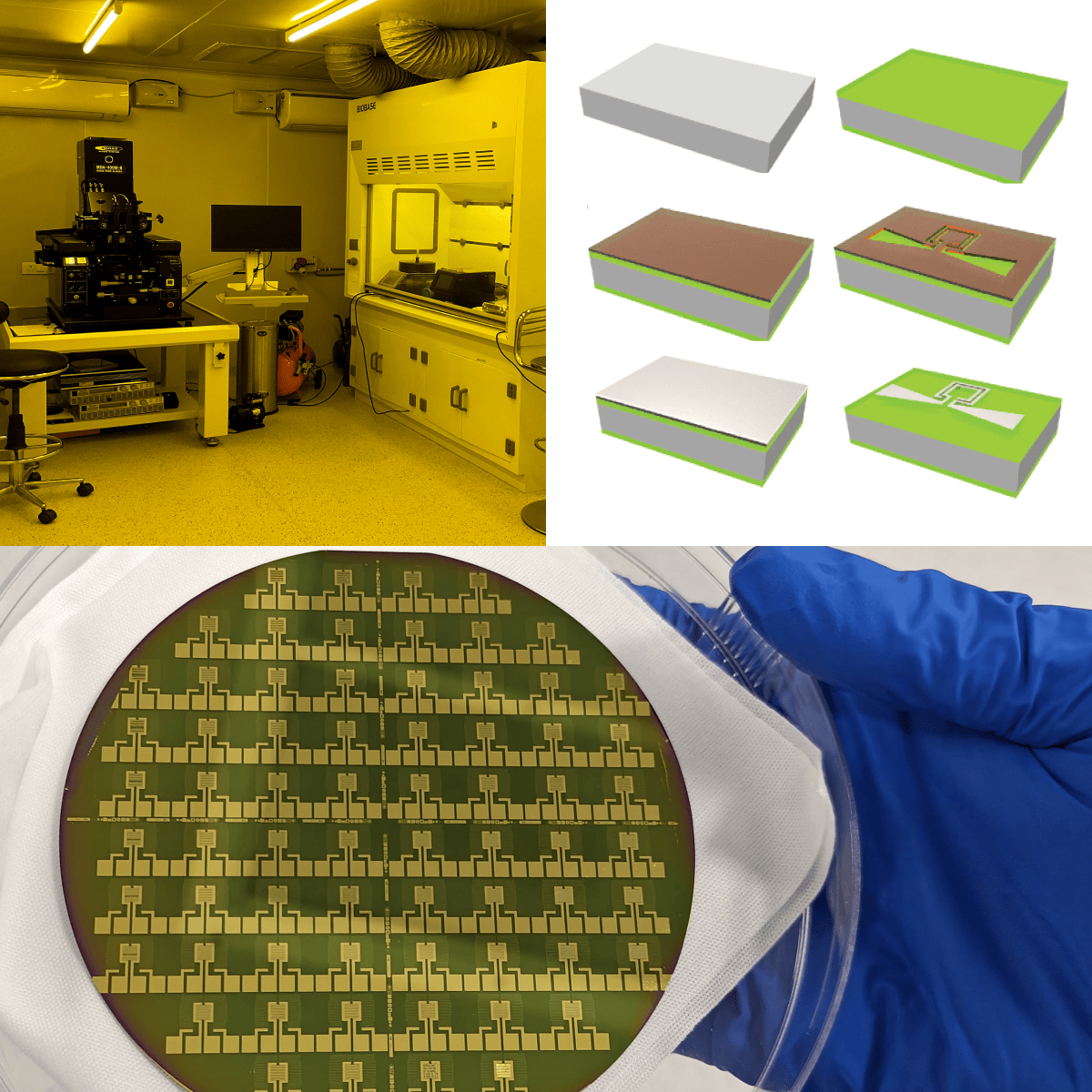
Unlock the potential of Micro Electromechanical Systems (MEMS) with this comprehensive course, designed to equip you with the knowledge and hands-on skills to excel in this transformative field.

Dive deep into the essential concepts, materials, and fabrication techniques that power MEMS technology, and explore how it is revolutionizing industries. From understanding foundational MEMS principles to mastering advanced sensor fabrication and characterization methods, this course offers a step-by-step guide to becoming proficient in MEMS applications.

Read more

Unlock the potential of Micro Electromechanical Systems (MEMS) with this comprehensive course, designed to equip you with the knowledge and hands-on skills to excel in this transformative field.

Dive deep into the essential concepts, materials, and fabrication techniques that power MEMS technology, and explore how it is revolutionizing industries. From understanding foundational MEMS principles to mastering advanced sensor fabrication and characterization methods, this course offers a step-by-step guide to becoming proficient in MEMS applications.

Engage with dynamic video content and develop practical skills in cleanroom protocols, micromachining, and PCB design. Learn to fabricate MEMS sensors, interface them with advanced techniques, and apply communication protocols to create innovative solutions.

Ideal for engineers, researchers, and students passionate about microfabrication and sensor design, this course will position you at the forefront of MEMS technology, ready to innovate and lead.

Enroll now

Here's a deal for you

Save money when you learn with a deal that may be relevant to this course.
All coupon codes, vouchers, and discounts are applied automatically unless otherwise noted.

What's inside

Syllabus

Get Started!
This module will give you a glimpse of what you will be learning in the course.
Introduction to MEMS and Material Properties
This module introduces students to the world of Micro Electromechanical Systems (MEMS), providing a broad overview of its technology and applications. Students will explore the key materials used in MEMS fabrication and gain practical knowledge of cleanroom protocols essential for the development of MEMS devices. This module lays the foundation for understanding the interplay between materials, mechanical structures, and electronic components that form MEMS systems.
Read more

Traffic lights

Read about what's good
what should give you pause
and possible dealbreakers
Offers hands-on skills in cleanroom protocols, micromachining, and PCB design, which are essential for practical application and innovation in the field
Explores essential concepts, materials, and fabrication techniques, providing a comprehensive foundation for excelling in the transformative field of MEMS technology
Presented by the Indian Institute of Science, a leading institution known for its research and education in engineering and technology
Covers advanced techniques like Deep Reactive Ion Etching (DRIE) and Reactive Ion Etching (RIE), which are crucial for developing sophisticated MEMS devices
Examines sensor integration and interfacing techniques, including 3D printing, PCB design, radar sensors, and sensor communication protocols, which are vital for practical MEMS applications
Requires learners to perform numerical calculations for oxidation processes and deposition techniques, which may require access to specialized software or computational tools

Save this course

Create your own learning path. Save this course to your list so you can find it easily later.
Save

Reviews summary

In-depth exploration of mems fabrication and sensors

According to learners, this course offers a positive and comprehensive deep dive into Micro Electromechanical Systems (MEMS), particularly focusing on fabrication techniques and sensor design. Students frequently praise the high quality of the lecture content, noting its clear and concise overview of foundational principles and advanced methods like micromachining, lithography, and PVD/CVD. Many found the course to be rigorous and informative, providing a solid foundation for further study or research. However, some feedback indicates that the course can be challenging, especially for those without a strong prerequisite background, and a few reviewers mention the potential for content to become slightly outdated in a rapidly evolving field, suggesting the need for updates.
Requires dedication, potentially difficult for some.
"This is a rigorous course and requires a solid background in physics and engineering to fully grasp all concepts."
"Some sections were quite challenging, requiring significant time outside of lectures for review and understanding."
"Might be difficult for complete beginners without any prior exposure to microfabrication concepts."
"It's demanding but rewarding if you put in the effort; expect complex technical details."
Connects theory to real-world applications.
"The course does a good job of connecting the theoretical fabrication methods to real-world MEMS applications."
"Learning about sensor interfacing and characterization was very practical and relevant to potential projects."
"I can see how the techniques discussed are directly applicable in a research or industrial setting."
"Discussing applications in healthcare and aerospace helped contextualize the importance of the technology."
Covers a wide range of essential MEMS topics.
"This course covers a wide array of essential MEMS topics from materials to characterization, giving a holistic view."
"I appreciated the breadth of topics covered, including various deposition techniques, etching, and interfacing."
"It provides a good foundation across different aspects of MEMS technology, useful for beginners and those refreshing knowledge."
"The syllabus hits all the major areas of MEMS, making it a good starting point for the field."
Provides clear, comprehensive, and detailed instruction.
"The lectures provided a very clear and comprehensive overview of the key concepts in MEMS."
"I found the explanations of fabrication techniques like lithography and micromachining to be incredibly detailed and easy to follow."
"The instructor presented complex topics in a way that was easy to digest, making the learning process smooth."
"Content is high quality and delivers a solid understanding of MEMS fundamentals and processes."
Some topics may benefit from more recent examples.
"While the fundamentals are solid, some specific examples or technologies discussed felt slightly dated."
"In such a fast-moving field, occasional updates to the course content would be very beneficial."
"Could use more in-depth coverage on the newest materials or cutting-edge fabrication processes being used today."

Activities

Be better prepared before your course. Deepen your understanding during and after it. Supplement your coursework and achieve mastery of the topics covered in Micro Electromechanical Systems with these activities:
Review Semiconductor Physics
Strengthen your understanding of semiconductor physics to better grasp the principles behind MEMS fabrication and sensor operation.
Browse courses on Semiconductor Physics
Show steps
  • Review key concepts like energy bands, doping, and carrier transport.
  • Solve practice problems related to semiconductor devices.
Solve Numerical Problems on Oxidation and Deposition
Improve your ability to perform calculations related to oxidation and deposition processes in MEMS fabrication.
Show steps
  • Find practice problems related to oxidation and deposition rates.
  • Solve the problems and check your answers against solutions.
  • Review the concepts and formulas used in the calculations.
Follow Cleanroom Protocol Tutorials
Familiarize yourself with cleanroom procedures to ensure proper handling of materials and equipment during MEMS fabrication.
Show steps
  • Search for online tutorials on cleanroom protocols.
  • Watch videos demonstrating proper gowning and handling techniques.
  • Take notes on key procedures and safety guidelines.
Four other activities
Expand to see all activities and additional details
Show all seven activities
Read 'Fundamentals of Microfabrication and Nanotechnology'
Gain a deeper understanding of microfabrication processes by studying a comprehensive textbook on the subject.
Show steps
  • Read chapters related to lithography, etching, and deposition.
  • Take notes on key concepts and fabrication techniques.
Study 'MEMS and Microsystems: Design and Manufacture'
Enhance your knowledge of MEMS design and manufacturing by studying a dedicated textbook.
Show steps
  • Read chapters related to design principles and manufacturing techniques.
  • Work through examples and case studies to reinforce your understanding.
Create a Presentation on MEMS Applications
Deepen your understanding of MEMS technology by researching and presenting on its diverse applications.
Show steps
  • Choose a specific application area for MEMS sensors (e.g., healthcare, automotive).
  • Research the use of MEMS sensors in that application area.
  • Create a presentation summarizing your findings.
  • Practice your presentation to improve clarity and delivery.
Design a Simple MEMS Accelerometer
Apply your knowledge of MEMS fabrication and sensor principles by designing a basic accelerometer.
Show steps
  • Research different accelerometer designs and select one to implement.
  • Create a detailed design using CAD software.
  • Simulate the performance of your design using finite element analysis (FEA) tools.
  • Document your design process and simulation results.

Career center

Learners who complete Micro Electromechanical Systems will develop knowledge and skills that may be useful to these careers:
MEMS Engineer
A MEMS Engineer designs, develops, and tests microelectromechanical systems. This course on Micro Electromechanical Systems helps build a foundation for this role by exploring MEMS technology and applications, covering materials, fabrication techniques, and cleanroom protocols. This course introduces engineers to oxidation, physical vapor deposition, lithography, and micromachining techniques. A budding MEMS Engineer will also gain knowledge of sensor integration techniques, PCB design, sensor communication, and characterization methods, making this course pivotal for a career in the field.
Sensor Design Engineer
A Sensor Design Engineer is responsible for designing and developing sensors for various applications. This course on Micro Electromechanical Systems is invaluable, as it provides a deep dive into MEMS fabrication techniques like oxidation, physical and chemical vapor deposition, and lithography. The course also delves into micromachining, sensor interfacing, and characterization, which directly relates to the daily tasks of a Sensor Design Engineer. This course may be useful for creating advanced sensor technologies, and understanding integration and communication protocols.
Microfabrication Engineer
A Microfabrication Engineer is involved in the manufacturing of micro and nanoscale devices. This course on Micro Electromechanical Systems is highly relevant, as it covers essential fabrication techniques such as oxidation, physical vapor deposition, chemical vapor deposition, lithography, and micromachining. A Microfabrication Engineer should also understand cleanroom protocols, which this course also introduces, along with methods to create MEMS sensors. This course will help engineers in the development of new microfabrication methods, and help them to fully understand material properties.
Process Development Engineer
A Process Development Engineer focuses on optimizing and developing manufacturing processes. This course on Micro Electromechanical Systems is directly applicable, offering important knowledge on MEMS fabrication techniques like oxidation, physical vapor deposition, chemical vapor deposition, lithography, and micromachining. This course may be useful because it also covers the development of MEMS sensors, which introduces practical applications, and the use of cleanroom protocols. This course introduces specific processes and their use in creating MEMS, which is directly applicable to the role of a Process Development Engineer.
Research Scientist
A Research Scientist in microelectronics conducts research and development in micro and nano scale technologies. The course on Micro Electromechanical Systems is particularly beneficial, as it delves into the details of MEMS technology, including materials, fabrication techniques, and sensor design. The course offers essential training in cleanroom protocols, micromachining, and characterization techniques. The curriculum also covers the fabrication of MEMS sensors and their integration. This course may be useful for a research scientist who wishes to develop new technologies and apply them in real world settings.
Product Development Engineer
A Product Development Engineer is involved in taking a product from the initial idea through the design and development, all the way to market. This course in Micro Electromechanical Systems is valuable, as it gives fundamental knowledge of MEMS technology, fabrication, and sensor design. Product Development Engineers benefit from the practical applications of MEMS sensors discussed in this course, as well as the sensor interfacing and characterization methods. The course may be useful for developing innovative MEMS based products, and having a full understanding of the manufacturing process.
Hardware Engineer
A Hardware Engineer designs and develops physical components of technological systems. This course on Micro Electromechanical Systems is a good fit, as it covers MEMS materials, fabrication, and sensor technology. The course also includes sensor interfacing with electronic systems, PCB design and communication protocols. A Hardware Engineer will benefit from this course's hands-on approach to MEMS, which helps them understand the physical components of hardware and how to integrate sensors for a broad range of applications. While this course does not cover all aspects of hardware engineering, it may be useful as it provides a detailed focus on electromechanical devices.
Electronics Engineer
An Electronics Engineer designs, develops, and tests electronic components and systems. This course on Micro Electromechanical Systems may be useful, as it provides a solid foundation in MEMS technology, including fabrication techniques and sensor design. The knowledge of sensor integration, PCB design, and communication protocols covered in the course are directly relevant for an Electronics Engineer. This course will help an electronics engineer who works with MEMS devices to understand their function and integrate them into broader electronic systems. The content on interfacing MEMS sensors with electronic systems and understanding encoding methods will be particularly valuable.
Materials Scientist
A Materials Scientist studies the structure and properties of materials, often to develop new materials. This course on Micro Electromechanical Systems is suitable, since it provides an overview on the materials common in MEMS devices. The course covers cleanroom protocols and MEMS fabrication techniques, especially oxidation, physical vapor deposition, and chemical vapor deposition methods, all of which are relevant to a Materials Scientist. This course may be useful for one studying material properties, and who is working in new sensor manufacturing. The coverage of the materials used and the techniques employed in fabrication will provide valuable context.
Quality Control Engineer
A Quality Control Engineer ensures that products meet certain standards. The course on Micro Electromechanical Systems may be useful, as it provides an understanding of MEMS fabrication techniques and characterization. A Quality Control Engineer might find the modules on cleanroom protocols, sensor characterization, and wire bonding techniques relevant. This course may be beneficial as it provides a foundational knowledge of microfabrication processes. Understanding testing and characterization methods taught in this course will be valuable for maintaining the quality of MEMS based components.
Automation Engineer
An Automation Engineer designs, programs, and implements automated processes in manufacturing and production. The course on Micro Electromechanical Systems may be useful, as it provides some foundational knowledge on MEMS fabrication and sensing. The course covers relevant topics including cleanroom protocols, micromachining, and sensor interfacing techniques. Though it does not focus on automation directly, an Automation Engineer may find this course useful for understanding and implementing automated processes in MEMS fabrication and sensor integration. This knowledge will be helpful in the development of systems that integrate MEMS sensors.
Biomedical Engineer
A Biomedical Engineer works on designing and developing solutions for healthcare. This course on Micro Electromechanical Systems may be useful, as it discusses sensor fabrication, integration and applications in healthcare. The course covers MEMS sensor design and fabrication, as well as sensor characterization. While this course does not focus specifically on the biomedical aspects of sensors, Biomedical Engineers may find this course useful for the development of medical and health related devices. Learning about sensor integration could be beneficial to the design of biomedical measuring and monitoring systems.
Test Engineer
A Test Engineer designs and implements testing procedures for products. The course on Micro Electromechanical Systems may be useful for those who wish to work with electromechanical devices. The modules covering MEMS sensor characterization and wire bonding techniques directly relate to testing methods for these devices. Though the course does not focus specifically on testing processes, learning about the functionality and design of MEMS sensors may be useful for Test Engineers. This course should help an engineer who is designing a test process or apparatus that works with MEMS sensors.
Robotics Engineer
A Robotics Engineer designs, builds, and tests robots and robotic systems. This course in Micro Electromechanical Systems may be helpful to a Robotics Engineer, as it covers sensor integration, which is critical for robot design. The sensor interfacing and communication protocols modules could be useful in developing the sensing and feedback mechanisms of a robot. This may be helpful to Robotics Engineers who are interested in creating innovative sensors for their robots. Also, the MEMS sensor applications module could give insight into how sensors can be used in robotics.
Systems Engineer
A Systems Engineer works on the overall design and integration of complex systems. This course on Micro Electromechanical Systems may be useful, as it provides a view of micro level sensor systems and how these fit into a larger whole. This course delves into MEMS technology, fabrication techniques, and sensor integration. Although this course does not address system engineering directly, it may help a Systems Engineer understand how MEMS based sensors are created, function, and interact with electronic systems. Knowledge of sensor interfacing and communication protocols may be beneficial as a broader understanding of system integration.

Reading list

We've selected two books that we think will supplement your learning. Use these to develop background knowledge, enrich your coursework, and gain a deeper understanding of the topics covered in Micro Electromechanical Systems.
Provides a comprehensive overview of microfabrication techniques, including lithography, etching, and deposition, which are essential for MEMS fabrication. It serves as a valuable reference for understanding the processes discussed in the course. The book offers detailed explanations and practical examples, making it suitable for both beginners and experienced researchers in the field. It is commonly used as a textbook in many academic institutions.
Provides a comprehensive overview of MEMS design and manufacturing processes. It covers a wide range of topics, including materials, fabrication techniques, and applications. It is particularly useful for understanding the design considerations and manufacturing challenges associated with MEMS devices. This book is often used as a reference by industry professionals and researchers.

Share

Help others find this course page by sharing it with your friends and followers:

Similar courses

Similar courses are unavailable at this time. Please try again later.
Our mission

OpenCourser helps millions of learners each year. People visit us to learn workspace skills, ace their exams, and nurture their curiosity.

Our extensive catalog contains over 50,000 courses and twice as many books. Browse by search, by topic, or even by career interests. We'll match you to the right resources quickly.

Find this site helpful? Tell a friend about us.

Affiliate disclosure

We're supported by our community of learners. When you purchase or subscribe to courses and programs or purchase books, we may earn a commission from our partners.

Your purchases help us maintain our catalog and keep our servers humming without ads.

Thank you for supporting OpenCourser.

© 2016 - 2025 OpenCourser