We may earn an affiliate commission when you visit our partners.
Course image
Helen Nam, Marla Yoshida, Meg Parker, and Emily Wong

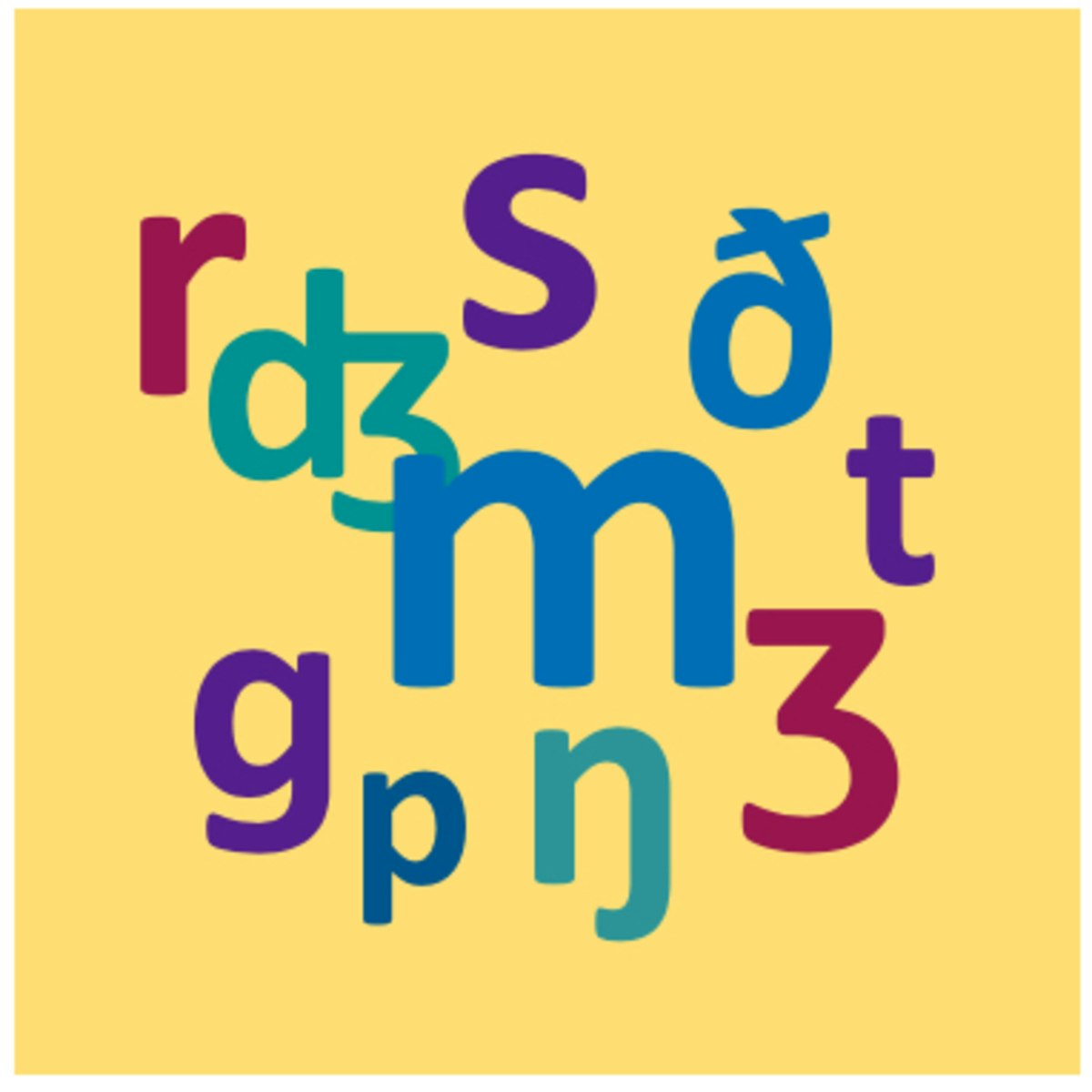
In this first course of The Pronunciation of American English specialization, you will learn and practice all of the consonant sounds of American English, including some pairs of consonants that are especially tricky. Each week you will receive practical advice from successful English learners and practice an effective technique called shadowing to improve your pronunciation of consonant sounds. You will also have opportunities to record yourself and to respond to the recordings of other learners.

Read more

In this first course of The Pronunciation of American English specialization, you will learn and practice all of the consonant sounds of American English, including some pairs of consonants that are especially tricky. Each week you will receive practical advice from successful English learners and practice an effective technique called shadowing to improve your pronunciation of consonant sounds. You will also have opportunities to record yourself and to respond to the recordings of other learners.

Only learners who pay for the course will be able to take the graded quizzes or submit assignments for feedback. The free version provides access to the lectures and practice activities only.

Enroll now

What's inside

Syllabus

Welcome
Welcome to Consonants of American English Pronunciation! In this course, you’ll practice all the consonant sounds of American English—like the first sounds in “town,” “zoo,” or “night.” You’ll also practice some pairs of consonant sounds that may be confusing, like the first sounds in “thick” and “sick” or “boat” and “vote.” Some of these consonant sounds will probably be very easy for you, but some may be more of a challenge. Don’t give up. Keep listening to the sounds, learning about how they’re pronounced, and practicing the ones you find difficult. Good luck practicing the pronunciation of the consonant sounds of American English.
Read more

Traffic lights

Read about what's good
what should give you pause
and possible dealbreakers
Offers a strong foundation in American English pronunciation, particularly useful for non-native speakers
Taught by four experienced instructors who specialize in English pronunciation and language learning
Provides practical advice and effective techniques for improving pronunciation through shadowing and self-recording
Suitable for beginners with little to no prior knowledge of American English pronunciation
Requires learners to pay for graded quizzes and feedback on assignments, limiting accessibility

Save this course

Create your own learning path. Save this course to your list so you can find it easily later.
Save

Reviews summary

Foundational american english consonants course

According to learners, "Consonants of American English Pronunciation" is a solid foundational course for mastering American English consonant sounds. Students particularly value the clear instructional approach and the practical exercises, such as the shadowing technique, which many find highly effective for improving their spoken clarity. While the course provides a thorough and systematic review of consonants, including tricky pairs, some learners feel it might be too fundamental if they possess prior experience. The self-recording opportunities are highlighted as beneficial, though opinions vary on the consistency of peer feedback.
Graded quizzes and assignments require paid enrollment.
"Access to the graded quizzes and assignments is restricted unless you pay for the course."
"The free version provides lectures and practice activities only, which is good, but the assessments are behind a paywall."
"For full engagement, including graded work, be aware that payment is required."
Recording self helps identify and correct errors effectively.
"The ability to record my own voice and compare it to the examples was essential for my progress."
"I found recording myself and listening back was key to pinpointing my specific areas for improvement."
"This feature truly allowed me to hear my pronunciation flaws and work on them."
Instructor's method provides very clear and systematic teaching.
"The course material is well-organized, with explanations that are easy to grasp for non-native speakers."
"I found the instructor's approach to breaking down each consonant sound to be exceptionally clear."
"The systematic teaching style helped me understand how to form sounds I previously struggled with."
Hands-on activities like shadowing are highly effective for learning.
"The shadowing exercises are a powerful tool; they really helped me mimic native speech patterns."
"Practicing the sounds with the provided exercises, especially shadowing, made a noticeable difference in my pronunciation."
"I appreciate the practical, repetitive practice that allowed me to solidify my understanding of the sounds."
Best suited for beginners or those reviewing basics.
"As a beginner, I found this course perfect, but more advanced learners might find it too elementary."
"If you're looking for an in-depth accent modification, this might be too basic; it's more for fundamental sounds."
"I already had some pronunciation knowledge, so parts felt a bit repetitive for me."
Quality of feedback from other learners can vary.
"The peer review component, while useful in concept, often lacks detailed or constructive feedback."
"Sometimes, the feedback I received from other students wasn't very helpful for actual improvement."
"I wish there was more consistency in the quality of peer assessments."

Activities

Be better prepared before your course. Deepen your understanding during and after it. Supplement your coursework and achieve mastery of the topics covered in Consonants of American English Pronunciation with these activities:
Pronunciation basics
Strengthen your understanding of basic pronunciation techniques to prepare for the course.
Show steps
  • Review the International Phonetic Alphabet (IPA)
  • Practice pronouncing individual consonant sounds
  • Listen to native speakers and imitate their pronunciation
Consonant discrimination exercises
Develop your ability to distinguish between similar consonant sounds.
Show steps
  • Listen to pairs of words that differ only in one consonant sound
  • Identify the consonant sound that is different
  • Repeat the exercise with different pairs of words
Pronunciation videos and tutorials
Supplement your learning with expert guidance.
Show steps
  • Find reputable videos or tutorials on American English pronunciation
  • Watch or listen to the materials carefully
  • Apply the techniques you learn to your own pronunciation
Four other activities
Expand to see all activities and additional details
Show all seven activities
Shadowing exercises
Improve your pronunciation by imitating native speakers.
Show steps
  • Find audio or video recordings of native English speakers
  • Listen carefully to the pronunciation of consonant sounds
  • Repeat the sounds immediately after the speaker
Pronunciation practice group
Connect with other learners to practice pronunciation and receive feedback.
Show steps
  • Find a study partner or group with similar pronunciation goals
  • Meet regularly to practice speaking and listening to each other
  • Provide constructive feedback on each other's pronunciation
Pronunciation recordings
Enhance your self-awareness and identify areas for improvement.
Show steps
  • Record yourself speaking English
  • Listen to the recordings and identify any pronunciation errors
  • Practice correcting the errors and re-record yourself
Pronunciation presentation
Demonstrate your pronunciation skills and share your learning with others.
Show steps
  • Prepare a short presentation on a topic related to American English pronunciation
  • Practice your presentation thoroughly
  • Deliver your presentation to an audience

Career center

Learners who complete Consonants of American English Pronunciation will develop knowledge and skills that may be useful to these careers:
Speech-Language Pathologist
Speech-Language Pathologists work with people of all ages improving their communication skills. As the ability to communicate is essential in almost every profession, your role as a Speech-Language Pathologist might be to work with a range of clients. This could include those with medical diagnoses, developmental issues, or even those who wish to improve their communication skills as part of their profession. In your work, Consonants of American English Pronunciation may be particularly useful, as it provides practical advice on standard American English pronunciation and practice in shadowing effective pronunciation.
Voice Teacher
Voice Teachers provide instruction on the use of the voice, typically for singers, public speakers, or people who otherwise need to improve their vocal skills. As a Voice Teacher, you will provide this instruction in both one-on-one and group settings, and you may also work in a specialized field such as training actors, opera singers, or choir members. Consonants of American English Pronunciation may be particularly useful for you, as it provides specific instruction and practice in producing all of the English consonant sounds, which is critical to proper vocal production and projection.
English Professor
English Professors teach courses in English language and literature at the college or university level. In this role, you will provide instruction in a variety of topics, including grammar, composition, literature, and creative writing. Consonants of American English Pronunciation may be particularly useful for you, as it will help you to improve your pronunciation and understanding of the English language, which will make you more effective in your teaching.
Broadcast Journalist
Broadcast Journalists research, write, and report on news and current events for television, radio, and other broadcast media. They may work as reporters, anchors, or producers, and they may specialize in a particular area of coverage, such as politics, sports, or entertainment. Consonants of American English Pronunciation may be particularly useful for you, as it will help you to improve your pronunciation and clarity of speech, which is essential for success in broadcast journalism.
ESL/EFL Teacher
ESL/EFL Teachers teach English as a second or foreign language to students of all ages and backgrounds. They may work in a variety of settings, including schools, universities, and community centers. Consonants of American English Pronunciation may be particularly useful for you, as it will help you to improve your pronunciation and understanding of the English language, which will make you more effective in your teaching.
Interpreter
Interpreters facilitate communication between people who speak different languages. They may work in a variety of settings, including hospitals, schools, courts, and businesses. In your work, you may be required to provide simultaneous interpretation, consecutive interpretation, or whispered interpretation. Consonants of American English Pronunciation may be particularly useful for you, as it will help you to improve your pronunciation and understanding of the English language, which is essential for your work as an interpreter.
Translator
Translators convert written text from one language to another. They may work in a variety of fields, including literature, law, business, and medicine. In your work, you may be required to translate a variety of materials, such as books, articles, contracts, and manuals. Consonants of American English Pronunciation may be particularly useful, as improving your pronunciation will help you to better understand the source text and accurately translate it to the target language.
Dialect Coach
Dialect Coaches work with actors and other performers to help them develop and perfect different dialects and accents for their roles. This may involve working with actors on stage, in films, or on television. Consonants of American English Pronunciation may be particularly useful for you, as it will help you to develop a deeper understanding of the different sounds and rhythms of the English language, which will make you more effective in your work as a Dialect Coach.
Linguist
Linguists study the structure and development of languages. They may work in a variety of fields, including academia, government, and the private sector. In your work, you may be involved in research, teaching, or language policy development. Consonants of American English Pronunciation may be useful for early-career Linguists who would like to explore this area of specialization. The course offers practical advice and covers tricky consonant pairs, which may be helpful for your study.
Customer Service Representative
Customer Service Representatives interact with customers to answer questions, resolve problems, and provide information. They may work in a variety of settings, including call centers, retail stores, and online chat support. Consonants of American English Pronunciation may be useful for early-career CSRs who would like to improve their pronunciation and communication skills in English. The course covers challenging consonant sounds and how to practice them effectively, which can enhance clarity and customer interactions.
Technical Writer
Technical Writers create instruction manuals, technical reports, and other documents that explain complex technical information. They may work in a variety of industries, including software, engineering, and manufacturing. Consonants of American English Pronunciation may be useful for early-career Technical Writers who need to improve their English pronunciation and clarity. This will help ensure that their written instructions are easily understood by readers, reducing the risk of errors and misinterpretations.
Marketing Manager
Marketing Managers plan and execute marketing campaigns to promote products and services. They may work in a variety of industries, including consumer goods, healthcare, and technology. Consonants of American English Pronunciation may be useful for early-career Marketing Managers who want to improve their communication skills. Since the course covers pronunciation and shadowing techniques, this can improve their ability to convey messages effectively, whether in presentations, meetings, or other marketing activities.
Public Relations Specialist
Public Relations Specialists manage the public image of companies and organizations. They may work in a variety of industries, including entertainment, politics, and healthcare. Consonants of American English Pronunciation may be useful for early-career Public Relations Specialists who want to improve their communication skills and media interactions. The course covers pronunciation and shadowing techniques, which can enhance their ability to convey messages effectively.
Media Strategist
Media Strategists develop and execute media campaigns to promote products and services. They may work in a variety of industries, including advertising, public relations, and marketing. Consonants of American English Pronunciation may be useful for early-career Media Strategists who want to improve their communication skills. The course covers pronunciation and shadowing techniques, which can help them deliver presentations and engage with media outlets more effectively.
Human Resources Manager
Human Resources Managers oversee the human resources functions of an organization, including recruiting, hiring, training, and employee relations. Consonants of American English Pronunciation may be useful for early-career Human Resources Managers who need to improve their communication skills. Since it covers pronunciation and shadowing techniques, this can enhance their ability to effectively interact with employees and candidates during interviews, training sessions, and other HR-related activities.

Reading list

We've selected seven books that we think will supplement your learning. Use these to develop background knowledge, enrich your coursework, and gain a deeper understanding of the topics covered in Consonants of American English Pronunciation.
Is designed for advanced learners of English, providing a detailed analysis of the pronunciation of English words and phrases, including the use of intonation and stress.
Provides a comprehensive overview of pronunciation teaching methods and techniques, offering practical guidance for teachers on how to help learners improve their pronunciation skills.
Provides a thorough introduction to the sounds of English, covering both the production and perception of speech sounds, as well as the acoustic and articulatory characteristics of each sound.
Classic introduction to English phonetics, providing a detailed analysis of the sounds of the language, as well as an overview of the principles of phonetic transcription.
This handbook provides the authoritative guide to the International Phonetic Alphabet (IPA), the universally recognized system for transcribing the sounds of spoken language.
Provides an introduction to the field of phonology, the study of the sound systems of languages, covering topics such as phoneme theory, distinctive features, and phonological processes.
Offers a comprehensive overview of the speech chain, the process of producing and perceiving speech, covering topics such as acoustics, physiology, and perception.

Share

Help others find this course page by sharing it with your friends and followers:

Similar courses

Similar courses are unavailable at this time. Please try again later.
Our mission

OpenCourser helps millions of learners each year. People visit us to learn workspace skills, ace their exams, and nurture their curiosity.

Our extensive catalog contains over 50,000 courses and twice as many books. Browse by search, by topic, or even by career interests. We'll match you to the right resources quickly.

Find this site helpful? Tell a friend about us.

Affiliate disclosure

We're supported by our community of learners. When you purchase or subscribe to courses and programs or purchase books, we may earn a commission from our partners.

Your purchases help us maintain our catalog and keep our servers humming without ads.

Thank you for supporting OpenCourser.

© 2016 - 2025 OpenCourser