We may earn an affiliate commission when you visit our partners.
Course image
Alfredo Deza

Optimize Your Development Workflow with GitHub Mastery Our in-depth GitHub course enables you to:

Read more

Optimize Your Development Workflow with GitHub Mastery Our in-depth GitHub course enables you to:

  • Increase productivity with GitHub Copilot's AI-powered code completion
  • Manage web-based development environments using GitHub Codespaces
  • Automate tasks like building, testing, and deploying with GitHub Actions
  • Securely handle secrets and credentials for seamless integrations
  • Implement continuous delivery pipelines for efficient deployments
  • Validate and manage containerization as part of your CI/CD workflows
  • Earn prestigious GitHub certifications to showcase your expertise

Benefits for Learners:

  • Optimize development workflows and improve code quality
  • Deploy applications faster and more efficiently
  • Become a valuable asset to your team and organization
  • Enhance your career prospects in software development

What Sets This Course Apart:

  • Comprehensive, one-stop-shop for mastering GitHub's powerful features
  • Deep dive into advanced use cases and real-world examples
  • Taught by experienced industry professionals with hands-on guidance
  • Opportunity to earn GitHub certifications and validate your skills

Elevate your development capabilities with our GitHub Mastery course.

What's inside

Learning objectives

  • Enabling and disabling github copilot in various files
  • Configuring development environments with github codespaces
  • Utilizing vs code integrations with github
  • Managing the lifecycle of github codespaces
  • Using slash commands in github copilot effectively
  • Leveraging agents in github copilot for specific tasks
  • Refining code suggestions with interactive inline chat
  • Crafting detailed prompts for tailored code generation
  • Implementing continuous delivery pipelines with github actions

Syllabus

Week 1: Getting Started with GitHub and Visual Studio Code
Introduction to the course and instructor
Installing and setting up Visual Studio Code
Read more

Traffic lights

Read about what's good
what should give you pause
and possible dealbreakers
Teaches the latest GitHub Actions CI/CD practices
Provides a comprehensive resource for mastering GitHub features
Builds foundational skills in GitHub, like working with Visual Studio Code and GitHub Codespaces
Offers practical applications of GitHub's latest features, including GitHub Copilot and GitHub Certifications
Taught by industry experts with experience using GitHub in real-world projects
Note that this course may be challenging for absolute beginners in coding or software development

Save this course

Create your own learning path. Save this course to your list so you can find it easily later.
Save

Reviews summary

Mastering github for modern development workflows

According to students, the "Applied GitHub Platform" course is a largely positive experience for those looking to master GitHub's advanced features. Learners particularly praise its comprehensive coverage of GitHub Copilot, GitHub Codespaces, and GitHub Actions, finding the content up-to-date and highly relevant for optimizing development workflows. The course offers practical, hands-on learning with real-world examples, and instructors are clear and expert in their explanations. However, some learners note inconsistent pacing and that certain complex topics, like containerization or troubleshooting CI/CD, could benefit from greater foundational depth. It is generally considered best suited for intermediate developers who have some prior knowledge. Newer reviews suggest the course has addressed earlier concerns about outdated content.
Recent updates mitigate earlier concerns about outdated content.
"The most up-to-date information on GitHub features."
"Outdated content in some sections, especially regarding UI elements in GitHub. ... Didn't feel like it fully lived up to 'Applied' in the title."
"Some minor parts were already outdated by the time I took it."
Instructors explain complex topics clearly with expertise.
"The instructor explains complex topics clearly and provides real-world examples."
"The explanation of secrets management was very clear."
"The instructor's expertise shines through."
Provides hands-on experience with real-world scenarios.
"I especially appreciated the hands-on labs with GitHub Actions for CI/CD."
"The hands-on approach to GitHub Actions and continuous delivery was a game-changer for my team."
"My productivity has definitely increased after applying what I learned here."
Covers key, cutting-edge GitHub tools effectively.
"This course is incredibly practical and covers the latest GitHub features like Copilot and Codespaces in depth."
"Excellent course! The content on GitHub Actions for continuous delivery was exactly what I needed."
"Fantastic course! The most up-to-date information on GitHub features. Copilot, Codespaces, Actions - all covered excellently."
Assumes some prior knowledge, potentially challenging for beginners.
"Definitely for intermediate users."
"Could use more foundational context for beginners in certain areas."
"Highly recommended for experienced developers."
Some topics are rushed or lack foundational depth.
"I found some parts on Azure deployment a bit fast-paced, assuming prior knowledge."
"The course covers a lot of ground, but some topics felt rushed."
"I felt some explanations lacked depth, especially for troubleshooting CI/CD pipelines, which is crucial."

Activities

Be better prepared before your course. Deepen your understanding during and after it. Supplement your coursework and achieve mastery of the topics covered in Applied GitHub Platform with these activities:
Read 'Pro Git'
Enhance your understanding of Git fundamentals and best practices by reading this comprehensive guide, 'Pro Git'.
Show steps
  • Read through the chapters
  • Take notes and highlight important concepts
  • Practice the commands and techniques described in the book
Refresh Git
Review the basics of Git to ensure a strong foundation for the GitHub-centric course materials.
Browse courses on Git
Show steps
  • Review basic Git commands
  • Practice cloning, committing, and pushing changes
  • Review the Git workflow
Consolidate course materials for efficient review
Organize your course materials to enhance your ability to locate and review important information effectively.
Show steps
  • Gather all relevant materials, including lecture notes, assignments, and readings.
  • Create a central repository or folder to store all the materials.
  • Organize the materials logically, using a hierarchical structure or categories.
  • Consider summarizing or annotating key concepts for quick reference.
11 other activities
Expand to see all activities and additional details
Show all 14 activities
Join a GitHub Study Group
Engage with fellow learners by joining a study group dedicated to GitHub. Share knowledge, troubleshoot issues, and deepen your understanding.
Browse courses on GitHub
Show steps
  • Find or create a GitHub study group
  • Participate in discussions and code reviews
  • Collaborate on projects
Work through GitHub Copilot tutorial
Practice using GitHub Copilot by completing the official GitHub tutorial to solidify your understanding of its features and capabilities.
Browse courses on GitHub
Show steps
  • Access the tutorial on GitHub's website.
  • Follow the step-by-step instructions provided in the tutorial.
  • Complete the exercises and examples included in the tutorial.
Automate GitHub Actions workflows for various scenarios
Build proficiency in creating and customizing GitHub Actions workflows by completing exercises that cover different automation scenarios.
Browse courses on GitHub
Show steps
  • Review documentation and examples of GitHub Actions workflows.
  • Identify tasks and processes in your workflow that can be automated.
  • Create and configure GitHub Actions workflows to automate those tasks.
  • Run and debug the workflows to ensure they work as intended.
Practice GitHub Copilot Prompts
Engage in hands-on practice to refine your ability to create effective prompts for GitHub Copilot, enhancing code suggestions.
Browse courses on GitHub Copilot
Show steps
  • Use inline chat to refine code suggestions
  • Experiment with different prompt formats
  • Practice providing detailed and specific requirements
Explore GitHub's Advanced Features
Expand your knowledge of GitHub by delving into tutorials that cover its more advanced capabilities, such as project management, issue tracking, and pull request review.
Browse courses on GitHub
Show steps
  • Find tutorials on advanced GitHub features
  • Follow the tutorials and experiment with the features
  • Apply your learnings to your own projects
Create a cheatsheet summarizing GitHub Copilot commands
Reinforce your knowledge of GitHub Copilot commands by creating a comprehensive cheatsheet for quick reference during your development workflow.
Browse courses on GitHub
Show steps
  • Gather all the essential Copilot commands from the documentation and online resources.
  • Organize the commands into logical categories.
  • Design and format the cheatsheet for clarity and ease of use.
Attend a GitHub Workshop
Immerse yourself in a hands-on GitHub workshop led by experienced practitioners. Gain practical skills and resolve real-world scenarios.
Browse courses on GitHub
Show steps
  • Research and find a relevant GitHub workshop
  • Register and attend the workshop
  • Actively participate and ask questions
Explore advanced GitHub Codespaces scenarios
Expand your understanding of GitHub Codespaces by following guided tutorials that demonstrate advanced use cases and troubleshooting techniques.
Browse courses on GitHub
Show steps
  • Identify specific advanced scenarios you want to explore.
  • Locate and select reputable tutorials that cover those scenarios.
  • Follow the tutorials and complete the exercises.
  • Experiment with different settings and configurations to gain practical experience.
Build Containerization Workflows
Apply your understanding of containerization by constructing and testing CI/CD workflows for managing containers.
Browse courses on Containerization
Show steps
  • Create a Dockerfile and build a container image
  • Set up a CI/CD pipeline for automated testing and deployment
  • Troubleshoot and optimize container deployment
Develop a GitHub Copilot integration guide for your team
Enhance collaboration and knowledge sharing by creating a comprehensive guide that outlines how to effectively integrate GitHub Copilot into your team's development workflow.
Browse courses on GitHub
Show steps
  • Gather best practices and recommendations for using GitHub Copilot.
  • Identify potential challenges and pitfalls in adopting GitHub Copilot.
  • Develop clear instructions and guidelines for installing, configuring, and using GitHub Copilot.
  • Include troubleshooting tips and resources to support team members.
Develop a GitHub Automation Script
Demonstrate your mastery of GitHub Actions by creating a custom script to automate a repetitive or complex task, improving efficiency.
Browse courses on Github Actions
Show steps
  • Identify a task to automate
  • Create a workflow file using GitHub Actions
  • Configure the workflow events and actions
  • Test and debug the script

Career center

Learners who complete Applied GitHub Platform will develop knowledge and skills that may be useful to these careers:

Reading list

We've selected 50 books that we think will supplement your learning. Use these to develop background knowledge, enrich your coursework, and gain a deeper understanding of the topics covered in Applied GitHub Platform.
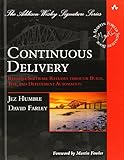
This classic book provides a comprehensive overview of Continuous Delivery, covering the principles, practices, and tools involved. It is highly recommended for anyone looking to implement Continuous Delivery in their organization.
Full-lifecycle AI coding workflows with GitHub Copilot span architectural planning, SQL query generation, automated test suites, and CI/CD scripting. Tom Taulli balances productivity gains with candid coverage of licensing risks, security scanning, and human code review.
Authored by Microsoft MVPs and reviewed by a GitHub Staff DevOps Architect, this book offers a practical approach to building CI/CD pipelines with GitHub Actions. It covers essential topics like workflows, actions, security, and performance optimization. is valuable for both learning and as a reference tool for implementing real-world CI/CD practices.
Provides an in-depth look at Visual Studio Code, including how to use it to build web applications, mobile apps, and data science projects.
Foundation model architecture, context window management, retrieval-augmented generation, and evaluation pipelines explain how coding assistants like GitHub Copilot operate under the hood. Chip Huyen equips engineers to build and audit production AI developer tooling.
Context structuring, few-shot exemplars, chain-of-thought reasoning, and deterministic output formatting directly improve GitHub Copilot Chat and inline code generation. Phoenix and Taylor provide battle-tested patterns for steering large language models in code-heavy tasks.
Side-by-side benchmarks pitting human problem-solving against GitHub Copilot and ChatGPT reveal exactly where AI coding assistants excel and where subtle bugs hide. David Mertz uses twenty-four tricky regex puzzles to sharpen developer verification and prompt refinement skills.
Provides a comprehensive introduction to GitHub Actions, covering its core concepts, structure, syntax, and use cases. It's particularly helpful for those new to CI/CD and looking to understand how GitHub Actions fits into the software development lifecycle. The book includes practical examples and helps solidify foundational knowledge.
This practical guide covers the cultural and technical aspects of DevOps, with a focus on Continuous Delivery. It provides valuable insights and case studies from leading DevOps practitioners.
Practical guide to using Git for version control. It covers all the essential commands and concepts, and provides clear and concise explanations.
Large language model APIs, function calling, and agentic tool execution share the exact capabilities powering GitHub Copilot Workspace and extensions. Caelen and Blete guide developers through building code-aware assistants and automated developer workflows.
Visual mental models of commits, branches, staging areas, and remote pull requests enable developers to checkpoint and review AI-generated diffs with confidence. Anna Skoulikari provides the essential version-control foundation for collaborating on GitHub.
Delves into more advanced aspects of GitHub Actions, suitable for those looking to deepen their understanding and explore complex scenarios. It covers reusable workflows, custom actions, integrating with external services, and enhancing security. It serves as a strong reference for experienced users and professionals.
Distributed version control internals, interactive rebasing, git bisect debugging, and GitHub pull request workflows remain indispensable when integrating rapid Copilot changes. Chacon and Straub's authoritative reference teaches engineers how to maintain clean commit histories.
Provides a hands-on approach to implementing CI/CD workflows using GitHub Actions. It covers implementation patterns, handling different technology stacks, and creating custom actions. It's a good resource for gaining practical experience and understanding the application of GitHub Actions in real projects.
Tactical programming that prioritizes speed over clean abstractions quickly buries teams in complexity—a danger amplified by uncritical use of AI autocomplete. John Ousterhout teaches developers how to design deep modules and clear interfaces before prompting for implementation.
Characterization tests, dependency-breaking seams, and sprout methods allow engineers to wrap untested code in safety harnesses before asking GitHub Copilot to refactor it. Michael Feathers provides the defensive testing playbook every AI-augmented developer needs.
Provides a comprehensive overview of Kubernetes Operators, a powerful mechanism for automating the management of complex Kubernetes applications. It's a great choice for anyone looking to gain a deep understanding of the topic.
Problem decomposition, specification writing, and systematic code reading replace rote syntax memorization when programming alongside GitHub Copilot. Computer science educators Leo Porter and Daniel Zingaro teach learners how to prompt, test, and debug AI-generated functions safely.
Likely focuses directly on implementing Continuous Integration and Continuous Delivery pipelines using GitHub Actions. It would be a practical guide for those specifically interested in the CI/CD aspects of GitHub Actions.
This practical guide focuses specifically on Docker, the leading containerization platform. It's a great resource for developers who want to get hands-on experience with building and deploying containerized applications.
IDE integration, inline ghost-text completions, Copilot Chat slash commands, and unit test generation receive hands-on coverage across enterprise languages. Kurt Dowswell demonstrates how to engineer comment-driven prompts, refactor legacy logic, and enforce security guardrails.
Step-by-step exercises pair core programming fundamentals with GitHub Copilot completions, chat refactoring, and automated unit testing. Scott McCoy and Mary Delamater show students and working developers how to guide Copilot without surrendering code comprehension.
Securing codebases built with generative assistants requires defending against probabilistic failure modes, injected dependencies, and non-deterministic outputs. Stephen R. Jordan outlines modern application security controls tailored for AI-augmented engineering teams.
Practical workflows for configuring GitHub Copilot in VS Code, translating between programming languages, and generating documentation help developers accelerate daily tasks. Chris Minnick walks readers through iterative prompting, bug diagnosis, and full-stack prototyping.
This influential book explores the dynamics and principles of open-source software development, providing valuable insights into the collaborative nature of GitHub.
Focuses on leveraging GitHub as a comprehensive DevOps platform, with a significant portion dedicated to using GitHub Actions for continuous delivery. It's beneficial for understanding the broader context of DevOps within the GitHub ecosystem and how Actions contributes to accelerating software delivery.
Provides a practical guide to implementing Continuous Delivery for Java applications using Jenkins, Maven, and Docker. It is suitable for Java developers looking to adopt Continuous Delivery practices.
Provides a comprehensive guide to implementing Continuous Delivery for .NET applications. It covers the tools, techniques, and best practices for automating the build, test, and deployment process.
Focuses on implementing Continuous Delivery in the AWS cloud. It covers the setup, configuration, and best practices for building, testing, and deploying serverless applications.
Provides a comprehensive overview of cloud native patterns, a set of best practices for building and deploying cloud-native applications. It's a great choice for anyone looking to gain a deep understanding of the topic.
Concise and easy-to-use reference guide to Git. It covers all the essential commands and concepts, and great resource for quick lookups.
Distinguishing accidental syntax hurdles from essential conceptual complexity explains why AI coding assistants accelerate typing yet cannot replace architectural judgment. Fred Brooks's classic essays offer timeless perspective on developer productivity and software design integrity.
Navigating the jagged frontier of large language model capabilities requires knowing when to delegate, when to verify, and how to prevent human skill atrophy. Wharton professor Ethan Mollick frames the cognitive habits that make pair programming with AI effective.
While not solely focused on GitHub Actions, this book demonstrates its use in a practical GitOps workflow alongside Terraform and AWS. It's valuable for understanding how GitHub Actions integrates with other popular DevOps tools and cloud providers for infrastructure management and CI/CD.
This comprehensive guide to software engineering covers various aspects of software development, including version control and collaboration, making it a valuable resource for GitHub users.
Focuses on the security aspects of containerization. It covers best practices for securing containerized applications and protecting against vulnerabilities.
This resource, structured like a book, offers a step-by-step tutorial approach to learning GitHub Actions through practical examples. It covers basics to advanced concepts and is suitable for those who prefer learning by doing. It's a good supplementary resource for solidifying understanding through practice.
Provides a comprehensive overview of the principles and patterns for designing and building data-intensive applications. While not specifically about containerization, it covers many relevant topics, such as distributed systems, data storage, and caching.
Fun and engaging way to learn Git. It provides short and easy lessons that can be completed in a month.
Is aimed at those new to GitHub and GitHub Actions, providing a foundational understanding of automating workflows. It covers the basics of YAML syntax, key concepts of GitHub Actions, and creating simple actions. It's a good starting point for beginners.
From Google provides insights into how high-performing teams manage large-scale systems. The principles of SRE, such as automation and monitoring, are highly relevant to building robust and reliable CI/CD pipelines with GitHub Actions. It's valuable for those aiming for high levels of system reliability and automation.
While not specifically about GitHub Actions, this foundational book on the principles and practices of Continuous Integration and Continuous Delivery. Understanding these concepts is crucial for effectively utilizing GitHub Actions for CI/CD. It provides valuable background knowledge for anyone working with automation pipelines.
While not directly focused on GitHub, this book provides a detailed overview of the concepts and practices of version control, which are fundamental to understanding GitHub.

Share

Help others find this course page by sharing it with your friends and followers:

Similar courses

Here are nine courses similar to Applied GitHub Platform.
ASP.NET Core MVC - Cross-Platform Development
Most relevant
Introduction to DevSecOps
Most relevant
Developing with GitHub Copilot and VS Code
Most relevant
Introduction to Web Development
Most relevant
Create Your UI/UX Portfolio with GitHub
Most relevant
R Programming Essentials with Microsoft Tools
Most relevant
Advanced Reproducibility in Cancer Informatics
Most relevant
GitHub Copilot for Project Management
Most relevant
Smarter Scientific Software Development with GitHub...
Most relevant

edX Buyer Protection & Guarantee

Verified partner policies & purchase protections

World-Class University Partner
Free Trial & Audit

Free Audit Track Available

Free audit track available for most courses, giving open access to video lectures, course readings, and assignments at no charge.

Return & Refund Policy

14-Day Full Refund Window

14-day full refund available up to 14 days after course start or 14 days after payment (whichever comes second, up to 6 months max), provided verified certificate has not yet been earned.

Buyer Protections

Verified Academic & Industry Partner

University-backed credentials authored by elite institutions like Harvard, MIT, and Oxford, with tamper-proof certificate verification.

Key Purchase Protections
Free audit track for open learning access
14-day money-back guarantee on verified certificates
Prestigious university credentials (Harvard, MIT)
Automatic unenrollment refund process via dashboard
OpenCourser Verified Partner Policy details last reviewed: 2026-10-22
Our mission

OpenCourser helps millions of learners each year. People visit us to learn workspace skills, ace their exams, and nurture their curiosity.

Our extensive catalog contains over 50,000 courses and twice as many books. Browse by search, by topic, or even by career interests. We'll match you to the right resources quickly.

Find this site helpful? Tell a friend about us.

Affiliate disclosure

We're supported by our community of learners. When you purchase or subscribe to courses and programs or purchase books, we may earn a commission from our partners.

Your purchases help us maintain our catalog and keep our servers humming without ads.

Thank you for supporting OpenCourser.

© 2016 - 2025 OpenCourser