We may earn an affiliate commission when you visit our partners.
Course image
Giovanni Maria Conti

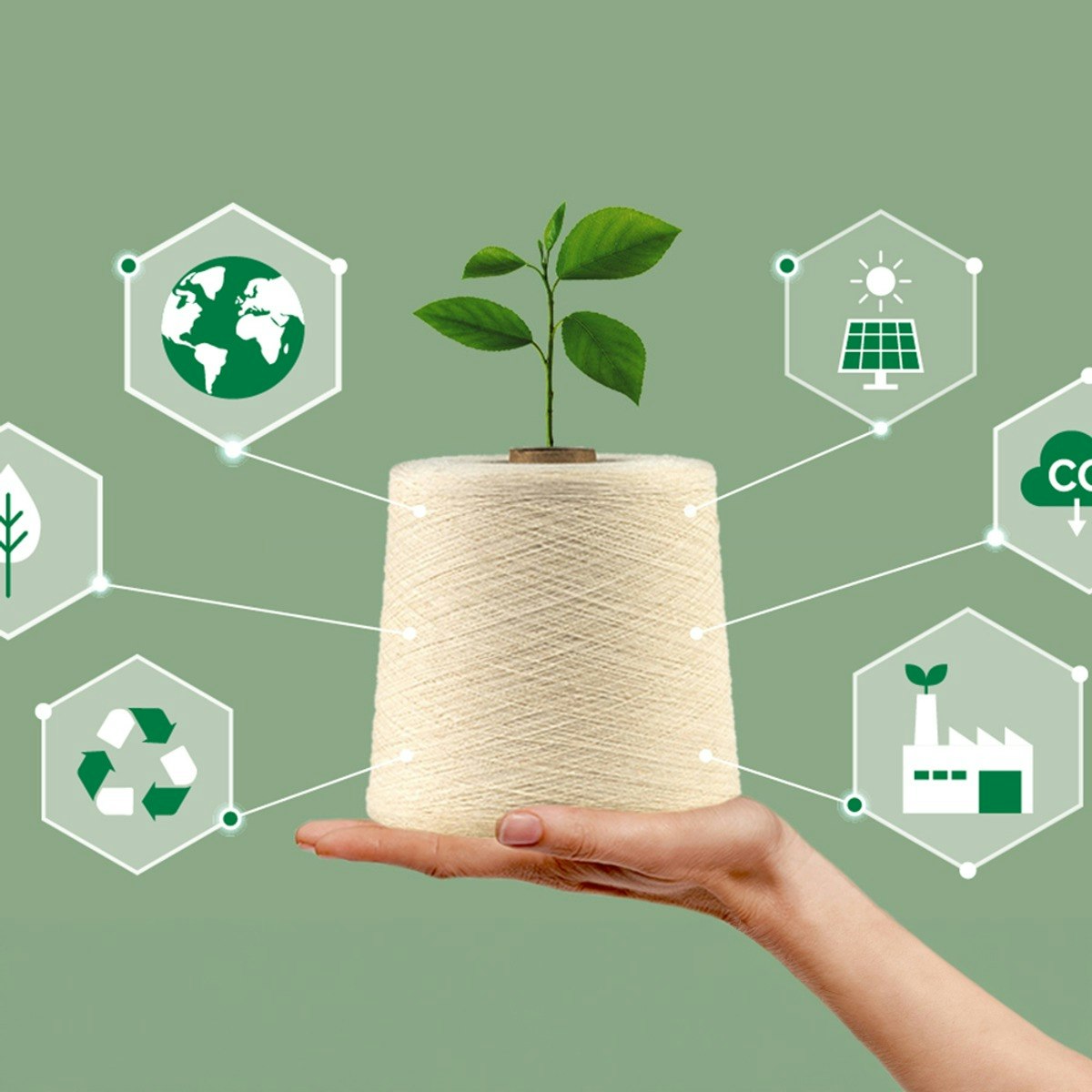
The MOOC aims to describe the approach to sustainability in the Italian textile manufacturing sector (for clothing and other sectors) with a specific focus on all steps of the production chain.

Read more

The MOOC aims to describe the approach to sustainability in the Italian textile manufacturing sector (for clothing and other sectors) with a specific focus on all steps of the production chain.

Each video focuses on one step of the supply chain (raw material sourcing, spinning, weaving, design, prototyping, production, integration of innovative technologies in the processes) and tells the state of the art on the sector's sustainable approach, possible plans and interventions, as well as the opportunities that companies will have to seize in the immediate future in terms of social and environmental responsibility. The topics are addressed by Politecnico di Milano lecturers and industry professionals as guest speakers.

INTENDED LEARNING OUTCOMES (ILOs)

If you actively participate in this course, at the end you will be able to:

- Acquiring technical knowledge of traditional manufacturing processes

- Acquiring technical knowledge about sustainable requirements and solutions

- Understanding contemporary change towards sustainability

- Understanding of the complexity and multitude of processes and stakeholders along the textile supply chain

ACTIVITIES

Over and above consulting the content, in the form of videos and other web-based resources, you will have the opportunity to discuss course topics and to share ideas with your peers in the Forum of this MOOC.

Enroll now

What's inside

Syllabus

Week 0: Introduction
Week 1: Materials
Week 2: Design and Production
Read more

Traffic lights

Read about what's good
what should give you pause
and possible dealbreakers
Suitable for learners with little to no experience in fashion, and those new to sustainable fashion practices
Provides an overview of the full textile supply chain, from design and production to innovative technologies
Delivered through a combination of lectures and guest speakers from industry professionals
May be of value to learners looking to develop a broad foundation in the textile industry

Save this course

Create your own learning path. Save this course to your list so you can find it easily later.
Save

Reviews summary

Sustainable textile manufacturing insights

According to learners, this course offers a comprehensive overview of sustainability in the textile manufacturing sector, effectively covering the entire supply chain from raw materials to innovative technologies. Students highly value the insights provided by Politecnico di Milano lecturers and industry professionals, finding the content highly relevant to understanding contemporary industry changes. While praised for its structured, bite-sized modules, some indicate a strong theoretical focus that could benefit from more practical applications. The course is a strong introduction for beginners but may not delve deep enough for advanced practitioners, and its emphasis on the Italian textile sector is notable.
Highlights sustainability practices within the Italian textile industry.
"The course's emphasis on the Italian textile industry was interesting, but I wondered about its global applicability in some areas."
"It provides a great look into sustainable practices in Italy, which is directly relevant to my work and research here."
"While the core principles are universal, the examples are very specific to Italy, which is something to consider if your focus is elsewhere."
Features valuable perspectives from both academics and industry leaders.
"The guest speakers from the industry brought real-world relevance that was incredibly valuable."
"Hearing from Politecnico di Milano lecturers and professionals made the content highly credible and engaging."
"I found the insights from practitioners in the field particularly enlightening for my career path."
Provides a thorough look at sustainability across the textile value chain.
"The course offered me a holistic view of sustainability in textile production, covering everything from materials to innovation."
"I appreciate how it covers each step of the supply chain, giving a clear picture of sustainable practices."
"It's a great introduction to the complexities of sustainable textile manufacturing for professionals."
Strong on concepts but some learners desire more practical application.
"While the course provides a strong theoretical foundation, I wished for more case studies or practical tools."
"It's excellent for understanding concepts, but I felt it could benefit from more hands-on examples and real-world projects."
"For someone looking to immediately apply skills, it might feel a bit abstract at times, needing supplemental research."
Ideal for foundational learning, less so for advanced industry veterans.
"As an introduction, this course is fantastic for newcomers, but for those with prior knowledge, it might seem too foundational."
"I found it a good overview, though I was hoping for more advanced topics in textile innovation and specific techniques."
"The course is accessible for newcomers to the field, but advanced practitioners might seek more specialized content or deep dives."

Activities

Be better prepared before your course. Deepen your understanding during and after it. Supplement your coursework and achieve mastery of the topics covered in Sustainable Textile Manufacturing with these activities:
Organize Course Materials
Enhances learning by encouraging a structured review of course content.
Show steps
  • Organize video lectures, notes, and readings into folders or a digital notebook.
  • Create summaries of key concepts and highlight important points.
  • Review organized materials regularly to reinforce learning.
Practice Sustainable Design Principles
Strengthens understanding of design principles for sustainability discussed in Week 2.
Browse courses on Sustainable Design
Show steps
  • Identify 3-5 products that align with sustainable design principles.
  • Analyze the design elements and materials used in these products.
  • Develop a concept for a sustainable textile product based on your analysis.
Develop a Sustainable Textile Product Design
Integrates and extends the knowledge gained throughout the course by challenging you to design a sustainable textile product.
Show steps
  • Identify a specific need or challenge in the textile industry.
  • Research and explore innovative sustainable materials and technologies.
  • Develop a design concept and prototype.
  • Create a presentation or report to showcase your design.
Show all three activities

Career center

Learners who complete Sustainable Textile Manufacturing will develop knowledge and skills that may be useful to these careers:

Reading list

We've selected 50 books that we think will supplement your learning. Use these to develop background knowledge, enrich your coursework, and gain a deeper understanding of the topics covered in Sustainable Textile Manufacturing.
This handbook collection of essays from leading scholars in the field of CSR. It provides a comprehensive overview of the topic, covering both theoretical and practical perspectives.
This handbook collection of essays from leading scholars in the field of CSR. It provides a comprehensive overview of the topic, covering both theoretical and practical perspectives. The handbook is particularly strong on the international dimensions of CSR.
Presents a theoretical framework for understanding the concept of production and productivity. It highly influential work in the field of economics and is considered a classic in the area of production theory.
Presents a collection of the most substantive solutions to global warming, based on extensive research and analysis. It offers a hopeful and practical perspective on addressing climate change through existing technologies and practices. This book is highly valuable for understanding concrete actions and strategies for achieving sustainability and useful reference tool for students and professionals working on climate solutions.
This provocative book argues that the climate crisis is not just an environmental issue but a call to transform our economic and political systems. It provides a critical analysis of the relationship between capitalism and climate change. is essential for understanding contemporary debates about the systemic drivers of environmental problems and is highly relevant for advanced students and professionals.
Provides a comprehensive overview of the field of production and operations management, covering topics such as forecasting, inventory management, scheduling, and quality control. It valuable resource for students and professionals alike.
This concise and accessible book provides a comprehensive overview of design thinking, covering its principles, processes, and tools.
Provides a comprehensive overview of sustainability. It covers the environmental, social, and economic dimensions of sustainability, and it discusses the challenges and opportunities that businesses face in creating a more sustainable world.
Offers a comprehensive overview of sustainable development, covering its history, key concepts, and practical challenges. Written by a leading economist, it provides valuable insights into the economic dimensions of sustainability and the role of policy. It can serve as a core textbook for undergraduate and graduate programs, offering a solid foundation for understanding the multifaceted nature of sustainable development. It useful reference for exploring various aspects of the topic.
This बुक presents a stark and urgent picture of the potential impacts of climate change if significant action is not taken. It synthesizes scientific research and explores the potential social, economic, and environmental consequences of a warming planet. is important for understanding the severity of the climate crisis and serves as a call to action, particularly relevant for contemporary discussions on climate impacts and adaptation.
Challenges traditional economic models and proposes a new framework for economic thinking that integrates social and planetary boundaries. It is highly relevant for contemporary discussions on sustainable economic systems and offers a fresh perspective on achieving well-being within ecological limits. This book is valuable for deepening understanding of alternative economic approaches to sustainability and is often used as supplementary reading in relevant courses.
Understanding systems thinking is crucial for comprehending the complex and interconnected nature of sustainability challenges. provides a clear and accessible introduction to the principles of systems thinking and how they can be applied to environmental and social issues. It is highly recommended as foundational reading to develop a holistic perspective on sustainability. It serves as a valuable tool for analyzing the root causes of unsustainable practices and designing effective interventions.
This Pulitzer Prize-winning book explores the ongoing extinction crisis and its causes, highlighting the profound impact of human activity on biodiversity. It provides a crucial understanding of the ecological consequences of unsustainable practices. is important for deepening understanding of the environmental challenges related to sustainability and is often recommended as essential reading on biodiversity loss.
Written by key figures in the Paris Agreement negotiations, this book outlines two potential future scenarios based on our response to the climate crisis. It offers a hopeful yet realistic perspective on the actions needed to create a sustainable future. is relevant for understanding the global efforts to address climate change and provides insights into potential pathways forward.
Explores the relationship between stakeholder theory and CSR. It argues that CSR moral obligation of businesses to consider the interests of all stakeholders, including employees, customers, suppliers, and the community.
Also known as the Brundtland Report, this publication landmark document that popularized the concept of sustainable development. It provides a comprehensive overview of the interconnected environmental and development challenges facing the world. This report is essential reading for gaining a broad understanding of the definition and scope of sustainable development as widely accepted internationally. It crucial reference for understanding the historical context of sustainability policy.
Examines the different ways we produce and consume food, tracing four different meal sources to their origins. It provides a critical look at the industrial food system and explores alternatives, connecting food choices to environmental sustainability and personal health. This book is valuable for understanding the complex relationship between food, agriculture, and sustainability and is often used in courses on food systems and environmental studies.
Presents a vision for a new industrial revolution based on the principles of resource efficiency, ecological design, and biomimicry. It provides practical examples of how businesses can adopt sustainable practices and improve profitability. This book is useful for understanding the business case for sustainability and offers insights for professionals in various industries.
This collection of speeches by the young climate activist Greta Thunberg offers a powerful and urgent voice on the need for immediate climate action. It reflects the perspective of a new generation on the climate crisis and the call for accountability. is valuable for understanding the youth climate movement and provides inspiration for individual and collective action, highly relevant for contemporary discussions and a broad audience.
This comprehensive guide presents 125 principles of design that are applicable to a wide range of disciplines.
A comprehensive guide to rapid prototyping techniques, materials, and applications.
Provides a practical guide for directors on how to integrate CSR into their risk management strategies. It discusses the legal, financial, and reputational risks that businesses face, and it provides guidance on how to mitigate these risks through CSR practices.
Provides a guide for investors on how to invest in socially responsible companies. It discusses the different types of socially responsible investments, and it provides guidance on how to evaluate the social and environmental performance of companies.
Provides a critical look at CSR. It argues that CSR can be a powerful force for good, but it also warns that CSR can be used by businesses to greenwash their image.
Challenges traditional business mindsets and argues for a shift towards embracing sustainability, ESG, and resilience for long-term business success. It provides a framework for transforming businesses to thrive in a complex and interconnected world. This book is particularly useful for business leaders and professionals seeking to integrate sustainability into their corporate strategy.
Provides a practical and accessible guide to understanding the carbon footprint of everyday activities and products. It helps readers make informed choices to reduce their environmental impact. This book useful reference tool for quantifying the environmental impact of various actions and is valuable for anyone seeking to understand their personal contribution to climate change.
A book that focuses on prototyping as a tool for designers, providing a comprehensive overview of the principles, techniques, and tools involved.
Provides a comprehensive overview of the field of industrial engineering and management, covering topics such as work study, ergonomics, and quality control. It valuable resource for students and professionals alike.
Examines successful companies that have integrated sustainability into their core business strategies and achieved significant financial success. It provides case studies and insights into how sustainability can be a driver of innovation and profitability. This book is particularly relevant for business students and professionals interested in corporate sustainability and ESG.
Vandana Shiva, a prominent environmental activist, advocates for a shift towards ecological democracy and challenges corporate control over resources and food systems. provides a perspective on sustainability that emphasizes social justice, biodiversity, and the rights of nature. It is valuable for exploring the social and ethical dimensions of sustainability and offers a critical viewpoint on globalization and its impact.
Explores the growing field of sustainable investing, which considers environmental, social, and governance (ESG) factors in investment decisions. It provides an overview of different approaches to sustainable investing and its potential impact. This book is valuable for students and professionals in finance and business who want to understand the role of finance in driving sustainability.
Norman investigates the psychological principles that underlie design preferences and decision-making, offering insights for creating more effective designs.
Considered one of the first books for a general audience about climate change, this book explores the idea that human activities have altered nature itself. It provides a historical perspective on the dawning awareness of climate change and its implications. While an older text, it remains a classic for understanding the philosophical and environmental shifts brought about by human impact on the planet.
Brooks provides a comprehensive overview of design research methods, including qualitative and quantitative techniques.
Provides a comprehensive overview of the field of production engineering, covering topics such as metal cutting, casting, and welding. It valuable resource for students and professionals alike.
Offers a critique of conventional economics and advocates for a more human-scale, decentralized, and environmentally conscious approach. It provides a valuable perspective on alternative economic models that align with sustainability principles. While first published in the 1970s, its ideas remain highly relevant for discussions on sustainable development and serve as important additional reading to broaden understanding beyond mainstream economic thought. It challenges readers to consider the social and environmental impacts of economic systems.
Weber examines the influence of the Bauhaus movement on American design, focusing on its impact on architecture, furniture, and graphic design.
A book that focuses on the role of digital prototyping in the design process, providing practical advice on how to use digital tools to create and test prototypes.
A book that covers the principles of prototyping and modelmaking for product design, providing a comprehensive overview of the techniques and materials used in the process.

Share

Help others find this course page by sharing it with your friends and followers:

Similar courses

Here are nine courses similar to Sustainable Textile Manufacturing.
Management of Urban Infrastructures – part 1
Most relevant
Business Models for Innovative Care for Older People
Most relevant
Global Health: An Interdisciplinary Overview
Most relevant
Stanford Introduction to Food and Health
Most relevant
Journey Conversations: Weaving Knowledge and Action
Most relevant
Management of Fashion and Luxury Companies
Most relevant
Sustainability through Soccer: Systems-Thinking in Action
Most relevant
Sustainable Business Enterprises
Most relevant
Dairy Production and Management
Most relevant

Coursera Buyer Protection & Guarantee

Verified partner policies & purchase protections

Accredited University Partner
Free Trial & Audit

7-Day Free Trial & Free Audit

7-day free trial on monthly Coursera Plus subscriptions; free audit option available on most individual courses to explore video lectures and readings at no charge.

Return & Refund Policy

14-Day Refund Guarantee

14-day refund window on annual Coursera Plus subscriptions and single-course purchases prior to certificate issuance. Monthly subscriptions do not offer refunds once billed.

Buyer Protections

Verified Academic & Industry Partner

Accredited university and industry certifications (e.g. Stanford, Google, IBM, Yale), secure SSL payment processing, and verifiable digital certificate links.

Key Purchase Protections
14-day refund window on annual Coursera Plus and single courses
7-day free trial on monthly Coursera Plus subscriptions
Free course audit option for lectures and readings
Verified certificates from top universities & companies
OpenCourser Verified Partner Policy details last reviewed: 2026-10-22
Our mission

OpenCourser helps millions of learners each year. People visit us to learn workspace skills, ace their exams, and nurture their curiosity.

Our extensive catalog contains over 50,000 courses and twice as many books. Browse by search, by topic, or even by career interests. We'll match you to the right resources quickly.

Find this site helpful? Tell a friend about us.

Affiliate disclosure

We're supported by our community of learners. When you purchase or subscribe to courses and programs or purchase books, we may earn a commission from our partners.

Your purchases help us maintain our catalog and keep our servers humming without ads.

Thank you for supporting OpenCourser.

© 2016 - 2025 OpenCourser