
We may earn an affiliate commission when you visit our partners.
Course image
Nestor Nicolas Campos Rojas

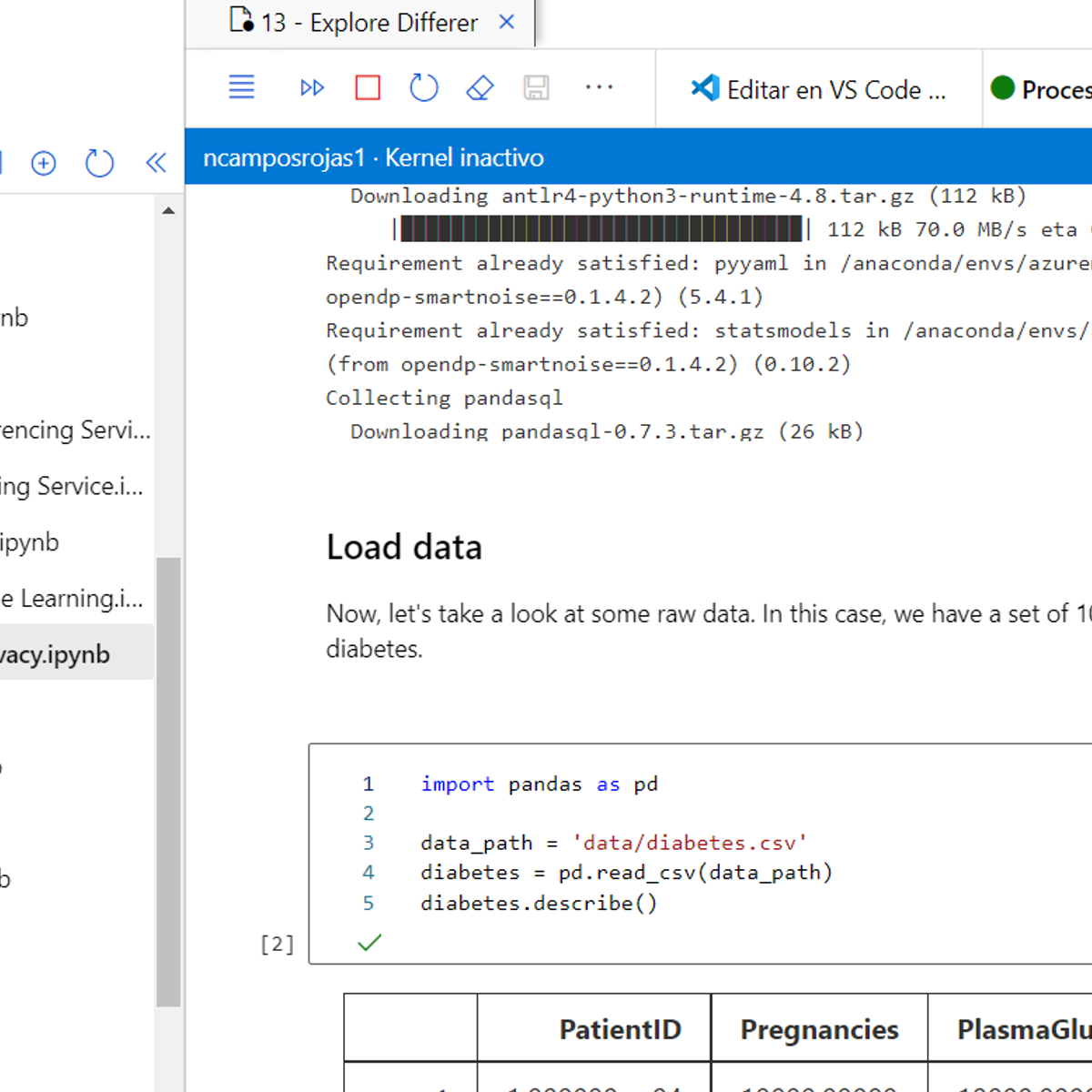
En este proyecto, vamos a entender la importancia de la privacidad en modelos de Machine Learning usando Azure.

Enroll now

Here's a deal for you

Save money when you learn with a deal that may be relevant to this course.
All coupon codes, vouchers, and discounts are applied automatically unless otherwise noted.

What's inside

Syllabus

Traffic lights

Read about what's good
what should give you pause
and possible dealbreakers
Desarrolla habilidades técnicas y analíticas para profesionales en ML
Se imparte en español, lo que lo hace accesible para hispanohablantes

Save this course

Create your own learning path. Save this course to your list so you can find it easily later.
Save

Reviews summary

Aplicando privacidad en ml con azure

Según los estudiantes, este curso ofrece una visión general práctica y directa para aplicar la privacidad en modelos de Machine Learning con Azure. Es considerado una excelente introducción, destacando su enfoque práctico y las demostraciones en Azure. Sin embargo, se advierte que asume conocimientos previos en ML y Azure, lo que puede ser un desafío para principiantes. Aunque es conciso, algunos desearían mayor profundidad o ejemplos avanzados, siendo ideal para quienes ya poseen una base.
Valorado por su brevedad, aunque a veces percibido como corto.
"Los materiales son concisos."
"La verdad, me pareció un poco corto."
Ofrece una visión general sólida, aunque algunos buscan mayor profundidad.
"Excelente curso introductorio."
"Buen curso para empezar con la privacidad en ML. Me hubiera gustado un poco más de profundidad en los aspectos teóricos..."
"La verdad, me pareció un poco corto. Los temas se tocan por encima. Sirve como una primera toma de contacto."
"Demasiado básico para mi nivel. Esperaba más sobre algoritmos de privacidad o técnicas avanzadas."
Destaca la aplicación directa de privacidad en modelos de ML usando Azure.
"La parte práctica con Azure fue muy útil y me permitió entender cómo aplicar los conceptos de privacidad directamente."
"Muy práctico y directo al grano. Aprender a usar las herramientas de privacidad en Azure fue clave."
"Me encantó el enfoque práctico. El proyecto final te obliga a aplicar lo aprendido y eso es lo mejor."
Asume familiaridad con Machine Learning y Azure.
"Creo que se asume mucho conocimiento previo. Si eres principiante en ML o en Azure, te costará seguir el ritmo."
"Ideal para quienes ya tienen una base en Machine Learning y quieren añadir esta capa de conocimiento."
"Si no tienes experiencia con Azure, puede que necesites un poco más de tiempo para configurarlo."

Activities

Be better prepared before your course. Deepen your understanding during and after it. Supplement your coursework and achieve mastery of the topics covered in Aplicando privacidad en modelos de Machine Learning with these activities:
Revisar conceptos básicos de machine learning
Refrescar los conceptos básicos de machine learning ayudará a comprender mejor los temas del curso.
Browse courses on Machine Learning
Show steps
  • Repasar los principios del machine learning
  • Revisar técnicas comunes de ML, como regresión y clasificación
  • Leer artículos o ver videos sobre los conceptos básicos de ML
Explorar bibliotecas y herramientas de Azure
Familiarízate con las herramientas y bibliotecas de Azure para comprender cómo se utilizan en la preservación de la privacidad.
Browse courses on Azure Machine Learning
Show steps
  • Seguir tutoriales oficiales de Microsoft Azure para Azure Machine Learning
  • Explorar la documentación de las bibliotecas de ML de Azure (por ejemplo, AzureML, ML.NET)
  • Experimentar con pequeños proyectos o ejemplos de código para practicar el uso de estas herramientas
Show all two activities

Career center

Learners who complete Aplicando privacidad en modelos de Machine Learning will develop knowledge and skills that may be useful to these careers:
Data Scientist
Machine learning is a subset of artificial intelligence (AI), and data scientists play a vital role in developing and implementing AI solutions. They use their expertise in statistics, programming, and machine learning to build models that can learn from data and make predictions. This course can help you develop the skills you need to become a data scientist, including how to use Azure to protect the privacy of your data and models.
Machine Learning Engineer
Machine learning engineers are responsible for designing, building, and deploying machine learning models. They work closely with data scientists to understand the business problem that needs to be solved, and then they develop and implement the machine learning solution. This course can help you develop the skills you need to become a machine learning engineer, including how to use Azure to protect the privacy of your data and models.
Data Analyst
Data analysts use their skills in statistics, programming, and data visualization to analyze data and identify trends and patterns. They also develop and implement data-driven solutions to business problems. This course can help you develop the skills you need to become a data analyst, including how to use Azure to protect the privacy of your data.
Business Intelligence Analyst
Business intelligence analysts use their skills in data analysis, visualization, and communication to help businesses make better decisions. They analyze data to identify trends and patterns, and then they develop and communicate insights that can help businesses improve their performance. This course can help you develop the skills you need to become a business intelligence analyst, including how to use Azure to protect the privacy of your data.
Software Engineer
Software engineers design, develop, and maintain software applications. They use their skills in programming, data structures, and algorithms to create software that meets the needs of users. This course can help you develop the skills you need to become a software engineer, including how to use Azure to protect the privacy of your data and applications.
Product Manager
Product managers are responsible for the development and launch of new products. They work with engineers, designers, and marketers to define the product vision, roadmap, and features. This course can help you develop the skills you need to become a product manager, including how to use Azure to protect the privacy of your users.
Project Manager
Project managers are responsible for planning, executing, and controlling projects. They work with stakeholders to define the project scope, budget, and timeline. This course can help you develop the skills you need to become a project manager, including how to use Azure to protect the privacy of your project data.
Data Protection Officer
Data protection officers are responsible for developing and implementing data protection policies and procedures. They work with businesses to ensure that their data is protected from unauthorized access, use, or disclosure. This course can help you develop the skills you need to become a data protection officer, including how to use Azure to protect the privacy of your data.
Privacy Lawyer
Privacy lawyers advise businesses on how to comply with privacy laws and regulations. They also represent clients in privacy-related litigation. This course can help you develop the skills you need to become a privacy lawyer, including how to use Azure to protect the privacy of your clients' data.
Compliance Officer
Compliance officers are responsible for ensuring that their organizations comply with all applicable laws and regulations. They work with businesses to develop and implement compliance policies and procedures. This course can help you develop the skills you need to become a compliance officer, including how to use Azure to protect the privacy of your organization's data.
Risk Manager
Risk managers are responsible for identifying, assessing, and managing risks. They work with businesses to develop and implement risk management plans. This course can help you develop the skills you need to become a risk manager, including how to use Azure to protect the privacy of your organization's data.
Information Security Analyst
Information security analysts are responsible for protecting their organizations from cyberattacks. They work with businesses to develop and implement information security policies and procedures. This course can help you develop the skills you need to become an information security analyst, including how to use Azure to protect the privacy of your organization's data.
Cybersecurity Analyst
Cybersecurity analysts are responsible for investigating and responding to cyberattacks. They work with businesses to develop and implement cybersecurity policies and procedures. This course can help you develop the skills you need to become a cybersecurity analyst, including how to use Azure to protect the privacy of your organization's data.
Forensic Analyst
Forensic analysts are responsible for investigating and analyzing cybercrimes. They work with law enforcement and businesses to collect and analyze evidence. This course can help you develop the skills you need to become a forensic analyst, including how to use Azure to protect the privacy of your organization's data.
Auditor
Auditors are responsible for examining and evaluating financial records. They work with businesses to ensure that their financial statements are accurate and comply with all applicable laws and regulations. This course can help you develop the skills you need to become an auditor, including how to use Azure to protect the privacy of your organization's data.

Reading list

We've selected seven books that we think will supplement your learning. Use these to develop background knowledge, enrich your coursework, and gain a deeper understanding of the topics covered in Aplicando privacidad en modelos de Machine Learning.
Este libro ofrece una visión general de las técnicas de preservación de la privacidad en el aprendizaje automático, cubriendo temas como el aprendizaje federado y la criptografía segura. Proporciona información complementaria a las técnicas prácticas enseñadas en el curso.
Este libro de texto clásico proporciona una base sólida en los conceptos estadísticos subyacentes al aprendizaje automático. Complementa el enfoque práctico del curso con una comprensión teórica más profunda.
Este libro proporciona una guía práctica para implementar modelos de aprendizaje automático con bibliotecas populares. Complementa las prácticas del curso con ejemplos y soluciones paso a paso, lo que lo hace adecuado para el desarrollo práctico.
Este libro ofrece una introducción accesible al aprendizaje automático. Proporciona una base para aquellos sin experiencia previa en el campo y complementa las lecciones del curso sobre los conceptos fundamentales.
Este libro se centra en el aprendizaje profundo, que es un subcampo del aprendizaje automático. Proporciona una exploración práctica de los enfoques de aprendizaje profundo y complementa las lecciones del curso sobre técnicas avanzadas.
Este libro ofrece una visión general de las leyes y regulaciones de privacidad de datos. Proporciona información valiosa sobre el panorama legal en el que operan las prácticas de privacidad del aprendizaje automático.
Este libro adopta un enfoque probabilístico del aprendizaje automático. Proporciona una perspectiva teórica que complementa el enfoque práctico del curso y amplía la comprensión de los modelos basados en probabilidad.

Share

Help others find this course page by sharing it with your friends and followers:

Similar courses

Similar courses are unavailable at this time. Please try again later.
Our mission

OpenCourser helps millions of learners each year. People visit us to learn workspace skills, ace their exams, and nurture their curiosity.

Our extensive catalog contains over 50,000 courses and twice as many books. Browse by search, by topic, or even by career interests. We'll match you to the right resources quickly.

Find this site helpful? Tell a friend about us.

Affiliate disclosure

We're supported by our community of learners. When you purchase or subscribe to courses and programs or purchase books, we may earn a commission from our partners.

Your purchases help us maintain our catalog and keep our servers humming without ads.

Thank you for supporting OpenCourser.

© 2016 - 2025 OpenCourser