We may earn an affiliate commission when you visit our partners.
Course image
LearnKartS

Welcome to the Continuous Monitoring with Jenkins & Best Practices course!

The course covers fundamental tasks such as system information gathering, Jenkins configuration management, and user administration. You will learn to utilize plugins for reporting, code analysis, and monitoring, enhancing visibility and project quality.

This course requires knowledge of Continuous Integration (CI), Continuous Delivery/Continuous Deployment (CD), and Command Line Interface (CLI)

By the end of this course, you will be able to:

Read more

Welcome to the Continuous Monitoring with Jenkins & Best Practices course!

The course covers fundamental tasks such as system information gathering, Jenkins configuration management, and user administration. You will learn to utilize plugins for reporting, code analysis, and monitoring, enhancing visibility and project quality.

This course requires knowledge of Continuous Integration (CI), Continuous Delivery/Continuous Deployment (CD), and Command Line Interface (CLI)

By the end of this course, you will be able to:

- Master essential Jenkins administration tasks, from system information gathering to configuration management. 

- Utilize plugins effectively for reporting, code analysis, and monitoring to improve project visibility and quality. 

- Implement best practices for global security, authentication, and access management to ensure a secure Jenkins environment. 

- Configure and manage Jenkins backups for seamless maintenance and disaster recovery. 

- Automate testing and reporting processes to streamline workflows and boost efficiency. 

- Apply your knowledge to design and implement a comprehensive Jenkins administration solution in your course-end project.

The course includes videos, demos, assignments, and readings designed to enrich your learning experience and ensure you gain practical, actionable skills in Continuous Monitoring with Jenkins & Best Practices.  

Enroll now

What's inside

Syllabus

Managing and Monitoring Jenkins
In this module, you will master Jenkins system management, like gathering system info, configuring Jenkins, managing users/plugins, monitoring performance, conducting server maintenance, and handling backup/restoration. By the end, you will gain skills to efficiently manage and monitor Jenkins for optimal performance.
Read more

Traffic lights

Read about what's good
what should give you pause
and possible dealbreakers
Builds a strong foundation for beginners by providing clear and fundamental tasks
Helps professionals implement best practices for global security, authentication, and access management
Provides essential administration tasks and configuration management for Jenkins
Covers important topics like system information gathering, user administration, and plugin utilization
Offers a course-end project for learners to apply their knowledge
Requires prior knowledge of Continuous Integration (CI), Continuous Delivery/Continuous Deployment (CD), and Command Line Interface (CLI)

Save this course

Create your own learning path. Save this course to your list so you can find it easily later.
Save

Reviews summary

Mastering jenkins monitoring and best practices

According to students (based on course objectives), this program aims to provide a comprehensive understanding of Jenkins administration, focusing on continuous monitoring and best practices. Learners can expect to gain practical, actionable skills through hands-on demos, assignments, and a capstone project. The course is designed to equip professionals with the ability to manage Jenkins systems, utilize plugins for reporting and analysis, implement robust security measures, and automate tasks for improved efficiency, making it highly relevant for those in DevOps and related fields. It's important to note the stated prerequisites in CI/CD and CLI knowledge for optimal learning.
Strong focus on implementing secure and efficient Jenkins environments.
"I will learn to implement best practices for global security, authentication, and access management."
"The course is designed to ensure I can maintain a secure Jenkins environment, which is highly valuable."
"I look forward to understanding and applying effective security and backup strategies."
Covers a wide array of Jenkins management, from setup to disaster recovery.
"I expect to learn all fundamental tasks like system information gathering, configuration management, and user administration."
"The syllabus indicates I'll master managing Jenkins performance, server maintenance, and backup/restoration processes."
"The curriculum outlines a clear path to becoming proficient in various aspects of Jenkins system management."
Focuses on delivering practical, actionable skills for real-world scenarios.
"The course promises to equip me with practical, actionable skills, crucial for my role."
"I anticipate mastering essential Jenkins administration tasks and apply them immediately."
"The inclusion of demos, assignments, and a course-end project will ensure I gain hands-on experience."
Requires prior knowledge of CI/CD and Command Line Interface for success.
"I understand that prior knowledge of Continuous Integration and Delivery is a prerequisite for this course."
"It's important that I have a solid grasp of Command Line Interface concepts before starting."
"I'll ensure my CI/CD and CLI skills are up to par to fully benefit from the course content."

Activities

Be better prepared before your course. Deepen your understanding during and after it. Supplement your coursework and achieve mastery of the topics covered in Continuous Monitoring with Jenkins & Best Practices with these activities:
Attend a Jenkins Webinar
Attend a free webinar on Jenkins to gain a basic understanding of its capabilities and use cases.
Show steps
  • Register for a Jenkins webinar
  • Attend the webinar and take notes
Review Jenkins
Review fundamental concepts of Jenkins to refresh your memory and strengthen your understanding before starting the course.
Browse courses on Jenkins
Show steps
  • Read through the Jenkin's documentation.
  • Set up a local Jenkins instance and explore its interface.
  • Create a simple Jenkins pipeline to gain hands-on experience.
Practice Jenkins Commands
Familiarize yourself with the Jenkins command-line interface by practicing common commands.
Show steps
  • Install Jenkins Command Line Interface (JCLI)
  • Execute basic JCLI commands for starting/stopping Jenkins, creating jobs, and managing plugins
Three other activities
Expand to see all activities and additional details
Show all six activities
Explore Jenkins Plugins
Follow online tutorials to learn about various Jenkins plugins and their usage. This will help you understand how to extend Jenkins' functionality and enhance your CI/CD pipelines.
Show steps
  • Identify common use cases for Jenkins plugins and research available plugins.
  • Select a tutorial that covers a plugin relevant to your interests.
  • Follow the tutorial steps carefully and implement the plugin in your Jenkins instance.
  • Experiment with different plugin configurations to understand their impact on your pipelines.
Create a Jenkins Dashboard
Create a personalized Jenkins dashboard to monitor your builds and visualize your progress.
Show steps
  • Design your dashboard layout
  • Install and configure relevant Jenkins plugins
  • Create widgets and add them to your dashboard
Follow Jenkins & Best Practices Tutorials
Gain hands-on experience and refine your skills by following tutorials that cover Jenkins administration and best practices.
Browse courses on Jenkins
Show steps
  • Identify relevant tutorials
  • Watch and follow the steps demonstrated
  • Practice and experiment with the concepts

Career center

Learners who complete Continuous Monitoring with Jenkins & Best Practices will develop knowledge and skills that may be useful to these careers:

Reading list

We've selected 50 books that we think will supplement your learning. Use these to develop background knowledge, enrich your coursework, and gain a deeper understanding of the topics covered in Continuous Monitoring with Jenkins & Best Practices.
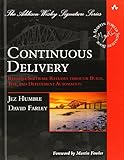
This classic book provides a comprehensive overview of Continuous Delivery, covering the principles, practices, and tools involved. It is highly recommended for anyone looking to implement Continuous Delivery in their organization.
Provides a comprehensive overview of authentication systems, from the basics to the most advanced topics. It is an excellent resource for anyone who wants to learn more about this complex and challenging field.
Considered a foundational text in the field, this book provides a comprehensive overview of the principles and technical practices necessary for rapid, reliable, and low-risk software releases. It introduces the deployment pipeline concept and discusses the ecosystem required for continuous delivery, including infrastructure, data, and configuration management. is essential for gaining a broad understanding and valuable reference for anyone involved in the software delivery lifecycle.
This is the updated second edition of The DevOps Handbook, incorporating new research and case studies. It continues to be a definitive guide for implementing DevOps practices, including continuous delivery, and is highly relevant for both individuals and organizations seeking to improve their software delivery performance. The inclusion of Nicole Forsgren as an author adds further depth based on the Accelerate research.
This comprehensive handbook covers the entire field of robotics and automation, from the basics to the latest developments. It is an essential resource for anyone who wants to learn about this rapidly growing field.
Save
Provides a practical introduction to Jenkins 2, focusing on the features that enable defining pipelines as code. It's excellent for understanding the fundamental shift in Jenkins towards pipeline-centric automation. It serves as a solid starting point for those new to modern Jenkins practices and useful reference for migrating older Jenkins jobs.
Based on extensive research, this book provides data-driven insights into the practices that drive high performance in technology organizations, including continuous delivery. It offers a scientific approach to understanding the impact of DevOps and continuous delivery on business outcomes. is valuable for deepening understanding and is particularly relevant for leaders and practitioners interested in measuring and improving their software delivery performance.
Focuses on integrating Jenkins with Docker to build effective CI/CD pipelines. It covers essential concepts of containerization and how to leverage Docker within a Jenkins workflow. This is highly relevant for understanding contemporary CI/CD practices and is valuable for both beginners and those looking to deepen their understanding of this integration.
This Pulitzer Prize-winning book powerful example of in-depth, long-form reporting on a critical social issue. It demonstrates the impact that thorough reporting and compelling storytelling can have in bringing important issues to light. It serves as an inspiration and a model for aspiring investigative and feature reporters.
Provides a comprehensive overview of identity and access management in cloud computing, including authentication and authorization. It is an excellent resource for anyone who wants to learn more about this important topic.
Is written by three leading experts in the field of software testing and serves as an ideal introduction to the core principles and practices of software testing.
Focuses on building end-to-end CI/CD pipelines with Jenkins, integrating various tools like Docker, Git, and Selenium. It provides practical solutions for setting up these processes. It is suitable for those looking for hands-on guidance in creating complete pipelines.
Provides a comprehensive overview of authentication protocols for wireless networks. It is an excellent resource for anyone who wants to learn more about this critical topic.
Is written by a leading expert in the field and serves as a comprehensive guide to software testing practices.
This handbook explores the growing field of data journalism, providing both theoretical context and practical examples of how data can be used in reporting. It is highly relevant to contemporary reporting, covering techniques for acquiring, cleaning, analyzing, and visualizing data for journalistic purposes. valuable resource for understanding the intersection of data and reporting.
Covers user administration in Office 365, including how to create, manage, and secure user accounts.
Is essential for application developers and owners who need to understand identity management in the context of modern applications. It covers key protocols like OAuth 2.0, OpenID Connect, and SAML 2.0, taking readers from account provisioning to authentication and authorization. It provides practical best practices and code samples.
Provides a comprehensive overview of biometric authentication methods, including fingerprint, face, iris, and voice recognition. It is an excellent resource for anyone who wants to learn more about this rapidly growing field.
Covers secure user administration, including best practices for creating, managing, and securing user accounts.
This guide is aimed at Jenkins administrators, covering installation, management, and scaling of Jenkins instances. It discusses setting up Jenkins in various environments and implementing best practices for a production-grade setup. This is particularly useful for professionals responsible for maintaining Jenkins infrastructure.
Kubernetes widely used platform for deploying and managing containerized applications, making it highly relevant to continuous deployment in modern cloud-native environments. provides a practical introduction to Kubernetes concepts and usage. It is valuable for those seeking to implement continuous deployment on container orchestration platforms.
Delves into more advanced topics in Jenkins, focusing on scaling, configuration, and implementing complex CI/CD solutions. It is suitable for users who have a basic understanding of Jenkins and wish to deepen their knowledge. This good resource for advanced undergraduates, graduate students, and professionals.
A definitive resource for IT managers, this book provides a comprehensive overview of access control components and a practical business framework for implementation. It's valuable for solidifying an understanding of how access control fits within the broader context of information security and is often used as a textbook or reference in academic and professional settings.
Tailored for those working with Microsoft Azure, this book focuses on implementing IAM solutions within the Azure ecosystem. It covers managing and protecting identities and data using Azure AD and building an identity governance strategy. This valuable resource for professionals specializing in Microsoft cloud environments.
In an age of increasing data and misinformation, this book provides essential skills for critically evaluating claims and identifying misleading uses of data. This is crucial for reporters who must verify information and present it accurately to the public. It enhances the ability to report responsibly in a data-saturated environment.
This recent book offers a practical and jargon-free guide to understanding and implementing continuous delivery pipelines. It focuses on the design and purpose of CD systems, making it accessible for developers and pipeline designers. It's a good resource for contemporary practices in CI/CD, offering clear examples and a tool-agnostic approach.
Offers a comprehensive, platform-agnostic guide to designing and implementing enterprise-level backup and recovery systems. It focuses on corporate procedures, policies, and best practices rather than specific products, making it valuable for understanding the strategic aspects of data protection. It's considered a must-read for IT decision-makers and professionals involved in safeguarding enterprise data.
Provides a comprehensive look at ethical considerations in journalism, particularly in the context of the digital age. It examines common ethical dilemmas and offers frameworks for making responsible decisions in reporting. This crucial read for anyone practicing or studying reporting today.
Outlines the essential principles and purpose of journalism in a democratic society. It delves into the core values and responsibilities of reporters, providing a strong ethical and philosophical framework for reporting. It is considered a fundamental text in journalism ethics and practice.
This is another listing for the Google SRE book, emphasizing its importance as a foundational text for understanding the operational aspects that underpin continuous deployment. It provides a deep dive into how Google achieves high reliability and efficiency in its systems, offering valuable lessons for anyone involved in continuous delivery.
Focusing on the security implications of identity and poor identity management, this book highlights how they can be leveraged as attack vectors. It delves into managing accounts, credentials, roles, certification, and attestation reporting. is crucial for understanding the risks associated with identity theft and implementing effective IAM solutions to mitigate them.
Continuous deployment heavily relies on automated infrastructure management. provides a comprehensive guide to the principles and practices of Infrastructure as Code (IaC), covering various tools and techniques. It is essential for understanding the underlying infrastructure automation needed to support continuous deployment pipelines.
GitOps contemporary approach to continuous delivery that leverages Git as the single source of truth. explores GitOps principles and their implementation with Kubernetes using popular tools like Argo CD, Jenkins X, and Flux. It's highly relevant for understanding modern continuous deployment strategies in a Kubernetes environment.
Offers a deep dive into protecting digital identities in the context of social networks, cloud computing, and the Internet of Things (IoT). It provides a sharp analysis of advanced technical and legal measures, focusing on authentication techniques, identity federation tools, and privacy protection solutions. Written by experts from various fields, it offers a multi-disciplinary perspective.
Provides a comprehensive guide to developing and running applications on Kubernetes. It covers core concepts and advanced techniques for deploying, managing, and scaling applications, which are essential for effective continuous deployment on Kubernetes. It valuable resource for developers and operations professionals.
This study guide is designed for those preparing for the AWS Certified Security - Specialty exam. It covers AWS security concepts and best practices, including a significant focus on identity and access management within the AWS cloud. It's a practical resource for professionals working with or planning to work with AWS security.
Authored by one of the co-authors of 'Continuous Delivery,' this book provides a more focused look at the deployment pipeline, a core component of continuous delivery. It offers practical guidance on building, using, and improving your pipelines. is valuable for deepening the technical understanding of this specific aspect of continuous deployment.
Specifically addresses the integration of security into the DevOps pipeline, providing a playbook for delivering continuous security at speed. It's a valuable resource for understanding the practical aspects of implementing DevSecOps within a continuous deployment framework.
Aimed at beginners, this book introduces the core concepts of Continuous Integration and Continuous Delivery using Jenkins 2. It provides a gentle introduction to the key features and helps establish a foundational understanding. This is an excellent resource for high school and early undergraduate students or those new to the topic.
Covers user administration in Windows Server 2016, including how to create, manage, and secure user accounts.
Provides a comprehensive overview of security in computing, covering topics such as operating system security, database security, and network security. It is suitable for both students and practitioners.
This is an official study guide for the Microsoft SC-300 exam, focusing on designing, implementing, and operating identity and access management systems with Microsoft Azure Active Directory (AD). It's a practical resource for professionals preparing for this specific certification and covers key areas like implementing identities, authentication, and access management in Azure AD.
Comprehensive guide to disaster recovery planning and implementation. It covers analyzing risks, choosing backup strategies, and developing plans for various environments. The third edition includes lessons learned from significant events, making it a valuable resource for understanding the broader context of backup and recovery within business continuity.

Share

Help others find this course page by sharing it with your friends and followers:

Similar courses

Here are nine courses similar to Continuous Monitoring with Jenkins & Best Practices.
Continuous Integration & Continuous Deployment with...
Most relevant
Development Methodologies Overview
Most relevant
Jenkins for Beginners
Most relevant
Jenkins Pipeline: Declarative and IaC approaches for...
Most relevant
Continuous Delivery with Jenkins in Kubernetes Engine
Most relevant
Appium -Mobile Testing (Android/IOS) from...
Most relevant
DevOps: CICD with Git GitLab Jenkins, Docker and Django
Most relevant
Jenkins 2 Bootcamp: Fully Automate Builds to Deployment...
Most relevant
DevOps: CI/CD with Jenkins pipelines, Maven, Gradle
Most relevant

Coursera Buyer Protection & Guarantee

Verified partner policies & purchase protections

Accredited University Partner
Free Trial & Audit

7-Day Free Trial & Free Audit

7-day free trial on monthly Coursera Plus subscriptions; free audit option available on most individual courses to explore video lectures and readings at no charge.

Return & Refund Policy

14-Day Refund Guarantee

14-day refund window on annual Coursera Plus subscriptions and single-course purchases prior to certificate issuance. Monthly subscriptions do not offer refunds once billed.

Buyer Protections

Verified Academic & Industry Partner

Accredited university and industry certifications (e.g. Stanford, Google, IBM, Yale), secure SSL payment processing, and verifiable digital certificate links.

Key Purchase Protections
14-day refund window on annual Coursera Plus and single courses
7-day free trial on monthly Coursera Plus subscriptions
Free course audit option for lectures and readings
Verified certificates from top universities & companies
OpenCourser Verified Partner Policy details last reviewed: 2026-10-22
Our mission

OpenCourser helps millions of learners each year. People visit us to learn workspace skills, ace their exams, and nurture their curiosity.

Our extensive catalog contains over 50,000 courses and twice as many books. Browse by search, by topic, or even by career interests. We'll match you to the right resources quickly.

Find this site helpful? Tell a friend about us.

Affiliate disclosure

We're supported by our community of learners. When you purchase or subscribe to courses and programs or purchase books, we may earn a commission from our partners.

Your purchases help us maintain our catalog and keep our servers humming without ads.

Thank you for supporting OpenCourser.

© 2016 - 2025 OpenCourser