We may earn an affiliate commission when you visit our partners.
Course image
Gill Gunnill, Karen Hornby, and Matt Cornock

Most FutureLearn courses run multiple times. Every run of a course has a set start date but you can join it and work through it after it starts. Find out more The course has been designed as CPD for teachers of science subjects for 14-16 year olds. Teachers of biology, early career teachers, returning teachers, non-specialist teachers, technicians and teaching assistants will gain from the peer learning and resources available on this course. Learn from national CPD subject leaders, the experience of other teachers and access high quality supporting resources throughout this course. You can use the hashtag #FLSTEMPractical to talk about this course on social media.

Read more

Most FutureLearn courses run multiple times. Every run of a course has a set start date but you can join it and work through it after it starts. Find out more The course has been designed as CPD for teachers of science subjects for 14-16 year olds. Teachers of biology, early career teachers, returning teachers, non-specialist teachers, technicians and teaching assistants will gain from the peer learning and resources available on this course. Learn from national CPD subject leaders, the experience of other teachers and access high quality supporting resources throughout this course. You can use the hashtag #FLSTEMPractical to talk about this course on social media.

Topics Covered

  • Practical work for 14-16 year olds for the key topics of: enzymes, microscopy and microbiology.
  • Contextualising practical work in biology to the everyday environment.
  • How progression in practical work impacts on students’ learning.
  • Assessment of learning through practical work in biology.
  • Approaches to teaching practical science that can be applied to other topic areas.

Save this course

Create your own learning path. Save this course to your list so you can find it easily later.
Save

Reviews summary

Practical biology for educators

According to teachers, this course is a highly valuable professional development resource, particularly for those involved in teaching 14-16 year old biology. Learners frequently commend the practical strategies and resources provided, finding them directly applicable to the classroom. The course is seen as beneficial for both specialist and non-specialist teachers, offering a solid foundation in key topics like enzymes, microscopy, and microbiology. While some suggest more interactive elements could enhance the experience, the overall sentiment points to a strong, actionable learning experience focused on improving practical science delivery and student assessment.
Provides actionable insights into assessing learning through practicals.
"I particularly appreciated the emphasis on how to assess student learning effectively."
"The focus on progression and assessment was particularly strong and helpful."
"I learned effective ways to assess students' understanding during practical work."
Excellent for teachers less familiar with biology content or practicals.
"Very helpful for a non-specialist like me; I gained so much confidence."
"As a returning teacher, I appreciated the clear foundational knowledge."
"I found it easy to follow even without a strong biology background."
Covers key biology topics crucial for the 14-16 age group syllabus.
"The focus on enzymes and microscopy was spot-on for my classroom needs."
"The depth on microbiology was good, and I picked up useful tips."
"The course covered practical work for topics like enzymes and microscopy, which are essential."
Offers concrete strategies and resources directly applicable to teaching.
"This course provided invaluable strategies for teaching practical biology."
"I've already implemented several ideas from this course into my lessons."
"I gained confidence in setting up practicals and found the resources excellent."
Some wish for more interactive elements to enhance engagement.
"While the content was relevant, the course could benefit from more interactive elements."
"It felt a bit like reading sometimes; more hands-on simulations would be great."
"I wished there were more opportunities for direct engagement with the material."

Career center

Learners who complete Teaching Practical Science: Biology will develop knowledge and skills that may be useful to these careers:

Reading list

We've selected 40 books that we think will supplement your learning. Use these to develop background knowledge, enrich your coursework, and gain a deeper understanding of the topics covered in Teaching Practical Science: Biology.
This three-volume handbook provides a comprehensive overview of the field of microscopy, covering a wide range of topics from the history of microscopy to the latest advances in imaging techniques.
This foundational textbook in general microbiology, widely used in undergraduate and graduate programs. It provides comprehensive coverage of microbial diversity, physiology, genetics, and ecology. It is an essential reference for students and professionals seeking a deep and broad understanding of the field.
Often referred to as the 'bible' of clinical microbiology, this manual is an authoritative and comprehensive reference for the identification and characterization of microbial pathogens. It is an indispensable resource for clinical microbiologists and diagnostic laboratories.
A comprehensive textbook focusing on the medical aspects of microbiology. It covers the characteristics of pathogens, mechanisms of disease, host defense, and laboratory diagnosis. is essential for students and professionals in medical and health sciences.
This comprehensive guide provides a thorough overview of effective science teaching methods, covering topics such as curriculum design, assessment, and classroom management. It is particularly valuable for new teachers or those looking to refine their teaching practices.
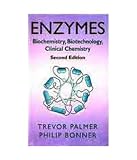
This graduate-level textbook provides in-depth coverage of not only basic enzymology but also the use of enzymes in biotechnology and medicine.
Another highly regarded textbook for general microbiology, Prescott's offers a balanced introduction to the world of microbes. It covers microbial anatomy, physiology, genetics, ecology, and their impact on health and disease. is suitable for undergraduate students and provides a strong conceptual understanding.
This research-based book summarizes the latest findings on how people learn science. It provides insights into the cognitive processes involved in science learning and implications for teaching practice.
Provides a detailed review of medically relevant microbiology and immunology. It is particularly useful for students preparing for exams and those needing a strong understanding of infectious diseases, their pathogenesis, and the immune response.
This comprehensive text covers the fundamental principles of food microbiology and explores contemporary issues in food safety and spoilage. It is an essential resource for students and professionals in food science, technology, and microbiology.
Provides a comprehensive overview of the principles and techniques of light microscopy and electronic imaging, with a focus on the practical applications of these techniques in biological and medical research.
Offers a philosophical perspective on science teaching. It explores the nature of science, the role of the teacher, and the importance of creating a positive and supportive learning environment.
A widely recognized textbook in food microbiology, covering the microorganisms important in food spoilage, preservation, and safety. It valuable reference for those in food science and related industries.
Provides a solid introduction to microbiology with a focus on basic principles and a taxonomic approach to diseases. It is particularly useful for students in allied health fields. The engaging writing style and case studies help solidify understanding of difficult concepts.
Delves into the study of microorganisms in various environments, including soil, water, and air. It covers microbial ecology, biogeochemical cycles, and the role of microbes in environmental processes and bioremediation. It is valuable for students and researchers interested in the broader impact of microbes.
Serves as a comprehensive yet accessible introductory text covering fundamental aspects of microbial biology and applied microbiology. It is suitable for students taking a first course in the subject and provides a good overview of diverse microbial life and their involvement in various processes, including infectious disease.
Immunology is closely linked to microbiology, particularly in understanding host responses to microbial infections. provides a comprehensive overview of the immune system, essential for a deeper understanding of infectious diseases and vaccinology.
Provides a thorough introduction to the study of viruses, covering their structure, replication, genetics, and the diseases they cause. It is an important resource for those specializing in virology, a significant subfield of microbiology.
This comprehensive textbook gives a detailed discussion of proteins, including enzymes and how they function inside of the cell.
Offers a simplified and often humorous approach to learning clinical microbiology, focusing on the high-yield information needed for understanding and diagnosis of infectious diseases. It great supplementary resource for medical students and those in clinical laboratory science programs.
Focuses on the fundamental physiological processes of microorganisms, including metabolism, growth, and regulation. It provides a detailed understanding of how microbes function at the cellular level, essential for advanced studies in microbiology.
A compelling examination of the factors contributing to the emergence of new infectious diseases. provides a historical and global perspective on epidemics, connecting microbiology with public health and societal issues.
This guide promotes inquiry-based learning as an effective approach to science instruction. It provides practical tips and strategies for implementing inquiry-based lessons in the classroom.
This extensive textbook gives a broad overview of biophysical chemistry and a good deal of information about enzymes.
While not solely focused on microbiology, this classic text is fundamental to understanding the molecular mechanisms within all living organisms, including microbes. It provides essential background knowledge in genetics and molecular biology that is crucial for advanced microbiology studies.
Examines the latest trends and challenges in science education. It discusses the use of technology, the importance of STEM education, and the integration of social justice issues into science teaching.
This guide provides practical advice for using technology to support science teaching. It covers topics such as choosing appropriate software, designing effective online learning environments, and using technology for assessment.
Relevant to courses on food fermentation and brewing, this book covers the principles and applications of fermentation technology, a key area in applied microbiology. It is valuable for students and professionals interested in industrial microbiology and biotechnology.
Explores the evolutionary history of microbes and their profound impact on the Earth's ecosystems. It offers a fascinating look at the central role of microorganisms in shaping life on our planet and provides valuable background for understanding microbial diversity and ecology.
Is written from the perspective of a science student. It offers practical advice on how to study and learn science effectively. While not specifically targeted at teachers, it can provide valuable insights into the needs and perspectives of students.
This textbook provides a detailed overview of cell biology, covering topics from the molecular level to the level of tissues and organs. It is appropriate for students with a basic understanding of biology.
This is an Indonesian-language textbook that provides a comprehensive overview of biology, covering topics from the molecular level to the level of ecosystems and evolution. It is appropriate for students with a basic understanding of biology.

Share

Help others find this course page by sharing it with your friends and followers:

Similar courses

Here are nine courses similar to Teaching Practical Science: Biology.

Futurelearn Buyer Protection & Guarantee

Verified partner policies & purchase protections

UK & International University Partner
Free Trial & Audit

Free Access on Short Courses

Free access option on most short courses for the duration of the course plus 14 days; free trial available on select subscriptions and tracks.

Return & Refund Policy

14-Day Cooling-Off Refund Window

14-day statutory cooling-off refund window from the date of purchase for course upgrades, Unlimited subscriptions, and ExpertTracks, provided no tests have been attempted and no certificates have been downloaded. Renewals are non-refundable.

Buyer Protections

Verified Academic & Industry Partner

Accredited university microcredentials and certificates from top institutions (British Council, leading UK and global universities), with secure payment safeguards.

Key Purchase Protections
Free access track on many short courses
14-day cooling-off refund window on initial purchases
Refund eligible if no tests completed and no certificate issued
Accredited certifications from top UK & global universities
OpenCourser Verified Partner Policy details last reviewed: 2026-10-22
Our mission

OpenCourser helps millions of learners each year. People visit us to learn workspace skills, ace their exams, and nurture their curiosity.

Our extensive catalog contains over 50,000 courses and twice as many books. Browse by search, by topic, or even by career interests. We'll match you to the right resources quickly.

Find this site helpful? Tell a friend about us.

Affiliate disclosure

We're supported by our community of learners. When you purchase or subscribe to courses and programs or purchase books, we may earn a commission from our partners.

Your purchases help us maintain our catalog and keep our servers humming without ads.

Thank you for supporting OpenCourser.

© 2016 - 2025 OpenCourser