We may earn an affiliate commission when you visit our partners.
Course image
Bob Ziroll

Learn all about the exciting new features coming with React 19, including baked-in ways to handle actions, optimistic updates, form statuses, the new use() API, and more!

React hasn’t had a major version update in over 2 years since React 18 was launched in 2022. React 19 has lots of exciting new features that make handling data mutations simpler while giving us APIs to improve the user’s experience with optimistic updates.

Read more

Learn all about the exciting new features coming with React 19, including baked-in ways to handle actions, optimistic updates, form statuses, the new use() API, and more!

React hasn’t had a major version update in over 2 years since React 18 was launched in 2022. React 19 has lots of exciting new features that make handling data mutations simpler while giving us APIs to improve the user’s experience with optimistic updates.

They’ve also launched a new open-source compiler they’ve been working on for years that will handle many of the nitty-gritty performance details for you behind the scenes. Join us in this course while we learn all about the latest, greatest features coming in the newest version of React!

Enroll now

What's inside

Syllabus

Traffic lights

Read about what's good
what should give you pause
and possible dealbreakers
Taught by Bob Ziroll, who are recognized for their work in React
Covers latest, greatest features of React, which is standard in web development
Explores ways to handle actions, optimistic updates, form statuses, and use() API in React

Save this course

Create your own learning path. Save this course to your list so you can find it easily later.
Save

Reviews summary

Timely react 19 feature deep dive

According to students, this course provides an excellent and timely overview of the new features in React 19, making it invaluable for developers looking to stay updated. Learners particularly appreciate the clear explanations of complex topics like actions and optimistic updates, finding the demos and practical examples highly beneficial. While the course is praised for its concise delivery, some suggest it's best for those with an existing React foundation, as it moves at a quick pace. Overall, it's considered an essential resource for understanding React's latest advancements.
Provides efficient overview, but some topics could use more depth.
"It's a great quick tour of React 19, but I wouldn't mind a deeper dive into some compiler optimizations."
"I liked the bite-sized approach for getting up to speed quickly; no fluff."
"For an intro to `useFormStatus`, it's perfect, but some topics felt a little rushed for full mastery."
Best suited for learners already familiar with core React concepts.
"If you're new to React, this might be a bit fast; it really assumes you know the basics already."
"The course is very concise, which is great if you're an experienced developer, but not for beginners."
"I felt the pace was perfect for an experienced React dev, but my junior colleague found it quick."
Instructor actively updates content to reflect React 19 changes.
"The instructor updated the lectures when a beta feature changed, which was super helpful."
"I noticed recent reviews mentioning improvements, and the course feels very current now."
"They seem responsive to feedback; I saw a new section added on a topic I had questions about earlier."
Hands-on examples effectively illustrate new React 19 functionalities.
"The code demos were invaluable; I could immediately see how to implement these features."
"Learning about form actions through real-world examples really solidified my understanding."
"I appreciated the practical approach; it wasn't just theory, but how to actually use it."
Complex React 19 concepts are broken down into understandable parts.
"The instructor made `use()` API and server actions so much clearer than reading the docs alone."
"I really grasped optimistic updates, which seemed daunting, thanks to the way it was explained."
"Their explanation of the new compiler was surprisingly easy to follow, a great overview."
Delivers up-to-date insights on the very latest React 19 features.
"This course is so timely! Exactly what I needed to understand React 19 before it's everywhere."
"I appreciate how quickly they put this together; it truly helped me get a head start on the new APIs."
"Finally, a course that covers these new React features in a practical way, not just theoretical."

Activities

Be better prepared before your course. Deepen your understanding during and after it. Supplement your coursework and achieve mastery of the topics covered in What's new in React 19? with these activities:
Review React concepts before starting the course
Strengthen your foundation in React by reviewing key concepts before the course begins.
Browse courses on React
Show steps
  • Read articles or blog posts about React
  • Watch videos or tutorials on React
  • Take a practice quiz or assessment
Read the React 19 documentation
Gain a comprehensive understanding of React 19 by thoroughly reading the official documentation.
Show steps
  • Locate the React 19 documentation
  • Read the documentation carefully
  • Take notes or highlight important sections
Follow a tutorial on React 19
Enhance your knowledge of React 19 by following a step-by-step tutorial.
Show steps
  • Find a reputable tutorial
  • Follow the tutorial instructions
  • Implement the concepts in your own project
Five other activities
Expand to see all activities and additional details
Show all eight activities
Join a React study group
Enhance your learning by collaborating with peers, sharing knowledge, and solving problems together.
Browse courses on React
Show steps
  • Find a React study group
  • Attend group meetings
  • Participate in discussions
Create a simple React app
Reinforce your understanding of React by building a simple app from scratch.
Browse courses on React
Show steps
  • Set up a new React project
  • Create a simple component
  • Render the component in the app
Solve React coding challenges
Test your React skills and improve your problem-solving abilities by solving coding challenges.
Browse courses on React
Show steps
  • Find a platform with React coding challenges
  • Select a challenge
  • Solve the challenge
  • Review your solution
Write a blog post about a feature in React 19
Deepen your understanding of React 19 by explaining a specific feature in your own words.
Show steps
  • Choose a feature in React 19
  • Research the feature
  • Write a draft of the blog post
  • Edit and publish the blog post
Attend a React 19 workshop
Gain hands-on experience and in-depth knowledge of React 19 by attending a specialized workshop.
Show steps
  • Find a React 19 workshop
  • Register for the workshop
  • Attend the workshop
  • Implement what you learned

Career center

Learners who complete What's new in React 19? will develop knowledge and skills that may be useful to these careers:

Reading list

We've selected 35 books that we think will supplement your learning. Use these to develop background knowledge, enrich your coursework, and gain a deeper understanding of the topics covered in What's new in React 19?.
This practical guide focuses on the engineering aspects of compiler design, covering topics such as code optimization, code generation, and error handling. It is an excellent resource for software engineers and compiler developers who want to learn how to build efficient and reliable compilers.
Focuses on writing fast and reusable React components using Hooks. It teaches how to use built-in hooks like useState, useReducer, and useEffect, and how to build custom hooks. The book includes practical examples, such as building a resource booking application, and is suitable for beginning to intermediate React developers.
Focuses specifically on designing custom React Hooks to manage application states effectively. It's a good resource for developers who want to move beyond using built-in hooks and create their own reusable logic.
A comprehensive and pragmatic book covering the fundamentals of React.js with Hooks while building a full application. It's a good starting point for beginners and covers related topics like TypeScript and Testing. The book is regularly updated, making it a valuable and current resource.
Practical guide to using React Hooks, a new set of features introduced in React 16.8. It covers the use of hooks for state management, side effects, and custom functions, making it suitable for beginner and intermediate React developers who want to learn how to leverage the power of hooks.
Covers various topics in React development, including React Hooks, within the context of design patterns and best practices. It's aimed at developers with intermediate experience and provides insights into building scalable and maintainable React applications.
Covers the full stack development process using React, including setting up a development environment, building a RESTful API, and deploying to production. It provides a comprehensive guide for beginners who want to learn full-stack development with React.
Covers a wide range of topics in distributed systems, including optimistic concurrency control and other techniques for ensuring data consistency and availability in distributed environments.
Provides a hands-on approach to compiler implementation, using the C programming language. It covers all the essential aspects of compiler design, from lexical analysis to code generation. It great choice for students and programmers who want to learn how to build compilers from scratch.
Provides a comprehensive overview of the field of pragmatics, with a particular focus on the role of context. It covers topics such as the different types of context, the effects of context on language use, and the methods used to study context.
Is ideal for developers who understand JavaScript, CSS, and HTML and want to learn how to build efficient React applications. The updated edition provides best practices and patterns for modern React code, including functional components and hooks. It's a great introduction for those new to React or functional JavaScript.
Focuses on React design patterns and best practices to solve common development problems. It includes exploring and working with useful hooks in React, making it relevant for understanding how Hooks fit into overall application architecture.
Explores advanced techniques and patterns for building scalable, maintainable, and performant React applications. It covers topics such as state management, dependency injection, and code organization, making it suitable for intermediate and experienced React developers.
Teaches how to build cross-platform mobile applications using React Native. It covers the core concepts of mobile development, including navigation, gestures, and camera integration, making it suitable for React developers who want to build native mobile applications.
Provides a comprehensive overview of the role of context in cognition. It covers topics such as the effects of context on memory, attention, and decision-making.
Provides a comprehensive overview of the role of context in language acquisition. It covers topics such as the effects of context on vocabulary acquisition, the role of context in grammar acquisition, and the use of context in communicative language teaching.
Explores the role of context in legal decision-making. It covers topics such as the effects of context on legal interpretation, the role of context in legal reasoning, and the use of context in legal research.
Provides a comprehensive overview of the internals of distributed data systems, including a chapter on optimistic concurrency control and other techniques for ensuring data consistency and integrity.
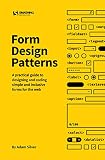
Covering both the design and usability of web forms, this book provides practical guidelines for creating forms that are easy to use and efficient.
This hands-on book teaches React concepts with examples and a large main project. While it covers a broader scope than just Hooks, it provides a strong foundation in React development, which is essential for understanding and effectively using Hooks.
Covers both the design and usability of web forms and provides practical advice on how to create effective and user-friendly forms.
This Spanish-language book provides a comprehensive overview of the field of context research. It covers topics such as the history of context research, the different types of context, and the methods used to study context.
Presents many real-world examples of web forms to help the reader avoid common pitfalls in design.
Provides a comprehensive overview of modern operating systems, including a chapter on concurrency control and other techniques for managing shared resources in a multi-user environment.
A comprehensive book on JavaScript, covering the language from the ground up. A strong command of JavaScript prerequisite for learning React and Hooks effectively. widely recommended resource for building that foundation.
Alongside teaching PHP and MySQL, this book contains a section on creating and using form elements in PHP
While not exclusively focused on web forms, this book includes a chapter on creating accessible web forms and provides guidance on how to design forms that are accessible to users with disabilities.
This practical guide teaches Redux by building a complete to-do application, covering both Redux concepts and practical implementation.
While not exclusively focused on web forms, this book contains a chapter on designing data-intensive forms and provides guidance on how to design forms that can handle large amounts of data efficiently.
This practical guide focuses on the Lex and Yacc tools, which are widely used for lexical analysis and parsing in compiler construction. It provides step-by-step instructions and examples to help readers learn how to use these tools effectively.
This advanced textbook provides a comprehensive treatment of compiler design and implementation, covering topics such as code optimization, register allocation, and garbage collection. It good choice for students and researchers who want to learn about the latest advances in compiler technology.
Focuses on code optimization techniques used in compilers. It covers topics such as loop optimization, instruction scheduling, and register allocation. It good choice for students and researchers who want to learn about how to improve the performance of compiled code.
Provides a comprehensive overview of modern compiler design techniques, covering topics such as just-in-time compilation, garbage collection, and parallel compilation. It good choice for students and researchers who want to learn about the latest advances in compiler technology.

Share

Help others find this course page by sharing it with your friends and followers:

Similar courses

Here are nine courses similar to What's new in React 19?.
React - State management in functional components (HOOKS)
Most relevant
React Hooks: useRef, useMemo, useCallback,...
Most relevant
Redux in JavaScript and React
Most relevant
Developing Front-End Apps with React
Most relevant
The Modern React 18 Bootcamp - A Complete Developer Guide
Most relevant
React For The Rest Of Us
Most relevant
React - The Complete Guide 2024 (incl. React Router &...
Most relevant
React and Typescript: Build a Portfolio Project
Most relevant
Collaborative Whiteboard with React Canvas and SocketIO
Most relevant

Coursera Buyer Protection & Guarantee

Verified partner policies & purchase protections

Accredited University Partner
Free Trial & Audit

7-Day Free Trial & Free Audit

7-day free trial on monthly Coursera Plus subscriptions; free audit option available on most individual courses to explore video lectures and readings at no charge.

Return & Refund Policy

14-Day Refund Guarantee

14-day refund window on annual Coursera Plus subscriptions and single-course purchases prior to certificate issuance. Monthly subscriptions do not offer refunds once billed.

Buyer Protections

Verified Academic & Industry Partner

Accredited university and industry certifications (e.g. Stanford, Google, IBM, Yale), secure SSL payment processing, and verifiable digital certificate links.

Key Purchase Protections
14-day refund window on annual Coursera Plus and single courses
7-day free trial on monthly Coursera Plus subscriptions
Free course audit option for lectures and readings
Verified certificates from top universities & companies
OpenCourser Verified Partner Policy details last reviewed: 2026-10-22
Our mission

OpenCourser helps millions of learners each year. People visit us to learn workspace skills, ace their exams, and nurture their curiosity.

Our extensive catalog contains over 50,000 courses and twice as many books. Browse by search, by topic, or even by career interests. We'll match you to the right resources quickly.

Find this site helpful? Tell a friend about us.

Affiliate disclosure

We're supported by our community of learners. When you purchase or subscribe to courses and programs or purchase books, we may earn a commission from our partners.

Your purchases help us maintain our catalog and keep our servers humming without ads.

Thank you for supporting OpenCourser.

© 2016 - 2025 OpenCourser