We may earn an affiliate commission when you visit our partners.
Course image
Basar Buyukkahraman

The frontend world is having very popular frameworks which are heavily used in most of the applications. Svelte is joining this competition by bringing lots of cool, developer friendly features. After practicing svelte, it will be hard to go back and work with other frameworks. You will be amazed when you see how much you can do with less code.

In this course we will be learning Svelte by creating a web application with it. Also we will apply test driven development (TDD) methodology from beginning to the end.

We will use one of the most popular test libraries of javascript. jest and testing-library

Read more

The frontend world is having very popular frameworks which are heavily used in most of the applications. Svelte is joining this competition by bringing lots of cool, developer friendly features. After practicing svelte, it will be hard to go back and work with other frameworks. You will be amazed when you see how much you can do with less code.

In this course we will be learning Svelte by creating a web application with it. Also we will apply test driven development (TDD) methodology from beginning to the end.

We will use one of the most popular test libraries of javascript. jest and testing-library

while building this application, we will learn

  • client-side routing. we will apply our custom implementation then we will use svelte-routing library

  • internationalization

  • global state management in a component based application

and we will see

  • how test driven development works.

  • how it's affecting our code quality, reusability

  • how it's giving us the confidence about refactoring our implementation

  • how to avoid implementation details while creating tests

This course is purely built on practice. Each code piece we write, will be for our actual application implementation.

In each section we will gradually build our application. We will not jump ahead and add functionality not needed for that moment. We will implement one requirement at a time. Each implementation will bring the next requirement to us.

And following this practice, will help you to get a solid foundation about overall web application requirements and how to implement one of them with Svelte by following test driven development methodology.

After completing the course, you will be able to use Svelte in your next project and you will experience the benefits of test driven development.

Enroll now

Here's a deal for you

Save money when you learn with a deal that may be relevant to this course.
All coupon codes, vouchers, and discounts are applied automatically unless otherwise noted.

What's inside

Learning objectives

  • Build application with svelte 3
  • Build an application with internationalization (i18n)
  • Build an application with client side routing
  • Store, actions, reactive declarations and many more features of svelte
  • Practice test driven development in a complete project from beginning to the end.
  • Learn the test runner, jest and understand how to structure test modules
  • How to mock external dependencies in testing.
  • Feel how the test driven development is giving confidence when refactoring your application.

Syllabus

Introduction
Methodology
Create Project
Running the App
Read more

If you see an issue with npm install for backend.zip you can try backend-without-db.zip which requires minimal dependencies.

Traffic lights

Read about what's good
what should give you pause
and possible dealbreakers
Examines popular frameworks used in most frontend applications, such as Svelte, highlighting its developer-friendly features and potential benefits
Develops practical skills in building a web application with Svelte from start to finish, emphasizing test-driven development (TDD)
Emphasizes internationalization (i18n) techniques, allowing learners to create multilingual applications that cater to users from diverse backgrounds
Introduces client-side routing, enabling learners to create applications with dynamic page navigation and single-page app (SPA) functionality
Utilises Jest and testing-library, popular JavaScript testing frameworks, to demonstrate the principles and benefits of TDD throughout the course
Provides practical experience in managing global state within a component-based application, ensuring data consistency and efficient state handling

Save this course

Create your own learning path. Save this course to your list so you can find it easily later.
Save

Reviews summary

Svelte and tdd: a practical project guide

According to students, 'Svelte with Test Driven Development' offers a highly practical and project-based approach to learning Svelte 3 alongside TDD. Learners consistently praise its step-by-step methodology which builds a complete web application, making concepts like client-side routing, internationalization, and global state management tangible. The course is particularly strong in demonstrating effective Test Driven Development practices, using Jest and Testing Library, and fostering confidence in refactoring code. While it provides a solid foundation for Svelte, some learners suggest having prior JavaScript knowledge, as the pace can be quick at times, and occasional dependency updates might be needed.
Covers essential Svelte features for practical application.
"I now have a solid foundation in Svelte 3 features like client-side routing, i18n, and state management."
"The course effectively introduced core Svelte concepts through real-world examples, which was very beneficial."
"I appreciate how it covers the most important aspects of Svelte development without getting bogged down."
Successfully integrates Test Driven Development into the workflow.
"The TDD approach was consistently applied throughout, providing a solid understanding of its benefits and how to use it effectively."
"I now feel confident applying TDD in my own projects, thanks to the practical demonstrations and clear examples."
"It clearly showed how TDD improves code quality and gives you confidence when refactoring your application."
Builds a complete application step-by-step, reinforcing concepts.
"The course's emphasis on building a full application was extremely helpful; it made learning Svelte and TDD very tangible."
"I found the practical, step-by-step approach made grasping Svelte and TDD concepts much easier."
"It’s purely built on practice, which is exactly what I needed to solidify my understanding of a real-world application."
Some encountered issues with outdated dependencies, requiring minor adjustments.
"I encountered some issues with 'npm install' due to slightly outdated dependencies, but they were resolvable."
"Had to troubleshoot a few package version conflicts, but the core content remains highly valuable."
"It would be great if the course material could be periodically updated with the latest library versions to avoid small hurdles."
May require prior JavaScript/frontend experience for optimal learning.
"While comprehensive, the pace was sometimes fast, especially for those new to TDD or with limited JavaScript background."
"I recommend having some fundamental JavaScript knowledge before diving into this course to get the most out of it."
"A few sections felt a bit rushed, requiring me to pause and re-watch to fully grasp the material."

Activities

Be better prepared before your course. Deepen your understanding during and after it. Supplement your coursework and achieve mastery of the topics covered in Svelte with Test Driven Development with these activities:
Review CSS Fundamentals
Ensure a solid foundation in CSS to effectively style your Svelte applications.
Browse courses on CSS
Show steps
  • Review core CSS concepts
  • Practice writing CSS rules
Tutor a Beginner in Svelte
Reinforce your knowledge by guiding a beginner through their Svelte journey.
Show steps
  • Find a beginner who needs help with Svelte
  • Provide one-on-one support and guidance
  • Share resources and best practices
Explore the Svelte Kitchen Sink
Gain hands-on experience with Svelte by following guided tutorials and experimenting with the Kitchen Sink.
Show steps
  • Start the Svelte Kitchen Sink
  • Explore the component gallery
  • Try out different Svelte features
Four other activities
Expand to see all activities and additional details
Show all seven activities
Build a Tic-Tac-Toe Game in Svelte
Practice Svelte's core concepts by building a simple but engaging game.
Browse courses on Tic-Tac-Toe
Show steps
  • Create a new Svelte project for the game
  • Implement the game logic
  • Design the game's user interface
  • Test the game's functionality
Create a To Do List App in Svelte with Jest
Reinforce your understanding of Svelte by developing a real-world application and testing it with Jest.
Show steps
  • Set up a new Svelte project
  • Create a simple to-do list interface
  • Implement Jest for testing
  • Write tests for the to-do list functionality
Design a Svelte Component Library
Deepen your understanding of Svelte by creating a reusable component library that solves a specific problem.
Browse courses on Component Library
Show steps
  • Identify a problem that can be solved with reusable Svelte components
  • Design the components and their functionality
  • Develop and test the component library
  • Document and share your library
Participate in a Svelte Hackathon
Challenge yourself and apply your Svelte skills in a competitive environment.
Show steps
  • Find an upcoming Svelte hackathon
  • Form a team or work solo
  • Develop a Svelte-based project within the hackathon's timeframe
  • Present your project and compete for prizes

Career center

Learners who complete Svelte with Test Driven Development will develop knowledge and skills that may be useful to these careers:

Reading list

We've selected 50 books that we think will supplement your learning. Use these to develop background knowledge, enrich your coursework, and gain a deeper understanding of the topics covered in Svelte with Test Driven Development.
Is considered the foundational text on refactoring. It provides a comprehensive catalog of refactorings with detailed explanations and examples. It's essential for gaining a broad understanding and must-read for anyone serious about software development. This book serves as an invaluable reference tool.
Authored by a core Svelte maintainer, this deep dive unlocks custom actions, context patterns, renderless components, and state synchronization. Frontend engineers learn how Svelte compiles declarative templates into surgical DOM updates without virtual DOM overhead.
Lucas Fernandes da Costa delivers the definitive Jest-first manual for JavaScript developers, walking through test runners, assertion APIs, module mocking, JSDOM, asynchronous flows, and CI pipelines so you can architect balanced unit, integration, and end-to-end suites.
This is considered the foundational book on TDD by one of its pioneers. It introduces the core concepts of TDD through practical examples, making it ideal for gaining a broad understanding. While not recently published, its principles remain highly relevant and it's often recommended for beginners.
Reimagined from the ground up with JavaScript and Jest examples, Roy Osherove's third edition teaches how to isolate dependencies with stubs and mocks, structure readable test suites, and refactor untestable async and module-coupled code for long-term maintainability.
Building production full-stack Svelte applications centers on SvelteKit's filesystem routing, load functions, progressive form actions, and server hooks. Hildenbrand walks developers through SSR, CSR, and edge deployment workflows with clarity and zero bloat.
Using Jest as the core test runner alongside React Testing Library, developers learn how to drive real-world React features with red-green-refactor cycles, mock fetch requests and browser APIs cleanly, and verify Redux and router state without brittle snapshots.
Comprehensive coverage of Svelte's component reactivity, stores, motion tweens, transitions, and slot composition makes Volkmann's work a foundational reference. Even where Sapper has been succeeded by SvelteKit, the core Svelte chapters remain exceptionally clear.
Pairing Jest with React Testing Library and jest-dom matchers, Scottie Crump shows how to query the DOM by accessibility roles, simulate realistic user events, and mock network calls so frontend tests mirror actual user behavior rather than component internals.
Updated for modern TypeScript and React workflows, the second edition demonstrates how to configure fast test feedback loops, validate hooks and custom components under strict types, and keep test suites resilient as UI requirements evolve.
Provides an advanced guide to unit testing with JUnit and Mockito, covering various techniques for writing high-quality tests, including the effective use of mocks. It's suitable for Java developers looking to enhance their unit testing and mocking skills.
Rigorous automated testing with Vitest, Playwright, and Testing Library ensures reactive Svelte components and stores behave predictably under complex user interactions. Irvine demonstrates red-green-refactor workflows tailored specifically to Svelte's component lifecycle and routing.
Vladimir Khorikov's four-pillar framework for evaluating test value helps Jest practitioners avoid over-mocking internal collaborators, distinguish between London and classical schools of unit testing, and focus coverage on high-impact domain logic.
Practical guide to developing software using TDD and Acceptance Test-Driven Development (ATDD). It places a strong emphasis on the use of mock objects as a primary tool for designing well-tested, object-oriented systems. It's an excellent resource for seeing how mocking is applied in a larger development context.
Provides a comprehensive introduction to unit testing, covering fundamental concepts, including the use of test doubles like mocks and stubs. It's an excellent resource for gaining a broad understanding of how mocking fits into a testing strategy. The examples are in C#, but the principles are widely applicable. It's often recommended for developers new to unit testing.
Authored by Vue Test Utils creator Edd Yerburgh, these chapters show how to wire Jest with Vue components, test emitted events, slots, and Vuex stores, and use Jest timers and module mocks to keep frontend suites fast and deterministic.
A more concise version of Hill's 'International Business,' this textbook provides a solid introduction to the fundamentals of international business in a more accessible format. It's suitable for undergraduate students or those seeking a less in-depth overview than the full textbook, offering a broad understanding of the key concepts.
This comprehensive catalog of test smells and patterns provides invaluable guidance on writing maintainable and effective unit tests. It includes detailed sections on different types of test doubles (including mocks) and when to use them. While a dense reference, it's a must-read for anyone serious about deepening their understanding of test automation and the role of mocks.
A seminal work on cultural dimensions, this book introduces Hofstede's framework for understanding national cultural differences along various dimensions like power distance, individualism, and uncertainty avoidance. It's a foundational text for anyone studying cross-cultural management and provides essential background for navigating international interactions.
Offers a practical, hands-on approach to learning TDD using the Python language and Django framework. It guides the reader through building a web application with TDD, making it particularly relevant for those interested in web development. It's a good resource for applying TDD concepts in a specific language context.
While not solely focused on refactoring, this book cornerstone for writing maintainable and readable code, which primary goal of refactoring. It provides principles and practices for writing clean code and identifying 'code smells' that necessitate refactoring. is often used as a textbook and crucial reference for any developer.
This recent book offers a practical approach to refactoring by focusing on keeping functions and methods small. It provides clear, actionable advice and is suitable for developers looking for hands-on techniques to improve code readability and maintainability through small, incremental changes. good resource for contemporary refactoring practices.
Juntao Qiu pairs refactoring recipes with Jest and React Testing Library safety nets, illustrating how to extract testable custom hooks, untangle prop-drilling and bloated effects, and replace fragile UI anti-patterns with clean, verifiable abstractions.
Because Svelte compiles down to tiny, framework-agnostic vanilla JavaScript bundles, it excels at generating standards-compliant Custom Elements and design systems. Libby guides teams through packaging, styling, documenting, and publishing reusable Svelte UI libraries.
Kent Beck's foundational treatise establishes the red-green-refactor rhythm and test-first design habits that underpin every modern Jest workflow, showing how small, incremental assertions drive cleaner interfaces and eliminate guesswork.
Focused squarely on Jest's snapshot testing, spy utilities, and component mounting patterns, Alex Jover Morales walks through practical recipes for isolating child components, mocking async data layers, and debugging failing assertions.
An updated perspective on cultural intelligence, this book delves into how leaders can leverage CQ for success in a globalized world. It offers practical strategies and case studies for developing culturally intelligent leadership, making it highly relevant for professionals and graduate students.
Gerard Meszaros catalogs the universal vocabulary of automated testing—stubs, spies, fakes, fixtures, and test smells—giving Jest engineers a precise lexicon for diagnosing flaky async tests, slow suites, and brittle setup helpers.
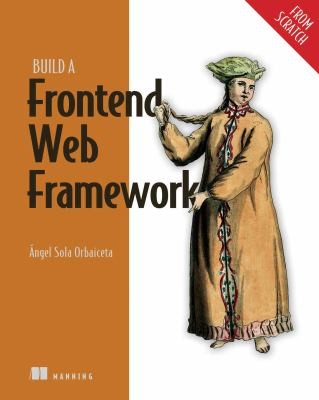
Appreciating why Svelte shifts work from runtime reconciliation to a build-time compiler requires understanding how frontend frameworks manage DOM patching and state lifecycles. Orbaiceta walks readers through engineering a component runtime and template compiler step by step.
Dan Vanderkam's updated second edition includes dedicated guidance on testing TypeScript types and configuring ts-jest or type-level assertions, ensuring your Jest suites verify both runtime behavior and compile-time contracts.
Michael Feathers provides battle-tested seam-finding and dependency-breaking techniques essential when introducing Jest into untested JavaScript or TypeScript codebases, helping you wrap legacy modules in characterization tests before changing behavior.
A classic in cross-cultural communication, this book categorizes cultures into linear-active, multi-active, and reactive types, offering insights into communication styles and behaviors across different regions. It's a valuable resource for anyone needing to navigate international business relationships effectively and provides a deeper understanding of cultural nuances beyond basic awareness.
This textbook provides a comprehensive introduction to the principles and practices of marketing in a global context. It covers topics such as global marketing strategies, market entry approaches, and the cultural and environmental factors influencing international marketing decisions. It's a key resource for understanding the marketing dimension of internationalization.
Connects Agile practices, design patterns, SOLID principles, and refactoring. It provides practical guidance on how to write flexible and maintainable code through the application of these concepts. It's particularly relevant for understanding contemporary approaches to refactoring within an Agile context.
Provides a practical introduction to unit testing in Java using JUnit. It introduces the concepts of test doubles, including mocks, and shows how to apply them with concrete examples. This good starting point for Java developers interested in unit testing and mocking.
Offers a practical approach to learning TDD with examples in Go, JavaScript, and Python. It focuses on tackling domain complexity using a unit test-driven approach and provides hands-on exercises. It's suitable for beginners looking to learn TDD through practice in multiple languages.
Addresses the challenges of refactoring large and complex codebases. It provides strategies and techniques for approaching refactoring efforts in a systematic and manageable way within a larger organization. This book is particularly relevant for experienced developers and teams dealing with significant technical debt.
Provides a detailed look at the process of software localization (L10n), covering everything from project management to linguistic and technical aspects. It's a valuable resource for those interested in the practical implementation of adapting software for specific locales, complementing the broader concepts of internationalization.
Since Svelte templates embrace standard JavaScript expressions, DOM events, and ES modules directly, strong mastery of modern ECMAScript is essential. Haverbeke's fourth edition grounds developers in closures, asynchronous promises, and browser DOM mechanics.
Covering modern Node.js architecture, dependency injection, and asynchronous streams, the fourth edition equips backend developers to structure modular services that are straightforward to isolate, mock, and test with Jest.
Focusing on C++, this book provides a comprehensive guide to implementing TDD in a modern C++ environment. It covers the tools and techniques necessary for C++ developers to effectively practice TDD, addressing language-specific considerations. is valuable for C++ programmers wanting to adopt TDD.
Martin Krause devotes a hands-on chapter to automated testing with Jest inside a full-stack TypeScript, React, and Next.js project, walking beginners through matchers, mocks, spies, and coverage reports from scratch.
Offers a practical guide to TDD, including self-directed lab work in Java, C#, C++, and JavaScript. It emphasizes the benefits of TDD for individual programmers and addresses challenges like working with legacy code. It's a good resource for gaining hands-on TDD experience.
Svelte components pair scoped styles directly with markup, making modern CSS mastery essential for clean interfaces. Ponamariov covers contemporary layout, animation, and responsive design patterns that elevate Svelte user experiences without heavy utility frameworks.
Modern SvelteKit projects leverage auto-generated route types ($types) and strict TypeScript props to guarantee end-to-end type safety from server load functions to UI components. Goldberg teaches the type narrowing and generic patterns needed to harness those guarantees.
Argues that we cannot simultaneously pursue hyper-globalization, national sovereignty, and democracy; we must choose two. It provides a critical economic perspective on the challenges of globalization and its potential conflicts with national interests and democratic processes, contributing to a deeper understanding of the complexities of internationalization.

Share

Help others find this course page by sharing it with your friends and followers:

Similar courses

Here are nine courses similar to Svelte with Test Driven Development.
Test your Angular web application using Jasmine and Karma
Most relevant
Test Driven Development in Java for Beginners
Most relevant
Scrum Master Certification Practice
Most relevant
Mobile Development and JavaScript
Most relevant
Building Interactive User Interfaces Using React Library
Most relevant
Scrum Master Certification: Scaling Agile and the Team-of...
Most relevant
Fundamentals of Software Architecture for Big Data
Most relevant
Python Automation Testing With Pytest
Most relevant
Easy Test Driven Development with TypeScript and Vitest
Most relevant

Udemy Buyer Protection & Guarantee

Verified partner policies & purchase protections

Global Marketplace Leader
Free Trial & Audit

Free Lecture Previews

Free preview video lectures available for all courses; optional 7-day free trial on Personal Plan subscriptions (cancel before trial ends to avoid conversion).

Return & Refund Policy

30-Day Money-Back Guarantee

30-day money-back guarantee on all eligible individual course purchases (provided course content has not been substantially consumed or downloaded). Subscription fees are non-refundable once billed.

Buyer Protections

Verified Academic & Industry Partner

Lifetime access to purchased individual courses and future updates, verifiable certificate of completion, and direct student Q&A forums.

Key Purchase Protections
30-day 100% money-back guarantee on course purchases
Lifetime access on web, mobile, and offline
Certificate of completion included with purchase
Direct instructor Q&A and active student community
OpenCourser Verified Partner Policy details last reviewed: 2026-10-22
Our mission

OpenCourser helps millions of learners each year. People visit us to learn workspace skills, ace their exams, and nurture their curiosity.

Our extensive catalog contains over 50,000 courses and twice as many books. Browse by search, by topic, or even by career interests. We'll match you to the right resources quickly.

Find this site helpful? Tell a friend about us.

Affiliate disclosure

We're supported by our community of learners. When you purchase or subscribe to courses and programs or purchase books, we may earn a commission from our partners.

Your purchases help us maintain our catalog and keep our servers humming without ads.

Thank you for supporting OpenCourser.

© 2016 - 2025 OpenCourser