We may earn an affiliate commission when you visit our partners.
Course image
Mark Shrike, Andrii Kuchyrenko, and Viсtoria N

Hi everyone. This course is about preparing for an interview for a Software Tester, also known as a QA. In most interviews there are two parts, testing your soft skills and technical knowledge, this course is about the second part, the technical part.

The course will be useful for testers:

1. Beginners in software testing, to deepen knowledge of software testing theory

2. Experienced software testers who want to recall the basic knowledge of software testing theory

Read more

Hi everyone. This course is about preparing for an interview for a Software Tester, also known as a QA. In most interviews there are two parts, testing your soft skills and technical knowledge, this course is about the second part, the technical part.

The course will be useful for testers:

1. Beginners in software testing, to deepen knowledge of software testing theory

2. Experienced software testers who want to recall the basic knowledge of software testing theory

The main task of the course is to deepen your knowledge of software theory. To help you answer questions clearly and confidently at the interview, we did three things, each answer to the question includes

1. Answer from official literature (standards, certifications, other documents)

2. Answer based on analyzed articles on the Internet (we call it "Human Language")

3. A real-life example to help you understand complex theoretical concepts

The course answers the following questions, which are divided into sections:

Testing theory

  • What is Testing?

  • What are software testing objectives?

  • Why is Testing necessary and important?

  • What is a bug?

  • What is the Difference between Error, Bug, and Failure?

  • What are the 7 Testing principles?

  • Principle 1. Testing shows the presence of defects, not their absence

  • Principle 2. Exhaustive testing is impossible

  • Principle 3. Early testing saves time and money

  • Principle 4. Defects cluster together

  • Principle 5. Beware of the pesticide paradox

  • Principle 6. Testing is context-dependent

  • Principle 7. Absence-of-errors is a fallacy

  • What is the difference between QA and QC and testing?

  • What is the importance of Manual testing, and do we still need it?

  • What is the difference between Verification and Validation?

SDLC  (Software Development Lifecycle)

  • What is SDLC? What software development methodologies do you know?

  • What is the Waterfall Model?

  • What are Iterative and incremental development models?

  • What is Agile? What Is the Agile Manifesto?

  • What is Scrum?

  • What is Kanban?

  • What is the difference between Scrum and Kanban?

STLC (Software Testing Life Cycle)

  • What is STLC?

  • What stages of STLC do you know?

  • What are the Entry and Exit criteria?

  • What is a Test Environment? Why is a test environment needed?

  • What are the different test levels?

Test Documentation

  • What is a Bug(Defect) report? What to include in a Bug report?

  • What is a Defect/Bug Life Cycle?

  • What is the difference between Priority and Severity?

  • What is a Test Case? What to include in a Test Case?

  • What is a Test Plan? What does the test plan consist of?

Test Types

  • What types of testing do you know?

  • What is Functional Testing?

  • What is Non-functional testing?

  • What types of non-functional testing do you know?

  • What is GUI testing?

  • What is the difference between Localization and Internationalization testing?

  • What is Change-related testing? What are the Change-related testing types?

  • What is Confirmation testing (re-testing)?

  • What is Regression testing?

  • What is the difference between regression testing and re-testing?

  • What is the difference between Smoke and Sanity Testing?

  • What is the difference between Positive testing and Negative testing?

Test Design Techniques

  • What is the test design technique? What test design techniques do you know?

  • What do you understand by Black box, Gray box, and White box testing?

  • What is Review and what type of It do you know?

  • Please explain the Equivalence partitioning technique?

  • What is Boundary Values Analysis(BVA)?

  • What is Decision Table testing?

  • What is State Transition testing?

  • What is the Use Case testing? Use Case VS Test Case?

Client-Server Model

  • What is the Client-Server model, and how does it work?

  • What are the core components of an HTTP request?

  • What tools for Capturing and Analyzing Network Traffic do you know?

  • Wireshark Tutorial for Beginners

Web Testing

  • What is Web testing, and why is it important?

  • What is the difference between Cache and Cookies?

  • What is Cache?

  • What are Cookies?

  • What types of Websites and Web Applications do you know?

  • What is E-Commerce?

  • What Web testing tools do you know?

  • Chrome DevTools Tutorial for Beginners

  • BrowserStack Tutorial for Beginners

  • Web Testing Checklist

Mobile Testing

  • What is mobile testing, and why is it important?

  • What's the difference between Native vs. Web vs. Hybrid Apps?

  • What Mobile tools do you know?

  • Xcode Tutorial for Beginners

  • Android Studio Tutorial for Beginners

  • Mobile Testing Checklist

API testing

  • What is API testing, and why is it important?

  • What are the different types of APIs?

  • What is an API?

  • What is a REST API?

  • What is REST?

  • What is a REST API?

  • How does the

  • What API testing tools do you know?

  • Postman Tutorial for Beginners

  • JMeter Tutorial for Beginners

  • API Testing Checklist

We hope you will enjoy the course and feel free to write reviews or send us the questions you were asked at the interview, we will prioritize and add them to the full version of the course.

Prepare a cup of coffee or another favorite drink and enjoy the course.

Hope to see you in the first lecture.

Enroll now

What's inside

Learning objectives

  • Answers to the top 100 software testing theory interview questions
  • Each answer includes real-life practical example, which helps to better understand the theory
  • Each answer includes a video for those who prefer visual content
  • Each answer includes an article for those who to read and analyze thoughtfully

Syllabus

What is Testing?
Intro to Software Testing Theory
What is Software Testing?
What are software testing objectives?
Read more

Save this course

Create your own learning path. Save this course to your list so you can find it easily later.
Save

Career center

Learners who complete Manual Software Testing Interview (Q&A for QA) will develop knowledge and skills that may be useful to these careers:

Reading list

We've selected 50 books that we think will supplement your learning. Use these to develop background knowledge, enrich your coursework, and gain a deeper understanding of the topics covered in Manual Software Testing Interview (Q&A for QA).
Provides a comprehensive overview of the software development lifecycle (SDLC), from planning and requirements gathering to design, implementation, testing, and deployment. It is written by two experienced practitioners who have decades of experience in the field.
This recent book focused specifically on Playwright, a modern web automation framework. Given the increasing popularity of Playwright as an alternative to Selenium, this book is highly relevant for contemporary web testing. It covers various aspects of Playwright, including end-to-end, API, accessibility, and visual testing.
Practical guide specifically for web test automation using Selenium WebDriver and Java, a common combination in the industry. It's highly relevant for those looking to gain hands-on experience with automating web tests. It covers both basic and advanced concepts, making it suitable for different skill levels.
Provides a practical guide to mobile testing with Java and covers a wide range of topics, including Java for mobile testing, mobile testing frameworks for Java, and mobile testing best practices with Java.
Provides an introduction to mobile application testing and covers topics such as planning, design, and execution. It also provides detailed information on various testing techniques and tools.
Provides a comprehensive overview of software testing, including both theoretical and practical aspects. It covers a wide range of topics, from test planning and design to test execution and analysis. This book good resource for anyone who wants to learn more about software testing, regardless of their experience level.
Provides a practical guide to mobile testing and covers a wide range of topics, including mobile application testing principles, mobile application testing techniques, and mobile application testing best practices.
Provides a comprehensive overview of API testing, covering topics such as test design, execution, and automation. It is written by a leading expert in API testing and is considered one of the best books on the subject.
Provides a hands-on approach to using Selenium WebDriver with Java for developing end-to-end web tests. It covers core features and explores advanced topics such as using Docker containers with Selenium. This practical guide for those who prefer a deep dive with code examples.
Focuses on system design interview questions, which are common in technical interviews for more experienced roles. It provides frameworks and examples for tackling scalable system design problems. It is highly relevant for mid-career and senior-level software engineers.
Is specifically tailored for those preparing for case interviews, commonly used in consulting. It provides frameworks and strategies for approaching and solving business cases, offering a deep dive into a specific type of interview format. It's essential reading for anyone targeting consulting roles and is highly relevant for undergraduate, graduate, and professional levels pursuing this path.
Is essential for understanding how web testing fits into a modern DevOps and continuous delivery pipeline. It covers the importance of automated testing for achieving reliable and frequent software releases. While not solely focused on web testing, the principles and practices discussed are directly applicable to automating web application deployments and testing within a CI/CD workflow.
Performance critical aspect of web applications. provides an excellent conceptual overview of performance testing specifically for web-based applications. It covers various types of performance testing, key indicators, and the steps involved, making it highly relevant for ensuring the responsiveness and scalability of web solutions.
Key resource for understanding and implementing Behavior-Driven Development (BDD), a methodology often used in conjunction with web testing automation. It explains how to write executable specifications using Gherkin and Cucumber, which is directly relevant to several of the listed courses.
Given the mention of Python in several course titles, this book on pytest is highly relevant for web testing using Python. Pytest popular testing framework for Python that can be used for various levels of testing, including web application testing. serves as both a tutorial and a reference for using pytest effectively.
Provides a practical guide to technical interviews, covering data structures, algorithms, and problem-solving techniques. It offers a good balance of theoretical concepts and practical examples, making it a valuable resource for software engineering candidates. It's suitable for undergraduate and graduate students, as well as early-career professionals.
Focuses on the STAR method, a widely used technique for answering behavioral interview questions effectively. It provides a structured approach to crafting compelling responses by detailing the Situation, Task, Action, and Result. This practical guide for anyone looking to improve their performance in behavioral interviews.
Offers a comprehensive guide to test automation, covering various techniques, practices, and design patterns. While not limited to web testing, the principles and patterns discussed are highly applicable to building maintainable and scalable web test automation frameworks. It's a valuable resource for deepening understanding of test automation architecture.
Provides a comprehensive overview of the art of software testing. It covers a wide range of topics, from the principles of software testing to the techniques that can be used to perform it. This book good resource for anyone who wants to learn more about the foundations of software testing.
Offers insights into the testing practices at Google, a company known for its large-scale web applications. It provides a perspective on how testing is approached in a large, complex environment, offering valuable lessons applicable to web testing at scale. It's more suited for those with some existing testing knowledge.
Takes a practical approach to software testing, focusing on the skills and techniques that are essential for effective testing. It covers a wide range of topics, from test planning and design to test execution and analysis. This book good resource for anyone who wants to improve their software testing skills.
Delves into advanced topics in manual testing, such as exploratory testing, risk-based testing, and performance testing. It provides in-depth insights into testing methodologies, tools, and techniques for effective defect detection and prevention. The book is suitable for experienced testers seeking to expand their knowledge and skills.
Often referred to as 'CLRS,' this foundational and comprehensive textbook on algorithms. It provides a rigorous treatment of the subject matter, essential for a deep understanding required for complex technical interviews and problem-solving. standard reference in computer science academia and is suitable for advanced undergraduate and graduate students.
A classic in the interview preparation genre, this book provides guidance on answering challenging interview questions. It helps candidates anticipate difficult inquiries and formulate thoughtful responses. It's a valuable resource for building confidence in handling unexpected or tricky questions.
A comprehensive textbook on algorithms and data structures, this book provides a deep theoretical understanding of the subject. While not solely focused on interviews, the knowledge gained is fundamental for technical interviews, particularly in computer science and related fields. It serves as an excellent resource for deepening understanding and is often used in undergraduate and graduate programs.
Provides a comprehensive overview of software testing principles and practices. It covers a wide range of topics, from the principles of software testing to the techniques that can be used to perform it. This book good resource for anyone who wants to learn more about the foundations of software testing.
Offers a comprehensive overview of software testing, encompassing both manual and automated testing techniques. It delves into the core principles of testing, including test planning, design, execution, and reporting. The book emphasizes the importance of manual testing as a crucial aspect of the testing process.
Provides a comprehensive guide to software test design, covering both manual and automated testing methods. It includes detailed discussions on various test design techniques, such as equivalence partitioning, boundary value analysis, and state-based testing. The book is valuable for testers seeking to enhance their test case design skills.
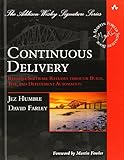
Describes the principles and practices of continuous delivery, a set of practices that enable software teams to deliver software updates quickly and reliably.
Is specifically aimed at beginners in web test automation. It provides a gentle introduction to the concepts and practices of automating web tests. It's a good resource for those starting their journey in web testing and provides a solid foundation.
Focuses on Robot Framework, an open-source automation framework that can be used for web testing, as mentioned in one of the course titles. It provides a practical introduction to using Robot Framework for automated acceptance testing. While it may lack in-depth coverage of advanced topics, it's a good starting point for those interested in this framework.
Serves as a comprehensive guide to designing and analyzing algorithms. While more academic in nature, it provides the foundational knowledge necessary for tackling algorithmic problems in technical interviews. It's a valuable reference for serious students of computer science and those preparing for highly theoretical interviews.
This guide provides a wide range of common interview questions and suggested answers. It practical resource for preparing for general interviews and understanding what hiring managers are looking for in responses. It can be helpful for building confidence in answering typical interview questions.
Following up on 'The 2-Hour Job Search,' this book provides further techniques for optimizing the job search process, with a focus on closing the deal. It offers strategies for mastering interviews and negotiations, making it a practical guide for job seekers looking to improve their success rate.
Offers strategies for making a strong impression quickly in an interview. It provides tips for concise communication and highlighting key qualifications effectively. It's a good resource for refining your elevator pitch and ensuring you make the most of every moment in the interview.
For those seeking a formal understanding of software testing principles and terminology, this book aligned with the ISTQB certification solid choice. It covers fundamental testing concepts that are universally applicable, including to web testing. It's often used as a textbook and provides a structured approach to learning testing basics.
While not solely about job interviews, this book on negotiation by a former FBI hostage negotiator offers powerful techniques applicable to salary and offer negotiation. Understanding these principles can significantly impact the outcome of a successful interview process. It provides a unique perspective on communication and influence that is valuable for all career levels, particularly as one progresses in their career.
Offers a hands-on approach to manual testing, guiding readers through the practical aspects of test planning, test execution, and defect reporting. It includes real-world examples and case studies to illustrate effective manual testing techniques and strategies.
This guide provides practical advice and strategies for handling challenging and unexpected interview questions. It helps you think on your feet and formulate effective responses to demonstrate your suitability for the role. It's a useful resource for building confidence in navigating difficult interview scenarios.
Focuses specifically on exploratory software testing, a manual testing technique that emphasizes flexibility, adaptability, and creativity. It provides insights into the mindset and techniques required for effective exploratory testing, which is particularly valuable for testers seeking to improve their manual testing skills.
Save
Focuses on the importance of effectively communicating your accomplishments and strengths. This crucial skill for interviews, where you need to highlight your value to potential employers. It helps you articulate your experiences confidently and convincingly without sounding arrogant.
Practical guide to API testing using Postman, a popular API testing tool. It is written by an experienced API testing expert and great resource for anyone who wants to learn how to use Postman for API testing.
While not directly about web testing, this book fundamental read for anyone involved in software development, including those writing test automation code. It emphasizes writing clean, readable, and maintainable code, which is crucial for building robust and sustainable test automation frameworks for web applications.
Practical guide to API testing using Selenium, a popular web testing tool. It is written by an experienced API testing expert and great resource for anyone who wants to learn how to use Selenium for API testing.
A timeless classic in human relations, this book offers fundamental principles for interacting with people effectively. These skills are directly transferable to building rapport and communicating successfully during an interview. While published decades ago, the core concepts remain highly relevant for developing strong interpersonal skills crucial for interview performance.
Provides a foundational understanding of the interviewing process and basic communication skills required for effective interviews. It offers a structured approach to learning and improving fundamental interviewing techniques. It's a good starting point for individuals new to interviewing or those looking to refine their basic skills.
Provides a comprehensive overview of requirements engineering, the process of eliciting, analyzing, and documenting the requirements for a software system.
While a bit dated, this book provides thorough coverage of the basics of web technology and web testing. It's a valuable reference for understanding the fundamentals, although it may not cover the latest web developments. It's more suitable for gaining historical context and foundational knowledge.

Share

Help others find this course page by sharing it with your friends and followers:

Similar courses

Here are nine courses similar to Manual Software Testing Interview (Q&A for QA).
Strategic Software Testing
Most relevant
QA Process Optimization: Agile & Automated Testing
Most relevant
Software Testing: Get A Tech Job in Software Testing 2025
Most relevant
Mastering Software Testing: A 2025 QA Bootcamp to Get...
Most relevant
Manual Testing for Complete Beginners
Most relevant
Software Testing Mastery: From Basics to Advanced...
Most relevant
Learn Manual Software Testing + Agile with Jira Tool
Most relevant
Software Tester Course - Become an Effective Tester
Most relevant
Master XPath and CSS Selectors for Selenium WebDriver
Most relevant

Udemy Buyer Protection & Guarantee

Verified partner policies & purchase protections

Global Marketplace Leader
Free Trial & Audit

Free Lecture Previews

Free preview video lectures available for all courses; optional 7-day free trial on Personal Plan subscriptions (cancel before trial ends to avoid conversion).

Return & Refund Policy

30-Day Money-Back Guarantee

30-day money-back guarantee on all eligible individual course purchases (provided course content has not been substantially consumed or downloaded). Subscription fees are non-refundable once billed.

Buyer Protections

Verified Academic & Industry Partner

Lifetime access to purchased individual courses and future updates, verifiable certificate of completion, and direct student Q&A forums.

Key Purchase Protections
30-day 100% money-back guarantee on course purchases
Lifetime access on web, mobile, and offline
Certificate of completion included with purchase
Direct instructor Q&A and active student community
OpenCourser Verified Partner Policy details last reviewed: 2026-10-22
Our mission

OpenCourser helps millions of learners each year. People visit us to learn workspace skills, ace their exams, and nurture their curiosity.

Our extensive catalog contains over 50,000 courses and twice as many books. Browse by search, by topic, or even by career interests. We'll match you to the right resources quickly.

Find this site helpful? Tell a friend about us.

Affiliate disclosure

We're supported by our community of learners. When you purchase or subscribe to courses and programs or purchase books, we may earn a commission from our partners.

Your purchases help us maintain our catalog and keep our servers humming without ads.

Thank you for supporting OpenCourser.

© 2016 - 2025 OpenCourser