We may earn an affiliate commission when you visit our partners.
Course image
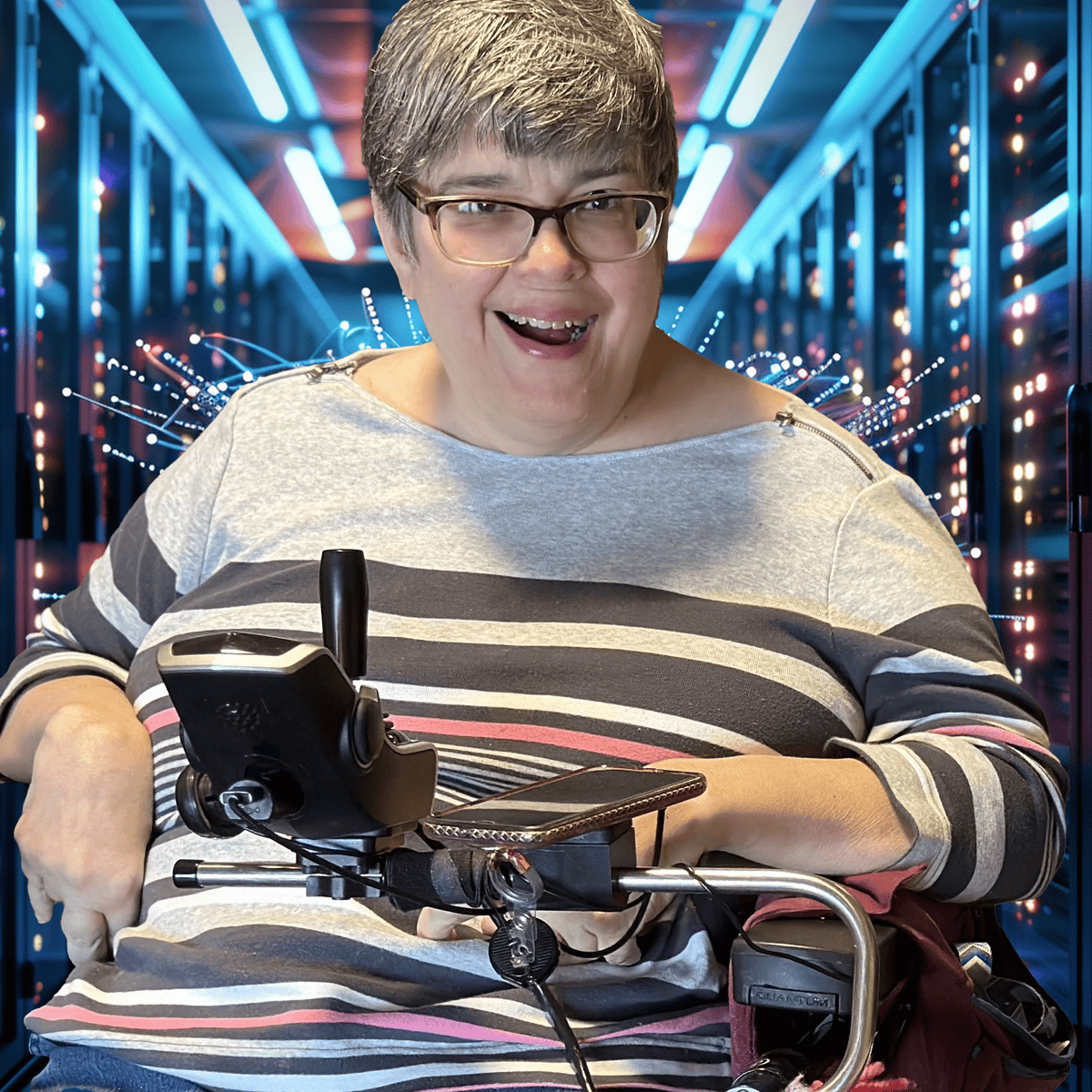
Andrea Fairman, Dan Ding, and Lindsey Morris

This course aims to provide healthcare providers, social service professionals, and caregivers with a comprehensive understanding of smart home technology and how it can be utilized as assistive technology to improve the well-being, independence, and participation for older adults and individuals with disabilities. Students will learn about the different components of a smart home, including the input methods, smart home controllers, and smart home devices. The course will cover major smart home ecosystems, such as Amazon Alexa, Google Home, Apple Home, along with common wireless communication protocols, such as Z-wave, Zigbee, Bluetooth, Wi-Fi, and Thread. The smart home standard Matter will also be introduced.

Enroll now

What's inside

Syllabus

Introduction to Smart Home Technology and Service Delivery
In this module, we cover the course introduction and an introduction to smart home technology and service delivery. We delve into the dynamic realm of smart technology used to enhance the quality of life for older adults and individuals with special needs by integrating the HAAT model (Human, Activity, Assistive Technology). This module explores the intricate interplay between assistive technology, assistive technology services, mainstream technology, and universal design.
Read more

Traffic lights

Read about what's good
what should give you pause
and possible dealbreakers
Develops knowledge of smart home technology including components, ecosystem, and protocols used in home environments, which is standard for professionals providing support to older adults and individuals with disabilities
Explores smart home devices and platforms to meet specific individual needs, which helps students develop a customized plan of care
Provides insights into strategies to optimize client adoption and sustained use of smart home technology, which supports independence and well-being
Taught by expert instructors with extensive experience in healthcare and technology, who share valuable industry knowledge
Examines the intersection of technology, healthcare, and social services, which is highly relevant to professionals working with older adults and individuals with disabilities
Builds a strong foundation for professionals seeking to integrate smart home technology into their practice, which enhances service delivery

Save this course

Create your own learning path. Save this course to your list so you can find it easily later.
Save

Reviews summary

Smart home tech for assistive living

According to students, this course provides a comprehensive and practical foundation in utilizing mainstream smart home technology as assistive solutions for older adults and individuals with disabilities. Learners particularly appreciate its direct applicability for healthcare providers, social service professionals, and caregivers, offering concrete strategies for client assessment and training. While many found it an excellent introduction, some more technically advanced learners suggested it offers a foundational overview rather than deep technical dives. The course is seen as highly relevant and up-to-date, covering key ecosystems and communication protocols like Matter.
Keeps pace with evolving technology.
"The course felt very current, especially with the inclusion of new standards like Matter."
"It's impressive how the content reflects the latest trends in smart home assistive technology."
"I felt confident that the information provided was up-to-date and relevant for today's market."
Excellent for beginners in smart home tech.
"As someone new to smart home technology, this course provided a perfect starting point."
"I now have a solid understanding of the basics required to advise my clients effectively."
"The concepts were explained clearly, making complex topics accessible for non-technical learners."
Covers a wide range of essential smart home tech.
"It was great to learn about all the major smart home ecosystems like Amazon Alexa, Google Home, and Apple Home."
"The modules on wireless communication protocols and the Matter standard were very informative."
"I appreciated the thorough introduction to smart home components and service delivery models."
Strong emphasis on professional application.
"The integration of the HAAT model was particularly insightful for my practice in assistive technology."
"I appreciated the modules dedicated to client assessment and practical training strategies."
"This course is clearly designed for healthcare providers and caregivers, not just general tech hobbyists."
Directly applicable for care professionals.
"I found the content incredibly useful for my work as a social service professional, immediately applying concepts."
"The course clearly outlined how to use smart home devices as assistive tools in real-world scenarios."
"It provided concrete strategies for integrating technology to improve client independence and well-being."
Less detailed for advanced tech enthusiasts.
"While comprehensive, I hoped for more technical deep-dives into specific device configurations or programming."
"For someone already familiar with smart home setup, some parts felt a bit basic and high-level."
"I felt it was more conceptual on application than a 'how-to' guide for advanced troubleshooting."

Activities

Be better prepared before your course. Deepen your understanding during and after it. Supplement your coursework and achieve mastery of the topics covered in Mainstream Smart Home Technology as Assistive Technology with these activities:
Review the basics of assistive technology
Reviewing the basics of assistive technology will help you better understand the course material and how smart home technology can be used as assistive technology.
Browse courses on Assistive Technology
Show steps
  • Read the assigned readings on assistive technology.
  • Watch the videos on assistive technology.
  • Take the quiz on assistive technology.
Follow a tutorial on setting up a smart home system
Following a tutorial on setting up a smart home system will help you learn how to use smart home technology in a practical setting.
Show steps
  • Find a tutorial on setting up a smart home system.
  • Follow the steps in the tutorial.
  • Test out the smart home system.
Practice using smart home devices
Practicing using smart home devices will help you become more comfortable using them and will allow you to see how they can be used to improve your life.
Show steps
  • Set up a smart home device.
  • Use the smart home device to complete a task.
  • Repeat steps 1 and 2 for different smart home devices.
Four other activities
Expand to see all activities and additional details
Show all seven activities
Create a blog post or article on smart home technology
Creating a blog post or article on smart home technology will help you synthesize your knowledge of the topic and share your insights with others.
Show steps
  • Choose a topic for your blog post or article.
  • Research your topic.
  • Write your blog post or article.
  • Publish your blog post or article.
Find a mentor who can provide guidance on your smart home technology journey
Finding a mentor who can provide guidance on your smart home technology journey will help you accelerate your learning and achieve your goals.
Show steps
  • Identify the areas in which you need guidance.
  • Network with people who work in the smart home technology field.
  • Ask for introductions to potential mentors.
Volunteer at a local senior center or disability organization
Volunteering at a local senior center or disability organization will allow you to see how smart home technology can be used to improve the lives of older adults and individuals with disabilities.
Show steps
  • Find a local senior center or disability organization that you can volunteer at.
  • Contact the organization and ask about volunteering opportunities.
  • Volunteer your time at the organization.
Mentor a student or colleague who is new to smart home technology
Mentoring a student or colleague who is new to smart home technology will help you deepen your understanding of the topic and will allow you to share your knowledge with others.
Show steps
  • Find a student or colleague who is new to smart home technology.
  • Offer to mentor them.
  • Meet with them regularly to answer their questions and provide guidance.

Career center

Learners who complete Mainstream Smart Home Technology as Assistive Technology will develop knowledge and skills that may be useful to these careers:

Reading list

We've selected 50 books that we think will supplement your learning. Use these to develop background knowledge, enrich your coursework, and gain a deeper understanding of the topics covered in Mainstream Smart Home Technology as Assistive Technology.
Widely regarded as a classic in the field of educational assessment, this book provides a comprehensive overview of the principles and practices of measurement and assessment in education. It covers a wide range of topics, including the development and validation of assessment instruments, the interpretation of assessment data, and the use of assessment to improve teaching and learning.
This multi-volume reference work provides an authoritative and comprehensive overview of cognitive neuroscience, covering topics ranging from perception and attention to memory, language, and decision-making. It is an invaluable resource for researchers and advanced students.
Provides a comprehensive and up-to-date overview of the field of educational measurement and assessment. It covers a wide range of topics, including the development and validation of assessment instruments, the interpretation of assessment data, and the use of assessment to improve teaching and learning.
This comprehensive handbook brings together leading researchers to explore the latest advances in thinking and reasoning. It covers topics such as problem-solving, decision-making, creativity, and rationality, providing a valuable resource for researchers and advanced students.
This comprehensive handbook provides a broad overview of the training and talent development field. It covers foundational concepts, current trends, and practical applications, making it an excellent starting point for anyone seeking a general understanding of the topic. It is often used as a reference tool and can serve as a textbook in academic and professional settings.
Is widely considered a foundational text in assistive technology, offering a comprehensive overview based on the Human Activity Assistive Technology (HAAT) model. It covers a broad range of devices, services, and practices, focusing on the relationship between the user, activity, and context. This is an excellent resource for gaining a broad understanding and is often used as a textbook in academic settings. The latest edition includes updated information on current technology and ethical considerations.
Considered a classic in adult education, this book lays the foundation for understanding adult learning principles (andragogy). It's essential reading for anyone designing training for adult audiences. provides the theoretical background for effective adult training.
Applies the principles of design thinking to the creation of training and development programs. It offers a human-centered approach to designing learning experiences that are engaging and effective. It's a valuable resource for innovation in training design.
While not solely focused on formal training, this book provides deep insights into how people learn and retain information effectively. Understanding these principles can significantly enhance the design and delivery of training programs. It's highly relevant for anyone involved in facilitating learning.
Written by a leading expert in the field, this book offers a comprehensive examination of attention, its neural basis, and its role in cognitive processes. It provides an in-depth understanding of the mechanisms and theories surrounding attention.
Provides a practical guide to the implementation of assessment in the classroom. It covers a wide range of topics, including the development of assessment plans, the selection and use of assessment instruments, and the use of assessment data to improve teaching and learning.
A comprehensive textbook covering all aspects of wireless communication, including protocols, standards, and technologies. It is written by a leading expert in the field.
Focuses on creating a learning culture within organizations, which is crucial for long-term employee development and training effectiveness. It provides practical strategies and case studies for fostering continuous learning in the workplace.
Presents a systematic approach to instructional design, covering the entire process from analysis to evaluation. It's a comprehensive guide for instructional designers and trainers. It can serve as a textbook for those seeking a structured methodology.
Is geared towards those who find themselves in an instructional design role without formal training. It covers the basics of designing digital learning experiences and provides practical guidance. It's a great resource for newcomers to the field.
This guide provides a framework of quality indicators for evaluating and improving assistive technology services. It's a valuable resource for service providers, educators, and policymakers involved in delivering AT to individuals with disabilities. It focuses on ensuring effective and consistent AT provision.
Explores the design and implementation of blended learning programs, combining various delivery methods for optimal results. It addresses the needs of modern learners and the evolving workplace. It's a practical guide for creating effective blended learning experiences.
Explores the concept of exclusion in design and how adopting inclusive methods can lead to more innovative and elegant solutions that benefit everyone. It challenges traditional design thinking and provides a framework for understanding how to design for a wider range of human variability. It offers valuable insights for anyone involved in the design and development of assistive technologies.
Challenges traditional training methods and emphasizes the importance of active learning and engagement. It's a practical guide for making training more effective by moving beyond passive information delivery. It offers actionable strategies for improving training design.
Introduces the principles of accelerated learning, focusing on engaging multiple senses and creating an optimal learning environment. It offers practical techniques for designing training that enhances knowledge retention and skill acquisition.
This textbook integrates assistive technology and Universal Design for Learning (UDL) principles for creating inclusive instruction. It's designed for undergraduate and graduate teaching programs and provides toolkits with resources and strategies for implementing AT and UDL in the classroom. This highly relevant resource for educators and those in training.
Focuses on the practical aspects of designing and implementing effective on-the-job training programs. It provides guidelines and tools for creating structured OJT experiences. It's a valuable resource for trainers and managers involved in on-the-job skill development.
Focusing on web accessibility, this book provides practical guidance for creating inclusive online experiences. It is rooted in universal design principles and offers solutions and examples for making websites accessible without compromising design. is highly relevant for anyone involved in web development and content creation within the field of assistive technology.
Focuses specifically on cognitive development in children, examining the acquisition of language, concepts, and problem-solving skills. It is suitable for students and researchers interested in child psychology and developmental science.
Offers essential sales strategies and is particularly relevant for those involved in sales training. It covers building sales teams, strategy, and management in a dynamic environment. It's a practical guide for sales leaders and trainers.
Provides a fundamental understanding of how adults learn, which is essential for designing effective training programs. It covers key principles and concepts in adult education. It valuable resource for those new to training adults.
Explores the future of learning and the need for continuous upskilling and reskilling in a rapidly changing job market. It provides valuable context for the strategic importance of training and development.
Delves into the intersection of rehabilitation engineering, assistive technologies, and the emerging role of robotics in healthcare. It explores contemporary topics and future possibilities in the field, making it relevant for those interested in cutting-edge advancements and research.
Focused on a key aspect of sales, this book provides a comprehensive guide to prospecting. It's highly relevant for sales training programs aimed at developing lead generation skills. It offers practical techniques and frameworks.
This practical guide focuses specifically on making online learning content accessible. It provides evidence-based advice and includes guidelines on Web Content Accessibility Guidelines (WCAG). is highly relevant for educators, instructional designers, and anyone creating digital learning materials.
Is geared towards educators and provides guidance on selecting, acquiring, and implementing assistive technology in educational settings. It emphasizes student-centered approaches and includes updated content on supporting students in distance learning environments. It's a practical guide for those interested in the application of AT in education.
Written by the head of Product Inclusion at Google, this book outlines strategies for building inclusive products and expanding market reach by considering diverse user needs. It provides a framework for integrating product inclusion into the development lifecycle, offering valuable insights for those in product management and design roles within the AT field or related industries.
A graduate-level textbook that provides a rigorous mathematical treatment of wireless communication principles. It is written by two leading experts in the field.
Offers a comprehensive look at universal design principles beyond the digital realm, focusing on creating inclusive physical environments. It covers various aspects, including urban planning, architecture, and product design. While not solely focused on technology, it provides essential foundational knowledge on designing for diverse human needs and crucial reference for understanding the broader context of assistive technology.
This advanced textbook delves into the biological underpinnings of cognition, exploring the neural mechanisms involved in perception, memory, attention, language, and other cognitive processes. It is suitable for students with a strong background in neuroscience or psychology.
Presents a cognitive approach to problem-solving and decision-making, emphasizing the role of heuristics and biases in everyday reasoning. It challenges traditional notions of rationality and provides practical insights into how we make decisions.
Focuses on the principles of wireless networks, including MAC protocols, routing protocols, and network security. It is written by two leading experts in the field.
Provides a critical analysis of the current state of assessment in education. It argues for the need for a more balanced and comprehensive approach to assessment, one that takes into account the multiple purposes of assessment and the diverse needs of students.
Provides a practical guide to the implementation of culturally responsive assessment for English learners. It covers a wide range of topics, including the development of culturally responsive assessment instruments, the interpretation of assessment data, and the use of assessment to improve teaching and learning for English learners.
Offers practical code recipes for building accessible web components. It's a valuable resource for web developers who need to implement accessibility guidelines in their work. It focuses on the 'how-to' aspects of creating inclusive digital experiences.
Explores the relationship between design, power, and social justice, advocating for community-led design practices that dismantle inequality. While not exclusively about assistive technology, it provides a critical framework for thinking about who is involved in the design process and how technology can be used to empower marginalized communities, highly relevant to the ethical considerations in AT.
Provides a foundational introduction to the field of rehabilitation engineering, which is closely related to assistive technology. It covers fundamental principles, design tools, universal design, and various technologies used in rehabilitation. It's a good resource for those seeking a more technical understanding of the engineering aspects behind AT.
This handbook offers an interdisciplinary perspective on applying assistive technology, particularly with children and young adults. It covers key areas of AT and addresses practical questions that arise in day-to-day work. It's a valuable resource for practitioners working with younger populations.
This accessible guide provides practical strategies for developing critical thinking skills, essential for problem-solving, decision-making, and understanding complex information. It covers topics such as argument analysis, logical fallacies, and cognitive biases.
Focuses on the technology, protocols, and applications of wireless sensor networks. It is written by three leading experts in the field.
This user-friendly handbook offers a concise overview of cognitive psychology, making it an ideal starting point for students new to the field. It covers key concepts, theories, and research methods in a clear and accessible manner.

Share

Help others find this course page by sharing it with your friends and followers:

Similar courses

Here are nine courses similar to Mainstream Smart Home Technology as Assistive Technology.
Introduction to Accessible Web Development
Most relevant
Promoting Accessible Workplaces with Assistive Technology...
Most relevant
Fundamentals of Document Accessibility
Most relevant
An Introduction to Accessibility and Inclusive Design
Most relevant
Disability Awareness and Support
Most relevant
Basics of Inclusive Design for Online Education
Most relevant
Automation for Everyone: Tech Benefits Unleashed
Most relevant
idea 2 IMPACT: An Introduction to Translating Assistive...
Most relevant
Teaching Children with Visual Impairment: Creating...
Most relevant

Coursera Buyer Protection & Guarantee

Verified partner policies & purchase protections

Accredited University Partner
Free Trial & Audit

7-Day Free Trial & Free Audit

7-day free trial on monthly Coursera Plus subscriptions; free audit option available on most individual courses to explore video lectures and readings at no charge.

Return & Refund Policy

14-Day Refund Guarantee

14-day refund window on annual Coursera Plus subscriptions and single-course purchases prior to certificate issuance. Monthly subscriptions do not offer refunds once billed.

Buyer Protections

Verified Academic & Industry Partner

Accredited university and industry certifications (e.g. Stanford, Google, IBM, Yale), secure SSL payment processing, and verifiable digital certificate links.

Key Purchase Protections
14-day refund window on annual Coursera Plus and single courses
7-day free trial on monthly Coursera Plus subscriptions
Free course audit option for lectures and readings
Verified certificates from top universities & companies
OpenCourser Verified Partner Policy details last reviewed: 2026-10-22
Our mission

OpenCourser helps millions of learners each year. People visit us to learn workspace skills, ace their exams, and nurture their curiosity.

Our extensive catalog contains over 50,000 courses and twice as many books. Browse by search, by topic, or even by career interests. We'll match you to the right resources quickly.

Find this site helpful? Tell a friend about us.

Affiliate disclosure

We're supported by our community of learners. When you purchase or subscribe to courses and programs or purchase books, we may earn a commission from our partners.

Your purchases help us maintain our catalog and keep our servers humming without ads.

Thank you for supporting OpenCourser.

© 2016 - 2025 OpenCourser