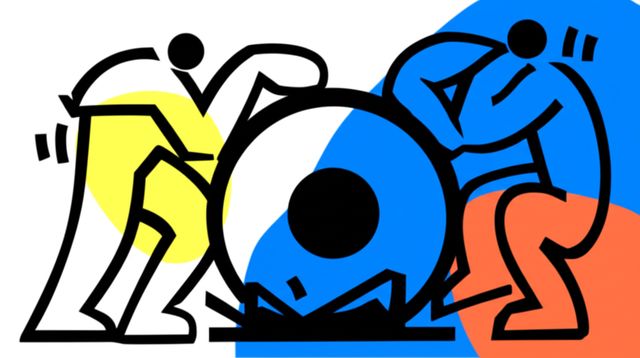
Friction
Friction is a fundamental force that governs the interaction between surfaces in contact. It's the resistance encountered when one object moves or attempts to move over another. While often perceived as a hindrance, friction is indispensable in countless aspects of our daily lives and the natural world. From the simple act of walking, where friction between our shoes and the ground prevents slipping, to the complex braking systems in vehicles that rely on friction to slow down, this force is constantly at play. Understanding friction is crucial not only in physics and engineering but also in fields like biology and earth science.
The study of friction, known as tribology, offers fascinating insights into how materials interact at a microscopic level and how these interactions can be controlled and optimized. Exploring friction can be an engaging journey, revealing its critical role in the design of everyday objects, the efficiency of machines, and even the movement of tectonic plates. For those with a curiosity for how things work and a desire to solve real-world problems, delving into the principles of friction can open doors to exciting and impactful career paths.
Introduction to Friction
Friction is a force that opposes the relative motion or tendency of such motion between two surfaces in contact. It arises from the microscopic interactions between the irregularities of these surfaces and the adhesive forces between them. Imagine trying to slide a heavy box across the floor; the resistance you feel is friction. This force is not just a single phenomenon but a complex interplay of factors that scientists and engineers have studied for centuries.