May 14, 2024
Updated July 21, 2025
18 minute read
AI Automation: A Comprehensive Guide
Introduction to AI Automation
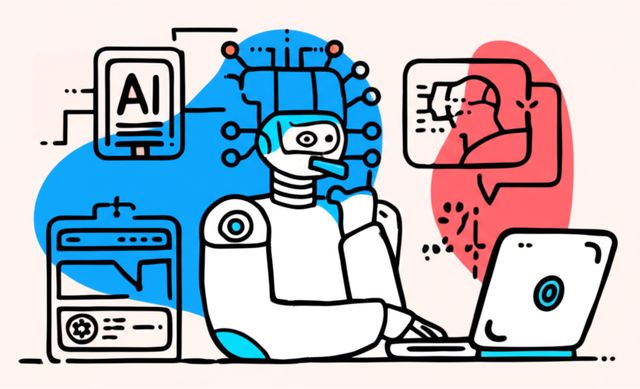
At its core, AI Automation is the use of artificial intelligence technologies to create systems that can perform complex tasks without human intervention. Unlike traditional automation, which follows pre-programmed, rule-based instructions, AI Automation systems can learn, adapt, and make decisions. Think of the difference between a simple factory robot that welds the same spot on a car frame every time and an advanced system that can visually inspect a weld, judge its quality, and decide whether to re-apply it or pass it on. The first is traditional automation; the second is AI Automation.
This field represents a significant leap forward, blending disciplines like machine learning, natural language processing (NLP), and computer vision with the principles of automation. The goal is not just to do things faster, but to automate tasks that were once thought to require human intuition, judgment, and cognitive abilities. From managing complex financial transactions to assisting in medical diagnoses, AI Automation is reshaping industries and creating new possibilities.
f1l1vf|
Find a path to becoming a AI Automation. Learn more at:
OpenCourser.com/topic/f1l1vf/ai
Reading list
We've selected 40 books
that we think will supplement your
learning. Use these to
develop background knowledge, enrich your coursework, and gain a
deeper understanding of the topics covered in
AI Automation.
Is widely considered the standard textbook in the field of AI. It provides a comprehensive and foundational understanding of artificial intelligence, covering a vast range of topics relevant to AI automation. While not solely focused on automation, it offers essential background knowledge for anyone looking to delve into the technical aspects of the field. It is commonly used as a textbook in academic institutions.
Considered a key book on intelligent automation and hyperautomation, this book delves into how companies are achieving efficiency gains through AI and automation. It provides a practical guide for business leaders and professionals on implementing AI and intelligent automation, emphasizing ethics and workforce integration. It's highly relevant for understanding contemporary applications.
Explores how humans and machines can collaborate effectively in the age of AI. It provides valuable insights into the practical application of AI in business processes and the transformation of work, directly relevant to AI automation. It's a useful resource for understanding the strategic implications of AI and is particularly valuable for professionals.
This classic textbook covering the fundamental principles of pattern recognition and machine learning. It provides a rigorous mathematical treatment of the subject, essential for a deep understanding of the algorithms and techniques used in AI automation. It valuable reference for advanced undergraduate and graduate students.
Through case studies, this book illustrates how organizations are successfully implementing AI to augment human capabilities. It provides practical examples of AI automation in action and highlights the importance of human-AI collaboration. It's a valuable resource for professionals seeking to understand real-world applications.
Specifically addresses the impact of AI and automation on the future of work. It explores how jobs and the workplace are changing and provides insights into navigating this transition. It's highly relevant for anyone concerned with the employment implications of AI automation.
Offers practical advice and case studies on implementing and scaling intelligent automation within organizations. It covers the challenges and best practices for deploying AI-powered automation solutions. It is particularly useful for professionals and students focused on the practical aspects of integrating AI into business processes.
Is designed to make deep learning accessible to coders with a focus on practical applications using the fastai library and PyTorch. It's an excellent resource for those who want to implement deep learning models for automation tasks. It's a hands-on guide suitable for developers and students.
This handbook provides a practical guide for business leaders on applying AI within their organizations. It covers identifying opportunities for AI automation and implementing AI projects. It's geared towards a professional audience looking for actionable insights.
Analyzes AI through an economic lens, explaining how the falling cost of prediction impacts business strategy. It provides a framework for understanding the economic forces driving AI automation and its business implications. It's particularly relevant for those interested in the strategic and economic aspects.
Is specifically aimed at business leaders, providing a guide to understanding and implementing AI for business growth. It covers the strategic implications of AI automation and how to leverage it effectively within an organization. It's a valuable resource for decision-makers.
Provides a comprehensive treatment of statistical learning methods, which are fundamental to many AI and machine learning techniques used in automation. It covers a wide range of topics from supervised to unsupervised learning, with an emphasis on concepts and applications. While mathematically rigorous, it core reference for understanding the statistical basis of AI automation.
Reinforcement learning key area within AI that is highly relevant to developing autonomous agents and automation systems that can learn through trial and error. foundational text in the field, providing a clear introduction to the concepts and algorithms of reinforcement learning. It crucial read for those interested in building AI systems that can learn and adapt in dynamic environments.
This collection of articles from Harvard Business Review provides insights into the latest developments and implications of generative AI. It's relevant for understanding contemporary topics in AI that are driving new forms of automation. It's a good resource for professionals and business leaders.
Written by a leading AI researcher, this book delves into the challenges of ensuring that advanced AI systems are beneficial to humanity and can be controlled. It discusses the potential risks of misaligned AI and proposes a new direction for AI research. is crucial for understanding the safety and ethical considerations that are becoming increasingly important in the development and deployment of AI automation.
This recent book explores the transformative potential of AI and other frontier technologies, and the challenges they pose for global order. It discusses the need to contain these powerful technologies for the benefit of humanity. It offers a contemporary perspective on the opportunities and risks associated with the rapid advancements in AI automation.
Provides a practical introduction to machine learning using Python and the scikit-learn library. It's a good starting point for understanding the fundamental machine learning techniques that are often used in building AI automation systems. It's suitable for beginners with some programming experience.
This recent book explores how humans can effectively collaborate with AI in the workplace and in daily life. It provides insights into leveraging AI as a tool to augment human capabilities, which key aspect of many AI automation strategies. It offers practical guidance on integrating AI into workflows and understanding the dynamics of human-AI collaboration.
Explores the different schools of thought in machine learning and the potential for a unifying algorithm. It provides a good overview of the various approaches to AI and machine learning relevant to automation. It's a thought-provoking read for those interested in the future direction of AI.
Explores the potential future impacts of AI on humanity, including the societal implications of advanced AI automation. It prompts readers to consider the long-term consequences and ethical considerations of increasingly capable AI systems. While not a technical guide, it provides crucial context for understanding the broader significance of AI automation and valuable read for anyone considering the societal impact.
Authored by prominent figures in policy, industry, and academia, this book explores the broader societal and geopolitical implications of AI. It offers a high-level perspective on how AI, including automation, will reshape global dynamics. It's a thought-provoking read for understanding the wider context.
Examines the potential for AI and automation to lead to widespread unemployment. It explores the economic challenges and opportunities presented by increasing automation. It's a relevant read for understanding the potential societal impact of AI automation.
Examines the global landscape of AI development, particularly the competition between the US and China. It provides context on the broader impact of AI, including its implications for automation and the future of work on a global scale. It's relevant for understanding the geopolitical and economic forces related to AI automation.
For more information about how these books relate to this course, visit:
OpenCourser.com/topic/f1l1vf/ai

 Save
Save


