
VPC Networks
 Save
Save
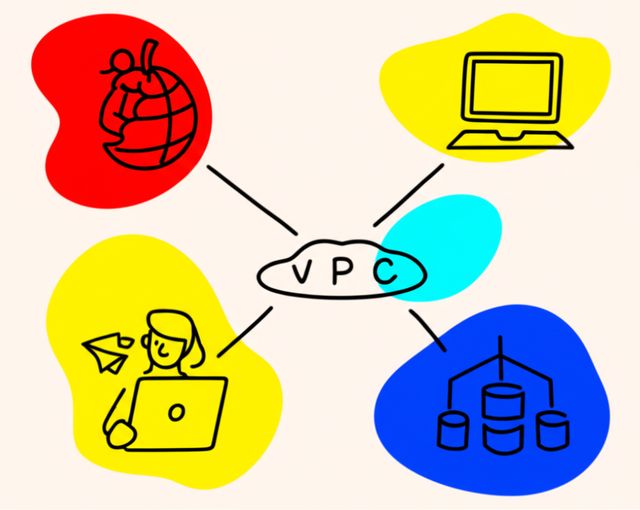
An Introduction to Virtual Private Cloud (VPC) Networks
Virtual Private Cloud (VPC) networks represent a fundamental shift in how organizations deploy and manage their digital infrastructure. At a high level, a VPC is a logically isolated section of a public cloud, providing you with your own private network environment within that shared cloud infrastructure. This allows businesses to leverage the scalability and cost-efficiency of public cloud services while maintaining control and security comparable to a traditional private data center. Essentially, you can define and control a virtual network, including your own IP address space, subnets, route tables, and network gateways, all within the secure confines of a cloud provider's global infrastructure.
Working with VPC networks can be quite engaging for several reasons. Firstly, it offers an incredible degree of flexibility and control over your network architecture, allowing you to design complex, resilient, and secure systems tailored to specific application needs. Secondly, the ability to dynamically scale resources up or down in response to demand introduces an agility that is difficult to achieve with physical networks. This means you can experiment, innovate, and respond to market changes more rapidly. Finally, understanding VPCs opens doors to a vast ecosystem of cloud services, from virtual machines and databases to advanced analytics and machine learning tools, all of which rely on a well-architected network foundation.
What are VPC Networks?
This section delves into the foundational concepts of Virtual Private Cloud networks. We will explore what they are, the advantages they offer over older networking paradigms, their prevalent applications in modern cloud computing, and the essential terminology that forms the language of VPCs. Understanding these core ideas is crucial for anyone looking to build, manage, or secure cloud-based resources.


