We may earn an affiliate commission when you visit our partners.

IoT Devices

Save
May 1, 2024 Updated May 31, 2025 20 minute read

Navigating the World of IoT Devices

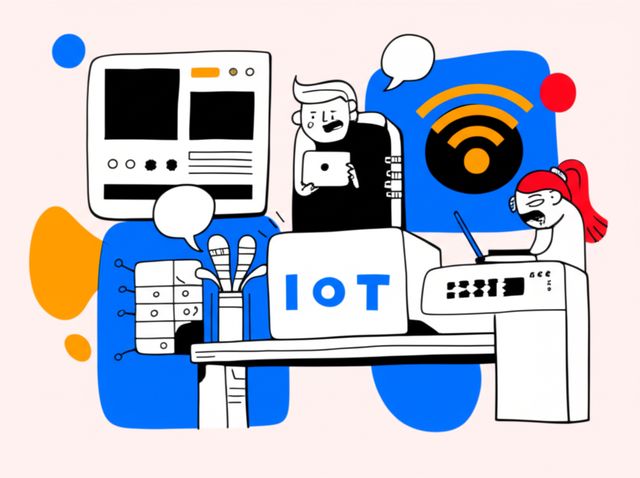
The Internet of Things (IoT) refers to the vast network of physical devices, vehicles, appliances, and other items embedded with sensors, software, and connectivity which enables these objects to connect and exchange data. At its core, IoT is about extending internet connectivity beyond traditional devices like computers and smartphones to a wide array of everyday objects, allowing them to "talk" to each other and to us. This interconnectivity is transforming how we live and work, creating opportunities for greater efficiency, automation, and new services. You might find the potential to develop devices that can solve real-world problems, from optimizing energy consumption in smart homes to enabling life-saving remote patient monitoring, to be incredibly engaging. The field is also characterized by rapid innovation, offering a chance to work on cutting-edge technologies that are shaping the future.

The concept of interconnected smart devices isn't entirely new, with early examples like an internet-controlled toaster appearing in 1990 and a networked Coca-Cola vending machine at Carnegie Mellon University even earlier in 1982. However, the term "Internet of Things" was officially coined in 1999 by Kevin Ashton. The field has truly blossomed in recent years due to the convergence of several key technologies: ubiquitous computing, affordable and powerful sensors, increasingly capable embedded systems, and advancements in machine learning. As more devices become connected, the IoT ecosystem continues to expand, driving innovation across countless industries.

Key Components of IoT Devices

Understanding the fundamental building blocks of IoT devices is crucial for anyone looking to delve into this field. These devices are more than just "things"; they are intricate systems composed of several key elements working in concert. At a high level, an IoT ecosystem involves sensors or devices to collect data, connectivity to transmit that data, data analysis to derive insights, and often a user interface to interact with the system. The complexity can vary greatly, but a few core components are almost always present.

Share

Help others find this page about IoT Devices: by sharing it with your friends and followers:

Reading list

We've selected seven books that we think will supplement your learning. Use these to develop background knowledge, enrich your coursework, and gain a deeper understanding of the topics covered in IoT Devices.
Practical guide to designing and architecting connected IoT devices, covering topics such as security, connectivity, and data management.
Is written for architects and system designers, covering the architectural challenges and best practices for designing IoT systems.
Comprehensive guide to the fundamentals of IoT devices, covering everything from the basics to the latest trends.
This great starting point for learning the basics of IoT devices, including the components, communication protocols, and applications. It covers a wide range of topics, from hardware to software.
Focuses on the key applications and protocols used in IoT devices, providing a deep understanding of how these devices work.
Comprehensive survey of the technologies and applications of IoT devices, providing a detailed overview of the current state of the art.
Table of Contents
Our mission

OpenCourser helps millions of learners each year. People visit us to learn workspace skills, ace their exams, and nurture their curiosity.

Our extensive catalog contains over 50,000 courses and twice as many books. Browse by search, by topic, or even by career interests. We'll match you to the right resources quickly.

Find this site helpful? Tell a friend about us.

Affiliate disclosure

We're supported by our community of learners. When you purchase or subscribe to courses and programs or purchase books, we may earn a commission from our partners.

Your purchases help us maintain our catalog and keep our servers humming without ads.

Thank you for supporting OpenCourser.

© 2016 - 2025 OpenCourser