We may earn an affiliate commission when you visit our partners.
Course image
Pearson
Enroll now

What's inside

Syllabus

Save this course

Create your own learning path. Save this course to your list so you can find it easily later.
Save

Career center

Learners who complete Build a CI/CD Pipeline will develop knowledge and skills that may be useful to these careers:

Reading list

We've selected 50 books that we think will supplement your learning. Use these to develop background knowledge, enrich your coursework, and gain a deeper understanding of the topics covered in Build a CI/CD Pipeline.
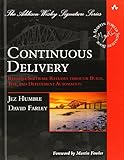
This classic book provides a comprehensive overview of Continuous Delivery, covering the principles, practices, and tools involved. It is highly recommended for anyone looking to implement Continuous Delivery in their organization.
Is widely considered a must-read for anyone working with distributed systems. It provides a comprehensive overview of the fundamental concepts and challenges in building data-intensive applications, which form the basis of many distributed systems. It's highly valuable as a reference tool and is often recommended as essential reading for both students and professionals.
Widely regarded as the definitive enterprise systems and network administration canon, Limoncelli and coauthors distill decades of operational wisdom on fleet architecture, change management, monitoring, service desks, and scaling IT teams beyond reactive firefighting.
Kief Morris's updated 2025 third edition establishes the core engineering patterns for managing dynamic cloud infrastructure through versioned code, modular abstractions, automated testing, and continuous delivery pipelines rather than brittle manual configuration.
Google's landmark production operations blueprint codifies service level objectives, error budgets, toil elimination, on-call incident response, and capacity planning, transforming infrastructure management from manual ticket triage into software engineering.
Presents the results of a four-year study of high-performing technology organizations. It identifies the key factors that drive success, and it provides a roadmap for organizations that want to improve their performance.
This comprehensive handbook covers the entire field of robotics and automation, from the basics to the latest developments. It is an essential resource for anyone who wants to learn about this rapidly growing field.
A foundational textbook providing a broad understanding of distributed systems principles. It covers essential topics like communication, synchronization, consistency, and fault tolerance with clear explanations and real-world examples. is commonly used as a textbook in university programs and solid resource for gaining prerequisite knowledge.
Updated in its 2025 sixth edition, the indispensable Linux and Unix sysadmin reference bridges kernel fundamentals, storage, DNS, networking, virtualization, and modern configuration automation for engineers running mission-critical server fleets.
Essential survival manual for keeping distributed production infrastructure online under real-world failure modes. Michael Nygard teaches stability patterns like circuit breakers, bulkheads, backpressure, and zero-downtime deployment architectures.
Microservices are a prevalent architectural style in modern distributed systems. provides a practical guide to designing and implementing microservices, covering topics like service decomposition, communication, and deployment. It's highly relevant for professionals and students interested in contemporary distributed system architectures.
Camille Fournier and Ian Nowland deliver a pragmatic 2024 playbook for treating internal infrastructure as a product, guiding engineering leaders through self-service developer platforms, API boundaries, team governance, and build-versus-buy trade-offs.
Limoncelli's companion volume extends operational discipline to distributed, multi-tenant cloud architectures, detailing stateless service design, automated provisioning, chaos resilience, and global capacity planning for hyperscale infrastructure.
This practical guide covers the cultural and technical aspects of DevOps, with a focus on Continuous Delivery. It provides valuable insights and case studies from leading DevOps practitioners.
A fast-paced introduction to Python, this book provides a solid foundation in programming concepts and includes projects to help solidify understanding. It's suitable for those with no prior programming experience and is often used as a textbook for introductory courses. The third edition is updated for 2023 and covers Python basics as well as projects in data analysis, web development, and gaming.
This handbook provides a step-by-step guide to implementing DevOps in your organization. It covers all aspects of DevOps, from planning to implementation to measurement, and it valuable resource for anyone looking to get started with DevOps.
Following up on the concept of microservices, this book dives into common patterns for building microservices-based applications. While it includes Java examples, the patterns themselves are broadly applicable. It's valuable for deepening understanding of practical microservices implementation strategies.
Cult-classic IT operations novel applying Lean manufacturing and the Theory of Constraints to infrastructure bottlenecks, unplanned work, and change advisory paralysis, giving managers a shared vocabulary for aligning IT operations with business flow.
Another excellent resource for learning Kubernetes, this book also utilizes YAML for deploying applications and managing the cluster. It's a practical guide that reinforces YAML concepts through hands-on Kubernetes examples.
This is the foundational book in the 'Month of Lunches' series for PowerShell, focusing on the shell's inner workings, core patterns, and basic usage before diving into scripting. It's highly recommended as a starting point before moving on to scripting specifically.
A practical guide focused on using PowerShell for system administration and workflow automation. is valuable for IT professionals looking to streamline their tasks and improve efficiency using PowerShell.
This textbook covers a wide range of topics in distributed computing, including principles, algorithms, and systems. It's a valuable resource for gaining a solid academic understanding of the field and is suitable for advanced undergraduate or graduate-level study.
Classic in the field, focusing on the theoretical underpinnings of distributed algorithms. It's a rigorous exploration of fundamental problems like consensus, and while theoretical, it solidifies understanding of the core algorithmic challenges in distributed systems. It is more suitable for those seeking a deep, theoretical understanding.
Robert Hafner's 2025 production guide tackles enterprise Infrastructure as Code with Terraform and OpenTofu, covering state isolation, module lifecycle governance, policy-as-code guardrails, drift remediation, and multi-team CI/CD execution.
Save
Contemporary distributed systems often involve large-scale data processing, and this book focuses on streaming systems. It covers the principles and practices of building systems for processing data in motion, a key aspect of many modern distributed applications.
Apache Kafka widely used distributed streaming platform. provides a comprehensive guide to Kafka, covering its architecture, design, and implementation. It's highly relevant for anyone working with or interested in stream processing in distributed systems.
Given the importance of data in distributed systems, understanding how databases work internally is crucial. explores the fundamental concepts behind distributed data systems, including storage engines and replication. It provides valuable background knowledge for anyone building or working with data-intensive distributed applications.
Skelton and Pais show infrastructure leaders how to structure platform, enabling, and stream-aligned teams around Conway's Law, minimizing cognitive load and cross-team handoff friction across shared cloud foundations.
Offers a detailed introduction to YAML, covering basics like scalars, sequences, and maps, as well as complex data structures and real-world applications in configuration files, build systems, and deployment processes.
Marko Luksa provides a thorough architectural walkthrough of Kubernetes cluster orchestration, covering control plane internals, pod scheduling, persistent storage, network policies, and declarative workload management in cloud infrastructure.
Similar to 'Kubernetes in Action' and 'The Kubernetes Book', this cookbook provides recipes for deploying and managing applications on Kubernetes, heavily relying on YAML manifests.
Bridges the gap between theory and practice in cloud-native environments using Kubernetes. It involves working with YAML for CI/CD pipelines, monitoring, and logging, providing a practical understanding of YAML in a DevOps context.
Offers an approachable introduction to distributed systems concepts for developers. It aims to provide a solid understanding of the key challenges and considerations when working with large distributed applications. It's a good starting point for those new to the field before diving into more in-depth texts.
Serves as a valuable guide to the Bash shell, providing practical examples of shell commands and programs. It's suitable for users new to Unix-based systems and those wanting to expand their knowledge of shell scripting. It covers key bindings, command line editing, and programming features.
Explores PowerShell's role in cybersecurity, covering both offensive and defensive capabilities. It's suitable for security professionals, penetration testers, and system administrators interested in leveraging PowerShell for security operations. It includes insights into event logs, remoting, and mitigation techniques.
Moving beyond static infrastructure dashboards and threshold alerts, Majors, Fong-Jones, and Miranda demonstrate how high-cardinality structured events, distributed tracing, and SLO-driven debugging uncover unknown failure modes in complex systems.
For organizations migrating from monolithic architectures to microservices, this book provides essential guidance and patterns for a successful transformation. It addresses common challenges and strategies for decomposing monoliths into distributed services.
This comprehensive guide aims to take individuals from Bash scripting basics to expert proficiency. It covers essential topics and progresses to advanced techniques for complex automation tasks in Unix/Linux environments. It recent publication, making it relevant for contemporary practices.
Focuses on building distributed services using the Go programming language. It provides hands-on guidance and practical examples for developing reliable and scalable distributed systems, making it particularly useful for developers working with Go.
Provides a foundational understanding of YAML, starting with basic concepts and progressing to more advanced topics like anchors. It's suitable for beginners across various technical roles and serves as a solid introduction to using YAML for configuration and data exchange.
Modernizing network operations for infrastructure teams, Adell and coauthors bridge traditional routing and switching with Python, Ansible, YANG data models, REST/gNMI APIs, and Git-backed continuous validation pipelines.
A well-regarded book for learning Ansible, emphasizing its simplicity and agentless nature. It covers writing playbooks in YAML and managing remote servers, making it a good resource for understanding YAML in automation.
A popular book for learning Ansible, this resource heavily relies on YAML for writing playbooks and managing infrastructure. It's a valuable read for anyone focusing on automation with Ansible and provides ample YAML examples.
Storment and Fuller establish the operational framework for cloud financial governance, uniting infrastructure engineers, finance, and leadership around cost allocation, utilization rightsizing, commitment management, and real-time unit economics.
Donella Meadows's classic primer on stocks, flows, reinforcing feedback loops, and systemic resilience equips infrastructure managers with mental models to spot queueing delays, policy resistance, and unintended consequences in complex IT estates.
Provides a guide to site reliability engineering (SRE), a set of practices that helps organizations build and operate reliable systems. SRE key part of DevOps, and this book provides a valuable introduction to the field.
Teaches you how to use deep learning to automate tasks in a variety of domains, such as computer vision, natural language processing, and speech recognition.
Provides a practical guide to Linux command-line and shell scripting, covering fundamentals to advanced topics. It helps users master shell scripting for system administration tasks and includes a look at using Python as a Bash scripting alternative.

Share

Help others find this course page by sharing it with your friends and followers:

Similar courses

Here are nine courses similar to Build a CI/CD Pipeline.
DevOps on AWS and Project Management
Most relevant
Systems Integration - Bachelor's
Most relevant
Developing a Google SRE Culture
Most relevant
Ansible and Ansible-Playbooks for Automation
Most relevant
Dashboard Customization with Jenkins: Track Health Metrics
Most relevant
DevOps Beginners to Advanced with Projects
Most relevant
Learn DevOps: CI/CD with Jenkins using Pipelines and...
Most relevant
Automate Linux SysAdmin tasks with Ansible in 100+...
Most relevant
Backend Developer - SAP Cloud Application Program |...
Most relevant

Coursera Buyer Protection & Guarantee

Verified partner policies & purchase protections

Accredited University Partner
Free Trial & Audit

7-Day Free Trial & Free Audit

7-day free trial on monthly Coursera Plus subscriptions; free audit option available on most individual courses to explore video lectures and readings at no charge.

Return & Refund Policy

14-Day Refund Guarantee

14-day refund window on annual Coursera Plus subscriptions and single-course purchases prior to certificate issuance. Monthly subscriptions do not offer refunds once billed.

Buyer Protections

Verified Academic & Industry Partner

Accredited university and industry certifications (e.g. Stanford, Google, IBM, Yale), secure SSL payment processing, and verifiable digital certificate links.

Key Purchase Protections
14-day refund window on annual Coursera Plus and single courses
7-day free trial on monthly Coursera Plus subscriptions
Free course audit option for lectures and readings
Verified certificates from top universities & companies
OpenCourser Verified Partner Policy details last reviewed: 2026-10-22
Our mission

OpenCourser helps millions of learners each year. People visit us to learn workspace skills, ace their exams, and nurture their curiosity.

Our extensive catalog contains over 50,000 courses and twice as many books. Browse by search, by topic, or even by career interests. We'll match you to the right resources quickly.

Find this site helpful? Tell a friend about us.

Affiliate disclosure

We're supported by our community of learners. When you purchase or subscribe to courses and programs or purchase books, we may earn a commission from our partners.

Your purchases help us maintain our catalog and keep our servers humming without ads.

Thank you for supporting OpenCourser.

© 2016 - 2025 OpenCourser