We may earn an affiliate commission when you visit our partners.
Course image
Tim Buchalka, Tim Buchalka's Learn Programming Academy, and Eduardo Rosas

Maybe you’ve heard the terms Continuous Integration and Continuous Delivery before, but have never really had time to find out what they mean, and how they can help you as a developer.

Perhaps DevOps rings a bell, but it’s not something practiced in your company.

Maybe you understand about source control, using git, and have always had an interest in finding ways to automate the build process.

Or maybe none of this means anything to you (yet).

Read more

Maybe you’ve heard the terms Continuous Integration and Continuous Delivery before, but have never really had time to find out what they mean, and how they can help you as a developer.

Perhaps DevOps rings a bell, but it’s not something practiced in your company.

Maybe you understand about source control, using git, and have always had an interest in finding ways to automate the build process.

Or maybe none of this means anything to you (yet).

Whatever the reason you have hit this landing page, you have arrived at a course that can give you a fast track in understanding what this Continuous Integration (CI) and Continuous Delivery (CD) is all about.

This short course is designed to give you an introduction to the concepts, and arm you with the knowledge of why you should be using them in your organization.

Developers with these skills are in hot demand, and there is a reason for that.  Proper implementation of CI and CD into the workplace brings with it processes that can save time, allowing companies to release software more often, fix bugs at a quicker pace, and deliver builds to their users faster, all with more control than you may have thought was possible.  The bottom line is the company will make more money, and developers are more valuable as a result.

It is possible to completely automate the build process of your companies software projects, no matter how big or small, and no matter how many developers you have on your team.

Not only that, but you can either completely automate or largely automate the deployment process of your applications as well, depending on whether they are web-based, or mobile-based.

CI and CD are not just buzz words, but bring big benefits to all that use them. 

In this course, you find out exactly what these benefits are, and how to get started.  In addition, you will find out just what DevOps is, and why it plays a critical role with CI and CD.

The course is mainly aimed at developers looking to take a quick course to understand the basics of why they should adopt the practices, enabling them to move on to more technical, hands-on courses or training using the specific tools suitable for their organization.

With that said, this course goes through a number of the more popular tools used by developers and even has a case study showing an application being set up for CI and CD, from start to finish.

No real development experience is needed to take the course.

In addition, non-developers such as project managers, and even senior management will obtain benefits from taking this course, obtaining an understanding of why their company should transition to DevOps and implement CI and CD in their workplace.

At just over two hours in length, the course is easily digestible in a morning, an afternoon, or evening and will equip you with a solid understanding of the processes, and the reasons why you should be using them, as well as the next step to take.

Click the enroll button to get started, and I look forward to equip you with the knowledge you need to know about Continuous Integration and Continuous Delivery.

Enroll now

What's inside

Learning objectives

  • Understand what continuous integration and continuous delivery is
  • Obtain a firm understanding of devops
  • Understand the competitive advantages of using ci and cd in your organization
  • Find out why companies like netflix and amazon use ci and cd in their daily workflow
  • Find out about the popular tools for integrating ci and cd into your workflow
  • See an actual case study of a real project using ci/cd from start to finish

Syllabus

The Software Development Lifecycle
Course Introduction
Software Development Lifecycle Overview
Before Coding
Read more

Traffic lights

Read about what's good
what should give you pause
and possible dealbreakers
Suitable for beginners
Suitable for various levels of experience
Focuses on the benefits of CI/CD for organizations
Taught by instructors with industry experience and certification
Highlights case studies and real-world examples
Outlines different CI/CD tools and their functions

Save this course

Create your own learning path. Save this course to your list so you can find it easily later.
Save

Reviews summary

Foundational introduction to ci/cd & devops concepts

According to students, this course provides a largely positive and concise introduction to Continuous Integration and Continuous Delivery. Learners appreciate its focus on the "why" behind CI/CD and DevOps, making it ideal for beginners, project managers, and non-technical professionals seeking a strategic overview. The lectures offer clear explanations, demystifying complex concepts. However, some developers seeking hands-on implementation or deeper technical dives found the course too superficial and wished for more practical application beyond the high-level case study. Overall, it serves as an excellent stepping stone for further learning.
The included case study provides an overview but lacks depth.
"The case study was a nice touch, though I wish it went a bit deeper into practical implementation with specific tools."
"The case study was a good idea, but again, very high-level."
The course is brief and to the point, easy to digest quickly.
"It's short, to the point, and easy to follow."
"The length is perfect for a quick overview."
"The pace was just right for a quick understanding."
Perfectly suited for new learners and non-technical roles.
"Highly recommend for non-technical roles or anyone new to the subject."
"Excellent for beginners! I knew nothing about CI/CD or DevOps..."
"Informative introduction. Good for managers or developers new to the concepts."
"Precisely what I needed as a non-technical founder. It demystifies the jargon."
"I found this course very suitable as I was starting from scratch with zero knowledge."
Provides a strong foundation in CI/CD and DevOps 'why'.
"This course is a great starting point for understanding CI/CD. The concepts are explained clearly and concisely."
"Absolutely brilliant! As a project manager, I needed to grasp the high-level benefits of CI/CD and DevOps."
"Good foundational course. The instructor did a good job explaining complex topics simply. The section on the competitive advantages was particularly insightful."
"Excellent for beginners! I knew nothing about CI/CD or DevOps, and now I have a solid conceptual understanding."
"This course gave me the 'why' behind CI/CD, helping me understand its strategic value for my startup."
May be redundant for those already familiar with SDLC or DevOps.
"If you're a developer already familiar with some aspects of the SDLC, you might find a lot of it redundant."
"Decent for a complete novice. If you have any prior exposure to software development methodologies or deployment, much of this will be review."
Does not provide in-depth technical or practical implementation.
"I wish it went a bit deeper into practical implementation with specific tools."
"I was hoping for more hands-on examples or deeper dives into the tools mentioned."
"Too superficial for me... I expected more practical advice on setting up pipelines or configuring specific tools."
"Didn't provide enough actionable steps for someone looking to implement CI/CD."
"This is purely theoretical, and you could probably get most of this from reading a few blog posts. No real depth or hands-on application."

Activities

Be better prepared before your course. Deepen your understanding during and after it. Supplement your coursework and achieve mastery of the topics covered in Introduction to Continuous Integration & Continuous Delivery with these activities:
Review Software Development Lifecycle basics
Refresh your understanding of the fundamental concepts of software development.
Show steps
  • Review online resources or textbooks on SDLC
  • Identify the different phases of SDLC
  • Understand the key concepts of each phase
Read Continuous Delivery
Build a solid foundation in Continuous Delivery practices.
Show steps
  • Read and understand the key concepts of Continuous Delivery
  • Apply the principles to real-world scenarios
Discuss CI/CD challenges and solutions
Engage with peers to share knowledge and experiences.
Browse courses on Continuous Integration
Show steps
  • Join or create a study group or discussion forum
  • Share your understanding of CI/CD concepts
  • Discuss challenges encountered and best practices
Five other activities
Expand to see all activities and additional details
Show all eight activities
Explore Jenkins CI/CD pipelines
Get hands-on experience with a popular CI/CD tool used in industry.
Browse courses on Continuous Integration
Show steps
  • Watch tutorials on setting up Jenkins pipelines
  • Follow along and create a sample pipeline
  • Experiment with different pipeline configurations
Solve CI/CD-related problems
Develop problem-solving skills in the context of CI/CD.
Browse courses on Continuous Integration
Show steps
  • Find online resources or platforms that provide CI/CD-related problems
  • Attempt to solve the problems on your own
  • Review solutions and discuss with peers or mentors
Attend a CI/CD workshop
Gain practical knowledge and interact with experts in the field.
Browse courses on Continuous Integration
Show steps
  • Find and register for a CI/CD workshop
  • Attend the workshop and participate actively
  • Network with speakers and other attendees
Build a sample web application with CI/CD
Apply the CI/CD concepts to a real-world project.
Browse courses on Continuous Integration
Show steps
  • Design and implement a simple web application
  • Set up CI/CD pipelines for the application
  • Automate the build, test, and deployment processes
Contribute to an open-source CI/CD project
Gain practical experience and contribute to the CI/CD community.
Browse courses on Continuous Integration
Show steps
  • Identify an open-source CI/CD project that aligns with your interests
  • Review the project's documentation and contribute to discussions
  • Fix bugs or implement new features as per the project's needs

Career center

Learners who complete Introduction to Continuous Integration & Continuous Delivery will develop knowledge and skills that may be useful to these careers:

Reading list

We've selected 50 books that we think will supplement your learning. Use these to develop background knowledge, enrich your coursework, and gain a deeper understanding of the topics covered in Introduction to Continuous Integration & Continuous Delivery.
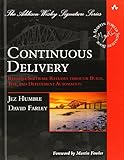
This classic book provides a comprehensive overview of Continuous Delivery, covering the principles, practices, and tools involved. It is highly recommended for anyone looking to implement Continuous Delivery in their organization.
Is an essential resource for anyone in a coaching role within an Agile environment. It delves into the mindset and skills required to effectively coach Agile teams, covering topics like team dynamics, conflict resolution, and fostering self-organization. It's particularly valuable for Scrum Masters and Agile coaches looking to deepen their coaching abilities.
Often referred to as the 'Bible' of CI/CD, this book extends the principles of Continuous Integration to Continuous Delivery. It provides a detailed guide to building, testing, and deploying software in a reliable and automated manner. is crucial for gaining a deep understanding of the technical practices and cultural changes required for effective continuous delivery, which direct evolution of CI. It widely referenced book in the field.
Presents the results of a four-year study of high-performing technology organizations. It identifies the key factors that drive success, and it provides a roadmap for organizations that want to improve their performance.
Similar to 'The Professional Scrum Master,' this book focuses on the Product Owner role in Scrum. It provides comprehensive guidance on maximizing the value of the product and the work of the Development Team. This is an essential read for Product Owners looking to excel in their role.
Offers in-depth guidance for Scrum Masters looking to go beyond the basics and truly enable their teams. It provides evidence-based techniques and insights for fostering high-performing Scrum teams. This great resource for experienced Scrum Masters seeking to deepen their understanding and impact.
This handbook provides a broader perspective on DevOps, of which CI/CD core component. It covers the principles and practices that enable organizations to achieve high performance in technology delivery. It's highly relevant for understanding the organizational and cultural context in which CI thrives and is considered a must-read for anyone involved in DevOps transformations. The second edition includes updated research and case studies.
Provides a practical guide for software development projects. It takes a structured approach and covers the entire software development lifecycle, from planning and requirements gathering to design, implementation, testing, and deployment.
Another practical guide by Mike Cohn, this book focuses specifically on the essential Agile practices of estimating and planning. It provides techniques for estimating effort, planning iterations and releases, and managing scope in an Agile context. valuable resource for product owners, Scrum Masters, and teams needing to effectively plan and forecast their work.
Provides a practical guide to test driven development, a software development practice that emphasizes writing tests before writing code. It covers all aspects of test driven development, from the principles and values to the practices and tools.
This handbook provides a step-by-step guide to implementing DevOps in your organization. It covers all aspects of DevOps, from planning to implementation to measurement, and it valuable resource for anyone looking to get started with DevOps.
Practical guide to facilitating effective retrospectives, a crucial practice in Agile for continuous improvement. It provides various activities and techniques for teams to reflect on their work and identify areas for improvement. This book is highly recommended for Scrum Masters, Agile coaches, and team members looking to improve their retrospective sessions.
Practical guide to working with user stories, a fundamental practice in many Agile frameworks like Scrum and XP. It provides detailed techniques for writing, gathering, and managing user stories effectively. This book valuable resource for anyone involved in defining and managing requirements in an Agile environment and is often recommended as a practical guide for teams.
Provides a comprehensive overview of software testing, including both theoretical and practical aspects. It covers a wide range of topics, from test planning and design to test execution and analysis. This book good resource for anyone who wants to learn more about software testing, regardless of their experience level.
Provides a practical guide to software architecture. It covers all aspects of software architecture, from the principles and values to the practices and tools. The authors are all experienced software architects and provide practical guidance and advice.
Provides a catalog of design patterns, which are general solutions to commonly occurring problems in software design. It covers all aspects of design patterns, from the principles and values to the patterns themselves. The authors are all experienced software developers and provide practical guidance and advice.
This recent book offers a practical and jargon-free guide to understanding and implementing continuous delivery pipelines. It focuses on the design and purpose of CD systems, making it accessible for developers and pipeline designers. It's a good resource for contemporary practices in CI/CD, offering clear examples and a tool-agnostic approach.
Foundational text on writing maintainable, readable, and testable code, which is crucial for sustainable Agile development. While not strictly about Agile methodologies, the principles of writing clean code are essential for Agile teams. It's a must-read for developers and is often used as a textbook or reference for improving coding practices.
Delves into applying Agile principles and practices at scale, specifically focusing on the LeSS (Large-Scale Scrum) framework. It's highly relevant for organizations looking to implement Agile in larger, multi-team environments. This book provides detailed guidance on organizational structure, roles, and practices for scaling Scrum effectively.
Provides a comprehensive guide to deployment automation, a key part of the DevOps process. It covers the tools, techniques, and best practices for automating deployments, and it valuable resource for anyone looking to improve their deployment process.
Provides a software architect's perspective on DevOps, a software development practice that combines development and operations teams. It covers all aspects of DevOps, from the principles and values to the practices and tools.
Takes a practical approach to software testing, focusing on the skills and techniques that are essential for effective testing. It covers a wide range of topics, from test planning and design to test execution and analysis. This book good resource for anyone who wants to improve their software testing skills.
Provides a comprehensive overview of the art of software testing. It covers a wide range of topics, from the principles of software testing to the techniques that can be used to perform it. This book good resource for anyone who wants to learn more about the foundations of software testing.
Foundational text for understanding the core principles and patterns of Agile development, with practical examples in C#. It's particularly useful for those with a programming background looking to see how Agile concepts translate into code. While the language is C#, the principles are broadly applicable. It serves as a valuable reference for implementing Agile practices at a technical level.
Is considered a foundational text on Continuous Integration, laying out the core principles and practices. It provides a comprehensive overview of how CI can transform the integration process from a painful event to a routine activity. While published in 2007, the fundamental concepts remain highly relevant and provide essential background knowledge for anyone new to CI or seeking to solidify their understanding. This book is more valuable as foundational reading rather than a reference for the latest tools.
Provides a practical guide to implementing Continuous Delivery for Java applications using Jenkins, Maven, and Docker. It is suitable for Java developers looking to adopt Continuous Delivery practices.
Provides a comprehensive overview of software testing principles and practices. It covers a wide range of topics, from the principles of software testing to the techniques that can be used to perform it. This book good resource for anyone who wants to learn more about the foundations of software testing.
As one of the foundational books on Extreme Programming (XP), a key Agile methodology, this book provides a clear and concise introduction to its values, principles, and practices. It's essential reading for anyone wanting to understand the origins and core ideas behind Agile. While an older publication, its principles remain highly relevant and it's considered a classic in the field.
Provides a guide to site reliability engineering (SRE), a set of practices that helps organizations build and operate reliable systems. SRE key part of DevOps, and this book provides a valuable introduction to the field.
Focuses on implementing Continuous Delivery in the AWS cloud. It covers the setup, configuration, and best practices for building, testing, and deploying serverless applications.
Provides a comprehensive guide to implementing Continuous Delivery for .NET applications. It covers the tools, techniques, and best practices for automating the build, test, and deployment process.
As containerization and Kubernetes are prevalent in modern deployments, this book provides valuable insights into building and deploying applications in such environments. It covers how CI/CD fits into a Kubernetes workflow, offering practical guidance for those working with cloud-native applications.
This classic book offers timeless advice on various aspects of software development, including taking responsibility, continuous learning, and writing flexible code. While published before the widespread adoption of Agile, its principles align strongly with the Agile mindset and are highly relevant for any software professional. It's considered a foundational text for developers.
Infrastructure as Code (IaC) key enabler of effective CI/CD, allowing for automated provisioning and management of environments. provides a comprehensive guide to IaC principles and practices. Understanding IaC is highly beneficial for building robust and repeatable deployment pipelines.
Microservices architecture often goes hand-in-hand with CI/CD. delves into the design and implementation of microservices, covering topics like testing, deployment, and monitoring in a distributed environment. While not solely focused on CI, it provides crucial context for implementing CI/CD pipelines in a microservices setting.
Provides a guide to lean software development, a set of practices that helps organizations deliver software more quickly and efficiently. Lean software development key part of DevOps, and this book provides a valuable introduction to the field.
Provides a guide to exploratory testing. It covers a wide range of topics, from the principles of exploratory testing to the techniques that can be used to perform it. This book good resource for anyone who wants to learn more about exploratory testing.
Provides a practical guide to implementing Continuous Integration using Jenkins, a popular CI tool. It covers the concepts of CI/CD methodologies and how to apply them within the Jenkins ecosystem. This book is particularly useful for those who want to gain hands-on experience with a widely used CI tool and understand its specific features and workflows.
Offers a prescriptive guide to implementing DevOps practices, including CI/CD, with a focus on practical application. It walks through creating a sample enterprise application and applying various tools and techniques for building, testing, deploying, and monitoring. It's a good resource for gaining hands-on experience with DevOps workflows.
From Google provides deep insights into their approach to SRE, which heavily relies on automation, monitoring, and a focus on reliability. Many of the practices described, particularly those related to automated testing, deployment, and incident response, are highly relevant to advanced CI/CD implementations. It's a valuable resource for understanding how large-scale, highly reliable systems are built and maintained.
Focuses on the challenges and strategies for implementing Agile and DevOps practices, including CI/CD, in large organizations. It provides insights into leading organizational change and scaling these practices effectively. It's valuable for leaders and managers involved in driving the adoption of CI/CD across an enterprise.
Test-Driven Development (TDD) practice that complements CI by emphasizing automated testing as a fundamental part of the development process. This classic book on TDD helps build a strong foundation in writing effective tests, which are essential for a reliable CI pipeline. While not directly about CI, the principles are highly relevant for improving code quality and enabling continuous integration.
Site Reliability Engineering (SRE) shares many principles with DevOps and CI/CD, focusing on the reliability and stability of systems. This workbook offers practical exercises and examples for implementing SRE practices, including aspects related to testing, deployment, and monitoring that are relevant to CI/CD.
Focuses on implementing Continuous Integration specifically within the .NET ecosystem. It provides practical guidance and uses tools relevant to .NET development, such as Visual Studio, MSBuild, and TFS. This book is highly relevant for developers and teams working with .NET technologies who want to adopt CI practices.
While a more advanced topic, Domain-Driven Design (DDD) can influence how systems are structured, which in turn impacts CI/CD strategies, particularly in microservices architectures. explores how to model complex software systems based on the business domain. It's valuable for those looking to deepen their understanding of how software design choices interact with CI/CD.

Share

Help others find this course page by sharing it with your friends and followers:

Similar courses

Here are nine courses similar to Introduction to Continuous Integration & Continuous Delivery.
Developing a Google SRE Culture
Most relevant
Continuous Delivery with Jenkins in Kubernetes Engine
Most relevant
Real World DevOps Project with Ansible, Docker and GitLab
Most relevant
Jenkins Pipeline: Declarative and IaC approaches for...
Most relevant
Hands-on with AWS: Software Development Practices
Most relevant
DevOps: CICD with Git GitLab Jenkins, Docker and Django
Most relevant
Git & GitHub Masterclass
Most relevant
DevOps: CI/CD with Jenkins pipelines, Maven, Gradle
Most relevant
Learn DevOps: CI/CD with Jenkins using Pipelines and...
Most relevant

Udemy Buyer Protection & Guarantee

Verified partner policies & purchase protections

Global Marketplace Leader
Free Trial & Audit

Free Lecture Previews

Free preview video lectures available for all courses; optional 7-day free trial on Personal Plan subscriptions (cancel before trial ends to avoid conversion).

Return & Refund Policy

30-Day Money-Back Guarantee

30-day money-back guarantee on all eligible individual course purchases (provided course content has not been substantially consumed or downloaded). Subscription fees are non-refundable once billed.

Buyer Protections

Verified Academic & Industry Partner

Lifetime access to purchased individual courses and future updates, verifiable certificate of completion, and direct student Q&A forums.

Key Purchase Protections
30-day 100% money-back guarantee on course purchases
Lifetime access on web, mobile, and offline
Certificate of completion included with purchase
Direct instructor Q&A and active student community
OpenCourser Verified Partner Policy details last reviewed: 2026-10-22
Our mission

OpenCourser helps millions of learners each year. People visit us to learn workspace skills, ace their exams, and nurture their curiosity.

Our extensive catalog contains over 50,000 courses and twice as many books. Browse by search, by topic, or even by career interests. We'll match you to the right resources quickly.

Find this site helpful? Tell a friend about us.

Affiliate disclosure

We're supported by our community of learners. When you purchase or subscribe to courses and programs or purchase books, we may earn a commission from our partners.

Your purchases help us maintain our catalog and keep our servers humming without ads.

Thank you for supporting OpenCourser.

© 2016 - 2025 OpenCourser