We may earn an affiliate commission when you visit our partners.
Course image
John Honai

CI, CD and DevOps have taken over the software development world by storm. Most companies today realize that the practices of continuous integration (CI) and continuous delivery (CD) will yield tremendous benefits like increased business revenue and faster time-to-market. The demand for these skills has been steadily rising over the last few years.

Read more

CI, CD and DevOps have taken over the software development world by storm. Most companies today realize that the practices of continuous integration (CI) and continuous delivery (CD) will yield tremendous benefits like increased business revenue and faster time-to-market. The demand for these skills has been steadily rising over the last few years.

There are a plethora of tools available in the CI/CD/DevOps landscape today. Implementing continuous integration, continuous delivery and continuous deployment with these tools and frameworks can help us immensely in modernizing our software development lifecycle. It catches us bugs early and increases the quality of our software products. This, in turn, reduces the overall cost for software development in startups and enterprise alike.

But before getting into tools and frameworks, it is important that you get a holistic picture of CI / CD and DevOps. For this, you need to understand where we started from - the old school traditional software development cycle. We will pick holes in the old model, identify pain points and learn how CI / CD and DevOps evolved, one step at a time. Once you build a rock solid foundation using this course, you can move on to more specific tool oriented courses.

If you are thinking about moving on to CI/CD/DevOps from your old school software development model, this course is for you. Well illustrated with animations to help you grasp a clear understanding of the underlying principles. Once you complete this course, you can take on bigger challenges related to implementation.

The demand for professionals who have experience with CI/CD/DevOps has been growing steadily over the last few years. The salaries for these skills have gone through the roof and are only bound to go up as the demand for these skills increases. Professionals with CI / CD / DevOps skill set can demand as much as $150K as their yearly compensation as per latest US job and salary surveys. And this is where you start.

Enroll now

What's inside

Learning objectives

  • Learn the basic concepts of continuous integration (ci), continuous delivery and continuous deployment (cd), and devops.
  • Understand the pain points in the traditional software development life cycle which paved the way for ci / cd/ devops.
  • Learn how business revenue and time-to-market are greatly improved by bringing in ci/cd/devops.
  • Learn how ci / cd / devops evolved step by step. this will help build a solid foundation to learn more about the implementation part and the tools involved.
  • Learn using illustrations, animations and cartoons. about 90% of the course is illustrated, the remaining 10% consists of crisp bullet point slides.

Syllabus

The Basics - CI, CD and DevOps
Introduction
The Old School Software Development Life Cycle
Old School Integration - Pain Points
Read more

Traffic lights

Read about what's good
what should give you pause
and possible dealbreakers
Explores CI/CD/DevOps pipeline concepts, which are standard in industry
Develops Continuous Integration and Continuous Delivery skills, which are core skills for modern software development
Taught by John Honai, who are recognized for their work in the software development field
Examines DevOps, which is highly relevant to modern software development
Suitable for learners with old-schoolsoftware development background
Requires learners to come in with extensive background knowledge in software development

Save this course

Create your own learning path. Save this course to your list so you can find it easily later.
Save

Reviews summary

Devops ci/cd: conceptual foundations for beginners

According to students, this course offers a largely positive experience, particularly for those new to the domain. Learners commend its ability to provide a strong conceptual foundation in DevOps, CI, and CD, focusing on the "what" and "why" rather than implementation details. A standout feature is the use of outstanding animations and illustrations, which make complex topics easy to grasp and engaging. While excellent for beginners to build foundational knowledge, some learners note that it lacks practical tool-specific details or real-world scenarios, serving primarily as a theoretical introduction to the field.
Prioritizes the 'what' and 'why' of DevOps over tool implementation.
"It covers the 'why' before the 'how', which is crucial."
"This course is for the 'what' and 'why', not the 'how', and it does that perfectly."
"It completely lacks any mention of tools or practical examples. I wished for a little more."
"It doesn't go into tools, which is fine for a conceptual course, but be aware it's purely theoretical."
Complex ideas are clarified through engaging animations and illustrations.
"The animations and illustrations make complex concepts easy to grasp."
"The visual aids are a definite plus and help in conceptual understanding."
"The way the course uses animations to explain the evolution of SDLC to DevOps is brilliant."
"The animations are top-notch and simplify complex ideas."
Excellent for building core understanding of CI/CD and DevOps.
"It truly provides a solid foundation for understanding DevOps, CI, and CD."
"Exactly what I needed to get a foundational understanding before diving into specific tools."
"Perfect for beginners! The focus on core concepts without getting bogged down in tools is a huge strength for a beginner course."
"I now feel confident to explore tool-specific courses after this."
Provides a broad conceptual overview, potentially too basic for some.
"It's very high-level. I was expecting a bit more depth, perhaps some real-world scenarios."
"If you have any prior knowledge, it might seem a bit too basic."
"Honestly, I found this course too basic. It's more like a lengthy presentation of definitions."
"If you've read any article on DevOps, you probably know most of this. There's no practical value."

Activities

Be better prepared before your course. Deepen your understanding during and after it. Supplement your coursework and achieve mastery of the topics covered in DevOps, CI/CD(Continuous Integration/Delivery) for Beginners with these activities:
Practice Continuous Integration pipeline steps
Build a strong foundation by practicing Continuous Integration pipeline steps
Browse courses on Continuous Integration
Show steps
  • Set up a new project with a version control system.
  • Add code to the project and commit it to the version control system.
  • Configure a Continuous Integration pipeline.
  • Run the Continuous Integration pipeline.
  • Review the results of the Continuous Integration pipeline run.
Practice Continuous Delivery pipeline steps
Bolster your understanding of Continuous Delivery by practicing the steps
Browse courses on Continuous Delivery
Show steps
  • Set up a new project with a version control system.
  • Add code to the project and commit it to the version control system.
  • Configure a Continuous Integration pipeline.
  • Configure a Continuous Delivery pipeline.
  • Run the Continuous Delivery pipeline.
  • Review the results of the Continuous Delivery pipeline run.
Practice Continuous Deployment steps
Solidify your grasp of Continuous Deployment through hands-on practice
Browse courses on Continuous deployment
Show steps
  • Set up a new project with a version control system.
  • Add code to the project and commit it to the version control system.
  • Configure a Continuous Integration pipeline.
  • Configure a Continuous Delivery pipeline.
  • Configure a Continuous Deployment pipeline.
  • Run the Continuous Deployment pipeline.
  • Review the results of the Continuous Deployment pipeline run.
Show all three activities

Career center

Learners who complete DevOps, CI/CD(Continuous Integration/Delivery) for Beginners will develop knowledge and skills that may be useful to these careers:

Reading list

We've selected 50 books that we think will supplement your learning. Use these to develop background knowledge, enrich your coursework, and gain a deeper understanding of the topics covered in DevOps, CI/CD(Continuous Integration/Delivery) for Beginners.
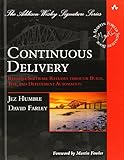
Provides a comprehensive overview of Continuous Delivery, covering the principles, practices, and tools involved in automating the delivery of software changes. It is written by Jez Humble and David Farley, who are well-known experts in the field.
Focused on writing clean, readable, and maintainable code, this book provides principles and practices essential for any software developer. It is particularly useful for solidifying understanding of good coding standards and is widely recommended across the industry. It serves as an excellent reference for improving code quality.
Offers practical advice on a wide range of software development topics, emphasizing pragmatic approaches to coding, debugging, and problem-solving. It's considered a must-read for developers seeking to improve their craft and is highly relevant for both broadening and deepening understanding. The 20th-anniversary edition keeps its timeless principles relevant for contemporary developers.
This comprehensive handbook covers the entire field of robotics and automation, from the basics to the latest developments. It is an essential resource for anyone who wants to learn about this rapidly growing field.
Comprehensive guide to the Git version control system. It covers a wide range of topics, including basic concepts, advanced workflows, and best practices. It valuable resource for experienced Git users who want to improve their skills.
Presents the results of a four-year study of high-performing technology organizations. It identifies the key factors that drive success, and it provides a roadmap for organizations that want to improve their performance.
Provides a catalog of refactoring techniques to improve the design of existing code without changing its external behavior. It's a practical guide essential for maintaining and evolving software systems, highly relevant for solidifying good coding practices and deepening understanding of code improvement.
Seminal work on the principles and practices of continuous integration, continuous delivery, and deployment automation. It is highly relevant for understanding contemporary software development methodologies focused on frequent and reliable releases. It's valuable for deepening understanding and key reference in the field.
Delves into the fundamental principles and challenges of designing data systems that are reliable, scalable, and maintainable. It is highly relevant for contemporary software development, particularly for engineers working with large-scale data, and provides deep technical understanding.
Written by members of Google's SRE team, this book details the practices and principles of Site Reliability Engineering, focusing on building and operating scalable and reliable systems. It's highly relevant for contemporary software development, particularly for those interested in operations, reliability, and large-scale systems. It provides deep insights into industry practices.
Explores the concepts and practices of designing and building microservices architectures. Given the prevalence of microservices in modern software development, this book is highly relevant for understanding contemporary approaches to system design. It's valuable for deepening understanding and serves as a practical guide.
This classic book introduces fundamental design patterns for object-oriented software, providing reusable solutions to common design problems. It is crucial for deepening understanding of software design and valuable reference for developers and architects. While not recently published, its content remains foundational.
This handbook provides a step-by-step guide to implementing DevOps in your organization. It covers all aspects of DevOps, from planning to implementation to measurement, and it valuable resource for anyone looking to get started with DevOps.
Provides a comprehensive overview of the Git version control system, including its basic concepts, commands, and workflows. It is an excellent resource for beginners and intermediate users who want to improve their understanding of Git.
Provides a comprehensive overview of software quality concepts and applications. It covers topics such as software quality models, measurement, and improvement.
Provides a practical introduction to Test-Driven Development (TDD) through a series of examples. It's a foundational text for understanding this important agile practice and is highly relevant for improving code quality and developer confidence. It's particularly useful for those looking to adopt TDD in their workflow.
Introduces Domain-Driven Design (DDD), an approach to software development that emphasizes aligning software design with the business domain. It is highly relevant for designing complex systems and provides a framework for deepening understanding of how to model software effectively based on business requirements.
This comprehensive textbook covers a wide range of algorithms and data structures, providing a theoretical foundation essential for understanding efficient code development. It core resource for deepening understanding, particularly for students and professionals focusing on the computational aspects of software development. It is often used as a textbook in university programs.
Provides a collection of case studies from organizations that have successfully implemented DevOps. It covers a wide range of industries and organizational sizes, and it provides valuable insights into the challenges and rewards of DevOps.
A collection of essays on the challenges of software project management, this book offers timeless insights into the complexities of developing software systems. It's considered a classic and provides a broad understanding of the non-technical aspects of software development, particularly relevant for those interested in project management and the history of the field.
Explores the Staff Engineer role and technical leadership paths for individual contributors in software engineering. It addresses a contemporary career topic and provides guidance for experienced professionals looking to grow their impact without moving into management.
Provides a comprehensive guide to deployment automation, a key part of the DevOps process. It covers the tools, techniques, and best practices for automating deployments, and it valuable resource for anyone looking to improve their deployment process.
Provides a comprehensive overview of the Perforce Helix version control system. It covers a wide range of topics, including basic concepts, advanced workflows, and best practices. It valuable resource for experienced Perforce Helix users who want to improve their skills.
This widely used textbook provides a solid theoretical foundation for understanding operating systems, which are a fundamental component of software development environments. It is essential for deepening understanding of how software interacts with hardware and is commonly used in undergraduate and graduate programs.
Provides a guide to site reliability engineering (SRE), a set of practices that helps organizations build and operate reliable systems. SRE key part of DevOps, and this book provides a valuable introduction to the field.
A guide to using AWS for continuous integration and delivery. Covers everything from setting up pipelines to deploying and managing applications on AWS.
Provides a practical guide to Continuous Delivery for Java developers. It covers the tools and techniques that developers can use to automate their software delivery processes, including Jenkins, Docker, and Kubernetes.
Provides a practical guide to Continuous Delivery for web applications. It covers the tools and techniques that developers can use to automate their software delivery processes, including Jenkins, Docker, and Kubernetes.
Provides a practical introduction to DevOps, a set of practices that aims to bridge the gap between development and operations teams. It is written by two of the leading experts in DevOps and is highly accessible for beginners.
Offers a comprehensive introduction to database systems, covering fundamental concepts, principles, and practices. Given the ubiquitous nature of databases in software applications, this book is highly relevant for gaining a broad understanding and deepening knowledge in this critical area. It is often used as a textbook.
Provides a practical approach to software quality engineering. It covers topics such as software quality planning, testing, and measurement.
Provides a practical guide to software quality assurance for software testers. It covers topics such as software testing techniques, test management, and quality assurance processes.
Provides a comprehensive overview of software quality management. It covers topics such as software quality planning, testing, and measurement.
Provides a lifecycle approach to software quality assurance. It covers topics such as software quality planning, testing, and measurement.
Teaches you how to use deep learning to automate tasks in a variety of domains, such as computer vision, natural language processing, and speech recognition.
Provides a comprehensive overview of the Subversion version control system. It covers a wide range of topics, including basic concepts, advanced workflows, and best practices. It valuable resource for experienced Subversion users who want to improve their skills.
Provides a concise overview of the essential Git commands and concepts. It is an excellent resource for beginners who want to learn the basics of Git quickly.
Provides a guide to lean software development, a set of practices that helps organizations deliver software more quickly and efficiently. Lean software development key part of DevOps, and this book provides a valuable introduction to the field.
Provides a practical introduction to version control using real-world examples. It is an excellent resource for beginners who want to learn the basics of version control.
Affectionately known as the "Dragon Book," this classic text on compiler design. While quite technical, it provides deep insights into how programming languages are processed and executed, contributing to a solid understanding of the underlying mechanisms of software. It is primarily for those seeking to deepen their understanding at a more theoretical level.
Teaches you how to use Python to automate tasks in a variety of domains, such as web scraping, data analysis, and software testing.
Provides a quick reference to the most common Git commands. It is an excellent resource for beginners and intermediate users who want to learn the basics of Git.
Introduces the concept of test-driven development, which emphasizes writing tests before writing code. It is highly relevant to the SDLC as it provides a framework for ensuring that software is both correct and reliable.
Provides a comprehensive overview of reinforcement learning, including its theory, algorithms, and applications.
Explores the human factors that affect software development and provides insights into how to create more productive teams. It is highly relevant to the SDLC as it provides a framework for managing software projects and teams more effectively.

Share

Help others find this course page by sharing it with your friends and followers:

Similar courses

Here are nine courses similar to DevOps, CI/CD(Continuous Integration/Delivery) for Beginners.
Introduction to DevSecOps
Most relevant
Continuous Integration
Most relevant
Microservices and Deployment by using ASP.NET
Most relevant
Two Major Models of running containers in AWS
Most relevant
Terraform in AWS from Basics to Guru: Unit 2
Most relevant
Advanced Data Engineering with Snowflake
Most relevant
Docker, Kubernetes & AWS: Real-World Deployment in 25 Days
Most relevant
HashiCorp Certified: Consul Associate Practice Exam
Most relevant
Rocking AWS CloudFormation with DevOps, Interview Guide
Most relevant

Udemy Buyer Protection & Guarantee

Verified partner policies & purchase protections

Global Marketplace Leader
Free Trial & Audit

Free Lecture Previews

Free preview video lectures available for all courses; optional 7-day free trial on Personal Plan subscriptions (cancel before trial ends to avoid conversion).

Return & Refund Policy

30-Day Money-Back Guarantee

30-day money-back guarantee on all eligible individual course purchases (provided course content has not been substantially consumed or downloaded). Subscription fees are non-refundable once billed.

Buyer Protections

Verified Academic & Industry Partner

Lifetime access to purchased individual courses and future updates, verifiable certificate of completion, and direct student Q&A forums.

Key Purchase Protections
30-day 100% money-back guarantee on course purchases
Lifetime access on web, mobile, and offline
Certificate of completion included with purchase
Direct instructor Q&A and active student community
OpenCourser Verified Partner Policy details last reviewed: 2026-10-22
Our mission

OpenCourser helps millions of learners each year. People visit us to learn workspace skills, ace their exams, and nurture their curiosity.

Our extensive catalog contains over 50,000 courses and twice as many books. Browse by search, by topic, or even by career interests. We'll match you to the right resources quickly.

Find this site helpful? Tell a friend about us.

Affiliate disclosure

We're supported by our community of learners. When you purchase or subscribe to courses and programs or purchase books, we may earn a commission from our partners.

Your purchases help us maintain our catalog and keep our servers humming without ads.

Thank you for supporting OpenCourser.

© 2016 - 2025 OpenCourser