We may earn an affiliate commission when you visit our partners.
Course image

Regenerative agriculture, the term as reported in various literature, initially came into usage by the Rodale Institute in the early 1980s. Later, in 2014, institute released a paper on Regenerative Organic Agriculture and Climate Change. The extract of the paper talks about sequestering more than 100% of current annual CO2 emissions with a switch to common and inexpensive organic management practices, which they termed 'regenerative organic agriculture.'

Read more

Regenerative agriculture, the term as reported in various literature, initially came into usage by the Rodale Institute in the early 1980s. Later, in 2014, institute released a paper on Regenerative Organic Agriculture and Climate Change. The extract of the paper talks about sequestering more than 100% of current annual CO2 emissions with a switch to common and inexpensive organic management practices, which they termed 'regenerative organic agriculture.'

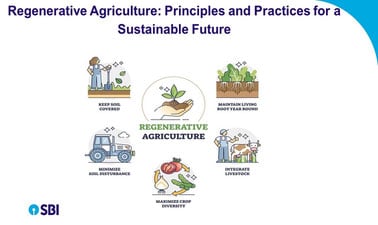
The farm and other management practices, under the regenerative agriculture, are focusing not only on restoring but also enhancement of soil health, ecosystem, biodiversity and communities. Unlike conventional agricultural practices that often prioritize short-term yields and rely heavily on synthetic chemicals, regenerative agriculture seeks to create sustainable, resilient, and self-sustaining systems. It aims to regenerate the soil, restore ecosystems, and increase carbon sequestration, all while producing food in a way that benefits the environment, farmers, and society at large.

What's inside

Learning objectives

  • * the principles of regenerative agriculture and its benefits.
  • * practical strategies for implementing regenerative practices on farms and ranches.
  • * analyze case studies of successful regenerative agriculture operations.
  • * skills in farm planning, management, and marketing for regenerative agriculture.
  • * about contribution of financial institutions to regenerative agriculture e.g. providing access to capital, incentivizing sustainable practices, developing innovative financial products, advisory services and capacity building and developing risk management tools.

Syllabus

Traffic lights

Read about what's good
what should give you pause
and possible dealbreakers
Offers practical strategies for implementing regenerative practices, which can lead to improved soil health and increased crop yields, benefiting both the environment and their bottom line
Explores the role of financial institutions in regenerative agriculture, including providing access to capital and incentivizing sustainable practices, which is relevant for institutions looking to invest in sustainable agriculture
Introduces the principles of regenerative agriculture and its benefits, which builds a strong foundation for those new to the field and wishing to learn more about sustainable farming practices
Analyzes case studies of successful regenerative agriculture operations, which provides valuable insights and real-world examples for farmers and ranchers considering adopting these practices
Develops skills in farm planning, management, and marketing for regenerative agriculture, which are core skills for farmers looking to transition to or improve their regenerative practices
Examines the economic and social aspects of regenerative agriculture across the globe, which may add color to other topics and subjects related to sustainability and community development

Save this course

Create your own learning path. Save this course to your list so you can find it easily later.
Save

Reviews summary

Introduction to regenerative agriculture principles

According to learners, this course provides a positive and solid introduction to the field of regenerative agriculture. Many students found the core content on principles and practices to be clear and foundational, covering important concepts like soil health and biodiversity. Some reviews noted that while it offers a good overview, those seeking deep practical application or advanced techniques might find it a bit high-level. The inclusion of economic and social aspects is appreciated by some, though the section on financial institutions is seen as more relevant to a specific audience. Overall, it serves as a valuable starting point for understanding the fundamentals.
Financial module niche but useful for some.
"The section on financial institutions was interesting, though less applicable to my personal interests."
"Useful if you're in finance or looking at funding, less so if purely focused on farm practices."
"Appreciated the perspective on the role of financial institutions, it's not often covered."
Material is relevant and well-structured.
"The course content was relevant and easy to follow, especially the modules on soil and water management."
"Appreciated the clear structure and flow of information presented."
"The topics covered felt important and timely for understanding sustainable farming."
Provides a clear, foundational overview.
"This course gave me a great overview of regenerative agriculture..."
"A strong starting point for someone new to the topic."
"I learned the core principles and key practices covered in the modules."
Could benefit from more practical depth.
"I wished there were more hands-on examples or case studies showing implementation details."
"Felt a bit theoretical at times; I was hoping for more practical guidance."
"Could use deeper dives into specific practices and how to apply them on a farm scale."

Activities

Be better prepared before your course. Deepen your understanding during and after it. Supplement your coursework and achieve mastery of the topics covered in Regenerative Agriculture: Principles and Practices for a Sustainable Future with these activities:
Review Soil Science Fundamentals
Reviewing soil science fundamentals will provide a strong foundation for understanding regenerative agriculture's emphasis on soil health.
Browse courses on Soil Science
Show steps
  • Review basic soil composition and structure.
  • Study the soil food web and its importance.
  • Understand key soil nutrients and their cycles.
Read 'Holistic Management, Third Edition: A Common Sense Revolution to Restore Our Environment'
Reading this book will provide a framework for making decisions that support regenerative agriculture.
Show steps
  • Obtain a copy of 'Holistic Management'.
  • Read the book, focusing on the decision-making framework.
  • Consider how to apply holistic management to your farm plan.
Read 'Dirt to Soil: One Family's Journey into Regenerative Agriculture'
Reading this book will provide a practical understanding of regenerative agriculture principles in action.
Show steps
  • Obtain a copy of 'Dirt to Soil'.
  • Read the book, taking notes on key practices.
  • Reflect on how these practices relate to the course content.
Four other activities
Expand to see all activities and additional details
Show all seven activities
Volunteer at a Local Regenerative Farm
Volunteering provides hands-on experience and allows you to observe regenerative practices in action.
Show steps
  • Identify a local regenerative farm or ranch.
  • Contact the farm to inquire about volunteer opportunities.
  • Participate in farm activities and learn from experienced practitioners.
Create a Presentation on Regenerative Agriculture
Creating a presentation will help you synthesize and communicate your understanding of regenerative agriculture.
Show steps
  • Research a specific aspect of regenerative agriculture.
  • Develop a presentation outline.
  • Create slides with clear and concise information.
  • Practice delivering the presentation.
Design a Regenerative Farm Plan
Designing a farm plan will allow you to apply the principles of regenerative agriculture to a specific context.
Show steps
  • Choose a specific farm or ranch as a case study.
  • Assess the current conditions of the land.
  • Develop a plan incorporating regenerative practices.
  • Outline a timeline for implementation.
Compile a List of Regenerative Agriculture Resources
Compiling resources will help you stay informed about the latest developments in regenerative agriculture.
Show steps
  • Search for articles, websites, and organizations related to regenerative agriculture.
  • Organize the resources into categories.
  • Annotate each resource with a brief description.

Career center

Learners who complete Regenerative Agriculture: Principles and Practices for a Sustainable Future will develop knowledge and skills that may be useful to these careers:
Regenerative Agriculture Researcher
Regenerative Agriculture Researchers conduct research to advance the field of regenerative agriculture. A researcher may use course principles and practical strategies to help design research projects, analyze data, and develop new regenerative practices. The course's coverage of case studies and its exploration of the economic and social aspects of regenerative agriculture may be useful for contextualizing research findings. An advanced degree such as a master's or doctorate may be required to become a Regenerative Agriculture Researcher. Researchers may find the course material on financial institutions useful.
Farm Manager
Farm Managers oversee the daily operations of a farm, and are increasingly turning to regenerative agriculture. They can leverage this course to implement regenerative practices that enhance soil health, restore ecosystems, and increase carbon sequestration. The course's curriculum on practical strategies for regenerative practices, case studies, and skills in farm planning directly contributes to effective management. Understanding the economic and social aspects of regenerative agriculture is also vital for making informed decisions. Farm managers should take this course to gain the knowledge and skills needed to transition to a more sustainable and profitable farming operation.
Carbon Sequestration Specialist
Carbon Sequestration Specialists focus on removing carbon dioxide from the atmosphere. This course makes learning about how regenerative agriculture contributes to carbon sequestration easy. The specialist may use the course's lessons on soil management, biodiversity, and carbon sequestration to assess the potential of regenerative agriculture to mitigate climate change. They use the knowledge to develop carbon sequestration projects, evaluate the effectiveness of carbon farming practices, and promote carbon-friendly agriculture. The course may be helpful for learning ways financial institutions can support carbon sequestration.
Agricultural Economist
Agricultural Economists analyze the economic aspects of agriculture. This course is a key tool for analyzing the economic benefits of regenerative practices for farmers and communities. The course's discussion of the economic and social aspects of regenerative agriculture is particularly relevant. An agricultural economist may use the knowledge gained to assess the profitability of regenerative farming methods, evaluate the impact of policies on sustainable agriculture, and advise farmers on financial planning. The course is also helpful for understanding the role of financial institutions in supporting regenerative agriculture.
Agricultural Extension Agent
Agricultural Extension Agents educate farmers on best practices. The principles of regenerative agriculture help equip agents with knowledge of sustainable practices to share with farmers. This course may be invaluable for learning practical strategies for implementing regenerative practices, analyzing successful case studies, and gaining skills in farm planning and management. Agents often work with financial institutions, so understanding their role in regenerative agriculture is a plus. They may use the information in the course to promote soil health, biodiversity, and carbon sequestration among local agricultural communities.
Sustainable Farming Advocate
Sustainable Farming Advocates promote sustainable agricultural practices. This course is extremely helpful for articulating the benefits of regenerative agriculture to a wide audience. The advocate may use the course's lessons on the principles of regenerative agriculture, its practical strategies, and its case studies to develop advocacy campaigns, educate the public, and influence policy decisions. The course will help them promote the adoption of regenerative practices. Sustainable Farming Advocates help to showcase financial institutions and their role in sustainable agriculture.
Conservation Scientist
Conservation Scientists protect natural resources. The principles of regenerative agriculture help in their work, offering sustainable agricultural practices. The course's focus on soil health, biodiversity, and ecosystem restoration directly contributes to a conservation scientist's skillset. They may use the knowledge to promote sustainable agricultural practices, assess environmental risks, and develop solutions for ecological damage. A Conservation Scientist should take this course to gain the knowledge and skills needed to promote ecologically sound regenerative agriculture.
Sustainability Consultant
A Sustainability Consultant advises organizations on implementing environmentally friendly practices, and this course is a step in that direction. The consultant may help farms adopt regenerative agriculture techniques to improve soil health, reduce environmental impact, and increase carbon sequestration. The course's focus on the principles of regenerative agriculture and practical strategies for implementation directly applies to the consultant's work. The case studies of successful operations and the skills in farm planning and management are also valuable resources. This course may be useful for understanding financial institutions' role in encouraging regenerative agriculture.
Soil Scientist
Soil Scientists study the composition, properties, and classification of soils. A course on regenerative agriculture helps soil scientists in their understanding of soil health and restoration. The course's coverage of soil management, water management, and biodiversity directly relates to a soil scientist's work. They can use the knowledge gained to assess the impact of different agricultural practices on soil health and contribute to sustainable land management strategies. The course may also be helpful for understanding how financial institutions support soil health initiatives.
Agricultural Consultant
Agricultural Consultants advise farmers on improving their operations. This course may be useful for providing advice on transitioning to regenerative practices to enhance soil health, reduce environmental impact, and increase profitability. The course's emphasis on practical strategies, case studies, and skills in farm planning directly contributes to this consultant's effectiveness. They may use the knowledge to help farmers implement sustainable practices, improve crop yields, and access financing for regenerative projects. The course may be perfect for learning about the financial institutions involved in regenerative agriculture.
Land Use Planner
Land Use Planners develop plans for the use of land, balancing various needs and interests. Sustainable agricultural practices such as regenerative agriculture should be something these planners are familiar with. The course provides insights into how regenerative agriculture can contribute to sustainable land management, ecosystem restoration, and community development. They may use the knowledge to promote land use policies that support regenerative practices, protect natural resources, and enhance community resilience. Land use planners should take this course to understand the financial institutions involved in regenerative agriculture and its effects on land.
Environmental Scientist
Environmental Scientists work to protect the environment and human health. With this course, environmental scientists can leverage an understanding of regenerative practices to mitigate the impact of agriculture on ecosystems. The course's insights into soil health, biodiversity, and carbon sequestration align with the goals of environmental science. They may use the knowledge to promote sustainable agricultural practices, assess environmental risks, and develop solutions for environmental challenges. The course may be helpful for appreciating the financial aspects of environmental sustainability.
Environmental Policy Analyst
Environmental Policy Analysts develop and analyze environmental policies. This course may be useful for understanding the potential of regenerative agriculture to address environmental challenges and promote sustainable development. The course's coverage of soil health, biodiversity, and carbon sequestration aligns with the goals of environmental policy. They can use the knowledge to inform policy recommendations, evaluate the effectiveness of environmental regulations, and promote sustainable agricultural practices. They will gain from learning financial institutions role in regenerative agriculture.
Food Security Analyst
Food Security Analysts work to ensure access to safe, nutritious food for all people. This course may assist in analyzing how regenerative agriculture can enhance food production while protecting the environment. The course's exploration of the social aspects of regenerative agriculture, including improved livelihoods and enhanced food security, is valuable. They may use the knowledge to assess the potential of regenerative agriculture to address food security challenges and promote sustainable food systems. Food Security Analysts may find the discussion of financial institutions' role in regenerative agriculture to be a boon.
Community Development Officer
Community Development Officers work to improve the quality of life in communities. A course in regenerative agriculture may be useful in their work. The course may be useful for understanding how regenerative agriculture can contribute to improved livelihoods, enhanced food security, and community development. The officer may use the knowledge gained to support community-based agricultural projects, promote sustainable food systems, and empower local farmers. They should consider learning about financial institutions' role in helping communities.

Reading list

We've selected two books that we think will supplement your learning. Use these to develop background knowledge, enrich your coursework, and gain a deeper understanding of the topics covered in Regenerative Agriculture: Principles and Practices for a Sustainable Future.
Provides a practical, real-world example of implementing regenerative agriculture practices. Gabe Brown shares his personal journey of transforming a degraded farm into a thriving ecosystem. It offers valuable insights into no-till farming, cover cropping, and livestock integration. This book serves as an inspiring case study for the course.
Introduces the concept of holistic management, a decision-making framework that considers ecological, social, and economic factors. It is particularly relevant to regenerative agriculture's focus on whole-system thinking. The book provides tools and techniques for managing land, livestock, and resources in a sustainable way. It valuable resource for understanding the interconnectedness of agricultural systems.

Share

Help others find this course page by sharing it with your friends and followers:

Similar courses

Similar courses are unavailable at this time. Please try again later.
Our mission

OpenCourser helps millions of learners each year. People visit us to learn workspace skills, ace their exams, and nurture their curiosity.

Our extensive catalog contains over 50,000 courses and twice as many books. Browse by search, by topic, or even by career interests. We'll match you to the right resources quickly.

Find this site helpful? Tell a friend about us.

Affiliate disclosure

We're supported by our community of learners. When you purchase or subscribe to courses and programs or purchase books, we may earn a commission from our partners.

Your purchases help us maintain our catalog and keep our servers humming without ads.

Thank you for supporting OpenCourser.

© 2016 - 2025 OpenCourser