We may earn an affiliate commission when you visit our partners.
Course image
Anthony Neely

About the course:

Are you tired of spending countless hours on lesson planning, grading, and creating study guides? Do you wish there was an easier way to differentiate instruction, provide personalized feedback, and automate daily tasks that eat up so much of your time as a teacher? If so...look no further than "ChatGPT for Teachers: The Ultimate Guide to Simplifying Life."

Read more

About the course:

Are you tired of spending countless hours on lesson planning, grading, and creating study guides? Do you wish there was an easier way to differentiate instruction, provide personalized feedback, and automate daily tasks that eat up so much of your time as a teacher? If so...look no further than "ChatGPT for Teachers: The Ultimate Guide to Simplifying Life."

This comprehensive Udemy course offers a range of modules designed to help educators streamline their workload and enhance their instructional practices using ChatGPT's cutting-edge AI-powered tools and strategies. After completing this course, you'll be able to plan effective and engaging lessons, generate creative writing prompts, create study guides with ease, grade quizzes and assessments quickly and accurately, and provide personalized feedback to your students.

ChatGPT's AI-powered tools make it easy to automate your workload, save time, and grade accurately while ensuring fairness and consistency. You'll also learn how to use gamification techniques and rap battles to boost student engagement and motivation, improve written communication skills, break language barriers, and support students with special needs in creating an inclusive learning environment.

Enroll in "ChatGPT for Teachers" today and revolutionize your instructional practices with the power of AI. This course includes modules on mastering lesson planning, streamlining study guides, personalizing feedback, automating grading, and more. Whether you're an experienced educator or a new teacher, this course is the ultimate guide to simplifying your life and enhancing learning outcomes for your students.

About the Instructor:

Dr. Anthony Neely is a renowned educator, researcher, and consultant with a passion for helping educators enhance their instructional practices. With over a decade of teaching experience at the secondary, university, and adult levels, Anthony has worked with thousands of students from thirty different countries, making him a globally recognized expert in education.

As a researcher, Anthony focuses on exploring generational perceptions of content relevance, the role of popular and fan cultures in teaching and learning, and reverse mentoring. His work has been published in numerous peer-reviewed research journals, and he has presented his findings at national and international conferences. He has also been invited to speak at various educational institutions and share his expertise with others in the field.

Anthony's extensive knowledge of curriculum and instruction has made him a sought-after consultant. He has contributed to the professional development of faculty and staff in various organizational contexts, helping them to enhance their teaching practices and achieve their goals.

Anthony holds a Doctorate in Interdisciplinary Learning and Teaching from the University of Texas at San Antonio, as well as a Master's degree in Educational Theory from Arkansas State University and a Bachelor's degree in Secondary Education from Tennessee Technological University.

Currently, Anthony is working on his first book and is planning to launch a corresponding podcast and blog, further extending his expertise and insights to educators worldwide. Join his Udemy course and learn from a true expert in the field of education.

Enroll now

Here's a deal for you

Save money when you learn with a deal that may be relevant to this course.
All coupon codes, vouchers, and discounts are applied automatically unless otherwise noted.

What's inside

Learning objectives

  • Master lesson planning with chatgpt in order to achieve teaching success.
  • Unleash creativity through easy-to-use writing prompts with chatgpt.
  • Streamline the creation of study guides with chatgpt to save time and effort.
  • Assess students with ease using chatgpt's simple quiz and assessment tools.
  • Meet the needs of every student by differentiating lessons with chatgpt.
  • Simplify grading with chatgpt's rubric creation and grading tools.
  • Personalize teaching through the power of feedback using chatgpt.
  • Save time and ensure accurate grading through automated grading with chatgpt.
  • Boost engagement in learning through chatgpt's gamification features.
  • Create epic rap battles with chatgpt
  • Write with ease using chatgpt for effective parent communication.
  • Break language barriers with chatgpt's translation capabilities.
  • Plan for long-termindividualize learning and meet the needs of every student using chatgpt. success with chatgpt's long-term planning tools.
  • Use chatgpt for special education and inclusion to meet diverse learning needs.
  • Write winning grant proposals using chatgpt.
  • Show more
  • Show less

Syllabus

Introduction
Get to Know Your Instructor: Meet Dr. Neely.

After completing "Getting Started with ChatGPT", students will be able to access ChatGPT and understand the basic components of the platform.

Read more

After completing "Mastering Lesson Planning: Roadmap to teaching success with ChatGPT", students will be able to plan effective and engaging lessons using ChatGPT's AI-powered tools and strategies.

After completing "Unleash Your Creativity: Writing prompts made easy with ChatGPT", students will be able to generate creative and diverse writing prompts for their students using ChatGPT's easy-to-use tools.

After completing "Streamlining Study Guides: Save time and effort with ChatGPT", students will be able to create study guides efficiently and effectively using ChatGPT's automated tools.

After completing "Assess with Ease: Quizzes and assessments made simple with ChatGPT", students will be able to create and grade quizzes and assessments quickly and accurately using ChatGPT's user-friendly platform.

After completing "Meeting Every Student's Needs: Differentiate your lessons with ChatGPT", students will be able to tailor their lessons to meet the diverse learning needs of their students using ChatGPT's differentiation tools.

After completing "Rubrics Made Easy: Simplify grading with ChatGPT's rubric creation", students will be able to create and use rubrics for grading student work with ease using ChatGPT's automated tools.

After completing "The Power of Feedback: Personalize your teaching with ChatGPT", students will be able to provide personalized and constructive feedback to their students using ChatGPT's AI-powered feedback tools.

After completing "Automate Your Grading: Save time and grade accurately with ChatGPT", students will be able to automate the grading process and save time while ensuring accurate and fair grading using ChatGPT's grading tools.

After completing "Game On! Boost Engagement with ChatGPT Gamification", students will be able to use gamification techniques to boost student engagement and motivation using ChatGPT's gamification tools.

After completing "Teaching with a Beat: Create Rap Battles with ChatGPT", students will be able to create engaging and memorable learning experiences through rap battles using ChatGPT's AI-generated lyrics.

After completing "Effective Communication: Write with ease using ChatGPT", students will be able to improve their written communication skills and write with ease using ChatGPT's AI-powered writing tools.

After completing "Breaking Language Barriers: ChatGPT Translation", students will be able to communicate effectively with non-native speakers and break language barriers using ChatGPT's translation capabilities.

After completing "Planning for Success: Long-Term Planning with ChatGPT", students will be able to plan for long-term success and achieve their teaching goals using ChatGPT's long-term planning tools.

After completing "The Power of Personalization: Individualize learning with ChatGPT", students will be able to personalize learning for each student and meet their diverse needs using ChatGPT's AI-powered personalization tools.

After completing "Meeting Every Student's Needs: ChatGPT for Special Education and Inclusion", students will be able to use ChatGPT to support students with special needs and create an inclusive learning environment that meets the needs of all students.

After completing "Write Winning Grants: Use ChatGPT to craft winning proposals", students will be able to write effective grant proposals and secure funding for their teaching projects using ChatGPT's AI-powered writing tools.

After completing "Connecting Virtually: Simulate interviews and conversations with ChatGPT", students will be able to simulate real-world conversations and interviews with ChatGPT's AI-powered virtual communication tools.

After completing "Wrap up - Review and Final Tips", you will have completed all sections of this course.

Traffic lights

Read about what's good
what should give you pause
and possible dealbreakers
Offers strategies to streamline workload and enhance instructional practices, which can be valuable for educators seeking to improve efficiency
Teaches how to use gamification techniques and rap battles to boost student engagement and motivation, which may appeal to creative teachers
Explores using ChatGPT to support students with special needs and create an inclusive learning environment, which is relevant for educators
Requires learners to use ChatGPT, which may require an account and familiarity with the platform, potentially posing a barrier for some
Teaches how to write grant proposals using ChatGPT, which may be useful for teachers seeking funding for classroom projects and initiatives
Taught by Dr. Anthony Neely, who has over a decade of teaching experience and is recognized as an expert in education, adding credibility

Save this course

Create your own learning path. Save this course to your list so you can find it easily later.
Save

Reviews summary

Chatgpt for teachers: simplifying workflows

According to learners, this course is a valuable resource for educators looking to integrate AI into their practice. Many find it provides practical strategies and actionable tips for using ChatGPT to save time on common tasks like lesson planning, creating study guides, and grading. Students appreciate the clear explanations and the instructor's ability to make the content easy to understand, even for those new to AI. The course is described as well-structured and filled with useful examples that can be immediately applied. While some reviews are less detailed, the overall consensus points to a highly positive experience, particularly highlighting its effectiveness in simplifying daily teaching tasks and enhancing productivity.
Great starting point for those new to AI.
"As a beginner with AI, this course was perfect for getting started."
"I had no prior experience with ChatGPT, but I feel confident now."
"It's a great introduction for anyone curious about using AI in education."
"Starts with the basics and builds up gradually."
"Didn't require any prior knowledge of AI."
Course is organized logically and effectively.
"The course is well-structured and easy to navigate."
"Each module built nicely on the previous one."
"I appreciated the logical flow of the topics covered."
"The way the course is organized makes it simple to find specific information."
"It felt very organized and well-paced."
Directly applicable to the teaching profession.
"This course is highly relevant to my work as a teacher."
"The examples provided are directly related to classroom scenarios."
"Focused specifically on using ChatGPT in the context of teaching, which is exactly what I needed."
"I can see how I can use these techniques immediately in my classroom."
"It's great to have a resource tailored specifically for teachers."
Content is presented clearly and easy to follow.
"The instructor is clear and concise, making complex topics easy to grasp."
"Really clear explanations, very easy to understand even for someone completely new to this."
"Everything was explained clearly and the examples were great."
"Dr. Neely explains everything very well. I feel confident using ChatGPT now."
"I found the content easy to follow and implement."
Provides actionable tips to simplify teaching tasks.
"I learned several tricks and strategies to save time on everyday tasks."
"Fantastic course! Provides many practical ways to use chat gpt to make teaching life easier and save time."
"So many practical tips for saving time and enhancing teacher tasks. Highly recommended for all teachers!"
"This course provides numerous practical tips and strategies that teachers can immediately use to simplify their daily tasks."
"I found the tips on lesson planning and study guides incredibly helpful for saving time."

Activities

Be better prepared before your course. Deepen your understanding during and after it. Supplement your coursework and achieve mastery of the topics covered in ChatGPT for Teachers: The Ultimate Guide to Simplifying Life with these activities:
Review AI Basics
Reinforce foundational knowledge of AI concepts to better understand ChatGPT's capabilities and limitations.
Browse courses on Large Language Models
Show steps
  • Read articles or watch videos explaining basic AI concepts.
  • Define key terms like 'neural networks' and 'machine learning'.
  • Summarize the history and evolution of AI.
Read 'AI for Educators'
Gain practical insights into AI applications in education to complement the course's focus on ChatGPT.
View Alter Ego: A Novel on Amazon
Show steps
  • Obtain a copy of 'AI for Educators'.
  • Read the book, focusing on chapters relevant to teaching.
  • Take notes on key concepts and examples.
Design a ChatGPT-Enhanced Lesson Plan
Apply course knowledge by creating a lesson plan that integrates ChatGPT for specific learning objectives.
Show steps
  • Choose a subject and grade level.
  • Define learning objectives for the lesson.
  • Identify specific ways ChatGPT can enhance the lesson.
  • Create a detailed lesson plan incorporating ChatGPT.
Four other activities
Expand to see all activities and additional details
Show all seven activities
Create a 'ChatGPT for Teachers' Blog Post
Solidify understanding by writing a blog post sharing tips and strategies for using ChatGPT in the classroom.
Show steps
  • Choose a specific topic related to ChatGPT in education.
  • Research and gather information on the topic.
  • Write a blog post with clear and actionable advice.
  • Edit and proofread the blog post.
Develop a ChatGPT Grading Rubric Template
Enhance grading efficiency by creating a reusable rubric template using ChatGPT's rubric creation tools.
Show steps
  • Select an assignment type (e.g., essay, presentation).
  • Define clear criteria for evaluating student work.
  • Use ChatGPT to generate rubric descriptions for each criterion.
  • Refine the rubric and save it as a template.
Explore 'The AI Classroom'
Gain a broader understanding of AI's impact on education beyond ChatGPT-specific applications.
View Alter Ego: A Novel on Amazon
Show steps
  • Acquire a copy of 'The AI Classroom'.
  • Read the book, focusing on chapters about AI's impact.
  • Reflect on the ethical and pedagogical implications discussed.
Tutor Other Teachers on ChatGPT
Reinforce your knowledge by helping other teachers learn how to use ChatGPT effectively.
Show steps
  • Offer to help colleagues with ChatGPT-related tasks.
  • Explain key concepts and demonstrate practical applications.
  • Answer questions and provide support.

Career center

Learners who complete ChatGPT for Teachers: The Ultimate Guide to Simplifying Life will develop knowledge and skills that may be useful to these careers:
Teacher
As a teacher, you may be responsible for planning lessons, grading assignments, and providing feedback to students. 'ChatGPT for Teachers' may be extremely useful, as it offers strategies for streamlining many of these tasks using AI. A teacher may learn how to use ChatGPT to create engaging lesson plans, generate writing prompts, and automate grading. This course may improve time management and create more opportunities for personalized instruction. Modules focused on special education and inclusion are also highly relevant for ensuring a supportive learning environment.
Adjunct Professor
As an adjunct professor, you may be responsible for teaching courses at the college or university level. 'ChatGPT for Teachers' may serve as a helpful tool. This course may help streamline lesson planning, grading, and student engagement. Adjunct professors may learn how to use ChatGPT to create engaging lesson plans, generate writing prompts, and automate grading. This may create efficiencies in time management and may provide more opportunities for personalized instruction. Modules focused on special education and inclusion are also highly relevant for ensuring a supportive learning environment.
Special Education Teacher
The special education teacher works with students who have a wide range of disabilities. 'ChatGPT for Teachers' may offer valuable strategies for supporting these students using AI. Special education teachers face unique challenges in adapting lesson plans, assessments, and feedback to meet individual needs. This course may inform how to use ChatGPT to differentiate instruction, personalize learning, and create inclusive learning environments. The module specifically focused on special education and inclusion may offer practical tips and techniques for addressing diverse learning needs.
Grant Writer
A grant writer prepares proposals to secure funding for educational or research projects. The course 'ChatGPT for Teachers' may be surprisingly valuable for a grant writer. The course includes a module specifically focused on writing winning grant proposals using ChatGPT. This course may provide valuable insights into how to leverage AI to craft compelling narratives, present data effectively, and align project goals with funding priorities. Grant writers may find the AI-powered writing tools helpful in streamlining the grant writing process.
Education Technology Specialist
An education technology specialist integrates technology into the classroom. An education technology specialist may find 'ChatGPT for Teachers' may be helpful. This role involves evaluating educational software, training teachers on new technologies, and supporting the effective use of technology. Since this course focuses on using ChatGPT to streamline educational tasks, education technology specialists may be able to offer guidance to teachers on how to effectively integrate AI into their teaching practices. The modules on gamification, translation, and long-term planning are relevant to leveraging technology for improved learning outcomes.
Curriculum Developer
A curriculum developer designs and implements educational curricula for schools or organizations. 'ChatGPT for Teachers' may be helpful for a curriculum developer by providing ways to integrate AI into curriculum design. This career involves researching best practices, creating lesson plans, and evaluating the effectiveness of the curriculum. Since this course emphasizes using ChatGPT to streamline planning, assessment, and personalization, the curriculum developer may be able to create more relevant and engaging content. The modules on lesson planning, study guide creation, and differentiation are directly applicable to curriculum design tasks.
Online Tutor
An online tutor provides personalized instruction to students remotely. The online tutor works to create engaging lessons, assess student progress, and provide effective feedback. 'ChatGPT for Teachers' may be a great resource for this role, as it may help the online tutor to leverage AI to streamline instruction. This course may provide approaches to generating writing prompts, creating study guides, and personalizing feedback. The modules on breaking language barriers and individualizing learning may also be helpful for supporting diverse learners.
Literacy Specialist
A literacy specialist works to improve students' reading and writing skills. A literacy specialist may encounter the need to adapt instruction, assess student progress, and provide targeted interventions. 'ChatGPT for Teachers' may prove to be a helpful tool to help literacy specialists support students using AI. This course may inform how to use ChatGPT to differentiate instruction, personalize learning, and create inclusive learning environments. The modules on writing prompts and breaking language barriers may offer practical tips for addressing diverse learning needs.
Instructional Designer
An instructional designer creates engaging and effective learning materials. 'ChatGPT for Teachers' may be especially useful for an instructional designer as they work to develop curricula. This role involves understanding learning objectives and translating them into a well-structured program. Given that this course focuses on using AI to streamline educational tasks, the course might help instructional designers to create more efficient and personalized learning experiences. They may learn how to rapidly prototype content, gather feedback, and iterate on designs using AI tools. Also, the modules on personalizing instruction and creating study guides may be useful for designing adaptive learning paths or self-paced learning modules.
Educational Consultant
An educational consultant advises schools and educational organizations on best practices. This career involves assessing educational programs, recommending improvements, and providing training to teachers and administrators. The course 'ChatGPT for Teachers' may be especially applicable for an educational consultant. This course dives into AI-powered tools and strategies that help educators improve their instructional practices. An educational consultant may benefit from the techniques for streamlining grading, personalizing feedback, and boosting student engagement. The course participant, and consultant, may be able to offer practical advice on how to effectively integrate AI into the classroom.
Academic Coach
Academic coaches support students in developing effective learning strategies. As an academic coach, you may help students to improve their study habits, manage their time, and achieve their academic goals. 'ChatGPT for Teachers' may offer insights into using AI to personalize learning and provide effective feedback. The academic coach may use the techniques taught via the course to streamline study guide creation, differentiate instruction, and boost student engagement. The modules on personalized learning and long-term planning are particularly applicable to academic coaching.
Educational Program Manager
An educational program manager oversees the development and implementation of educational programs. Educational program managers may find 'ChatGPT for Teachers' may be a valuable resource. This role involves setting program goals, managing budgets, and evaluating program outcomes. Since this course focuses on using ChatGPT to streamline educational tasks, educational program managers may be able to assess the feasibility of integrating AI into their programs. The modules on long-term planning and individualizing learning may be relevant to program design.
Corporate Trainer
A corporate trainer develops and delivers training programs for employees. 'ChatGPT for Teachers' may be applicable to a corporate trainer by introducing new methods for efficient training. They may be tasked with creating engaging content, assessing learning outcomes, and adapting training materials to different learning styles. They may use the techniques taught in this course to streamline content creation, personalize learning experiences, and automate assessment. The modules on lesson planning, study guide creation, and personalized feedback may be helpful for creating impactful training programs.
Training Coordinator
A training coordinator organizes and manages training programs for organizations. A training coordinator may find 'ChatGPT for Teachers' may be a great resource, as they work to schedule training sessions, coordinate logistics, and evaluate the effectiveness of training programs. This course may provide insight as to how to leverage AI to streamline training processes. The modules on lesson planning, study guide creation, and personalized feedback may be applicable to creating impactful training programs.
Content Writer
A content writer creates written content for various platforms. 'ChatGPT for Teachers' may be useful for content writers that specialize in educational materials. This course may provide insight into how AI tools like ChatGPT can be used to develop educational content more efficiently. The modules on writing prompts, study guide creation, and effective communication may be particularly helpful in producing high-quality content that meets the needs of educators and students.

Reading list

We've selected 50 books that we think will supplement your learning. Use these to develop background knowledge, enrich your coursework, and gain a deeper understanding of the topics covered in ChatGPT for Teachers: The Ultimate Guide to Simplifying Life.
Provides a comprehensive overview of the field of AI in education, covering topics such as personalized learning, adaptive learning, and intelligent tutoring systems. The author leading researcher in the field, and the book is written in a clear and accessible style.
Provides a comprehensive overview of AI education for K-12, covering topics such as curriculum design, implementation, and assessment. The authors are both leading researchers in the field, and the book is written in a clear and accessible style.
Olivier Caelen and Marie-Alice Blete walk developers through building production software with the OpenAI API, covering chat completions, function calling, embeddings, and retrieval-augmented generation with clear Python examples.
Delves into the psychological drives behind human motivation and introduces the Octalysis Framework, a widely recognized model for designing engaging experiences. It moves beyond superficial game mechanics and provides a deeper understanding of how to create truly engaging systems. This valuable resource for anyone looking to design effective gamified solutions and is often referenced by practitioners.
Chip Huyen establishes the end-to-end engineering discipline behind ChatGPT-powered products, detailing evaluation pipelines, prompt optimization, RAG architectures, latency reduction, and model adaptation for real-world systems.
Wharton professor Ethan Mollick offers an evidence-based roadmap for collaborating with ChatGPT as a daily thinking partner, showing how knowledge workers, educators, and leaders can redesign workflows around generative AI.
A key resource for applying gamification principles to educational and training contexts. provides theoretical background and practical strategies for designing engaging learning experiences. It's a valuable reference for educators and instructional designers looking to incorporate game elements effectively.
Focuses on applying Universal Design for Learning (UDL) principles to lesson planning. It provides a step-by-step guide for creating inclusive lessons that cater to diverse learner needs. It's an essential resource for educators looking to implement UDL in their classrooms and is valuable for both general and special education teachers.
James Phoenix and Mike Taylor codify repeatable prompt engineering patterns for ChatGPT and modern LLMs, bridging zero-shot and few-shot design, chain-of-thought reasoning, and structured output generation for software workflows.
Considered a foundational text in the business application of gamification, this book provides a solid overview of how game mechanics and design can be used to solve business problems and drive engagement in the workplace and with customers. It offers a practical framework and real-world examples, making it highly relevant for those interested in the business aspects of gamification. This is often used as a reference for professionals.
Offers a collection of practical techniques for effective teaching, many of which directly impact lesson planning and delivery. It focuses on strategies for classroom management, student engagement, and academic rigor. While not solely a lesson planning book, its techniques are essential for successful implementation of any lesson plan. It widely referenced book in teacher training and professional development.
Provides a comprehensive overview of machine learning techniques and their applications in education. The author leading researcher in the field, and the book is written in a clear and accessible style.
This comprehensive guide provides teachers with a deep understanding of learning disabilities, their assessment, and effective teaching strategies. It covers various types of learning disabilities, including dyslexia, dyscalculia, and dysgraphia, and offers practical guidance on how to create inclusive and supportive learning environments.
Provides a comprehensive overview of intelligent tutoring systems, covering topics such as architecture, design, and evaluation. The authors are all leading researchers in the field, and the book is written in a clear and accessible style.
A companion to 'The Gamification of Learning and Instruction,' this fieldbook offers practical exercises, worksheets, and examples to help readers implement gamification strategies in learning contexts. It's a hands-on resource for instructional designers and educators. is more of a practical guide than a theoretical text.
Drawing on production experience building AI coding assistants, the authors break down how token windows, context assembly, and iterative prompt refinement turn raw language models like GPT-4 into reliable software tools.
This practical guide that covers all aspects of lesson planning, from setting learning aims to assessment and incorporating technology. It offers a wide range of adaptable strategies and activities for daily use. The book is particularly useful for trainee and early career teachers and can serve as a valuable reference tool.
Richly illustrated visual explanations demystify how ChatGPT-class language models tokenize text, compute attention, and generate responses, paired with hands-on code for semantic search, RAG, and fine-tuning.
Written by a Gartner analyst, this book provides a business-oriented perspective on gamification. It focuses on how gamification can be used to motivate people and achieve organizational goals. This good resource for understanding the strategic implications of gamification in a business setting.
Specifically addresses the application of gamification within the enterprise. It provides a framework for designing engaging business software and discusses the unique challenges and opportunities of gamification in a work context. It's a practical guide for those focused on internal applications of gamification.
Presents a research-based model for lesson planning in K-12 settings. It delves into both theoretical foundations and provides a step-by-step guide for developing different types of lesson plans, including direct instruction and inquiry-based approaches. It also addresses meeting the needs of diverse learners.
Sebastian Raschka guides readers through coding a GPT-style decoder-only transformer in PyTorch from the ground up, illuminating pretraining, instruction fine-tuning, and alignment steps that power ChatGPT.
Focused on the 2025 shift from single-turn chat to autonomous workflows, this practical manual demonstrates how to equip GPT-class models with tool use, persistent memory, planning loops, and multi-agent coordination.
Paul Iusztin covers the full MLOps lifecycle for LLM applications beyond ChatGPT prototypes, tackling data pipelines, supervised fine-tuning, preference alignment, quantization, and scalable inference deployment.
Provides step-by-step guidance for both novice and experienced teachers on the complex task of lesson planning. It introduces progressively complex models of instruction, including basic, integrated, differentiated, and problem-based learning. It's a useful resource for understanding different planning approaches and revitalizing teaching practices.
Focusing on the strategic use of games and game-based design in a business context, this book explores how gamification can address organizational challenges and improve performance. It includes case studies and practical guidance for business leaders. is particularly relevant for professionals looking to implement gamification for organizational change.
Created by core Hugging Face engineers, this modern classic teaches the transformer architecture and fine-tuning practices that underpin ChatGPT, giving practitioners hands-on mastery of attention-based NLP.
Enterprise architects learn how to integrate OpenAI models and ChatGPT capabilities into corporate systems safely, addressing vector databases, prompt security, cost governance, and responsible AI guardrails.
Explores the theoretical foundations and practical applications of gamification in learning and education. It delves into how gamification can enhance student motivation and engagement. This relevant text for educators and researchers interested in the pedagogical aspects of gamification.
Explores the psychology behind habit-forming products and provides a framework for building engaging user experiences. Understanding these principles is highly relevant to gamification design, particularly for creating systems that encourage repeated engagement. It's a valuable resource for product designers and marketers.
Adrian Thompson focuses specifically on conversational UX and chatbot engineering with ChatGPT, showing product builders how to design persona constraints, multi-turn dialogue flows, and customer-facing assistants.
Save
A seminal work in psychology that explores the concept of 'flow,' a state of deep immersion and enjoyment. Understanding flow is essential for designing engaging gamified experiences that promote intrinsic motivation. While not directly about gamification, its principles are highly relevant to the field.
Provides a practical, step-by-step guide to designing lessons aligned with standards. It focuses on creating clear objectives, developing assessments, and structuring lessons with direct instruction, guided practice, and independent practice. It's a useful resource for ensuring lessons are standards-based and focused on student achievement.
Updated for 2025 capabilities, an accessible entry point for non-technical readers looking to master everyday ChatGPT workflows, custom GPTs, multimodal prompting, writing assistance, and workplace productivity.
Another edited volume focusing on the intersection of game-based learning, gamification, and serious games in education. It showcases recent advances and applications in using gameful approaches for learning and training. is suitable for researchers and practitioners in educational game design.
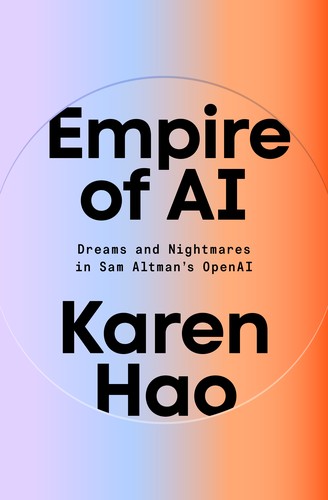
Investigative journalist Karen Hao traces the inside story of OpenAI and the race to build ChatGPT, offering essential context on compute concentration, governance battles, and the geopolitical stakes of frontier AI.
Provides a comprehensive overview of grading rubrics, including how to create and use them effectively.
Provides a comprehensive overview of assessment in the classroom, including grading and reporting student learning.
This practical guide provides step-by-step instructions for writing successful grant proposals, including tips and templates.
Offers practical guidance on designing and delivering rigorous and engaging lessons. It provides strategies for developing critical thinking and problem-solving skills through lesson design. It valuable resource for teachers aiming to elevate the intellectual challenge of their instruction.
A project-driven introduction to wiring ChatGPT APIs into real software, walking developers through authentication, streaming responses, context management, and building custom conversational utilities.
Explores how technology can be designed to influence behavior. While not solely focused on gamification, it provides valuable insights into the principles of persuasion and behavior change that are fundamental to gamified design. It's a useful resource for understanding the ethical considerations and potential impact of persuasive technologies.
Nathan Hunter distills practical prompting techniques for everyday ChatGPT users, illustrating how role framing, constraints, and iterative questioning dramatically improve output quality for research and content creation.
Provides practical strategies for incorporating inquiry-based learning into lesson plans using everyday objects. It focuses on hands-on activities that promote critical thinking and active learning. While centered on using objects, the principles can be applied to various subjects and grade levels. It useful resource for adding depth and engagement to lessons.
Introduces a focused and time-saving approach to lesson planning that centers on student outcomes and backward design. It emphasizes the importance of well-designed tasks in revealing teacher intentions and content to be learned. It is suitable for independent study or use in teacher education programs.
Drawing on John Hattie's extensive research on factors influencing student achievement, this book focuses on high-impact strategies specifically for literacy instruction. It helps educators make informed decisions when planning literacy lessons to maximize student learning. It's a valuable resource for evidence-based lesson design in literacy.

Share

Help others find this course page by sharing it with your friends and followers:

Similar courses

Here are nine courses similar to ChatGPT for Teachers: The Ultimate Guide to Simplifying Life.
Innovative Teaching with ChatGPT
Most relevant
Creating LLM powered NPCs
Most relevant
Using AI & ChatGPT for Content: Research & Planning
Most relevant
Generative AI Teach-Out
Most relevant
React JS & ChatGPT Course 2026: Build Modern AI-Powered...
Most relevant
Prompt Engineering: From Basics to Breakthroughs
Most relevant
Build Python Programs with ChatGPT with Zero Coding Skills
Most relevant
AI SEO Blogging: Passive Income Blog Rank #1 (ChatGPT)
Most relevant
Unleash your math potential with ChatGPT
Most relevant

Udemy Buyer Protection & Guarantee

Verified partner policies & purchase protections

Global Marketplace Leader
Free Trial & Audit

Free Lecture Previews

Free preview video lectures available for all courses; optional 7-day free trial on Personal Plan subscriptions (cancel before trial ends to avoid conversion).

Return & Refund Policy

30-Day Money-Back Guarantee

30-day money-back guarantee on all eligible individual course purchases (provided course content has not been substantially consumed or downloaded). Subscription fees are non-refundable once billed.

Buyer Protections

Verified Academic & Industry Partner

Lifetime access to purchased individual courses and future updates, verifiable certificate of completion, and direct student Q&A forums.

Key Purchase Protections
30-day 100% money-back guarantee on course purchases
Lifetime access on web, mobile, and offline
Certificate of completion included with purchase
Direct instructor Q&A and active student community
OpenCourser Verified Partner Policy details last reviewed: 2026-10-22
Our mission

OpenCourser helps millions of learners each year. People visit us to learn workspace skills, ace their exams, and nurture their curiosity.

Our extensive catalog contains over 50,000 courses and twice as many books. Browse by search, by topic, or even by career interests. We'll match you to the right resources quickly.

Find this site helpful? Tell a friend about us.

Affiliate disclosure

We're supported by our community of learners. When you purchase or subscribe to courses and programs or purchase books, we may earn a commission from our partners.

Your purchases help us maintain our catalog and keep our servers humming without ads.

Thank you for supporting OpenCourser.

© 2016 - 2025 OpenCourser