We may earn an affiliate commission when you visit our partners.
Course Discontinued We've found some alternatives for you:

Top Active Alternatives

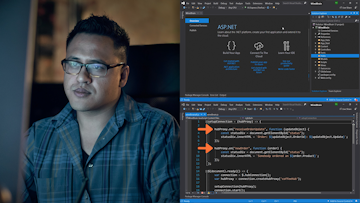
Getting Started with ASP.NET SignalR is no longer accepting new enrollments. We've matched the highest-rated active courses in this subject:

Course image
Roland Guijt
Read more
This course is no longer available. Find something similar by browsing:
WebSockets SignalR Real-Time Web JavaScript .NET Remote Procedure Call (RPC) Hubs

Traffic lights

Read about what's good
what should give you pause
and possible dealbreakers
Taught by Roland Guijt, an experienced instructor in the field of real-time web development
Demonstrates real-time web functionality, a vital component in modern web applications
Implements concepts using SignalR, a powerful framework for real-time web
Covers essential topics such as WebSockets, Server Sent Events (SSE), and long polling
Builds upon a strong foundation, suitable for those with some experience in web development
May require students to have access to specialized software or tools

Save this course

Create your own learning path. Save this course to your list so you can find it easily later.
Save

Career center

Learners who complete Getting Started with ASP.NET SignalR will develop knowledge and skills that may be useful to these careers:
Web Developer
Web Developers create and maintain websites and web applications. With a growing emphasis on real-time interaction, many web applications today are adding features like instant messaging, chat, and multiplayer gaming. In this course, you will build a solid foundation in the Microsoft SignalR framework, a powerful tool for creating real-time web applications. SignalR makes it easy to add real-time features to your web apps, enabling you to build more engaging and interactive experiences for your users. As a Web Developer, you will also need to be proficient in HTML, CSS, and JavaScript. Aspiring Web Developers who are interested in incorporating real-time functionality into their web applications should consider taking this course.
Software Engineer
Software Engineers design, develop, and maintain software systems. In recent years, there has been a growing demand for Software Engineers with expertise in real-time web technologies. SignalR is one of the most popular frameworks for building real-time web applications, and it is used by many large companies such as Microsoft, Amazon, and Google. In this course, you will learn the fundamentals of SignalR and how to use it to create real-time web applications. This course can help you build a strong foundation in real-time web development, which can make you more competitive in the job market.
Full-Stack Developer
Full Stack Developers are responsible for developing both the front-end and back-end of web applications. Real-time functionality is becoming increasingly important in web applications, and SignalR is a powerful tool for building real-time web applications. If you are looking to become a Full Stack Developer, or if you are a Full Stack Developer who wants to add real-time functionality to your web applications, then this course is a great place to start.
Web Architect
Web Architects design and develop the architecture of websites and web applications. With the growing popularity of real-time web applications, Web Architects need to be familiar with the latest technologies for building these types of applications. SignalR is one of the most popular frameworks for building real-time web applications, and it is used by many large companies such as Microsoft, Amazon, and Google. This course will teach you the fundamentals of SignalR and how to use it to create real-time web applications. This course can help you gain the skills and knowledge you need to be a successful Web Architect.
Cloud Architect
Cloud Architects design and develop the architecture of cloud-based applications. Real-time web applications are becoming increasingly popular, and many of these applications are deployed in the cloud. SignalR is a powerful tool for building real-time web applications, and it is supported by all major cloud providers such as Microsoft Azure, Amazon Web Services, and Google Cloud Platform. If you are looking to become a Cloud Architect, or if you are a Cloud Architect who wants to add real-time functionality to your cloud-based applications, then this course is a great place to start.
Data Scientist
Data Scientists use data to solve problems and make predictions. Real-time data is becoming increasingly important, and SignalR is a powerful tool for streaming real-time data to your applications. If you are looking to become a Data Scientist, or if you are a Data Scientist who wants to learn how to use real-time data, then this course is a great place to start.
Machine Learning Engineer
Machine Learning Engineers develop and deploy machine learning models. Real-time data is becoming increasingly important for training and deploying machine learning models. SignalR is a powerful tool for streaming real-time data to your applications. If you are looking to become a Machine Learning Engineer, or if you are a Machine Learning Engineer who wants to learn how to use real-time data, then this course is a great place to start.
Data Analyst
Data Analysts collect, clean, and analyze data to help businesses make better decisions. Real-time data is becoming increasingly important for businesses, and SignalR is a powerful tool for streaming real-time data to your applications. If you are looking to become a Data Analyst, or if you are a Data Analyst who wants to learn how to use real-time data, then this course is a great place to start.
Business Analyst
Business Analysts help businesses understand their needs and develop solutions to improve their operations. Real-time data is becoming increasingly important for businesses, and SignalR is a powerful tool for streaming real-time data to your applications. If you are looking to become a Business Analyst, or if you are a Business Analyst who wants to learn how to use real-time data, then this course is a great place to start.
Product Manager
Product Managers are responsible for developing and launching new products. Real-time data is becoming increasingly important for businesses, and SignalR is a powerful tool for streaming real-time data to your applications. If you are looking to become a Product Manager, or if you are a Product Manager who wants to learn how to use real-time data, then this course is a great place to start.
Project Manager
Project Managers are responsible for planning and executing projects. Real-time data is becoming increasingly important for businesses, and SignalR is a powerful tool for streaming real-time data to your applications. If you are looking to become a Project Manager, or if you are a Project Manager who wants to learn how to use real-time data, then this course is a great place to start.
Sales Manager
Sales Managers are responsible for selling products and services. Real-time data is becoming increasingly important for businesses, and SignalR is a powerful tool for streaming real-time data to your applications. If you are looking to become a Sales Manager, or if you are a Sales Manager who wants to learn how to use real-time data, then this course is a great place to start.
Marketing Manager
Marketing Managers are responsible for developing and executing marketing campaigns. Real-time data is becoming increasingly important for businesses, and SignalR is a powerful tool for streaming real-time data to your applications. If you are looking to become a Marketing Manager, or if you are a Marketing Manager who wants to learn how to use real-time data, then this course is a great place to start.
Human Resources Manager
Human Resources Managers are responsible for managing the human resources of an organization. Real-time data is becoming increasingly important for businesses, and SignalR is a powerful tool for streaming real-time data to your applications. If you are looking to become a Human Resources Manager, or if you are a Human Resources Manager who wants to learn how to use real-time data, then this course is a great place to start.
Financial Manager
Financial Managers are responsible for managing the finances of an organization. Real-time data is becoming increasingly important for businesses, and SignalR is a powerful tool for streaming real-time data to your applications. If you are looking to become a Financial Manager, or if you are a Financial Manager who wants to learn how to use real-time data, then this course is a great place to start.

Reading list

We've selected 50 books that we think will supplement your learning. Use these to develop background knowledge, enrich your coursework, and gain a deeper understanding of the topics covered in Getting Started with ASP.NET SignalR.
Is considered a foundational text for understanding the challenges and solutions in building scalable and reliable data systems. It provides a broad overview of the fundamental concepts behind databases and distributed systems, making it essential for gaining a broad understanding of scaling in a technical context. It is frequently recommended for both students and professionals and serves as an excellent reference.
Focused squarely on RFC 6455 mechanics and the browser WebSocket API, Lombardi walks developers through HTTP upgrade handshakes, binary frame handling, subprotocol negotiation, and connection heartbeats. Practical Node.js examples demonstrate real-time chat and live telemetry.
Kubernetes de facto standard for orchestrating containerized applications at scale. provides a practical introduction to Kubernetes, covering its architecture, deployment, and scaling capabilities. It's a must-read for anyone involved in deploying and managing scalable applications on cloud-native platforms.
Microservices are a popular architectural style for building scalable applications, and this book definitive guide to their design and implementation. It covers various aspects of microservices, including decomposition, testing, deployment, and scaling. It's essential for anyone looking to deepen their understanding of scaling through microservices.
Enterprise real-time architecture comes into sharp focus as Wang, Salim, and Moskovits layer higher-level messaging protocols—STOMP, XMPP, and VNC/RFB—directly over persistent WebSocket streams. Security, proxy traversal, and load-balancing strategies receive thorough treatment.
Is an excellent starting point for anyone new to .NET and C#. It provides a broad introduction to the fundamentals of C# programming and the .NET ecosystem, covering topics essential for beginners. It is often used as a foundational text in introductory programming courses and valuable resource for solidifying basic concepts before moving to more advanced areas. Its focus on modern .NET versions makes it highly relevant.
Is specifically designed to help readers prepare for the AZ-900 Microsoft Azure Fundamentals exam. It provides a broad overview of cloud concepts, core Azure services, security, privacy, compliance, and pricing. It serves as an excellent starting point for anyone new to Azure or cloud computing, providing foundational knowledge that is essential before diving into more specialized areas. This book is often used as a textbook or primary study guide for those seeking their first Azure certification.
Provides a catalog of design patterns specifically for building and deploying scalable microservices-based applications. It offers solutions to common challenges in microservices architecture, such as transaction management and inter-service communication. It's a valuable reference for developers and architects working with microservices.
Evaluating when to deploy WebSockets versus Server-Sent Events (SSE), HTTP/2 streams, or WebRTC data channels requires understanding wire-level framing and head-of-line blocking. Grigorik's benchmark-driven analysis of RFC 6455 framing and TLS overhead is essential reading.
Study guide for the AZ-104 exam, focusing on implementing and managing Azure infrastructure solutions. It covers topics like managing Azure identities and governance, implementing and managing storage, configuring and managing virtual networking, and managing Azure compute resources. It's a key resource for aspiring Azure Administrators.
Offers a comprehensive view of scalability, extending beyond just technology to include processes and organizational structures. It provides a framework for understanding the different dimensions of scaling (X, Y, and Z axes) and offers practical guidance for architects and leaders. It's valuable for gaining a broad understanding and useful reference for those involved in scaling at an enterprise level.
Study guide for the AZ-305 exam, focusing on designing Microsoft Azure infrastructure solutions. It covers key architectural decisions related to compute, storage, networking, and security. It's essential for aspiring Azure Solutions Architects and provides in-depth knowledge required for designing complex Azure environments.
Microservices are a popular architectural style, and this book guides .NET developers in building them effectively. It covers design principles, communication patterns, and deployment strategies relevant to the .NET ecosystem. It's a highly relevant book for contemporary software development and is useful for understanding how to structure larger applications. The second edition is updated for modern .NET and includes coverage of Kubernetes.
Focuses on leveraging Kubernetes within a DevOps workflow to build and scale modern applications in the cloud. It covers topics such as CI/CD, monitoring, and security in a Kubernetes environment, providing practical insights for achieving scalable and reliable deployments.
Scaling stateful WebSocket servers to millions of concurrent connections demands distributed pub/sub, presence tracking, and graceful reconnection strategies. Bussey demonstrates how Elixir and Phoenix Channels solve real-time fan-out, backpressure, and cluster split-brain pitfalls.
Dependency Injection key technique for building loosely coupled and testable applications in .NET. provides a deep dive into the principles and practices of DI, with examples relevant to .NET developers. It's essential for writing maintainable and scalable code and is highly recommended for anyone moving beyond basic .NET development.
Focuses on designing secure, scalable, and highly available applications on Azure. It delves into core architectural concepts, including serverless architecture, containers, Kubernetes, and big data solutions. It's essential for those looking to deepen their understanding of how to build robust and efficient solutions on the platform. This book is valuable for both aspiring and experienced Azure architects and can serve as a key reference for design patterns and best practices.
Offers a practical, task-focused introduction to Azure, broken down into 21 easy-to-digest lessons. It covers core Azure concepts and services through hands-on labs, making it ideal for beginners who want to quickly gain practical experience. While not an exhaustive reference, it's highly valuable for solidifying fundamental understanding and getting productive with Azure in a short timeframe. It's well-regarded for its accessible approach to learning Azure basics.
Authored by the specification lead for the Java API for WebSocket (JSR 356), this guide explains annotated endpoints, message encoders/decoders, asynchronous send modes, and container lifecycle management on enterprise JVM servers.
Provides a practical introduction to the design principles and technologies that enable scalable applications. It covers foundational concepts of distributed systems and explores essential ingredients for scalable solutions, including replication, messaging, and microservices. It's a good resource for developers and architects looking to solidify their understanding of technical scaling.
Offers a comprehensive and detailed exploration of the C# language, suitable for those who want to move beyond the basics. It delves into language features and programming paradigms, providing a solid foundation for writing robust and efficient C# code. It serves as a strong reference for intermediate learners and can be used to deepen understanding after a foundational text.
Classic in the JavaScript community, and it is still one of the best books on the language. Crockford leading expert on JavaScript, and his book is full of insights and best practices.
Unit testing fundamental practice for ensuring code quality and maintainability. provides a practical guide to unit testing in .NET, covering principles, techniques, and tools. It's essential reading for any .NET developer who wants to write reliable software. The examples are in .NET, making it directly applicable.
Memory management complex but critical aspect of .NET performance. dives deep into the .NET garbage collector and provides practical techniques for optimizing memory usage. It's a specialized topic, but essential for senior developers and those working on performance-sensitive applications.
While not exclusively about scaling, this book provides invaluable insights into operating and scaling large-scale systems reliably. It outlines the practices and principles that Google uses to ensure the availability, latency, performance, and efficiency of their systems, all of which are critical aspects of scaling successfully.
For organizations transitioning from monolithic architectures to microservices to achieve better scalability and agility, this book provides a guide to the process. It outlines evolutionary patterns and strategies for safely and effectively breaking down a monolith into smaller, scalable services.
Identity and Access Management (IAM) is critical in cloud security. provides in-depth coverage of managing identities and access in Azure, including Azure Active Directory (now Microsoft Entra ID) and related services. It's a must-read for anyone responsible for securing Azure environments and managing user access.
Provides a comprehensive guide to monitoring and managing Azure environments. It covers selecting, deploying, and running Azure's monitoring and management services to simplify administration, reduce downtime, and optimize costs. It's a crucial resource for Azure administrators and operations professionals responsible for maintaining healthy and efficient Azure deployments.
Serves as a gentle introduction to the core concepts of distributed systems, which are fundamental to understanding scaling in modern applications. It breaks down complex ideas into simpler terms, making it suitable for those new to the topic. It's an excellent starting point for gaining a broad understanding before diving into more advanced material.
Focusing on building and maintaining big data platforms on Azure, this book covers data management patterns, techniques, and best practices used within Microsoft. It's highly relevant for those interested in data engineering, ETL/ELT, and data governance on the Azure platform. provides practical guidance for setting up infrastructure, orchestration, workloads, and governance, making it a valuable resource for data professionals.
Data access critical part of most applications, and Entity Framework Core is the standard ORM in .NET. provides in-depth coverage of EF Core, from basic usage to advanced topics. It's essential for developers working with databases in .NET applications and serves as an excellent reference.
Focuses on writing flexible and maintainable code using design patterns and SOLID principles, which are highly relevant in .NET development. It helps developers write code that can easily adapt to changing requirements, a critical skill in agile environments. It's a practical guide that bridges theory and practice.
Explains Azure DevOps and its components for implementing DevOps practices on Azure. It covers topics like CI/CD pipelines, source control, and artifact management within the Azure ecosystem. It's highly relevant for developers and operations professionals looking to streamline their application development and deployment processes using Azure DevOps.
Addresses the challenges of designing and deploying software that can withstand real-world pressures, including scaling under load and handling failures. It provides patterns and practices for building resilient systems, which is crucial for successful scaling in production environments.
Introduces essential architecture patterns for designing applications for the cloud, with a significant focus on scalability. It covers patterns like horizontal scaling, queue-centric workflows, and auto-scaling, providing practical guidance for leveraging cloud services for scalable deployments.
Focusing specifically on testing in the context of ASP.NET Core, this book covers various testing techniques, including unit, integration, and functional testing. It's a practical guide for ensuring the quality of web applications built with ASP.NET Core.
Focuses on Azure services relevant to developers, particularly Platform as a Service (PaaS) offerings like App Service, Functions, and databases. It guides developers in building and deploying applications on Azure. It's a valuable resource for developers looking to leverage Azure's cloud capabilities and understand best practices for cloud-native development.
Focusing on the unique challenges of scaling deep learning models and infrastructure, this book covers topics such as distributed training, model parallelism, and optimizing performance for large-scale deep learning workloads. It's a specialized but highly relevant book for those in the AI/ML field.
Modern real-time web backends bridge durable event logs like Kafka directly to browser clients over WebSocket gateways. Kumar illustrates how to decouple high-velocity event ingestion from stateful client-facing WebSocket push tiers.
Another language-agnostic classic, this book offers timeless advice on various aspects of software development, including productivity, craftsmanship, and career development. Its principles are highly relevant to .NET developers seeking to improve their overall effectiveness and approach to building software.
Understanding the internals of databases and distributed data systems is key to designing scalable applications. delves into the fundamental concepts and mechanisms behind how these systems work, providing a deeper understanding of topics like storage engines, indexing, and replication.
Event-driven nonblocking I/O makes Node.js and the ws library a dominant stack for real-time WebSocket servers and horizontal Redis pub/sub scaling. Casciaro and Mammino detail streams, backpressure, and distributed messaging patterns critical for socket stability.
Using a visually rich and engaging format, this book is ideal for learners who prefer a more interactive approach. It covers core C# and .NET concepts in a way that aids understanding and retention. While not an exhaustive reference, it's a great supplementary read for beginners and can help make the initial learning process more enjoyable.
Known as the 'Gang of Four' book, this foundational text on software design patterns. While not .NET-specific, the patterns described are widely applicable and implemented in .NET. Understanding these patterns is crucial for writing well-structured and maintainable object-oriented code in any language, including C#.
Concurrency and parallel programming are important aspects of modern application development. This cookbook provides practical recipes and solutions for common concurrency problems in C#, helping developers write responsive and efficient applications.
Explores various architectural perspectives within Azure, covering infrastructure, application, data, and security architecture. It uses 'maps' to illustrate how different Azure services can be combined to build solutions. This book is particularly useful for understanding cloud-native concepts and how to design comprehensive solutions on Azure. It's a good resource for architects and developers looking to gain a broader and deeper view of Azure's capabilities.
A recipe-based guide to building and managing ETL/ELT pipelines using Azure Data Factory (ADF). is practical and problem-solution oriented, covering various aspects of ADF, Azure Synapse, and data integration. It's an excellent resource for data engineers and ETL developers working with Azure's data services, providing hands-on examples for common tasks.

Share

Help others find this course page by sharing it with your friends and followers:

Similar courses

Here are nine courses similar to Getting Started with ASP.NET SignalR.
Authentic Node.js WebSocket Server Workshop
Most relevant
AR in marketing using Meta Spark
Most relevant
Manipulate Arrays with JavaScript Methods
Most relevant
Creating a Quiz Game using Vanilla JavaScript
Most relevant
Interactivity with JavaScript
Most relevant
Learn TypeScript
Most relevant
Build a WebSocket server with Node.js - no libraries -...
Most relevant
Docker Bootcamp: Conquer Docker with Real-World Projects
Most relevant
Vector Search with Relational Databases using PostgreSQL
Most relevant

Pluralsight Buyer Protection & Guarantee

Verified partner policies & purchase protections

Enterprise Technology Platform
Free Trial & Audit

10-Day Free Trial

10-day free trial (up to 200 minutes of content) with access to the Skills video library and skill assessments. Cancel before day 10 to avoid automatic conversion.

Return & Refund Policy

Cancel Anytime (Non-Refundable Once Billed)

Cancel easily online anytime before the 10-day trial expires to prevent billing. Once subscription fees are paid, individual subscriptions are non-refundable (cancellation stops future renewals).

Buyer Protections

Verified Academic & Industry Partner

Skill IQ and Role IQ diagnostic benchmark assessments, hands-on lab environments, and curated learning paths designed by technology leaders.

Key Purchase Protections
10-day free trial on individual Skills plans
Skill IQ assessments to benchmark proficiency
Cancel anytime online before trial ends without fees
Hands-on interactive labs and enterprise-grade tech content
OpenCourser Verified Partner Policy details last reviewed: 2026-10-22
Our mission

OpenCourser helps millions of learners each year. People visit us to learn workspace skills, ace their exams, and nurture their curiosity.

Our extensive catalog contains over 50,000 courses and twice as many books. Browse by search, by topic, or even by career interests. We'll match you to the right resources quickly.

Find this site helpful? Tell a friend about us.

Affiliate disclosure

We're supported by our community of learners. When you purchase or subscribe to courses and programs or purchase books, we may earn a commission from our partners.

Your purchases help us maintain our catalog and keep our servers humming without ads.

Thank you for supporting OpenCourser.

© 2016 - 2025 OpenCourser