We may earn an affiliate commission when you visit our partners.
Course image
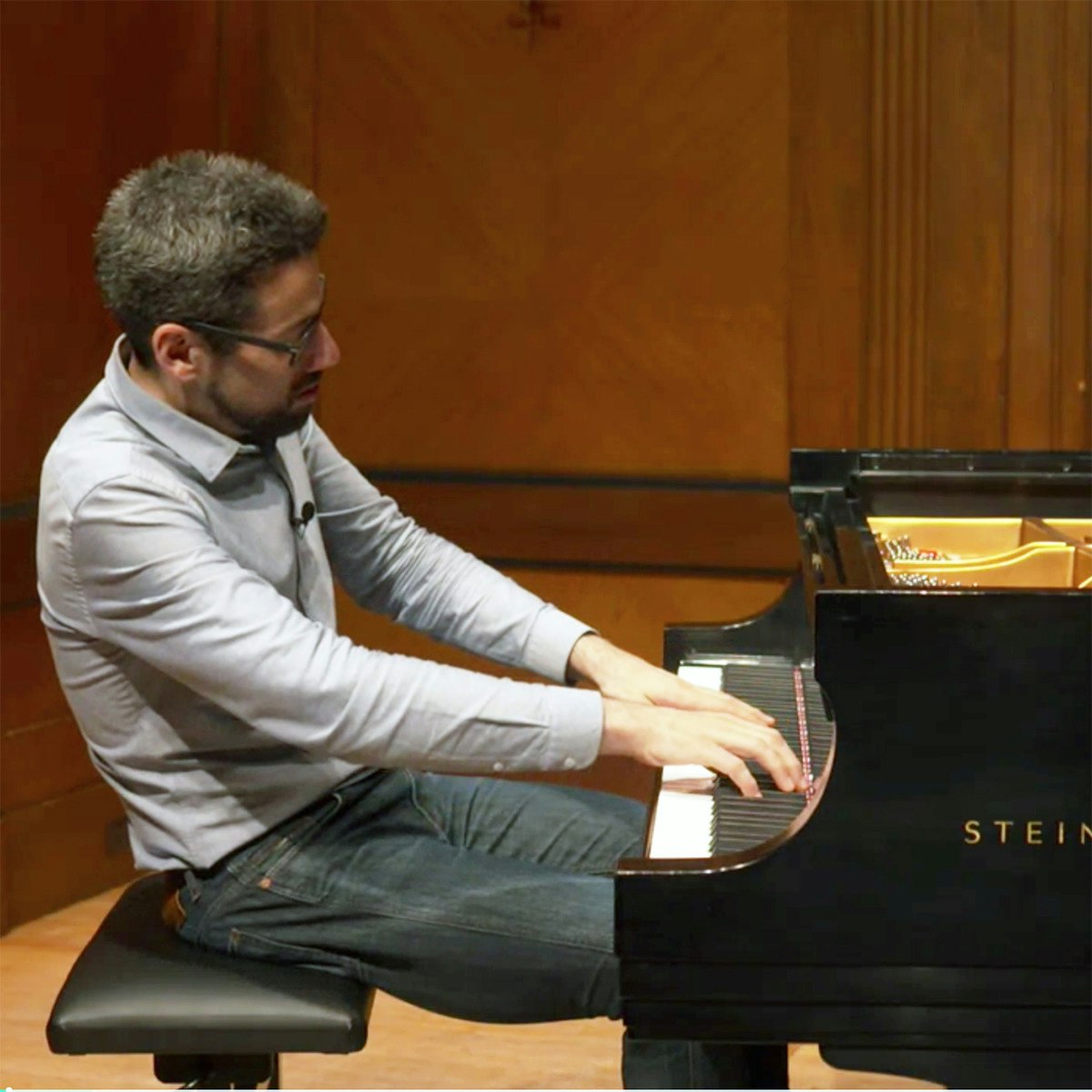
Jonathan Biss

Welcome to Part 3 of Exploring Beethoven's Piano Sonatas!

I'm delighted to launch another set of new lectures of this course as Part 3. As before, this class is meant for people of all levels of experience with Beethoven's music (including no experience at all!). Remember that you are able to watch the lectures as many times as you like, at whatever pace is comfortable for you.

Read more

Welcome to Part 3 of Exploring Beethoven's Piano Sonatas!

I'm delighted to launch another set of new lectures of this course as Part 3. As before, this class is meant for people of all levels of experience with Beethoven's music (including no experience at all!). Remember that you are able to watch the lectures as many times as you like, at whatever pace is comfortable for you.

As I’ve done with the first two sets of Beethoven lectures, I look forward to meeting with students—online and in person, in various cities. The dates and locations will be posted in the Announcements and Events section, as part of the course content. So please remember to check back there for details.

In these four new lectures, we will explore the following sonatas:

• Sonata Op. 10, No. 1

• Sonata Op. 22

• Sonata Op. 31, No. 2

• Sonata Opp. 78, 79, 81a

The Dolfinger-McMahon Foundation supports Curtis’s lifelong learning initiatives.

Enroll now

Here's a deal for you

Save money when you learn with a deal that may be relevant to this course.
All coupon codes, vouchers, and discounts are applied automatically unless otherwise noted.

What's inside

Syllabus

welcome to class
We are glad that you have joined us for Part 3 of Exploring Beethoven's Piano Sonatas course, taught by Curtis faculty member and extraordinary concert artist, Jonathan Biss! This course is considered Part 3, with new and separate sets of lectures. Specifically, in Part 3 we will cover Beethoven's Piano Sonatas Op. 10, No. 1, Op. 22, Op. 31, No. 2 and Opp. 78, 79 and 81a. As with the other two Beethoven courses, it is not necessary to have taken the previous Exploring Beethoven's Piano Sonatas courses. We know you will be perfectly comfortable to start learning with Part 3, if you wish and go from here. There is always the option to go back to Parts 1 and 2 at any time. Between these two courses, there exists a large amount of additional resources and learning that might be helpful as you embark on Part 3. We certainly encourage you to take Parts 1 and 2, if you have not just yet. In the meantime, enjoy the class: Part 3 of Exploring Beethoven’s Piano Sonatas.
Read more

Traffic lights

Read about what's good
what should give you pause
and possible dealbreakers
Provides a deep dive into a specific set of Beethoven's piano sonatas, tapping into a niche interest for classical music enthusiasts and performers
Taught by Jonathan Biss, an internationally renowned concert pianist and pedagogue, providing learners with access to high-quality instruction from an expert in the field
Suitable for learners of all experience levels, making it accessible to a wide audience, including beginners and enthusiasts alike
Focuses on exploring specific sonatas, rather than providing a comprehensive overview of Beethoven's entire piano sonata repertoire, potentially limiting its appeal to those seeking a broader understanding of the composer's work
Relies on external resources, such as access to Jonathan Biss's Beethoven Sonatas recordings, which may require additional subscriptions or purchases

Save this course

Create your own learning path. Save this course to your list so you can find it easily later.
Save

Reviews summary

Exploration of beethoven sonatas (part 3)

According to the course description, this installment covers specific Beethoven sonatas led by renowned pianist Jonathan Biss. It states it is open to learners of all levels and includes access to instructor recordings. While the syllabus details the sonatas covered, without student feedback, it is unclear how well it serves absolute beginners or the depth of analysis provided in practice.
Can be taken independently, part of larger set.
"It's good that I can start with Part 3."
"I might consider taking Parts 1 and 2 later if this one is good."
"Does it reference material heavily from previous parts?"
Specific, potentially complex sonatas explored.
"I'm interested in the analysis of Op. 31, No. 2."
"The selection of sonatas in Part 3 seems challenging and rewarding."
"I hope the lectures provide thorough analysis of these works."
Course claims to be for all experience levels.
"I wonder if this course is truly suitable for someone with no musical background."
"Will the analysis be too technical for a beginner?"
"As someone with some music theory, I hope it still offers depth."
Access to instructor's own performances.
"Having Jonathan Biss's recordings available seems very valuable."
"Listening to the analyses alongside his performance should be insightful."
"I appreciate having the performances readily accessible."
Course led by renowned concert pianist.
"I would expect deep musical insight from a concert pianist like Jonathan Biss."
"His performance background should bring unique perspectives to the analysis."
"Learning from such a highly regarded musician seems like a great opportunity."

Activities

Be better prepared before your course. Deepen your understanding during and after it. Supplement your coursework and achieve mastery of the topics covered in Exploring Beethoven's Piano Sonatas Part 3 with these activities:
Review Music Theory Basics
Reinforce your understanding of basic music theory concepts, including scales, chords, and rhythm, to enhance your understanding of Beethoven's sonatas.
Browse courses on Music Theory
Show steps
  • Review scales and their construction.
  • Practice identifying chords and their inversions.
  • Analyze the rhythmic patterns in simple pieces.
Review Beethoven's Musical Style and Historical Context
Refresh your knowledge of Beethoven's musical style and the historical context during which he composed his sonatas to enhance your understanding of the pieces explored in this course.
Browse courses on Historical Context
Show steps
  • Review key characteristics of Beethoven's musical style, such as his use of dissonance, development sections, and rhythmic innovations.
  • Explore the historical context of Beethoven's time, including the cultural and political influences that shaped his musical journey.
Read 'Beethoven's Piano Sonatas: A Short Companion' by Charles Rosen
Gain additional insights into Beethoven's piano sonatas by reading this comprehensive guide, offering historical context, analytical perspectives, and detailed discussions of each sonata.
Show steps
  • Purchase or borrow the book from a library.
  • Read the book thoroughly, taking notes and highlighting key passages.
  • Refer to the book throughout the course to supplement your understanding.
Five other activities
Expand to see all activities and additional details
Show all eight activities
Explore Beethoven's Piano Sonatas with Online Tutorials
Supplement your learning by seeking out online tutorials that provide in-depth analysis and performance insights into Beethoven's piano sonatas.
Show steps
  • Search for reputable online sources offering tutorials on Beethoven's sonatas.
  • Choose tutorials that cover the specific sonatas included in Part 3.
  • Take notes and practice the techniques and interpretations demonstrated in the tutorials.
Join a Study Group for Collaborative Learning
Engage with fellow students through a study group to discuss the sonatas, share insights, and enhance your understanding through peer-to-peer learning.
Show steps
  • Reach out to classmates or join online forums to connect with potential study partners.
  • Establish regular meeting times and set clear goals for each session.
  • Take turns presenting and discussing different aspects of the sonatas.
Analyze and Perform Selected Piano Sonatas
Enhance your comprehension by selecting a few sonatas and thoroughly analyzing their musical structure, harmonies, and technical demands. Practice performing them to deepen your understanding and develop your musical skills.
Show steps
  • Choose specific sonatas for in-depth analysis.
  • Break down the sonatas into smaller sections and analyze their harmonic progressions, melodic lines, and rhythmic patterns.
  • Practice performing the sonatas slowly and carefully, focusing on accuracy and interpretation.
Write a Comparative Essay on Two Sonatas
Demonstrate your understanding and analytical skills by writing a comparative essay that examines two sonatas, highlighting their similarities, differences, and musical significance.
Show steps
  • Select two sonatas for comparison.
  • Conduct a thorough analysis of each sonata, considering their musical elements, form, and historical context.
  • Write an essay that compares and contrasts the two sonatas, discussing their unique characteristics and contributions to Beethoven's piano music.
Contribute to the Beethoven Piano Sonata Database
Engage in meaningful learning by contributing to the creation of a comprehensive database on Beethoven's piano sonatas. This involves researching, compiling, and organizing information related to the sonatas in a collaborative online platform.
Show steps
  • Join the Beethoven Piano Sonata Database project.
  • Research specific sonatas and gather relevant information, such as performance history, musical analysis, and historical background.
  • Contribute your findings to the database, ensuring accuracy and completeness.

Career center

Learners who complete Exploring Beethoven's Piano Sonatas Part 3 will develop knowledge and skills that may be useful to these careers:
Music Teacher
As a Music Teacher, you will provide music instruction to students of all ages and skill levels. You may teach a variety of instruments, including the piano, and you will need to be able to demonstrate proficiency in playing the instrument. Courses like Exploring Beethoven's Piano Sonatas Part 3 can help build a foundation in music theory and piano performance, which can be helpful for aspiring Music Teachers.
Piano Tuner
As a Piano Tuner, you will be responsible for tuning and repairing pianos. You will need to have a good understanding of the mechanics of a piano and be able to make adjustments to the strings and other components. Courses like Exploring Beethoven's Piano Sonatas Part 3 can help you develop a deeper understanding of the piano, which can be helpful for aspiring Piano Tuners.
Music Composer
As a Music Composer, you will create original music compositions. You will need to have a strong understanding of music theory and be able to use a variety of instruments and techniques to create your compositions. Courses like Exploring Beethoven's Piano Sonatas Part 3 can help you develop your musical creativity and composition skills, which can be helpful for aspiring Music Composers.
Music Arranger
As a Music Arranger, you will adapt and arrange existing music for different instruments or ensembles. You will need to have a strong understanding of music theory and be able to use a variety of instruments and techniques to create your arrangements. Courses like Exploring Beethoven's Piano Sonatas Part 3 can help you develop your musical creativity and arrangement skills, which can be helpful for aspiring Music Arrangers.
Music Producer
As a Music Producer, you will oversee the recording, mixing, and mastering of music. You will need to have a strong understanding of music production techniques and be able to work with a variety of artists and musicians. Courses like Exploring Beethoven's Piano Sonatas Part 3 can help you develop your music production skills, which can be helpful for aspiring Music Producers.
Music Librarian
As a Music Librarian, you will manage and catalog music collections. You will need to have a strong understanding of music theory and be able to use a variety of library resources. Courses like Exploring Beethoven's Piano Sonatas Part 3 can help you develop your music theory knowledge and library skills, which can be helpful for aspiring Music Librarians.
Music Historian
As a Music Historian, you will research and write about the history of music. You will need to have a strong understanding of music theory and be able to use a variety of research methods. Courses like Exploring Beethoven's Piano Sonatas Part 3 can help you develop your music theory knowledge and research skills, which can be helpful for aspiring Music Historians.
Music Critic
As a Music Critic, you will write reviews and articles about music performances and recordings. You will need to have a strong understanding of music theory and be able to write clearly and concisely. Courses like Exploring Beethoven's Piano Sonatas Part 3 can help you develop your music theory knowledge and writing skills, which can be helpful for aspiring Music Critics.
Music Educator
As a Music Educator, you will teach music to students of all ages. You will need to have a strong understanding of music theory and be able to use a variety of teaching methods. Courses like Exploring Beethoven's Piano Sonatas Part 3 can help you develop your music theory knowledge and teaching skills, which can be helpful for aspiring Music Educators.
Music Therapist
As a Music Therapist, you will use music to help people improve their physical and mental health. You will need to have a strong understanding of music theory and be able to work with a variety of clients. Courses like Exploring Beethoven's Piano Sonatas Part 3 can help you develop your music theory knowledge and therapeutic skills, which can be helpful for aspiring Music Therapists.
Music Journalist
As a Music Journalist, you will write articles and reviews about music for newspapers, magazines, and websites. You will need to have a strong understanding of music theory and be able to write clearly and concisely. Courses like Exploring Beethoven's Piano Sonatas Part 3 can help you develop your music theory knowledge and writing skills, which can be helpful for aspiring Music Journalists.
Music Promoter
As a Music Promoter, you will promote and organize music events. You will need to have a strong understanding of the music industry and be able to work with a variety of artists and venues. Courses like Exploring Beethoven's Piano Sonatas Part 3 can help you develop your music industry knowledge and promotional skills, which can be helpful for aspiring Music Promoters.
Music Publisher
As a Music Publisher, you will acquire and publish musical works. You will need to have a strong understanding of the music industry and be able to work with a variety of artists and songwriters. Courses like Exploring Beethoven's Piano Sonatas Part 3 can help you develop your music industry knowledge and publishing skills, which can be helpful for aspiring Music Publishers.
Music Director
As a Music Director, you will lead and conduct musical ensembles. You will need to have a strong understanding of music theory and be able to work with a variety of musicians. Courses like Exploring Beethoven's Piano Sonatas Part 3 can help you develop your music theory knowledge and conducting skills, which can be helpful for aspiring Music Directors.
Music Professor
As a Music Professor, you will teach music at a college or university. You will need to have a strong understanding of music theory and be able to conduct research. Courses like Exploring Beethoven's Piano Sonatas Part 3 can help you develop your music theory knowledge and research skills, which can be helpful for aspiring Music Professors.

Reading list

We've selected ten books that we think will supplement your learning. Use these to develop background knowledge, enrich your coursework, and gain a deeper understanding of the topics covered in Exploring Beethoven's Piano Sonatas Part 3.
Provides a comprehensive overview of Beethoven's piano sonatas, discussing their musical structure, historical context, and performance practice. It valuable resource for students and performers alike.
Provides a comprehensive overview of Beethoven's life, music, and legacy. It includes essays by leading scholars on a variety of topics, including Beethoven's musical style, his historical context, and his influence on later composers.
Provides a detailed history of Beethoven's piano sonatas, discussing their musical style, historical context, and performance practice. It valuable resource for students and performers who want to learn more about the development of Beethoven's music.
Provides a detailed analysis of each of Beethoven's piano sonatas, discussing their musical structure, technical challenges, and performance considerations. It valuable resource for students and performers who want to deepen their understanding of Beethoven's music.
Provides a comprehensive guide to Beethoven's piano sonatas, discussing their musical style, historical context, and performance practice. It valuable resource for students and performers who want to learn more about Beethoven's music.
Provides a detailed analysis of each of Beethoven's piano sonatas, discussing their musical structure, technical challenges, and performance considerations. It valuable resource for students and performers who want to deepen their understanding of Beethoven's music.
Provides a philosophical interpretation of Beethoven's piano sonatas, discussing their musical structure, technical challenges, and performance considerations. It valuable resource for students and performers who want to deepen their understanding of Beethoven's music.
Provides a sociological perspective on Beethoven's piano sonatas, discussing their musical structure, technical challenges, and performance considerations. It valuable resource for students and performers who want to deepen their understanding of Beethoven's music.

Share

Help others find this course page by sharing it with your friends and followers:

Similar courses

Similar courses are unavailable at this time. Please try again later.
Our mission

OpenCourser helps millions of learners each year. People visit us to learn workspace skills, ace their exams, and nurture their curiosity.

Our extensive catalog contains over 50,000 courses and twice as many books. Browse by search, by topic, or even by career interests. We'll match you to the right resources quickly.

Find this site helpful? Tell a friend about us.

Affiliate disclosure

We're supported by our community of learners. When you purchase or subscribe to courses and programs or purchase books, we may earn a commission from our partners.

Your purchases help us maintain our catalog and keep our servers humming without ads.

Thank you for supporting OpenCourser.

© 2016 - 2025 OpenCourser