Sorry, this page is no longer available
We may earn an affiliate commission when you visit our partners.
Course image
Hanspeter Schaub

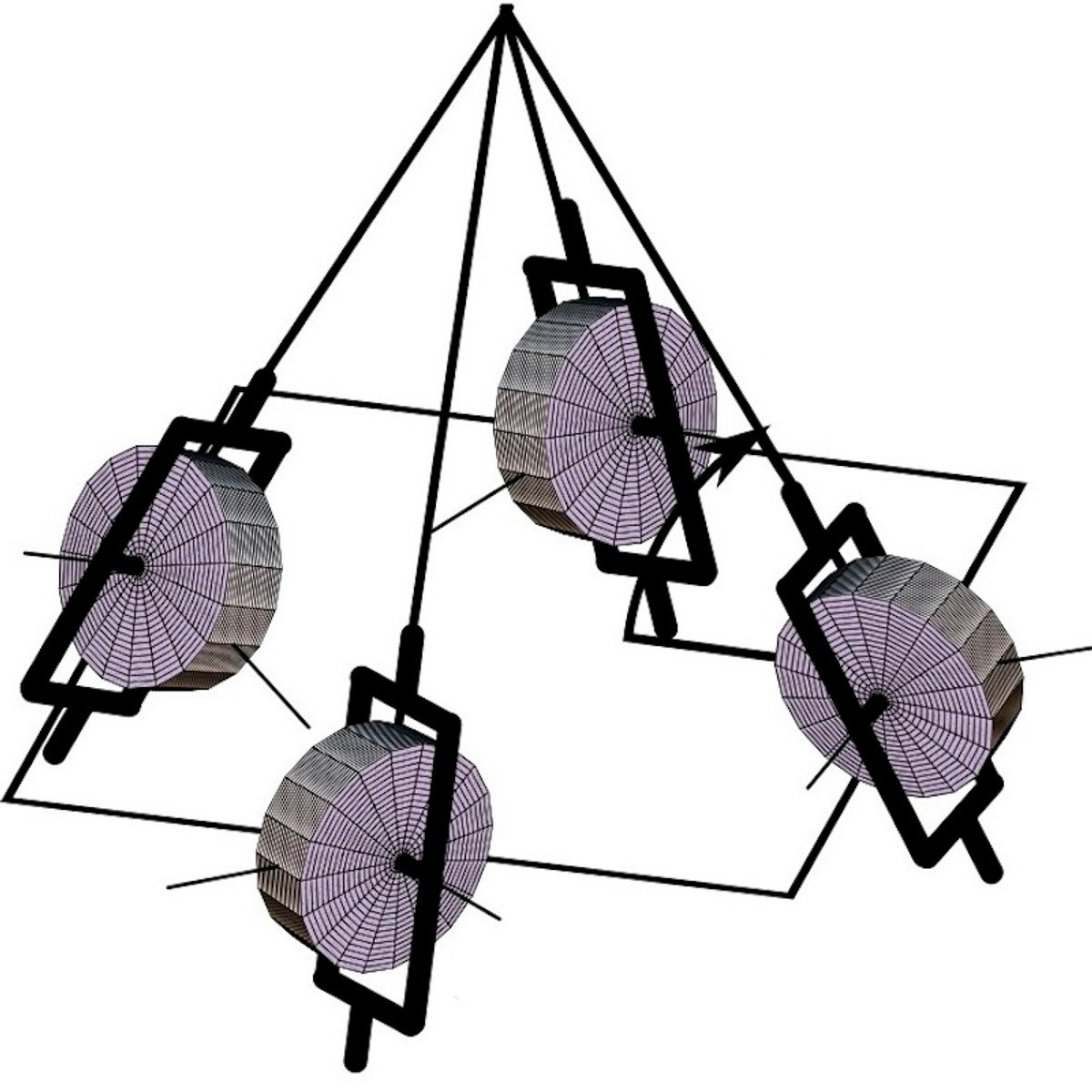
This course is part 1 of the specialization Advanced Spacecraft Dynamics and Control. It is a direct continuation of the Coursera specialization Spacecraft Dynamics and Control. This first course focuses on nonlinear attitude feedback control using a range of angular momentum devices. The course provides a comprehensive review of prerequisite material. Next it develops equations of motion of a spacecraft with momentum exchange devices such as reaction wheels (RWs), control momentum gyroscopes (CMGs) and variable speed control moment gyroscopes (VSCMGs).

Read more

This course is part 1 of the specialization Advanced Spacecraft Dynamics and Control. It is a direct continuation of the Coursera specialization Spacecraft Dynamics and Control. This first course focuses on nonlinear attitude feedback control using a range of angular momentum devices. The course provides a comprehensive review of prerequisite material. Next it develops equations of motion of a spacecraft with momentum exchange devices such as reaction wheels (RWs), control momentum gyroscopes (CMGs) and variable speed control moment gyroscopes (VSCMGs).

The course discusses developing a complex spacecraft simulation with a number VSCMGs and how to approach debugging such complex software. The use of the work/energy theorem is discussed to assist with debugging the simulation by validating angular momentum, energy, changes in momentum and mechanical power.

Further, the use of null motion is explored to reconfigure the attitude control devices to avoid singularities and gimbal lock. The redundancy is exploited to seek control solutions that avoid classical CMG singularities.

Enroll now

Here's a deal for you

Save money when you learn with a deal that may be relevant to this course.
All coupon codes, vouchers, and discounts are applied automatically unless otherwise noted.

What's inside

Syllabus

Revisiting Basics of Spacecraft Kinematics
The prerequisite topics of spacecraft kinematics are reviewed in this module. This sequence is intended to ramp up the student on the mathematical tools and concepts required for this course. For each topic we also dig a little deeper into the subject matter.
Read more

Traffic lights

Read about what's good
what should give you pause
and possible dealbreakers
Assumes a background in fundamental mathematics of kinematics and dynamics
Provides a comprehensive introduction to momentum-based 3-axis attitude control, relevant to spacecraft engineering
Taught by Hanspeter Schaub, who has a history of working in spacecraft dynamics and control
Builds on the foundational concepts taught in the Spacecraft Dynamics and Control specialization
Requires access to a complex spacecraft simulation with VSCMGs, which may not be readily available to all learners

Save this course

Create your own learning path. Save this course to your list so you can find it easily later.
Save

Reviews summary

Advanced spacecraft attitude control with md

According to learners, this course offers a deep and rigorous dive into spacecraft attitude control using momentum exchange devices like VSCMGs and CMGs. Students praise the comprehensive review of prerequisite material, which is vital for this advanced topic, and the clear explanations from the instructor. While the course is highly valued for its depth of knowledge and practical aspects like complex spacecraft simulation debugging, it is unequivocally not for beginners. Many highlight its high level of mathematical rigor and a fast pace, requiring a strong prior foundation in dynamics and control. Despite its demanding nature, it's considered essential for professionals in the field.
Instructor delivers clear, comprehensive, and insightful lectures.
"Dr. Schaub's <span class='positive'>lectures are incredibly clear and comprehensive."
"The <span class='positive'>instructor's insights were invaluable; I learned so much from his explanations."
"The <span class='positive'>lectures are dense but packed with information, making every minute worthwhile."
"I greatly appreciated the <span class='positive'>foundational reviews, which were thorough and prevented common pitfalls."
Features practical, challenging spacecraft simulation exercises.
"The <span class='positive'>simulations were challenging but immensely practical."
"I especially appreciated the sections on <span class='positive'>debugging complex simulations using work/energy theorems."
"The practical aspects of <span class='positive'>simulating spacecraft with multiple momentum devices were excellent."
"I found the <span class='neutral'>simulation aspects robust and highly beneficial for my understanding."
Provides unparalleled depth in advanced spacecraft control topics.
"The <span class='positive'>deep dive into VSCMG dynamics and null motion strategies was exactly what I needed for my research."
"Absolutely essential for anyone serious about spacecraft control. The <span class='positive'>coverage of CMGs and VSCMGs is top-tier."
"This course stands alone in terms of the <span class='positive'>depth it provides on these specific topics."
"I found the focus on <span class='positive'>momentum exchange devices detailed and highly relevant to my field."
Opinions diverge on the balance between theory and practical application.
"This course is <span class='warning'>very theoretical. While the content is deep, I felt it <span class='negative'>lacked hands-on examples beyond the main simulation."
"The theoretical background is solid, but the <span class='warning'>practical implementation advice for the simulations was sometimes sparse."
"I found the content deeply theoretical, but the <span class='positive'>simulation aspects made it highly relevant for my work."
"The course's <span class='positive'>depth of knowledge gained is unparalleled, even if some parts felt more academic than immediately practical."
Demanding pace with a high level of mathematical rigor.
"Expect a <span class='neutral'>high level of mathematical rigor, but it's well worth the effort."
"The <span class='warning'>pace is quite fast and sometimes I struggled to keep up, even with the review sections."
"The <span class='negative'>mathematics are overwhelming and the lectures assume a lot of prior knowledge."
"I found myself needing to pause and re-watch sections due to the <span class='warning'>dense lecture content and fast pace."
Course demands significant prior knowledge, challenging unprepared learners.
"This course is <span class='negative'>extremely difficult. Despite the 'review' modules, if you're not already an expert, you'll be lost."
"It's definitely <span class='warning'>not for beginners; make sure you have a strong foundation in orbital mechanics and linear control before starting."
"It <span class='negative'>did not effectively review basics for someone rusty, it just glossed over them at an advanced level. This course is for people who already know this stuff."
"I found this course <span class='negative'>overwhelming; the mathematics and assumed prior knowledge were a significant barrier."

Activities

Be better prepared before your course. Deepen your understanding during and after it. Supplement your coursework and achieve mastery of the topics covered in Attitude Control with Momentum Exchange Devices with these activities:
Review Matrix Algebra
A strong foundation in matrix algebra is essential for this course. Reviewing this topic will help you prepare for success.
Browse courses on Matrix Algebra
Show steps
  • Review your notes from a previous linear algebra course
  • Solve practice problems from a textbook or online resource
  • Attend a review session or workshop on matrix algebra
Create a Notebook of Class Notes, Assignments, and Quizzes
Creating a notebook of class notes, assignments, and quizzes will help you stay organized and keep track of the material covered in the course.
Show steps
  • Purchase a notebook or create a digital notebook using a note-taking app
  • Take notes during class lectures
  • Copy or print out assignments and quizzes
Review Celestial Mechanics
Familiarity with Celestial Mechanics will aid in understanding the fundamentals of this course and its many applications.
Show steps
  • Read Chapter 1: The Kinematics of a Point Mass
  • Read Chapter 2: The Dynamics of a Point Mass
  • Solve end-of-chapter problems
Three other activities
Expand to see all activities and additional details
Show all six activities
Follow Tutorials on VSCMG Dynamics
Understanding VSCMG Dynamics is crucial for this course. Following tutorials will help you grasp the concepts and equations involved.
Show steps
  • Find online tutorials on VSCMG Dynamics
  • Follow the tutorials and take notes
  • Solve the practice problems provided in the tutorials
Create a Model of a Spacecraft with VSCMGs
Creating a model of a spacecraft with VSCMGs will help you solidify your understanding of the spacecraft dynamics concepts covered in this course.
Browse courses on Spacecraft Dynamics
Show steps
  • Choose a spacecraft design and software platform to use
  • Model the spacecraft's dynamics, including the VSCMGs
  • Test and validate the model
Mentor a Student in Nonlinear Spacecraft Control
Mentoring a student in nonlinear spacecraft control will help you solidify your understanding of the concepts covered in this course.
Show steps
  • Identify a student who is struggling with the material
  • Work with the student to help them understand the concepts
  • Provide feedback on their work

Career center

Learners who complete Attitude Control with Momentum Exchange Devices will develop knowledge and skills that may be useful to these careers:
Spacecraft Attitude Control Engineer
The Spacecraft Attitude Control Engineer designs and implements control systems that orient spacecraft in the desired attitude. Attitude control systems help spacecraft point their instruments, keep their solar panels pointed towards the sun, or stabilize them for scientific measurements. This course will build a foundation in spacecraft dynamics and control. Students will learn how to develop equations of motion and attitude feedback control systems for spacecraft with momentum exchange devices. These skills are essential for designing spacecraft attitude control systems and will help the Spacecraft Attitude Control Engineer succeed in their career.
Aerospace Control Systems Engineer
The Aerospace Control Systems Engineer designs, develops, and tests control systems for aerospace vehicles. These systems include flight control systems, propulsion control systems, and navigation systems. This course will provide a solid foundation in spacecraft dynamics and control, which are essential for designing aerospace control systems. Students will learn how to develop equations of motion and attitude feedback control systems for spacecraft with momentum exchange devices. These skills will help the Aerospace Control Systems Engineer succeed in their career.
Rocket Scientist
The Rocket Scientist designs, develops, and tests rockets and spacecraft. They also work on the guidance and control systems that keep rockets and spacecraft on course. This course will provide a foundation in spacecraft dynamics and control, which are essential for designing rockets and spacecraft. Students will learn how to develop equations of motion and attitude feedback control systems for spacecraft with momentum exchange devices. These skills will help the Rocket Scientist succeed in their career.
Satellite Communications Engineer
The Satellite Communications Engineer designs, develops, and tests satellite communications systems. These systems are used to transmit data, voice, and video signals between satellites and ground stations. This course will provide a foundation in spacecraft dynamics and control, which are essential for designing satellite communications systems. Students will learn how to develop equations of motion and attitude feedback control systems for spacecraft with momentum exchange devices. These skills will help the Satellite Communications Engineer succeed in their career.
Astronautical Engineer
The Astronautical Engineer designs, develops, and tests spacecraft and space systems. They also work on the guidance and control systems that keep spacecraft and space systems on course. This course will provide a foundation in spacecraft dynamics and control, which are essential for designing spacecraft and space systems. Students will learn how to develop equations of motion and attitude feedback control systems for spacecraft with momentum exchange devices. These skills will help the Astronautical Engineer succeed in their career.
Avionics Engineer
The Avionics Engineer designs, develops, and tests avionics systems for aircraft and spacecraft. Avionics systems include flight control systems, navigation systems, and communication systems. This course will provide a foundation in spacecraft dynamics and control, which are essential for designing avionics systems. Students will learn how to develop equations of motion and attitude feedback control systems for spacecraft with momentum exchange devices. These skills will help the Avionics Engineer succeed in their career.
Control Systems Engineer
The Control Systems Engineer designs, develops, and tests control systems for a variety of applications, including industrial automation, robotics, and aerospace. This course will provide a foundation in spacecraft dynamics and control, which are essential for designing control systems. Students will learn how to develop equations of motion and attitude feedback control systems for spacecraft with momentum exchange devices. These skills will help the Control Systems Engineer succeed in their career.
Mechanical Engineer
The Mechanical Engineer designs, develops, and tests mechanical systems, including spacecraft, aircraft, and automobiles. This course will provide a foundation in spacecraft dynamics and control, which are essential for designing mechanical systems. Students will learn how to develop equations of motion and attitude feedback control systems for spacecraft with momentum exchange devices. These skills will help the Mechanical Engineer succeed in their career.
Electrical Engineer
The Electrical Engineer designs, develops, and tests electrical systems, including spacecraft, aircraft, and automobiles. This course will provide a foundation in spacecraft dynamics and control, which are essential for designing electrical systems. Students will learn how to develop equations of motion and attitude feedback control systems for spacecraft with momentum exchange devices. These skills will help the Electrical Engineer succeed in their career.
Computer Engineer
The Computer Engineer designs, develops, and tests computer systems, including spacecraft, aircraft, and automobiles. This course will provide a foundation in spacecraft dynamics and control, which are essential for designing computer systems. Students will learn how to develop equations of motion and attitude feedback control systems for spacecraft with momentum exchange devices. These skills will help the Computer Engineer succeed in their career.
Systems Engineer
The Systems Engineer designs, develops, and tests complex systems, including spacecraft, aircraft, and automobiles. This course will provide a foundation in spacecraft dynamics and control, which are essential for designing complex systems. Students will learn how to develop equations of motion and attitude feedback control systems for spacecraft with momentum exchange devices. These skills will help the Systems Engineer succeed in their career.
Software Engineer
The Software Engineer designs, develops, and tests software systems, including spacecraft, aircraft, and automobiles. This course will provide a foundation in spacecraft dynamics and control, which are essential for designing software systems. Students will learn how to develop equations of motion and attitude feedback control systems for spacecraft with momentum exchange devices. These skills will help the Software Engineer succeed in their career.
Data Scientist
The Data Scientist collects, analyzes, and interprets data to help businesses make better decisions. This course will provide a foundation in spacecraft dynamics and control, which will help the Data Scientist understand the data collected from spacecraft. Students will learn how to develop equations of motion and attitude feedback control systems for spacecraft with momentum exchange devices. These skills will help the Data Scientist succeed in their career.
Business Analyst
The Business Analyst helps businesses analyze their operations and make better decisions. This course will provide a foundation in spacecraft dynamics and control, which will help the Business Analyst understand the operations of spacecraft. Students will learn how to develop equations of motion and attitude feedback control systems for spacecraft with momentum exchange devices. These skills will help the Business Analyst succeed in their career.
Project Manager
The Project Manager plans, organizes, and manages projects. This course will provide a foundation in spacecraft dynamics and control, which will help the Project Manager understand the technical aspects of spacecraft projects. Students will learn how to develop equations of motion and attitude feedback control systems for spacecraft with momentum exchange devices. These skills will help the Project Manager succeed in their career.

Reading list

We've selected eight books that we think will supplement your learning. Use these to develop background knowledge, enrich your coursework, and gain a deeper understanding of the topics covered in Attitude Control with Momentum Exchange Devices.
Provides a comprehensive overview of spacecraft dynamics and control, covering both the theoretical and practical aspects of the subject. It valuable resource for students, researchers, and engineers working in the field of spacecraft attitude and orbit control.
Provides a comprehensive overview of modern control systems, covering both the theoretical and practical aspects of the subject. It valuable resource for students, researchers, and engineers working in the field of control systems.
Provides a comprehensive overview of spacecraft attitude determination and control, covering both the theoretical and practical aspects of the subject. It valuable resource for students, researchers, and engineers working in the field of spacecraft attitude and orbit control.
Provides a comprehensive overview of feedback control of dynamic systems, covering both the theoretical and practical aspects of the subject. It valuable resource for students, researchers, and engineers working in the field of control systems.
Provides a comprehensive overview of spacecraft control systems, covering both the theoretical and practical aspects of the subject. It valuable resource for students, researchers, and engineers working in the field of spacecraft attitude and orbit control.
Provides a comprehensive overview of spacecraft thermal control, covering both the theoretical and practical aspects of the subject. It valuable resource for students, researchers, and engineers working in the field of spacecraft design and operations.
Provides a comprehensive overview of nonlinear control systems, covering both the theoretical and practical aspects of the subject. It valuable resource for students, researchers, and engineers working in the field of control systems.
Provides a comprehensive overview of spacecraft dynamics and control, covering both the theoretical and practical aspects of the subject. It valuable resource for students, researchers, and engineers working in the field of spacecraft attitude and orbit control.

Share

Help others find this course page by sharing it with your friends and followers:

Similar courses

Similar courses are unavailable at this time. Please try again later.
Our mission

OpenCourser helps millions of learners each year. People visit us to learn workspace skills, ace their exams, and nurture their curiosity.

Our extensive catalog contains over 50,000 courses and twice as many books. Browse by search, by topic, or even by career interests. We'll match you to the right resources quickly.

Find this site helpful? Tell a friend about us.

Affiliate disclosure

We're supported by our community of learners. When you purchase or subscribe to courses and programs or purchase books, we may earn a commission from our partners.

Your purchases help us maintain our catalog and keep our servers humming without ads.

Thank you for supporting OpenCourser.

© 2016 - 2025 OpenCourser