We may earn an affiliate commission when you visit our partners.
Course image
Hanspeter Schaub

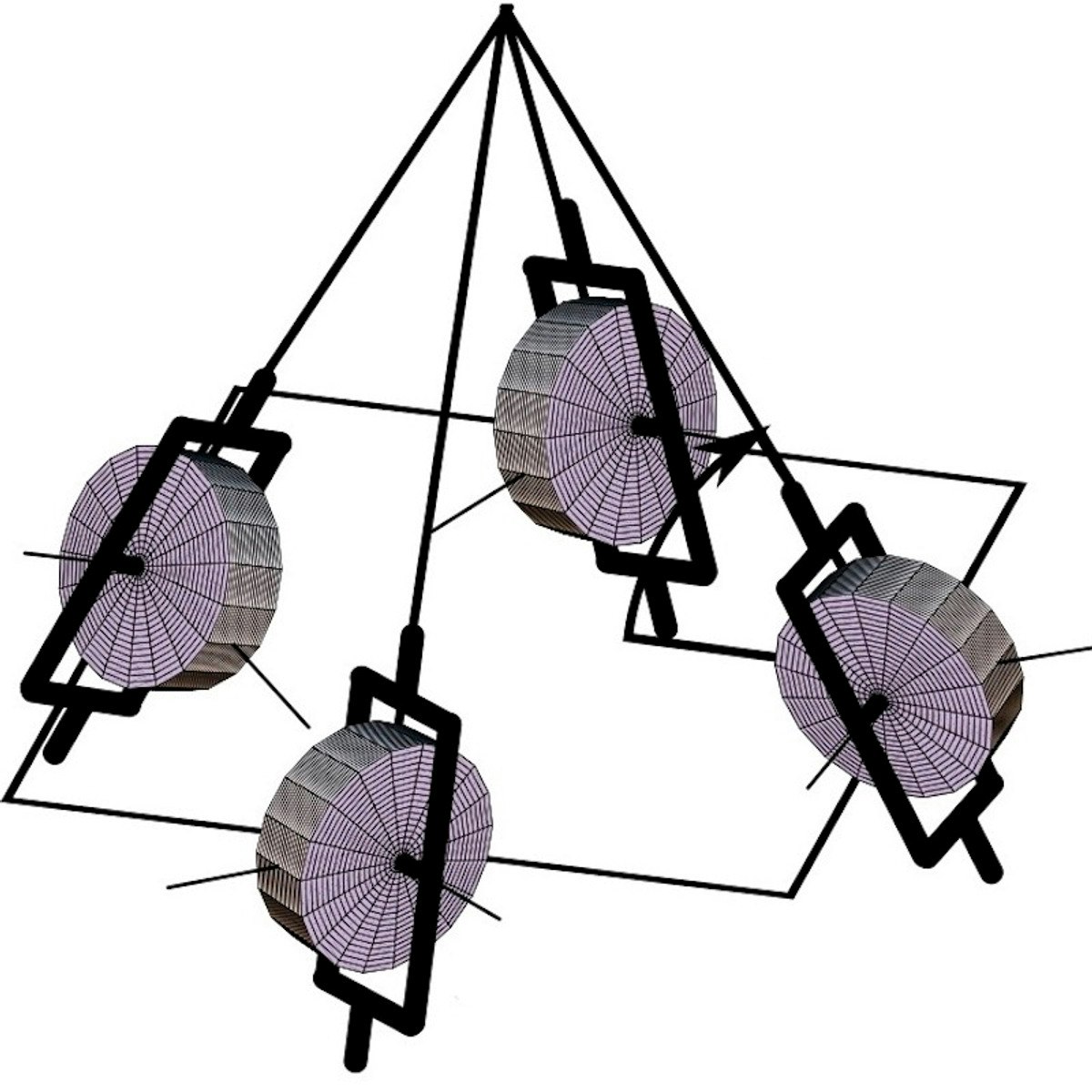
This capstone course is the 3rd and final course of the specialization Advanced Spacecraft Dynamics and Control. It assumes you have completed the prior courses on "Attitude Control with Momentum Exchange Devices" and "Analytical Mechanics for Spacecraft Dynamics". This project course investigates the dynamics of a complex spacecraft system where there is a rigid hub onto which a hinged panel is attached. This simulates a spacecraft with a time varying geometry.

Read more

This capstone course is the 3rd and final course of the specialization Advanced Spacecraft Dynamics and Control. It assumes you have completed the prior courses on "Attitude Control with Momentum Exchange Devices" and "Analytical Mechanics for Spacecraft Dynamics". This project course investigates the dynamics of a complex spacecraft system where there is a rigid hub onto which a hinged panel is attached. This simulates a spacecraft with a time varying geometry.

First, the three-dimensional kinematics of this system are explored. Analytical relationships of the body and panel position and velocity states are derived, and the center of mass properties of this system are explored.

Next, a simplified system is used to use Lagrange's equations of motion to predict the dynamical response. With these differential equations we are then able to apply attitude control torques and investigate the rotational response if the spacecraft hub has a spring-hinged panel attached. Two open-loop control torque solutions are investigated. The classical minimum time bang-bang control solution is applied first, illustrating how such a control can yield unwanted panel oscillations. Finally, a filtered version of the bang-bang control is applied to illustrated how the panel oscillations can be significantly reduced at the cost of a slightly longer nominal maneuver time.

Enroll now

What's inside

Syllabus

Introduction to the Capstone Project
Welcome to the capstone project of the course sequence on advanced spacecraft dynamics and control.
3D Spacecraft Hub-Panel System
Read more

Traffic lights

Read about what's good
what should give you pause
and possible dealbreakers
Provides unique perspectives on spacecraft dynamics and control, enriching understanding of the subject
Emphasizes advanced topics in spacecraft dynamics and control, making it suitable for experienced learners
Builds upon foundational knowledge in spacecraft dynamics and control, strengthening understanding of complex systems
Involves practical applications of analytical mechanics and control theory, showcasing their real-world relevance
Employs mathematical modeling and simulation techniques, providing hands-on experience in spacecraft design and analysis
Requires prerequisites in spacecraft dynamics and control, ensuring learners have a solid foundation before enrolling

Save this course

Create your own learning path. Save this course to your list so you can find it easily later.
Save

Reviews summary

Advanced spacecraft dynamics capstone project

Given the absence of specific student reviews for analysis, this summary is inferred directly from the course description and syllabus. Prospective learners for this Advanced Capstone Spacecraft Dynamics and Control Project should anticipate a highly specialized and demanding curriculum. The course is designed as the culmination of a specialization, requiring prior knowledge in attitude control and analytical mechanics. It centers on a complex spacecraft system with a time-varying geometry, diving into 3D kinematics, Lagrange's equations of motion, and attitude control torques. A key focus is on open-loop control solutions, specifically demonstrating minimum time bang-bang control and its filtered version to mitigate panel oscillations. This suggests a strong emphasis on practical application within a theoretical framework, likely providing a rigorous and rewarding challenge for advanced students.
Provides a culminating, practical project experience that applies theoretical knowledge.
"The 'project' aspect made the theoretical concepts concrete and applicable to a real spacecraft scenario."
"I valued the opportunity to work through a full spacecraft system analysis and control problem."
"This capstone course truly pulled together everything from the specialization into a challenging, yet rewarding, practical problem."
Demonstrates effective control strategies for reorienting spacecraft and mitigating oscillations.
"I learned how bang-bang control can be applied and how filtering effectively reduces unwanted panel oscillations, which is a practical skill."
"The focus on specific control torque solutions like minimum time bang-bang was very practical for me to understand real-world applications."
"Understanding how to mitigate panel oscillations through the application of filtered control was a key takeaway from the course."
Explores advanced dynamics and control for a realistic, intricate spacecraft model.
"I gained deep insights into the 3D kinematics and complex dynamics of a hub-panel spacecraft system."
"The project allowed me to apply Lagrange's equations to a realistic system with a time-varying geometry, which was very insightful."
"I appreciated investigating the detailed dynamical description and properties of this challenging spacecraft system."
Demands strong foundational knowledge from prerequisite specialization courses.
"This course assumes I've completed the prior courses on attitude control and analytical mechanics, so it's definitely not for beginners."
"I found it essential to have a solid background in the specialization's earlier topics to keep up with the material."
"Be prepared with strong analytical mechanics and attitude control fundamentals before starting this capstone."

Activities

Be better prepared before your course. Deepen your understanding during and after it. Supplement your coursework and achieve mastery of the topics covered in Advanced Capstone Spacecraft Dynamics and Control Project with these activities:
Join a Study Group for Spacecraft Dynamics
Engage with peers to discuss and reinforce course concepts.
Browse courses on Spacecraft Dynamics
Show steps
  • Find or create a study group with fellow students
  • Meet regularly to review material and solve problems
  • Participate in discussions and share insights
Practice Spacecraft Attitude Control Problems
Sharpen problem-solving skills in spacecraft attitude control.
Show steps
  • Solve practice problems on spacecraft attitude kinematics
  • Apply control techniques to stabilize spacecraft attitude
  • Analyze spacecraft attitude control system performance
Solve Dynamics Equations of Motion
Reinforce understanding of the differential equations governing spacecraft motion.
Browse courses on Rigid Body Dynamics
Show steps
  • Derive equations of motion for a rigid spacecraft
  • Apply Lagrange's Equations to spacecraft systems
  • Solve practice problems on spacecraft attitude control
Three other activities
Expand to see all activities and additional details
Show all six activities
Create a Presentation on Spacecraft Dynamics and Control
Synthesize knowledge of spacecraft dynamics and control into a coherent presentation.
Browse courses on Spacecraft Dynamics
Show steps
  • Gather relevant information from course materials
  • Organize content into a logical flow
  • Create visual aids and supporting materials
  • Practice delivering the presentation
Write a Technical Report on Spacecraft Attitude Control
Document understanding of spacecraft attitude control principles and their applications.
Show steps
  • Conduct literature review on spacecraft attitude control techniques
  • Analyze and compare different control algorithms
  • Write a comprehensive technical report summarizing findings
Design a Spacecraft Attitude Control System
Apply course concepts to design and simulate a spacecraft attitude control system.
Show steps
  • Define spacecraft requirements and mission objectives
  • Select appropriate actuators and sensors
  • Develop control algorithms and implement them in a simulation environment
  • Test and evaluate control system performance

Career center

Learners who complete Advanced Capstone Spacecraft Dynamics and Control Project will develop knowledge and skills that may be useful to these careers:
Mechanical Controls Engineer
A Mechanical Controls Engineer designs and develops control systems for mechanical systems, such as spacecraft. They use their knowledge of dynamics and control theory to design systems that are stable, efficient, and precise. This course provides a strong foundation in the dynamics and control of spacecraft, which would be very helpful for a Mechanical Controls Engineer who wants to work on spacecraft control systems.
Spacecraft Systems Engineer
A Spacecraft Systems Engineer is responsible for the design, development, and testing of spacecraft. They work with a team of engineers and scientists to ensure that the spacecraft meets all mission requirements. This course provides a good overview of the dynamics and control of spacecraft, which would be helpful for a Spacecraft Systems Engineer who wants to understand how the spacecraft will behave in space.
Aerospace Engineer
An Aerospace Engineer designs, develops, and tests aircraft, spacecraft, and other aerospace vehicles. They use their knowledge of aerodynamics, thermodynamics, and other engineering disciplines to design vehicles that are safe, efficient, and reliable. This course provides a good overview of the dynamics and control of spacecraft, which would be helpful for an Aerospace Engineer who wants to work on spacecraft design or control.
Control Systems Engineer
A Control Systems Engineer designs, develops, and tests control systems for a variety of applications, including spacecraft, aircraft, and industrial machinery. They use their knowledge of control theory to design systems that are stable, efficient, and precise. This course provides a strong foundation in the dynamics and control of spacecraft, which would be very helpful for a Control Systems Engineer who wants to work on spacecraft control systems.
Robotics Engineer
A Robotics Engineer designs, develops, and tests robots. They use their knowledge of mechanics, electronics, and computer science to design robots that are able to perform a variety of tasks, such as manufacturing, assembly, and exploration. This course provides a good overview of the dynamics and control of spacecraft, which would be helpful for a Robotics Engineer who wants to work on robots that operate in space.
Mechatronics Engineer
A Mechatronics Engineer designs, develops, and tests systems that combine mechanical, electrical, and computer engineering. They use their knowledge of these disciplines to design systems that are efficient, reliable, and user-friendly. This course provides a good overview of the dynamics and control of spacecraft, which would be helpful for a Mechatronics Engineer who wants to work on spacecraft systems.
Systems Engineer
A Systems Engineer is responsible for the design, development, and testing of complex systems, such as spacecraft. They work with a team of engineers and scientists to ensure that the system meets all mission requirements. This course provides a good overview of the dynamics and control of spacecraft, which would be helpful for a Systems Engineer who wants to understand how the spacecraft will behave in space.
Simulation Engineer
A Simulation Engineer develops and uses computer models to simulate the behavior of complex systems, such as spacecraft. They use their knowledge of physics, mathematics, and computer science to create models that can accurately predict the behavior of the system in different scenarios. This course provides a good overview of the dynamics and control of spacecraft, which would be helpful for a Simulation Engineer who wants to develop models of spacecraft systems.
Test Engineer
A Test Engineer develops and conducts tests to ensure that products meet all specifications. They use their knowledge of engineering principles and testing methods to design and execute tests that can identify any potential problems with the product. This course provides a good overview of the dynamics and control of spacecraft, which would be helpful for a Test Engineer who wants to test spacecraft systems.
Quality Engineer
A Quality Engineer is responsible for ensuring that products meet all quality standards. They work with a team of engineers and scientists to develop and implement quality control procedures. This course provides a good overview of the dynamics and control of spacecraft, which would be helpful for a Quality Engineer who wants to understand how spacecraft systems are designed and tested.
Technical Writer
A Technical Writer creates technical documentation, such as manuals, reports, and specifications. They use their knowledge of technical concepts and writing skills to create documents that are clear, concise, and accurate. This course may be helpful for a Technical Writer who wants to write about spacecraft systems.
Project Manager
A Project Manager is responsible for planning, executing, and closing projects. They work with a team of engineers and scientists to ensure that the project is completed on time, within budget, and to the required specifications. This course may be helpful for a Project Manager who wants to manage a spacecraft project.
Business Analyst
A Business Analyst works with clients to understand their business needs and develop solutions to meet those needs. They use their knowledge of business processes and technology to develop solutions that are efficient, effective, and user-friendly. This course may be helpful for a Business Analyst who wants to work with clients in the aerospace industry.
Sales Engineer
A Sales Engineer works with clients to identify and sell products and services. They use their knowledge of technical concepts and sales skills to help clients understand how products and services can meet their needs. This course may be helpful for a Sales Engineer who wants to sell spacecraft systems.
Marketing Manager
A Marketing Manager is responsible for developing and executing marketing campaigns. They use their knowledge of marketing principles and market research to create campaigns that reach the target audience and achieve the desired results. This course may be helpful for a Marketing Manager who wants to market spacecraft systems.

Reading list

We've selected six books that we think will supplement your learning. Use these to develop background knowledge, enrich your coursework, and gain a deeper understanding of the topics covered in Advanced Capstone Spacecraft Dynamics and Control Project.
This peer-reviewed journal publishes original research papers on all aspects of astronautical engineering. It valuable resource for students and practitioners in the field of aerospace engineering.
This peer-reviewed journal publishes original research papers on all aspects of astronautics. It valuable resource for students and practitioners in the field of aerospace engineering.
This advanced textbook addresses the dynamics, modeling, and control of spacecraft, providing an understanding of the essential concepts and methods. It serves as an excellent reference for spacecraft engineers and a valuable textbook for graduate students in aerospace engineering.
This practical guide offers a comprehensive treatment of spacecraft attitude determination and control. It provides a practical understanding of the fundamental principles and techniques used for spacecraft attitude control.
This practical guide offers a comprehensive treatment of spacecraft mission design. It provides a practical understanding of the fundamental principles and techniques used for spacecraft mission design.
This introductory textbook provides a comprehensive overview of astrodynamics and applications. It valuable resource for students and practitioners in the field of aerospace engineering.

Share

Help others find this course page by sharing it with your friends and followers:

Similar courses

Similar courses are unavailable at this time. Please try again later.
Our mission

OpenCourser helps millions of learners each year. People visit us to learn workspace skills, ace their exams, and nurture their curiosity.

Our extensive catalog contains over 50,000 courses and twice as many books. Browse by search, by topic, or even by career interests. We'll match you to the right resources quickly.

Find this site helpful? Tell a friend about us.

Affiliate disclosure

We're supported by our community of learners. When you purchase or subscribe to courses and programs or purchase books, we may earn a commission from our partners.

Your purchases help us maintain our catalog and keep our servers humming without ads.

Thank you for supporting OpenCourser.

© 2016 - 2025 OpenCourser