May 1, 2024
Updated May 9, 2025
17 minute read
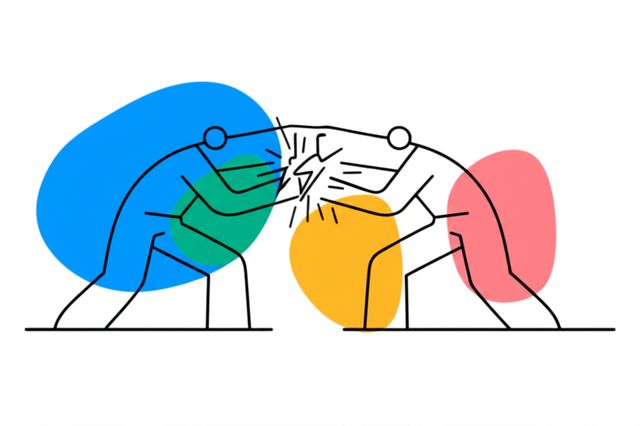
Conflict, in its most basic sense, refers to a disagreement or clash of interests, ideas, or forces. It is an inherent part of human interaction, arising whenever individuals or groups perceive their goals, values, or needs to be incompatible with those of others. While often viewed negatively, conflict can also serve as a catalyst for growth, innovation, and positive change. Understanding the multifaceted nature of conflict is the first step toward effectively managing and resolving it in various settings, from personal relationships to international relations.
0ctl25|
Find a path to becoming a Conflict. Learn more at:
OpenCourser.com/topic/0ctl25/conflic
Reading list
We've selected 35 books
that we think will supplement your
learning. Use these to
develop background knowledge, enrich your coursework, and gain a
deeper understanding of the topics covered in
Conflict.
A classic in negotiation, this book presents a principled approach to reaching mutually agreeable solutions in conflicts. While not solely focused on large-scale conflict, its principles are universally applicable to understanding and managing disagreements. This must-read for anyone interested in conflict resolution and is suitable for all audience levels.
This widely used textbook offers a commanding overview of the field of conflict resolution in the contemporary world. It covers key concepts, issues, and debates, making it an excellent resource for gaining a broad understanding and deepening knowledge. It is suitable for undergraduate and graduate students.
Provides a practical guide to developing conflict management skills. It covers topics such as how to identify and analyze conflict, how to develop conflict resolution strategies, and how to implement conflict resolution solutions. It valuable resource for anyone who wants to improve their conflict management skills.
Provides a comprehensive introduction to the study of peace and conflict studies, exploring historical roots and contemporary tools for conflict management. It valuable resource for gaining a broad understanding and is often used as a textbook in academic settings. The book's focus on both historical and contemporary settings makes it relevant for undergraduate and graduate students.
Focuses on the emotional dimensions of conflict and provides a method for resolving deeply entrenched disputes. It is highly relevant for understanding interpersonal and intergroup conflict, offering practical strategies for navigating difficult conversations. This must-read for anyone dealing with high-stakes conflicts.
A foundational text in international relations theory, this book examines the causes of war at three levels of analysis: the individual, the state, and the international system. It provides a crucial theoretical framework for understanding the origins of conflict. This classic is essential for graduate students and researchers in political science and international relations.
This best-selling book explores the root causes of conflict from a psychological perspective, emphasizing the importance of individual mindset in resolving disputes. It offers practical insights and a framework for approaching conflict with a 'heart at peace.' This highly accessible and valuable book for all audience levels interested in personal and interpersonal conflict.
Authored by a pioneer in peace studies, this book offers a wide-ranging panorama of ideas, theories, and assumptions underpinning the study of peace. It delves into conflict theory, nonviolent conflict handling, structural violence, and cultural violence. This foundational text highly recommended for gaining a broad understanding, particularly for undergraduate and graduate students.
This interdisciplinary textbook provides a comprehensive overview of the major forms of conflict resolution used in international disputes. It covers traditional and newer hybrid approaches, making it highly relevant for understanding contemporary practices in international conflict management. This is an excellent resource for advanced undergraduate and graduate students, as well as professionals.
Building on his earlier work, Lederach delves deeper into the concept of conflict transformation, emphasizing the importance of relationships and long-term processes in building sustainable peace. is valuable for deepening understanding and is particularly relevant for practitioners and graduate students.
This influential book analyzes the changing nature of warfare in the contemporary era, distinguishing between 'new wars' and 'old wars.' It is highly relevant for understanding contemporary conflict dynamics and their impact on civilians. This key text for students and professionals studying contemporary conflict.
Lederach explores the concept of moral imagination as a crucial element in peacebuilding and conflict transformation. delves into the creative and ethical dimensions of addressing conflict, offering a deeper and more nuanced understanding. It is valuable for students and practitioners seeking to develop innovative approaches to peace.
Provides a comprehensive overview of conflict and peacemaking in multi-ethnic societies. Richmond explores the causes of conflict, the challenges of peacemaking, and the role of international organizations in conflict resolution. It is an essential read for anyone who wants to understand the complexities of conflict in multi-ethnic societies.
Explores the multifaceted ways in which conflict has shaped human history, societies, and even our understanding of ourselves. It provides a broad historical and societal perspective on conflict. This is an engaging read for anyone interested in the broader impact of conflict and is suitable for all audience levels.
Provides a comprehensive overview of the origins of political order. Fukuyama argues that political order is essential for human progress and that it has evolved over time from prehuman times to the present day. It challenging read, but it is essential for anyone who wants to understand the foundations of human society.
Provides practical advice on how to have difficult conversations in a constructive and productive way. It covers topics such as how to prepare for difficult conversations, how to stay calm under pressure, and how to find common ground. It valuable resource for anyone who wants to improve their communication skills.
Delves into the art of diplomacy and negotiation as tools for preventing violent conflict. It examines the root causes of international conflicts and provides a framework for de-escalation. This valuable resource for those interested in the practical aspects of conflict prevention and is suitable for graduate students and professionals.
An updated abridgment of Collins' classic work, this book presents a powerful statement of conflict theory from a sociological perspective. It examines conflict at both macro and micro levels, offering a deeper understanding of the social dynamics of conflict. This valuable resource for students of sociology and conflict studies at the graduate level.
Introduces a micro-sociological approach to understanding peace and conflict, examining how face-to-face interactions shape larger patterns of violence and peacebuilding. It offers a novel perspective for deepening understanding, particularly for graduate students and researchers in sociology and peace studies. Published recently, it addresses contemporary analytical approaches.
This classic novel provides a powerful exploration of the themes of war and peace. Tolstoy follows the lives of several families during the Napoleonic Wars and offers a deep insight into the human cost of war. It must-read for anyone who wants to understand the complexities of conflict.
Examines the economic dimensions of conflict, exploring how economic factors can contribute to, sustain, and be impacted by war. It provides a valuable perspective for understanding the complex drivers of contemporary conflicts. This is suitable for advanced undergraduate and graduate students interested in the intersection of economics and conflict.
Applies psychological principles to the practice of conflict resolution and mediation. It helps readers understand the psychological processes involved in conflict, providing practical insights for managing disputes. This useful resource for those interested in the interpersonal aspects of conflict and is suitable for advanced undergraduate students and practitioners.
This influential and controversial book argues that future conflicts will be primarily cultural. It provides a broad, albeit debated, perspective on the potential sources of global conflict in the post-Cold War era. It is relevant for understanding contemporary topics and is suitable for undergraduate and graduate students.
This classic work of political philosophy explores the nature of the social contract. Rousseau argues that the social contract voluntary agreement between individuals to create a just and equitable society. It foundational text for anyone who wants to understand the history of political thought.
For more information about how these books relate to this course, visit:
OpenCourser.com/topic/0ctl25/conflic

 Save
Save


