We may earn an affiliate commission when you visit our partners.
Course image
Emmanuel Segui

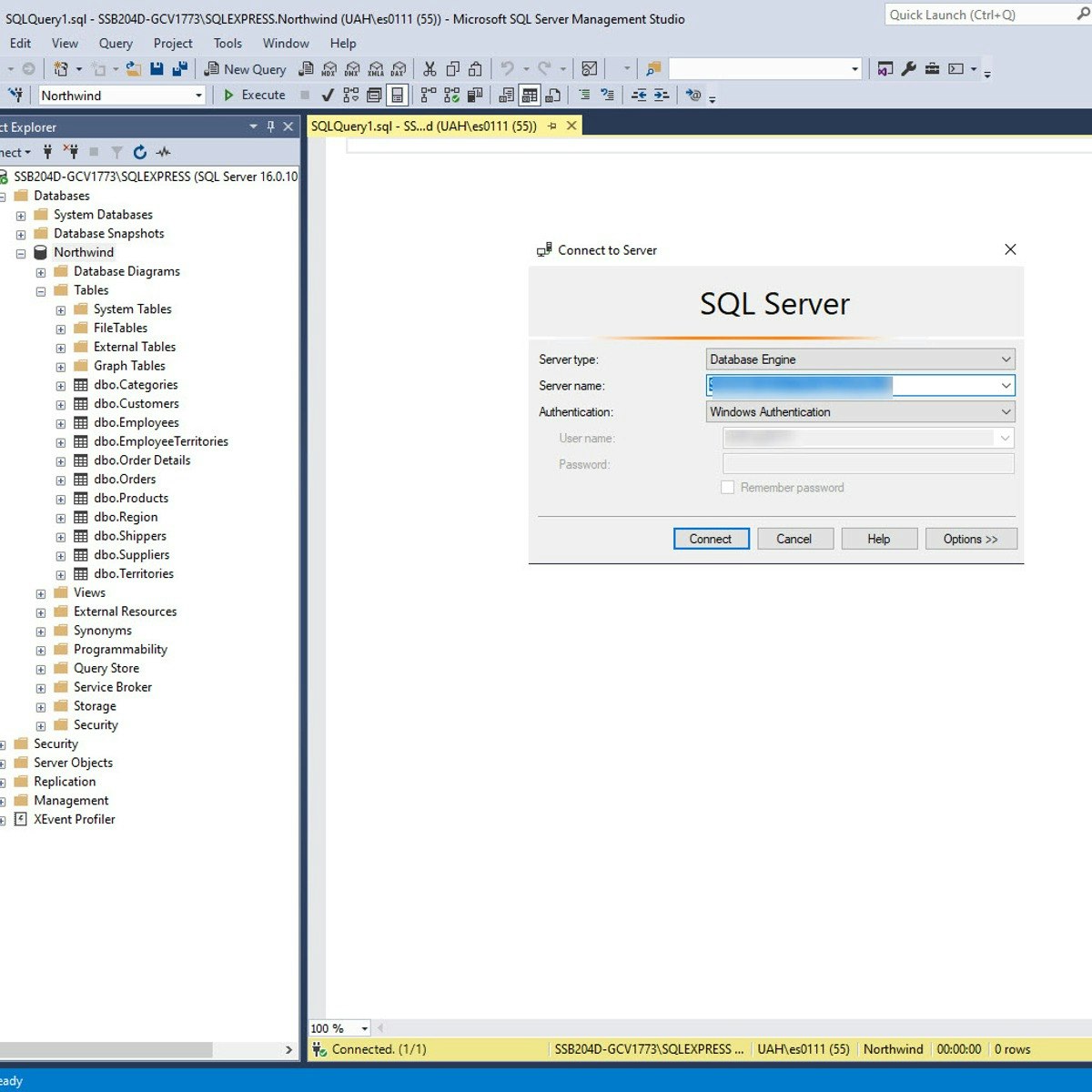
This Guided Project, SQL for Beginners: Querying Data, is for beginner or aspiring data analysts who want to use SQL to extract data from databases. In this 1-hour long project-based course, you will learn how to use basic SQL clauses such as SELECT, GROUP BY and WHERE to query data from a database.. To achieve this, we will work through a SQL server database to perform basic queries with SQL. This project is unique because it is a hands-on approach to learning how to use basic SQL functions to extract and query data from a database. In order to be successful in this project, you will need complete a series of practice activities and a quiz.

Enroll now

Here's a deal for you

Save money when you learn with a deal that may be relevant to this course.
All coupon codes, vouchers, and discounts are applied automatically unless otherwise noted.

What's inside

Syllabus

Traffic lights

Read about what's good
what should give you pause
and possible dealbreakers
Designed for individuals aspiring to become data analysts or those already working in this field who want to enhance their SQL skills
Suitable for beginners with little to no prior experience in SQL who want to gain foundational knowledge
Provides hands-on learning through practice activities and a quiz to reinforce understanding and ensure knowledge retention
Limited to basic SQL functions, which may not be sufficient for individuals seeking more advanced knowledge or comprehensive training
Duration is not specified, making it challenging to assess the depth and comprehensiveness of the course

Save this course

Create your own learning path. Save this course to your list so you can find it easily later.
Save

Reviews summary

Sql fundamentals for absolute beginners

According to learners, this course is an excellent starting point for absolute beginners in SQL. Students praise the hands-on exercises and clear explanations that make learning basic querying accessible and practical. While highly effective for those with no prior knowledge, some find the 1-hour project to be too superficial if they're seeking advanced topics or have existing SQL experience. It's concise and covers essential fundamentals, making it a valuable first step into data querying.
Short and to-the-point, effective for quick learning.
"This was a good introductory course, and the pace was just right for a beginner."
"It's short, concise, and straight to the point. Perfect for learning the fundamentals of SQL querying quickly."
"I felt the single hour was too constrained to cover much depth."
"It's okay for what it is – a very basic introduction, nothing more."
Instructor delivers concepts clearly and concisely.
"The instructor explains each concept clearly and the hands-on exercises are perfect."
"The explanations of SELECT, WHERE, and GROUP BY were easy to follow."
"The instructor broke down complex ideas into simple, digestible pieces."
"I found the instructor makes it easy to follow along, making the content accessible."
Practical, project-based approach with exercises.
"The hands-on exercises are perfect for solidifying understanding."
"The project-based approach meant I was writing queries from minute one."
"I loved the hands-on nature of this course. It was perfect for learning the fundamentals of SQL querying quickly."
"I appreciated the practical approach in this course, which made it effective."
Perfect for those with no prior SQL knowledge.
"This guided project is excellent for absolute beginners. I had no prior SQL knowledge and feel confident now in basic querying."
"Exactly what I needed to get started with SQL... Fantastic for brushing up or learning from scratch."
"Absolutely brilliant! If you're a beginner, this is your starting point."
"I found it to be decent for someone who knows nothing about SQL."
Some found pacing rushed; may require external resources.
"Sometimes the explanations felt a bit rushed, especially when moving between concepts."
"I had to look up external resources frequently because it jumped too quickly into syntax without enough theory."
"The teaching style felt a bit rushed at times and I found myself pausing a lot to keep up."
"For complete beginners, I found it might be challenging without additional self-study."
Too basic and superficial for those with prior SQL knowledge.
"If I had touched SQL before, even casually, I found it too slow and repetitive."
"I felt the course content was too shallow; I was expecting more than just basic SELECT statements."
"While it says 'Beginners', I felt it jumped too quickly into syntax without enough theoretical background."
"I found it useful only if I literally knew nothing, otherwise it was too basic and not worth my time."

Activities

Be better prepared before your course. Deepen your understanding during and after it. Supplement your coursework and achieve mastery of the topics covered in SQL for Beginners: Querying Data with these activities:
Review SQL Server Basics
SQL Server basics is a prerequisite for this course. Refresh your understanding to succeed in this course
Browse courses on SQL Server
Show steps
  • Revise data types and their characteristics in SQL Server
  • Practice writing basic SELECT statements
  • Execute simple queries on a sample database
Follow Guided Tutorials on SQL Syntax
Master the fundamentals of SQL syntax with guided tutorials to build a solid foundation for this course
Browse courses on SQL Syntax
Show steps
  • Locate reputable online resources or courses on SQL syntax
  • Follow step-by-step tutorials on SELECT, WHERE, and GROUP BY clauses
  • Practice writing queries using the guided examples
Seek Guidance from Experienced SQL Professionals
Enhance your learning journey by connecting with experienced SQL professionals who can provide valuable insights and support
Show steps
  • Attend industry events or online forums to network with SQL experts
  • Reach out to professionals on LinkedIn or other platforms to request mentorship
  • Prepare specific questions or areas where you seek guidance
Three other activities
Expand to see all activities and additional details
Show all six activities
Practice SQL Queries on Sample Datasets
Reinforce your understanding of SQL by practicing queries on sample datasets, improving your problem-solving skills
Browse courses on SQL Queries
Show steps
  • Acquire sample datasets relevant to your interests or course topics
  • Design and execute queries to extract specific information or perform analysis
  • Validate your results and identify areas for improvement
Engage in Peer Learning Groups
Enhance your understanding by collaborating with peers in learning groups, sharing knowledge, and working on projects together
Show steps
  • Form a study group with classmates or connect with peers online
  • Establish regular meeting times and set clear goals for each session
  • Take turns presenting concepts, leading discussions, and working on exercises together
Build a Simple Database Project
Solidify your SQL skills by designing and building a simple database project, integrating theory and practice
Browse courses on Database Design
Show steps
  • Define the purpose and scope of your database project
  • Design the database schema and relationships between tables
  • Create and populate the database using SQL statements
  • Develop queries to retrieve and manipulate data from the database

Career center

Learners who complete SQL for Beginners: Querying Data will develop knowledge and skills that may be useful to these careers:
Data Analyst
The Data Analyst role involves extracting and interpreting data to find trends and patterns. The SQL for Beginners: Querying Data course can help build a foundation for this role by teaching learners how to use basic SQL clauses to query data from a database. This knowledge can be applied to a variety of industries, including finance, healthcare, and retail.
Business Analyst
Business Analysts use data to identify and solve business problems. The SQL for Beginners: Querying Data course can help build a foundation for this role by teaching learners how to extract and interpret data from a database. This knowledge can be applied to a variety of industries, including consulting, finance, and technology.
Data Scientist
Data Scientists use data to build predictive models and solve complex problems. The SQL for Beginners: Querying Data course can help build a foundation for this role by teaching learners how to extract and interpret data from a database. This knowledge can be applied to a variety of industries, including finance, healthcare, and technology.
Database Administrator
Database Administrators are responsible for managing and maintaining databases. The SQL for Beginners: Querying Data course can help build a foundation for this role by teaching learners how to use basic SQL clauses to query data from a database. This knowledge is essential for managing and maintaining databases.
Software Engineer
Software Engineers design, develop, and maintain software applications. The SQL for Beginners: Querying Data course may be useful for Software Engineers who need to work with databases. This course can teach learners how to use basic SQL clauses to query data from a database.
Web Developer
Web Developers design and develop websites. The SQL for Beginners: Querying Data course may be useful for Web Developers who need to work with databases. This course can teach learners how to use basic SQL clauses to query data from a database.
Data Engineer
Data Engineers build and maintain data pipelines. The SQL for Beginners: Querying Data course may be useful for Data Engineers who need to work with databases. This course can teach learners how to use basic SQL clauses to query data from a database.
Statistician
Statisticians collect, analyze, and interpret data. The SQL for Beginners: Querying Data course may be useful for Statisticians who need to work with databases. This course can teach learners how to use basic SQL clauses to query data from a database.
Operations Research Analyst
Operations Research Analysts use mathematical and statistical techniques to solve business problems. The SQL for Beginners: Querying Data course may be useful for Operations Research Analysts who need to work with databases. This course can teach learners how to use basic SQL clauses to query data from a database.
Financial Analyst
Financial Analysts analyze financial data to make investment recommendations. The SQL for Beginners: Querying Data course may be useful for Financial Analysts who need to work with databases. This course can teach learners how to use basic SQL clauses to query data from a database.
Market Research Analyst
Market Research Analysts collect and analyze data about markets and consumers. The SQL for Beginners: Querying Data course may be useful for Market Research Analysts who need to work with databases. This course can teach learners how to use basic SQL clauses to query data from a database.
Sales Analyst
Sales Analysts analyze sales data to identify trends and opportunities. The SQL for Beginners: Querying Data course may be useful for Sales Analysts who need to work with databases. This course can teach learners how to use basic SQL clauses to query data from a database.
Customer Success Manager
Customer Success Managers help customers get the most value from a product or service. The SQL for Beginners: Querying Data course may be useful for Customer Success Managers who need to work with databases. This course can teach learners how to use basic SQL clauses to query data from a database.
Project Manager
Project Managers plan and execute projects. The SQL for Beginners: Querying Data course may be useful for Project Managers who need to work with databases. This course can teach learners how to use basic SQL clauses to query data from a database.
Product Manager
Product Managers develop and manage products. The SQL for Beginners: Querying Data course may be useful for Product Managers who need to work with databases. This course can teach learners how to use basic SQL clauses to query data from a database.

Reading list

We've selected seven books that we think will supplement your learning. Use these to develop background knowledge, enrich your coursework, and gain a deeper understanding of the topics covered in SQL for Beginners: Querying Data.
Is the official MySQL documentation, providing comprehensive coverage of the MySQL database system. It good choice for experienced users who want to learn more about the inner workings of MySQL.
Is the official IBM DB2 SQL reference, providing comprehensive coverage of the IBM DB2 SQL language. It good choice for experienced users who want to learn more about the specific features of IBM DB2 SQL.
Is the official PostgreSQL documentation, providing comprehensive coverage of the PostgreSQL database system. It good choice for experienced users who want to learn more about the inner workings of PostgreSQL.
Provides a comprehensive overview of SQL queries, covering basic to advanced concepts. It valuable resource for beginners who want to learn the fundamentals of SQL and for experienced users who want to refresh their knowledge.
Provides a collection of common pitfalls and antipatterns in SQL programming. It good choice for experienced users who want to learn how to avoid these mistakes and write more efficient and secure SQL code.
Quick and accessible introduction to SQL, covering the basics of data manipulation and querying. It good choice for beginners who want to get up and running with SQL quickly.
Provides a comprehensive overview of SQL injection attacks and how to defend against them. It good choice for experienced users who want to learn how to protect their databases from this type of attack.

Share

Help others find this course page by sharing it with your friends and followers:

Similar courses

Similar courses are unavailable at this time. Please try again later.
Our mission

OpenCourser helps millions of learners each year. People visit us to learn workspace skills, ace their exams, and nurture their curiosity.

Our extensive catalog contains over 50,000 courses and twice as many books. Browse by search, by topic, or even by career interests. We'll match you to the right resources quickly.

Find this site helpful? Tell a friend about us.

Affiliate disclosure

We're supported by our community of learners. When you purchase or subscribe to courses and programs or purchase books, we may earn a commission from our partners.

Your purchases help us maintain our catalog and keep our servers humming without ads.

Thank you for supporting OpenCourser.

© 2016 - 2025 OpenCourser