Sorry, this page is no longer available
We may earn an affiliate commission when you visit our partners.
Course image
Milovan Peric

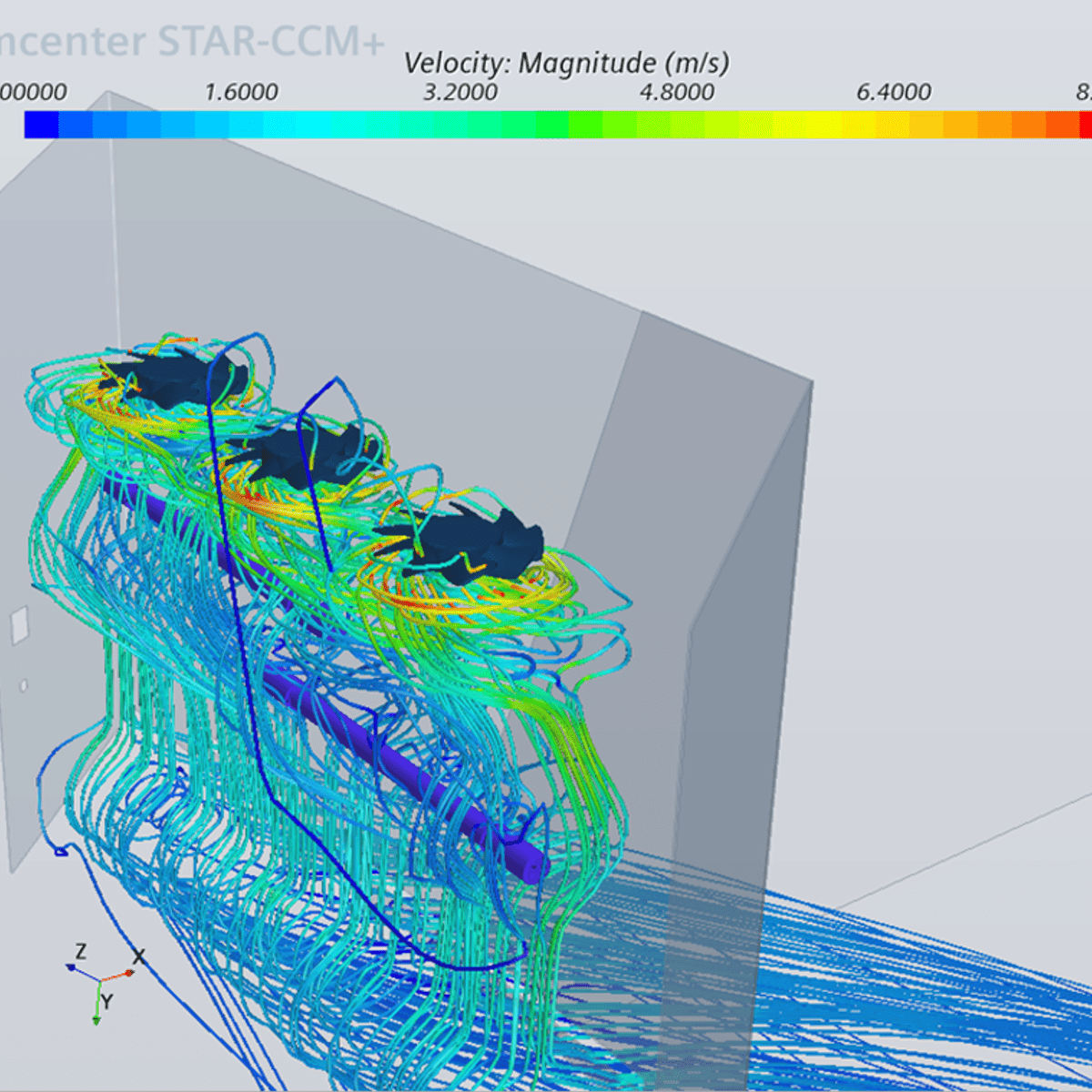
Si vous lisez ceci, c'est que vous êtes probablement intéressé par la dynamique des fluides numérique (Computational Fluid Dynamics, CFD) appliquée utilisant le logiciel Simcenter STAR-CCM+ ou un autre outil CFD.Ce cours peut être une première étape pour améliorer vos performances professionnelles et faire progresser votre carrière ou votre parcours éducatif.

Read more

Si vous lisez ceci, c'est que vous êtes probablement intéressé par la dynamique des fluides numérique (Computational Fluid Dynamics, CFD) appliquée utilisant le logiciel Simcenter STAR-CCM+ ou un autre outil CFD.Ce cours peut être une première étape pour améliorer vos performances professionnelles et faire progresser votre carrière ou votre parcours éducatif.

Nous avons imaginé ce cours pour vous faire mieux connaître la physique des écoulements et la dynamique des fluides numérique et vous permettre de résoudre efficacement les problèmes d'écoulement et de transfert de chaleur. Ce cours n'est pas un mode d'emploi d'un logiciel particulier. Simcenter STAR-CCM+ a été utilisé pour toutes les simulations présentées dans ce cours.Néanmoins, les résultats seraient les mêmes si un autre logiciel public ou commercial était utilisé, à condition qu'il ait les mêmes capacités.

Enroll now

What's inside

Syllabus

Introduction à la dynamique des fluides numérique appliquée
Au cours de la semaine 1, nous allons explorer l'écoulement dans un canal présentant un obstacle semi-circulaire sur la paroi de fond pour introduire les modèles d'écoulement de base (équations d'Euler, de Navier-Stokes et de Navier-Stockes à moyenne de Reynolds), les caractéristiques de base de la plupart des écoulements dans les applications d'ingénierie (couche limite, couche de cisaillement, séparation d'écoulement, zone de recirculation) et les méthodes utilisées pour simuler les écoulements, y compris ces phénomènes. La distinction entre les écoulements non visqueux, laminaires et turbulents est expliquée, ainsi que la façon dont les caractéristiques de l'écoulement peuvent être visualisées et analysées et comment la connaissance du régime d'écoulement influe sur la conception du maillage de calcul et sur le choix des modèles physiques et des paramètres de simulation. Enfin, les façons d'augmenter l'efficacité de la simulation et l'estimation des erreurs de discrétisation sont présentées.
Read more

Traffic lights

Read about what's good
what should give you pause
and possible dealbreakers
Approprié pour les individus souhaitant acquérir une compréhension concrète de la dynamique des fluides numérique appliquée utilisant un logiciel CFD
Pratique pour ceux travaillant dans le domaine de l'ingénierie, de la conception et de la recherche
Couvre une gamme complète de sujets liés à la CFD, y compris les écoulements dans les diffuseurs et les réducteurs, les écoulements secondaires et tourbillonnaires, les écoulements autour d'un cylindre circulaire et les écoulements avec transfert de chaleur
Enseigné par des instructeurs réputés, Milovan Peric, qui possèdent une expertise dans le domaine
Fournit une base solide pour les débutants et les apprenants intermédiaires dans le domaine

Save this course

Create your own learning path. Save this course to your list so you can find it easily later.
Save

Reviews summary

Maîtrise des principes de la cfd appliquée

Selon les apprenants, ce cours offre une formation complète et appliquée en dynamique des fluides numérique (CFD), idéale pour les professionnels souhaitant approfondir leurs compétences. Il couvre les principes fondamentaux des écoulements, les modèles de turbulence, et le transfert de chaleur, avec une approche qui, bien qu'utilisant Simcenter STAR-CCM+, se veut universellement applicable aux outils CFD. Les aspects théoriques sont bien expliqués, mais le cours pourrait exiger une base solide en physique et mathématiques et nécessiter des exercices pratiques supplémentaires pour une maîtrise complète des logiciels. C'est une ressource précieuse pour l'avancement de carrière.
Excellent pour l'avancement professionnel en ingénierie.
"Ce cours est <span class="positive">parfait pour les ingénieurs qui veulent monter en compétence en CFD."
"J'estime que ce que j'ai appris va <span class="positive">directement améliorer mes performances professionnelles."
"Une ressource <span class="positive">précieuse pour ma carrière dans l'ingénierie des fluides."
Les concepts sont généralisables au-delà d'un logiciel spécifique.
"Malgré l'utilisation de Simcenter STAR-CCM+, les <span class="positive">connaissances acquises sont transférables à d'autres logiciels CFD."
"J'ai trouvé la philosophie du cours <span class="positive">axée sur la physique plutôt que sur l'interface d'un outil."
"Ce cours m'a donné une <span class="positive">compréhension profonde des méthodes de simulation, indépendamment du logiciel que j'utilise."
Fournit une base solide et détaillée des concepts de la CFD.
"Ce cours a vraiment approfondi ma compréhension des <span class="neutral">équations de Navier-Stokes et des <span class="neutral">modèles d'écoulement."
"J'ai apprécié la manière dont tous les <span class="neutral">phénomènes d'écoulement, comme la <span class="neutral">couche limite et le <span class="neutral">transfert de chaleur, sont abordés en détail."
"Le syllabus couvre un <span class="neutral">large éventail de sujets de CFD, des écoulements laminaires aux turbulents."
Nécessite des bases solides, manque d'exercices pratiques interactifs.
"Je pense qu'une <span class="warning">solide formation en physique et en mathématiques est essentielle pour suivre ce cours."
"J'aurais aimé plus d'<span class="warning">exercices pratiques ou de labs pour appliquer les concepts théoriques directement."
"Le cours explique les <span class="neutral">simulations sans être un tutoriel logiciel, ce qui est bien, mais implique de devoir pratiquer ailleurs."

Activities

Be better prepared before your course. Deepen your understanding during and after it. Supplement your coursework and achieve mastery of the topics covered in Dynamique des fluides numérique appliquée with these activities:
Review Newtonian fluid mechanics
Refresh knowledge of Newtonian fluid mechanics, such as viscosity and fluid pressure, to prepare for this course.
Browse courses on Fluid Dynamics
Show steps
  • Review notes from a previous course or textbook.
  • Solve practice problems related to Newtonian fluid mechanics.
Volunteer with a local engineering or science organization
Engage with the community and apply your knowledge by volunteering with an organization related to engineering or science.
Browse courses on Community Involvement
Show steps
  • Search for local organizations that offer volunteer opportunities.
  • Contact the organization and inquire about their volunteer needs.
  • Participate in volunteer activities related to engineering or science education.
Follow tutorials on using Simcenter STAR-CCM+
Gain familiarity with the software used in this course by following tutorials.
Browse courses on Simcenter STAR-CCM+
Show steps
  • Find tutorials on the official Simcenter STAR-CCM+ website or YouTube.
  • Follow the tutorials step-by-step, practicing the software's features.
  • Create a simple simulation model to test your understanding.
Seven other activities
Expand to see all activities and additional details
Show all ten activities
Practice solving Navier-Stokes equations
Sharpen problem-solving skills by practicing with Navier-Stokes equations.
Browse courses on Navier-Stokes Equations
Show steps
  • Find practice problems online or in textbooks.
  • Solve the problems analytically or using numerical methods.
  • Compare your solutions to known results or numerical simulations.
Tutoriel sur le logiciel CFD
Regardez des tutoriels sur un logiciel CFD comme Simcenter STAR-CCM+ pour vous familiariser avec l'interface et les fonctionnalités de base.
Browse courses on CFD
Show steps
  • Recherchez des tutoriels en ligne ou sur des plateformes vidéo.
  • Choisissez un tutoriel adapté à votre niveau de compétence.
  • Suivez les instructions du tutoriel étape par étape.
  • Essayez d'appliquer ce que vous avez appris en résolvant des problèmes simples.
Simulate fluid flow around a simplified geometry
Apply the concepts learned in this course by simulating fluid flow around a simple geometry using Simcenter STAR-CCM+ or other CFD software.
Show steps
  • Define the geometry of the object and the fluid domain.
  • Set up the simulation parameters, including boundary conditions and fluid properties.
  • Run the simulation and analyze the results, including velocity, pressure, and temperature distributions.
Host a study group or discussion session
Enhance understanding and engage with peers by hosting a study group or discussion session on course topics.
Show steps
  • Reach out to classmates and form a study group.
  • Choose a topic for discussion or work on a problem set together.
  • Facilitate the discussion, ensuring all participants have the opportunity to contribute.
Develop a presentation on the applications of CFD in industry
Expand understanding of the practical applications of CFD by researching and presenting on its uses in various industries.
Show steps
  • Research the use of CFD in different industries, such as aerospace, automotive, and energy.
  • Identify specific case studies or examples where CFD has been successfully applied.
  • Create a presentation that clearly explains the benefits and applications of CFD.
Participate in a CFD challenge or competition
Challenge yourself and test your skills by participating in a CFD competition.
Show steps
  • Find a CFD challenge or competition that aligns with your interests.
  • Form a team or work individually to solve the challenge.
  • Submit your solution and compete for prizes or recognition.
Contribute to open-source CFD projects
Gain practical experience and contribute to the CFD community by参与ping in open-source CFD projects.
Browse courses on Software Development
Show steps
  • Find an open-source CFD project that interests you.
  • Identify an area where you can contribute, such as code development, documentation, or testing.
  • Contact the project maintainers and propose your contribution.

Career center

Learners who complete Dynamique des fluides numérique appliquée will develop knowledge and skills that may be useful to these careers:
CFD Engineer
Computational Fluid Dynamics Engineers use software to simulate fluid flow and heat transfer. A CFD Engineer could use the knowledge and skills they gain in this course to improve the performance and efficiency of a variety of designs in industries such as automotive, aerospace, and energy. A CFD Engineer can use this course to enhance their understanding of fluid flow, transfer of heat, and other principles which can be applied to their work on complex fluid dynamics projects.
CFD Analyst
CFD Analysts are responsible for analyzing and interpreting data from CFD simulations. This data can be used to improve the design of products and processes. A CFD Analyst could use the knowledge and skills they gain in this course to advance their career by learning new techniques for simulating fluid flow and heat transfer. This course can help build a foundation for CFD Analysts who wish to work on projects in industries such as aerospace, automotive, and energy.
Mechanical Engineer
Mechanical Engineers design, develop, and test mechanical systems. A Mechanical Engineer could use the knowledge and skills they gain in this course to improve their understanding of fluid flow and heat transfer. This understanding can be applied to the design of a variety of systems, such as engines, turbines, and HVAC systems. This course may be particularly useful for Mechanical Engineers who work on projects involving fluid flow and heat transfer.
Aerospace Engineer
Aerospace Engineers design, develop, and test aircraft, spacecraft, and other aerospace systems. An Aerospace Engineer could use the knowledge and skills they gain in this course to improve their understanding of fluid flow and heat transfer. This understanding can be applied to the design of a variety of aerospace systems, such as aircraft wings, rocket engines, and spacecraft thermal control systems. This course may be particularly useful for Aerospace Engineers who work on projects involving fluid flow and heat transfer.
Automotive Engineer
Automotive Engineers design, develop, and test automobiles and other vehicles. An Automotive Engineer could use the knowledge and skills they gain in this course to improve their understanding of fluid flow and heat transfer. This understanding can be applied to the design of a variety of automotive systems, such as engines, transmissions, and HVAC systems. This course may be particularly useful for Automotive Engineers who work on projects involving fluid flow and heat transfer.
Energy Engineer
Energy Engineers design, develop, and test energy systems. An Energy Engineer could use the knowledge and skills they gain in this course to improve their understanding of fluid flow and heat transfer. This understanding can be applied to the design of a variety of energy systems, such as power plants, wind turbines, and solar panels. This course may be particularly useful for Energy Engineers who work on projects involving fluid flow and heat transfer.
Chemical Engineer
Chemical Engineers design, develop, and test chemical processes. A Chemical Engineer could use the knowledge and skills they gain in this course to improve their understanding of fluid flow and heat transfer. This understanding can be applied to the design of a variety of chemical processes, such as chemical reactors, pipelines, and heat exchangers. This course may be particularly useful for Chemical Engineers who work on projects involving fluid flow and heat transfer.
Civil Engineer
Civil Engineers design, develop, and test civil infrastructure, such as buildings, bridges, and roads. A Civil Engineer could use the knowledge and skills they gain in this course to improve their understanding of fluid flow and heat transfer. This understanding can be applied to the design of a variety of civil infrastructure projects, such as water distribution systems, wastewater treatment plants, and dams. This course may be particularly useful for Civil Engineers who work on projects involving fluid flow and heat transfer.
Environmental Engineer
Environmental Engineers design, develop, and test environmental systems, such as water treatment plants and air pollution control devices. An Environmental Engineer could use the knowledge and skills they gain in this course to improve their understanding of fluid flow and heat transfer. This understanding can be applied to the design of a variety of environmental systems, such as water distribution systems, wastewater treatment plants, and air pollution control devices. This course may be particularly useful for Environmental Engineers who work on projects involving fluid flow and heat transfer.
Geotechnical Engineer
Geotechnical Engineers design, develop, and test geotechnical structures, such as foundations, slopes, and retaining walls. A Geotechnical Engineer could use the knowledge and skills they gain in this course to improve their understanding of fluid flow and heat transfer. This understanding can be applied to the design of a variety of geotechnical structures, such as foundations, slopes, and retaining walls. This course may be particularly useful for Geotechnical Engineers who work on projects involving fluid flow and heat transfer.
Hydrologist
Hydrologists study the movement and distribution of water on the Earth's surface and in the ground. A Hydrologist could use the knowledge and skills they gain in this course to improve their understanding of fluid flow and heat transfer. This understanding can be applied to the study of a variety of hydrological processes, such as groundwater flow, surface water flow, and water quality. This course may be particularly useful for Hydrologists who work on projects involving fluid flow and heat transfer.
Materials Scientist
Materials Scientists research and develop new materials. A Materials Scientist could use the knowledge and skills they gain in this course to improve their understanding of fluid flow and heat transfer. This understanding can be applied to the development of new materials with improved properties, such as strength, toughness, and thermal conductivity. This course may be particularly useful for Materials Scientists who work on projects involving fluid flow and heat transfer.
Mechanical Design Engineer
Mechanical Design Engineers design, develop, and test mechanical systems. A Mechanical Design Engineer could use the knowledge and skills they gain in this course to improve their understanding of fluid flow and heat transfer. This understanding can be applied to the design of a variety of mechanical systems, such as engines, turbines, and HVAC systems. This course may be particularly useful for Mechanical Design Engineers who work on projects involving fluid flow and heat transfer.
Product Design Engineer
Product Design Engineers design, develop, and test products. A Product Design Engineer could use the knowledge and skills they gain in this course to improve their understanding of fluid flow and heat transfer. This understanding can be applied to the design of a variety of products, such as consumer electronics, appliances, and vehicles. This course may be particularly useful for Product Design Engineers who work on projects involving fluid flow and heat transfer.
Research Scientist
Research Scientists conduct research in a variety of scientific fields. A Research Scientist could use the knowledge and skills they gain in this course to improve their understanding of fluid flow and heat transfer. This understanding can be applied to a variety of research projects, such as the development of new energy technologies, the improvement of medical treatments, and the exploration of space. This course may be particularly useful for Research Scientists who work on projects involving fluid flow and heat transfer.

Reading list

We've selected seven books that we think will supplement your learning. Use these to develop background knowledge, enrich your coursework, and gain a deeper understanding of the topics covered in Dynamique des fluides numérique appliquée.
Ce livre offre une introduction complète à la dynamique des fluides numérique, fournissant une base solide pour les principes fondamentaux et les techniques utilisées dans les simulations CFD. Il couvre un large éventail de sujets, y compris les équations gouvernantes, les méthodes de discrétisation, les techniques de résolution et les applications dans l'ingénierie.
Ce livre fournit une introduction complète à la méthode des volumes finis, qui est largement utilisée dans les simulations CFD. Il couvre les concepts de base, les techniques de discrétisation et les algorithmes de résolution. Ce livre est particulièrement utile pour comprendre les aspects numériques de la CFD.
Ce livre couvre à la fois le transfert de chaleur et l'écoulement des fluides, fournissant une compréhension approfondie des principes fondamentaux et des techniques numériques. Il est particulièrement utile pour comprendre les aspects physiques des simulations CFD, tels que le transfert de chaleur, la convection et la turbulence.
Ce livre fournit une introduction complète à la mécanique des fluides, en couvrant les concepts de base, tels que la cinématique, la dynamique, la conservation de la masse, de l'énergie et de la quantité de mouvement. Il est utile pour ceux qui souhaitent acquérir une compréhension solide des principes fondamentaux de la CFD.
Ce livre fournit une introduction complète à la turbulence, qui est un phénomène complexe rencontré dans de nombreuses simulations CFD. Il couvre les concepts de base, les modèles de turbulence et les techniques de simulation.
Ce livre est conçu pour les ingénieurs qui souhaitent utiliser la CFD dans leur travail. Il couvre les aspects pratiques de la CFD, tels que la modélisation, le maillage et l'interprétation des résultats.
Ce livre fournit une introduction théorique à la dynamique des fluides, en mettant l'accent sur les aspects mathématiques et physiques. Il est utile pour ceux qui souhaitent approfondir leur compréhension des principes fondamentaux de la CFD.

Share

Help others find this course page by sharing it with your friends and followers:

Similar courses

Similar courses are unavailable at this time. Please try again later.
Our mission

OpenCourser helps millions of learners each year. People visit us to learn workspace skills, ace their exams, and nurture their curiosity.

Our extensive catalog contains over 50,000 courses and twice as many books. Browse by search, by topic, or even by career interests. We'll match you to the right resources quickly.

Find this site helpful? Tell a friend about us.

Affiliate disclosure

We're supported by our community of learners. When you purchase or subscribe to courses and programs or purchase books, we may earn a commission from our partners.

Your purchases help us maintain our catalog and keep our servers humming without ads.

Thank you for supporting OpenCourser.

© 2016 - 2025 OpenCourser