May 1, 2024
Updated November 14, 2026
21 minute read

Zoonotic diseases, in simple terms, are illnesses that can be transmitted between animals and humans. These diseases are caused by a variety of pathogens, including bacteria, viruses, fungi, parasites, and prions, that jump from vertebrate animals to people, or in some cases, from people back to animals (a phenomenon known as reverse zoonosis). The connection between human and animal health is intricate, and understanding these diseases is crucial for public health, veterinary medicine, and environmental science. The study of zoonotic diseases offers a fascinating glimpse into the interconnectedness of life and presents compelling challenges in areas like global health security and disease prevention.
Working in the field of zoonotic diseases can be incredibly engaging. Professionals in this area often find themselves at the forefront of scientific discovery, investigating the emergence and spread of new and re-emerging infectious diseases. This can involve fieldwork in diverse environments, laboratory research to understand pathogens, and collaboration with a wide range of experts. Furthermore, the "One Health" approach, which recognizes the interconnected health of people, animals, plants, and their shared environment, is a cornerstone of zoonotic disease work, offering a holistic and impactful way to address global health challenges.
Introduction to Zoonotic Diseases
This section provides a foundational understanding of zoonotic diseases, aiming to be accessible to a broad audience, including those new to the topic. We will explore what these diseases are, how they spread, their historical importance, and some common examples.
Definition and Basic Mechanisms of Transmission
awmvh2|
Find a path to becoming a Zoonotic Diseases. Learn more at:
OpenCourser.com/topic/awmvh2/zoonotic
Reading list
We've selected 22 books
that we think will supplement your
learning. Use these to
develop background knowledge, enrich your coursework, and gain a
deeper understanding of the topics covered in
Zoonotic Diseases.
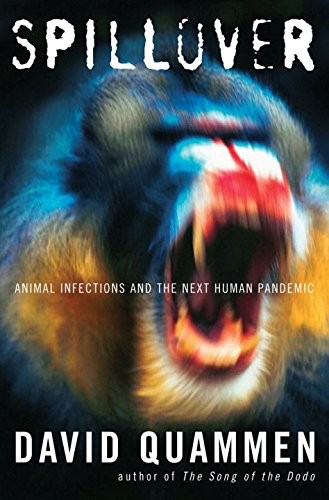
David Quammen traces disease detectives across rainforests, caves, and wet markets to show how Hendra, Ebola, SARS, and HIV leap from wildlife reservoirs into humans. Essential reading for grasping the ecological mechanics of spillover and why habitat disruption accelerates pandemic risk.
Laurie Garrett delivers an encyclopedic investigative chronicle of emerging microbes from Marburg and Lassa fever to hantavirus and drug-resistant pathogens. Learners gain deep historical context on how urbanization, deforestation, and strained public health systems fuel modern outbreaks.
Virologist Nathan Wolfe draws on field surveillance in Central African bushmeat markets to explain how animal retroviruses and novel pathogens cross species barriers. Bridges evolutionary biology and global viral forecasting to show how early detection can intercept pandemics before they ignite.
Drawing on interviews with nearly a hundred virologists, David Quammen dissects the scientific race to decode SARS-CoV-2, trace its bat coronavirus lineage, and track rapid viral evolution. Ideal for understanding modern genomic surveillance and real-time outbreak investigation.
Epidemiologist Michael Osterholm translates decades of outbreak response into an actionable blueprint for confronting pandemic influenza, coronaviruses, and antimicrobial resistance. Equips public health learners with concrete strategies for vaccine stockpiling, biosafety, and crisis readiness.
Richard Preston reconstructs the Reston ebolavirus incident and early African filovirus outbreaks with vivid narrative precision. Introduces learners to biosafety level 4 containment protocols, hemorrhagic fever pathology, and the urgent biosecurity stakes of primate-borne viruses.
Sonia Shah maps the ecological and infrastructural pathways that carry pathogens from wild animal hosts into dense cities, linking cholera, West Nile virus, and Ebola. Clarifies how industrial livestock, global trade, and climate shifts repeatedly turn localized spillovers into global crises.
Carl Zimmer offers crisp, accessible essays on viral biology spanning influenza, Ebola, rabies, and SARS-CoV-2 alongside ancient endogenous retroviruses. Perfect for building foundational virological literacy on how viruses mutate, jump hosts, and reshape ecosystems across species.
Salkeld, Hopkins, and Hayman synthesize wildlife disease ecology, mathematical epidemiology, and conservation biology to model cross-species pathogen transmission. Rigorous graduate-level training for analyzing reservoir host dynamics, biodiversity loss, and land-use drivers of emergence.
Physician Laura H. Kahn compares SARS-CoV-1, MERS, and SARS-CoV-2 through a One Health lens to examine wildlife markets, camel and civet reservoirs, and gain-of-function biosafety debates. Helps policy and health learners connect molecular spillover evidence with geopolitical realities.
Jakob Zinsstag and an international team establish the quantitative and operational foundations of integrated human-animal-ecosystem health. Covers joint epidemiological surveillance, economic valuation of zoonosis control, and empirical field studies across pastoral and urban settings.
Rolf Bauerfeind and specialist coauthors provide an authoritative clinical and microbiological reference covering viral, bacterial, fungal, and parasitic zoonoses. Indispensable for veterinary and medical students needing pathogen-by-pathogen details on reservoirs, vectors, diagnostics, and prophylaxis.
William E. Sander delivers an applied practitioner handbook for cross-sector outbreak investigation, uniting veterinarians, physicians, and environmental scientists. Demonstrates practical surveillance workflows and field coordination for tackling emerging zoonoses and vector-borne threats.
Martyn Jeggo and John S. MacKenzie examine high-consequence bat- and rodent-borne zoonoses alongside endemic threats like bovine tuberculosis and rabies. Demonstrates why coordinated cross-sectoral surveillance across wildlife, livestock, and public health agencies is vital for outbreak control.
Sharon Deem and coauthors bridge conservation medicine, veterinary science, and human epidemiology in an accessible undergraduate textbook. Uses real-world case studies on rabies, avian influenza, and ecosystem health to teach interdisciplinary problem-solving across species boundaries.
Oreta Samples and colleagues systematically map major viral, bacterial, parasitic, and arthropod-borne zoonoses onto clinical One Health workflows. Designed for veterinary and public health trainees mastering causative agents, clinical signs, diagnostic testing, and prevention protocols.
Ripan Biswas and fellow veterinary microbiologists present contemporary frameworks for mitigating zoonotic spillover across intensive farming, companion animals, and wildlife interfaces. Equips students with up-to-date surveillance concepts, biosecurity standards, and integrated control strategies.
Former CDC outbreak director Ali S. Khan recounts frontline field responses to hantavirus, Ebola, SARS, and anthrax to expose operational vulnerabilities in global disease detection. Offers grounded lessons in field epidemiology, contact tracing, and rapid containment logistics.
Medical anthropologist Paul Farmer investigates the 2014 West African Ebola epidemic to reveal how colonial extraction and gutted health infrastructure turn zoonotic spillovers into mass fatalities. Crucial cross-disciplinary perspective linking clinical care equity with outbreak containment.
Historian William H. McNeill reframes human civilization around the ecological shock of animal domestication and cross-species pathogen exchange. Illuminates how livestock herd diseases evolved into endemic human plagues that toppled empires and reshaped global demographics.
Laura H. Kahn traces how routine antibiotic use in industrial livestock drives drug-resistant bacteria across food chains, soil, and human hospitals. Essential specialized reading on the agricultural and regulatory dimensions of zoonotic microbial threats.
Katie Woolaston and Jane Kotzmann analyze the legal, regulatory, and governance barriers dividing wildlife conservation, agricultural policy, and human public health agencies. Provides legal scholars and policy practitioners with concrete frameworks for institutionalizing One Health mandates.
For more information about how these books relate to this course, visit:
OpenCourser.com/topic/awmvh2/zoonotic

 Save