We may earn an affiliate commission when you visit our partners.
Course image
Beerend P. Hierck, PHD., Marco De Ruiter, PhD, Paul Gobée, MD, Bas Boekestijn, MD, Daniël Jansma, MSc, and Friso Jansen

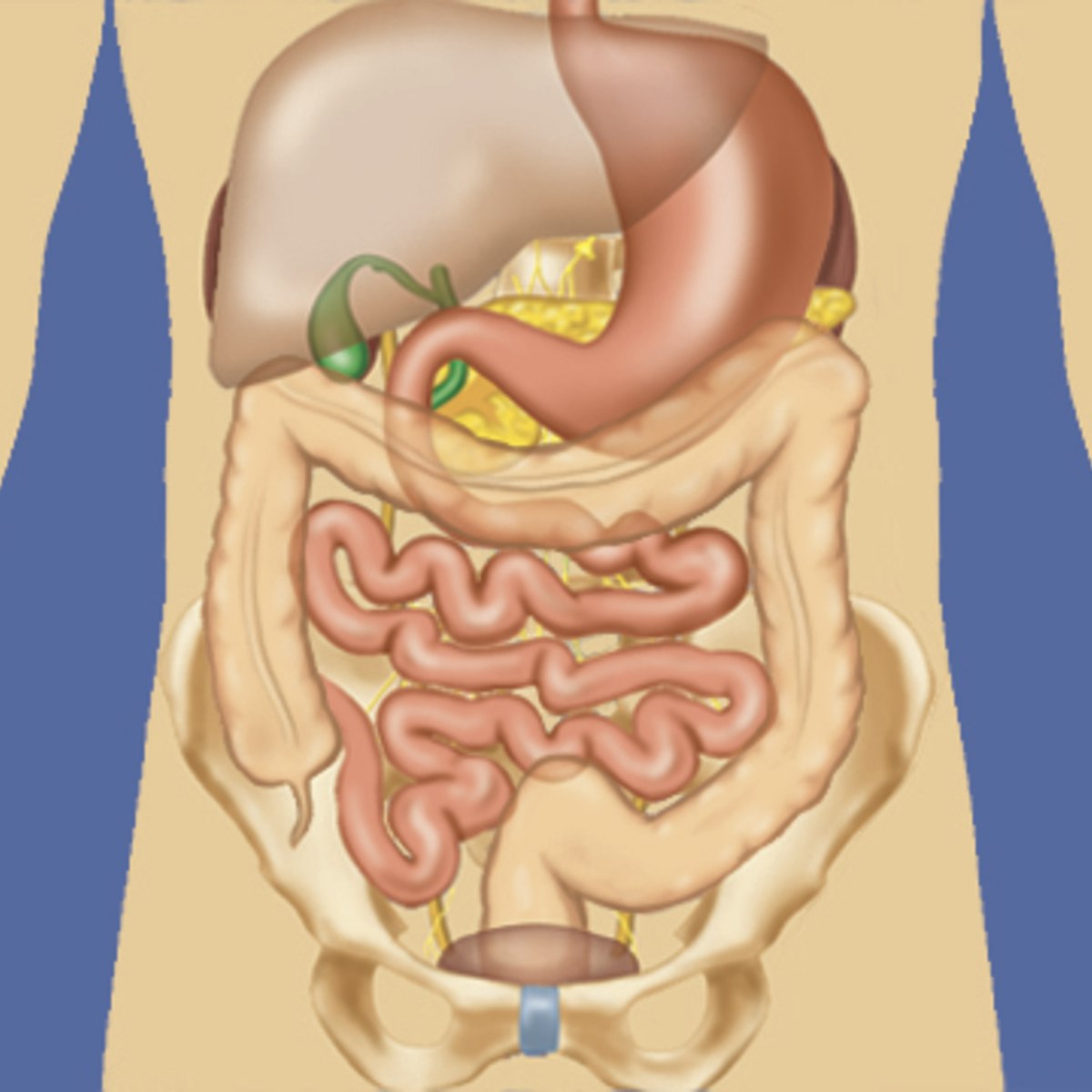
In this anatomy course you will explore the organs involved in our food digestion and discover the common causes of abdominal and pelvic pain. The latest graphics and animations will help you to find new insights and understanding of this part of the body, that has been the focus of anatomical research for centuries and presently arouses renewed scientific interest.

Read more

In this anatomy course you will explore the organs involved in our food digestion and discover the common causes of abdominal and pelvic pain. The latest graphics and animations will help you to find new insights and understanding of this part of the body, that has been the focus of anatomical research for centuries and presently arouses renewed scientific interest.

You will explore the 3D anatomy of the organs from a basic level, providing thorough anatomical understanding, to its advanced application in surgical procedures. This course will challenge you to discover and help you to understand the anatomy of the abdomen and pelvis in all its aspects, ranging from its embryological underpinnings, via digital microscopy to gross topography and its clinical applications.

The course is unique in that it continuously connects basic anatomical knowledge from the lab with its medical applications and current diagnostic techniques. You’ll get the chance to discuss anatomical and clinical problems with peers and experts in forum discussions and you will receive guidance in exploring the wealth of anatomical information that has been gathered over the centuries. Follow us on an exciting journey through the abdomen and pelvis where you digest your food but also where new life starts!

Enroll now

Here's a deal for you

Save money when you learn with a deal that may be relevant to this course.
All coupon codes, vouchers, and discounts are applied automatically unless otherwise noted.

What's inside

Syllabus

Introduction
This course is about Anatomy of the Abdomen and Pelvis. Before you dive into the content however, we invite you to read this introduction so you can improve your study success. We hope you enjoy learning in this course.
Read more

Traffic lights

Read about what's good
what should give you pause
and possible dealbreakers
Provides a basic foundation in anatomy for beginners
Covers key topics in anatomy of the abdomen and pelvis
Offers a detailed understanding of the anatomy of the abdomen and pelvis

Save this course

Create your own learning path. Save this course to your list so you can find it easily later.
Save

Reviews summary

Comprehensive clinical anatomy of abdomen and pelvis

According to learners, this course provides a highly detailed and comprehensive exploration of the abdomen and pelvis. Students particularly praise the exceptional quality of the 3D anatomical visualizations, which significantly enhance understanding of complex spatial relationships. The course structure is described as logical and well-paced, effectively building knowledge week by week. A major highlight is the strong emphasis on clinical correlation, effectively linking basic anatomy to diagnostic techniques and surgical applications. While generally very positively received, some reviewers note the course is challenging and may be best suited for those with some prior anatomical background or a strong willingness to invest significant study time.
Lectures are easy to follow.
"The instructors explain complex topics in a clear and understandable manner."
"Lectures were well-structured and easy to follow, even for difficult concepts."
"I found the teaching style very engaging and effective."
"The explanations provided clarity on intricate anatomical relationships."
In-depth coverage of the subject.
"This course is incredibly thorough, covering everything from embryology to clinical application."
"The depth of detail provided is exceptional and goes beyond typical introductory courses."
"I feel I have gained a very solid and comprehensive understanding of abdominal and pelvic anatomy."
"They really dive deep into the subject matter, providing a complete picture."
Links anatomy directly to clinic.
"Connecting the anatomy to clinical applications and surgical procedures is incredibly valuable."
"I appreciated the emphasis on diagnostic techniques and how anatomy relates to patient presentations and pain."
"The course effectively bridges the gap between foundational anatomy and its real-world clinical relevance."
"The lectures relating anatomy to clinical cases and surgical relevance were the most useful part of this course."
High-quality 3D models and animations.
"The 3D visualizations and animations are simply outstanding and make understanding complex anatomy much easier."
"I found the graphical content, especially the 3D models, to be the most helpful aspect of the course."
"The use of state-of-the-art graphics really helped me visualize the intricate structures of the abdomen and pelvis."
"The unique 3D animations helped me understand spatial relationships in a way textbooks cannot."
Requires significant study time.
"Be prepared to dedicate significant time; this course is challenging and requires effort."
"The pace can feel fast at times, especially if you don't have a strong prior background."
"It's definitely not a light course, but the challenge is rewarding."
"I had to pause and rewatch lectures frequently to fully grasp the details."

Activities

Be better prepared before your course. Deepen your understanding during and after it. Supplement your coursework and achieve mastery of the topics covered in Anatomy of the Abdomen and Pelvis; a journey from basis to clinic. with these activities:
Review embryological underpinnings
Reviewing the embryological underpinnings of the abdomen and pelvis will provide a strong foundation for understanding the complex anatomy of this region.
Browse courses on Embryology
Show steps
  • Read through the Embryological Basics chapter in the course materials.
  • Watch the videos and animations on embryological development in the course.
  • Take notes on the key concepts and processes involved in the embryonic development of the abdomen and pelvis.
Create a collection of resources on abdominal and pelvic anatomy
Creating a collection of resources on abdominal and pelvic anatomy will provide you with a valuable resource for future reference.
Show steps
  • Search for resources on abdominal and pelvic anatomy.
  • Organize the resources into a collection.
  • Share your collection with other students or colleagues.
Find a mentor who can provide guidance on a topic in abdominal or pelvic anatomy
Finding a mentor who can provide guidance on a topic in abdominal or pelvic anatomy will help you to learn more about the topic and to develop your professional network.
Show steps
  • Identify a topic in abdominal or pelvic anatomy that you are interested in.
  • Search for potential mentors who have expertise in the topic.
  • Contact the mentors and ask if they are willing to mentor you.
Six other activities
Expand to see all activities and additional details
Show all nine activities
Follow online tutorials on abdominal and pelvic anatomy
Following online tutorials on abdominal and pelvic anatomy will provide you with additional opportunities to learn and reinforce the material covered in the course.
Browse courses on Abdominal Anatomy
Show steps
  • Search for online tutorials on abdominal and pelvic anatomy.
  • Choose a tutorial that covers the topic you are interested in.
  • Follow the tutorial and take notes on the key concepts.
Participate in a study group with other students
Participating in a study group with other students will provide you with opportunities to discuss the material, ask questions, and get help with difficult concepts.
Show steps
  • Find a study group to join.
  • Attend study group meetings regularly.
  • Participate in discussions and ask questions.
Practice identifying abdominal and pelvic structures on images
Practicing identifying abdominal and pelvic structures on images will improve your ability to recognize these structures in real-world clinical settings.
Browse courses on Abdominal Anatomy
Show steps
  • Find a set of images of abdominal and pelvic structures.
  • Label the structures on the images.
  • Check your answers against a key.
Mentor a fellow student who is struggling with the material
Mentoring a fellow student who is struggling with the material will help you to reinforce your own understanding and to develop your communication skills.
Show steps
  • Identify a student who is struggling with the material.
  • Offer to help the student.
  • Meet with the student regularly to review the material and answer their questions.
Create a 3D model of the abdominal and pelvic organs
Creating a 3D model of the abdominal and pelvic organs will help you visualize and understand the spatial relationships of these structures.
Show steps
  • Use a 3D modeling software to create a model of the abdominal and pelvic organs.
  • Label the organs and their major anatomical features.
  • Use your model to study the relationships between the organs and to identify the major blood vessels and nerves that supply them.
Create a video presentation on a topic in abdominal or pelvic anatomy
Creating a video presentation on a topic in abdominal or pelvic anatomy will help you to synthesize your knowledge and to develop your communication skills.
Show steps
  • Choose a topic for your video presentation.
  • Research your topic and gather information.
  • Create a storyboard for your video presentation.
  • Record your video presentation.
  • Edit your video presentation.

Career center

Learners who complete Anatomy of the Abdomen and Pelvis; a journey from basis to clinic. will develop knowledge and skills that may be useful to these careers:
Gastroenterologist
Gastroenterologists are medical doctors who specialize in the diagnosis and treatment of diseases of the digestive system, including the abdomen and pelvis. This course can help gastroenterologists to understand the anatomy of the abdomen and pelvis, which is essential for accurate diagnosis and treatment. The course covers topics such as the mapping of the abdomen and pelvis, the structure and function of the gut, and the peritoneal relationships of the abdominal organs.
Radiologist
Radiologists are medical doctors who use imaging techniques such as X-rays, CT scans, and MRIs to diagnose and treat medical conditions. They may specialize in a particular area of the body, such as the abdomen and pelvis. This course can help radiologists to understand the anatomy of the abdomen and pelvis, which is essential for accurate diagnosis and treatment. The course covers topics such as the mapping of the abdomen and pelvis, the structure and function of the gut, and the peritoneal relationships of the abdominal organs.
Ultrasound Technologist
Ultrasound technologists are healthcare professionals who use ultrasound imaging to diagnose and treat medical conditions. They may specialize in a particular area of the body, such as the abdomen and pelvis. This course can help ultrasound technologists to understand the anatomy of the abdomen and pelvis, which is essential for accurate image acquisition and interpretation.
Surgeon
Surgeons are medical doctors who perform operations on the body to treat diseases and injuries. They may specialize in a particular area of the body, such as the abdomen and pelvis. This course can help surgeons to understand the anatomy of the abdomen and pelvis, which is essential for safe and effective surgery. The course covers topics such as the mapping of the abdomen and pelvis, the structure and function of the gut, and the peritoneal relationships of the abdominal organs.
Radiologic Technologist
Radiologic technologists are healthcare professionals who use imaging techniques such as X-rays, CT scans, and MRIs to diagnose and treat medical conditions. They may specialize in a particular area of the body, such as the abdomen and pelvis. This course can help radiologic technologists to understand the anatomy of the abdomen and pelvis, which is essential for accurate image acquisition and interpretation.
Nuclear Medicine Technologist
Nuclear medicine technologists are healthcare professionals who use radioactive substances to diagnose and treat medical conditions. They may specialize in a particular area of the body, such as the abdomen and pelvis. This course can help nuclear medicine technologists to understand the anatomy of the abdomen and pelvis, which is essential for accurate image acquisition and interpretation.
Medical Physicist
Medical physicists are healthcare professionals who use physics principles to develop and use medical imaging and treatment technologies. They may specialize in a particular area of medicine, such as radiology or radiation therapy. This course can help medical physicists to understand the anatomy of the abdomen and pelvis, which is essential for developing and using safe and effective medical technologies.
Physician Assistant
Physician assistants are healthcare professionals who work under the supervision of a physician. They can perform a variety of tasks, including diagnosing and treating medical conditions, prescribing medications, and assisting with surgery. This course can help physician assistants to understand the anatomy of the abdomen and pelvis, which is essential for accurate diagnosis and treatment. The course covers topics such as the mapping of the abdomen and pelvis, the structure and function of the gut, and the peritoneal relationships of the abdominal organs.
Nurse
Nurses provide care to patients in a variety of settings, including hospitals, clinics, and nursing homes. They can perform a variety of tasks, including monitoring vital signs, administering medications, and providing wound care. This course can help nurses to understand the anatomy of the abdomen and pelvis, which is essential for providing safe and effective care. The course covers topics such as the mapping of the abdomen and pelvis, the structure and function of the gut, and the peritoneal relationships of the abdominal organs.
Radiation Therapist
Radiation therapists are healthcare professionals who use radiation to treat cancer. They may specialize in a particular area of the body, such as the abdomen and pelvis. This course can help radiation therapists to understand the anatomy of the abdomen and pelvis, which is essential for accurate treatment planning and delivery.
Biomedical Engineer
Biomedical engineers are engineers who design and develop medical devices and technologies. They may specialize in a particular area of medicine, such as radiology or surgery. This course can help biomedical engineers to understand the anatomy of the abdomen and pelvis, which is essential for designing and developing safe and effective medical devices and technologies.
Medical Assistant
Medical assistants are healthcare professionals who work under the supervision of a physician or other healthcare provider. They can perform a variety of tasks, including taking vital signs, preparing patients for exams, and assisting with medical procedures. This course can help medical assistants to understand the anatomy of the abdomen and pelvis, which is essential for providing safe and effective care. The course covers topics such as the mapping of the abdomen and pelvis, the structure and function of the gut, and the peritoneal relationships of the abdominal organs.
Medical Writer
Medical writers are writers who specialize in writing about medical topics. They may write for a variety of audiences, including patients, healthcare professionals, and the general public. This course can help medical writers to understand the anatomy of the abdomen and pelvis, which is essential for writing accurate and informative medical content.
Science Teacher
Science teachers teach science to students in a variety of settings, including schools, museums, and science centers. This course can help science teachers to understand the anatomy of the abdomen and pelvis, which is essential for teaching students about the human body.
Forensic Scientist
Forensic scientists apply scientific methods to investigate crimes. They may specialize in a particular area, such as DNA analysis or fingerprint analysis. This course can help forensic scientists to understand the anatomy of the abdomen and pelvis, which is essential for accurately interpreting evidence.

Reading list

We've selected 15 books that we think will supplement your learning. Use these to develop background knowledge, enrich your coursework, and gain a deeper understanding of the topics covered in Anatomy of the Abdomen and Pelvis; a journey from basis to clinic. .
This atlas provides a comprehensive collection of high-quality illustrations of human anatomy. It valuable resource for students and professionals in the field.
This atlas provides a detailed overview of human anatomy, with a focus on cross-sectional images. It valuable resource for students and professionals in the field.
This textbook provides a detailed overview of human anatomy and physiology. It valuable resource for students and professionals in the field.
This textbook provides a detailed overview of human biology. It valuable resource for students and professionals in the field.
This textbook comprehensive reference on human embryology, covering all stages of development from fertilization to birth. It valuable resource for students and professionals in the field.
This textbook provides a comprehensive overview of human anatomy, with a focus on topographical and functional aspects. It valuable resource for students and professionals in the field.
This textbook provides a detailed overview of human anatomy and physiology. It valuable resource for students and professionals in the field.
This textbook provides a detailed overview of human anatomy. It valuable resource for students and professionals in the field.

Share

Help others find this course page by sharing it with your friends and followers:

Similar courses

Similar courses are unavailable at this time. Please try again later.
Our mission

OpenCourser helps millions of learners each year. People visit us to learn workspace skills, ace their exams, and nurture their curiosity.

Our extensive catalog contains over 50,000 courses and twice as many books. Browse by search, by topic, or even by career interests. We'll match you to the right resources quickly.

Find this site helpful? Tell a friend about us.

Affiliate disclosure

We're supported by our community of learners. When you purchase or subscribe to courses and programs or purchase books, we may earn a commission from our partners.

Your purchases help us maintain our catalog and keep our servers humming without ads.

Thank you for supporting OpenCourser.

© 2016 - 2025 OpenCourser