May 1, 2024
Updated November 11, 2026
12 minute read

LibreOffice is a free and open-source office suite that can be used for a variety of tasks, including word processing, spreadsheets, presentations, databases, and drawing. It is compatible with Microsoft Office and other popular office suites, making it a great option for those who want to save money or for those who do not have access to proprietary software. LibreOffice is available for Windows, macOS, and Linux.
Why Learn LibreOffice?
There are many reasons why you might want to learn LibreOffice. Whether you are a student, a professional, or someone who simply wants to be more productive, LibreOffice has something to offer. Here are a few of the benefits of learning LibreOffice:
74jun8|
Find a path to becoming a LibreOffice. Learn more at:
OpenCourser.com/topic/74jun8/libreoffic
Reading list
We've selected 17 books
that we think will supplement your
learning. Use these to
develop background knowledge, enrich your coursework, and gain a
deeper understanding of the topics covered in
LibreOffice.
Official onboarding documentation from The Document Foundation introduces the entire open-source office suite in a single cohesive reference. Newcomers learn interface customization, OpenDocument file management, PDF export, and core workflows across Writer, Calc, Impress, Draw, Base, and Math.
Universal Network Objects (UNO) architecture and Basic macro scripting remain the foundation of advanced LibreOffice automation. Andrew Pitonyak provides hundreds of tested code listings for manipulating text cursors, spreadsheet ranges, database connections, and custom dialogs.
Style-driven word processing lies at the heart of LibreOffice Writer, inherited directly from OpenOffice.org. Longtime LibreOffice documentation lead Jean Hollis Weber teaches master documents, page styles, cross-references, and reusable templates for complex reports.
Spreadsheet automation in Calc relies on the UNO object model and Basic scripting syntax pioneered in OpenOffice.org. Mark Alexander Bain walks developers through cell listeners, custom spreadsheet functions, dynamic charts, and automated database queries.
Comprehensive cross-suite training bridges Writer, Calc, Impress, Draw, Base, and Math for users migrating from proprietary office suites. Andy Channelle covers file compatibility, mail merge, PivotTable equivalents, and everyday productivity shortcuts shared with LibreOffice.
Programmatic batch processing of spreadsheets, CSV files, Word/OpenDocument texts, and PDFs extends office productivity far beyond manual clicking. Al Sweigart teaches non-programmers how to write Python scripts that populate reports and clean tabular data automatically.
Practical typographic rules turn ordinary LibreOffice Writer reports and Impress slides into readable publications. Elliot Jay Stocks and Ellen Lupton distill one hundred concepts covering grid alignment, font pairing, kerning, tables, and visual hierarchy.
OpenDocument Format (ODF) XML internals govern every file saved by LibreOffice Writer, Calc, and Impress. J. David Eisenberg demonstrates how developers inspect.odt and.ods zip archives, read content.xml schemas, and generate documents with XSLT.
Organizational adoption of open-source suites like LibreOffice requires clear governance alongside desktop training. Vicky Brasseur explains licensing compliance, vendor-lock-in mitigation, support workflows, and sustainable open-source strategy for teams.
Hands-on administrative recipes and migration checklists help power users transition smoothly out of proprietary office ecosystems. Solveig Haugland details advanced formatting, conditional styles, data pilot tables, and template libraries that carry directly into LibreOffice.
Independent authors can produce print-ready manuscripts without expensive desktop publishing software. Harwood Loomis walks writers step by step through mirror margins, running headers, front matter pagination, and commercial PDF export inside LibreOffice Writer.
Master documents, automated tables of contents, mail merge, track changes, and scholarly indexing receive exhaustive coverage in the official Writer manual. Technical editors and long-form writers gain authoritative reference workflows for structured LibreOffice documents.
Relational table design, SQL query construction, custom data-entry forms, and Report Builder layouts turn LibreOffice Base into a capable desktop front end. Official documentation covers embedded Firebird and HSQLDB engines plus external PostgreSQL and MariaDB connections.
Database modeling fundamentals make the difference between fragile spreadsheets and maintainable LibreOffice Base applications. Qiang Hao illustrates entity-relationship diagrams, normalization, foreign keys, and SQL queries with clear worked examples.
Visual design principles of contrast, repetition, alignment, and proximity immediately elevate LibreOffice Impress slide decks. Robin Williams uses concise before-and-after slide makeovers to teach clear hierarchy, typography, and uncluttered layouts.
Accessible macro tutorials help everyday LibreOffice users automate repetitive Writer and Calc tasks without wading through dense API specifications. Christopher Topalian introduces scripting patterns, event triggers, and practical automation snippets step by step.
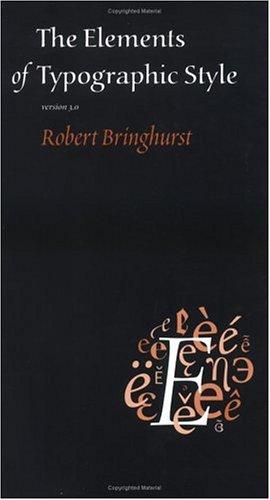
Typographic proportion, page margins, rhythm, and OpenType glyph selection inform anyone using LibreOffice Writer for book publishing or scholarly typesetting. Robert Bringhurst's masterwork supplies the aesthetic rationale behind professional paragraph and page styles.
For more information about how these books relate to this course, visit:
OpenCourser.com/topic/74jun8/libreoffic

 Save