We may earn an affiliate commission when you visit our partners.
Course image
Angelo Paolillo

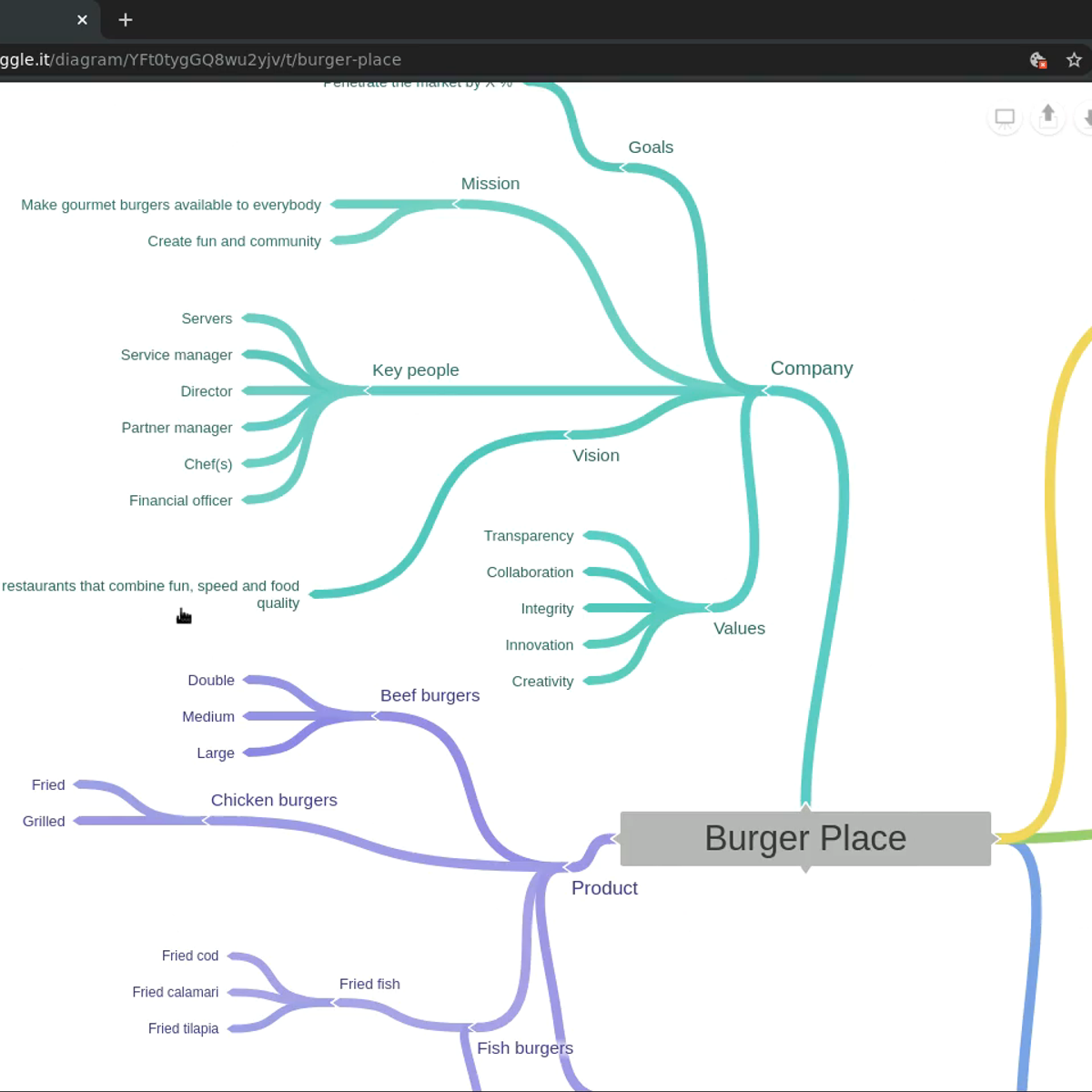
In this 1-hour long project-based course, you will learn how to build a business plan mind map using Coggle. You will create branches with keywords stemming from a central idea, analyze product and market fit, services, company structure and summarize an executive overview. You will learn how to use signifiers to organize information and establish hierarchies. Finally you will share, comment and manage revision history for solid collaboration.

Note: This course works best for learners who are based in the North America region. We’re currently working on providing the same experience in other regions.

Enroll now

Here's a deal for you

Save money when you learn with a deal that may be relevant to this course.
All coupon codes, vouchers, and discounts are applied automatically unless otherwise noted.

What's inside

Syllabus

Traffic lights

Read about what's good
what should give you pause
and possible dealbreakers
Develops business plan mind mapping skills, which are core for advising clients on business models and strategizing toward business growth
Builds foundational knowledge on business planning by introducing keywords, market fit analysis, company structure, and executive summaries
Introduces Coggle, a mind mapping software, which may have a learning curve for those unfamiliar with such tools

Save this course

Create your own learning path. Save this course to your list so you can find it easily later.
Save

Reviews summary

Coggle for business mind mapping

According to the course description, this is a 1-hour project-based course designed to teach learners how to create a business plan mind map using Coggle. It emphasizes practical application, covering topics like product/market fit, company structure, and executive overview, all within the Coggle environment. The course aims to develop proficiency in Coggle's features, including using signifiers for organization and managing collaboration through revision history. While offering a focused, hands-on experience, potential learners should note it is currently best suited for those based in North America.
Provides a guided, practical exercise for immediate skill application.
"The guided project was the most valuable part for me; it really helped solidify my understanding."
"I really liked the hands-on approach because it made learning Coggle for business planning tangible."
"Working on the business plan mind map project allowed me to immediately apply what I learned and see results."
Focuses on mastering Coggle's features for effective mind mapping.
"I now feel confident in using Coggle to visualize my business plans and organize complex information."
"The course clearly demonstrates Coggle's capabilities for creating structured and collaborative mind maps."
"I learned essential Coggle features like branches, signifiers, and revision history, making the tool much more useful."
Delivers efficient and direct instruction for immediate application.
"I appreciate how quickly I could grasp the core concepts and apply them directly to my business ideas."
"This course was a perfect time investment, providing actionable steps without unnecessary fluff."
"I found the project-based approach highly effective for learning how to use Coggle in a practical business context."
Content is optimized for North American learners, potentially limiting others.
"As someone outside North America, I noticed some examples might be more relevant to that region, though the tool use is universal."
"I understood the concepts, but I wonder if the 'product and market fit' analysis would differ slightly for other geographical areas."
"The note about being best for North America is important; I hope they expand content for other regions soon."
Offers a good overview but may lack advanced or theoretical insights.
"While excellent for beginners, I wished there was a bit more on advanced mind mapping strategies or complex business models."
"It's a great introduction, but don't expect a deep dive into business analytics or extensive theoretical frameworks."
"I found it very focused on the 'how-to' of Coggle, which is good, but less on the 'why' or broader implications."

Activities

Be better prepared before your course. Deepen your understanding during and after it. Supplement your coursework and achieve mastery of the topics covered in Create a business mind map with Coggle with these activities:
Organize Course Notes and Resources
Organizing your course notes and resources ensures that you have a centralized and easily accessible repository of information, enhancing your ability to review and retain knowledge gained.
Show steps
  • Create a dedicated folder or notebook for course materials.
  • File notes, slides, assignments, and other resources systematically.
Review Business Planning Concepts
Reviewing business planning concepts can refresh your memory on key principles and frameworks, providing a solid foundation for applying them in the course.
Browse courses on Business Planning
Show steps
  • Refer to textbooks, online articles, or business planning templates.
  • Summarize key concepts, such as market analysis, financial planning, and operations management.
Explore Coggle Tutorials and Features
Going through Coggle tutorials can familiarize you with the software's functionalities, enhancing your ability to create effective business plan mind maps.
Show steps
  • Access Coggle's official website or online tutorials.
  • Follow step-by-step instructions on creating and editing mind maps.
Three other activities
Expand to see all activities and additional details
Show all six activities
Practice Mind Mapping Exercises
Engaging in mind mapping exercises improves your ability to structure and analyze information, fostering critical thinking skills essential for effective business planning.
Browse courses on Business Analysis
Show steps
  • Find practice exercises or case studies involving mind mapping.
  • Work through the exercises, applying mind mapping techniques to analyze scenarios.
Create a Sample Business Plan Mind Map
Creating a sample business plan mind map allows you to apply the techniques learned, analyze product-market fit, and structure your plan effectively.
Browse courses on Business Planning
Show steps
  • Identify a business idea or scenario.
  • Use Coggle to create a mind map outline, including branches for key concepts.
  • Fill in the branches with relevant information, such as product features, market analysis, and company structure.
Participate in Mind Mapping Discussion Groups
Engaging in mind mapping discussion groups provides opportunities to share knowledge, receive feedback, and refine your understanding of business plan development.
Browse courses on Collaboration
Show steps
  • Join online forums or communities dedicated to business mind mapping.
  • Participate in discussions, ask questions, and offer insights.

Career center

Learners who complete Create a business mind map with Coggle will develop knowledge and skills that may be useful to these careers:
Business Analyst
A Business Analyst is responsible for analyzing an organization's business processes and making recommendations for improvement. This course can help Business Analysts build a foundation in business planning and strategy, which is essential for their success in this role. The course will also teach Business Analysts how to use mind mapping to organize and visualize their ideas, which can be a valuable tool for their work.
Project Manager
A Project Manager is responsible for planning, executing, and closing out projects. This course can help Project Managers build a foundation in business planning and strategy, which is essential for their success in this role. The course will also teach Project Managers how to use mind mapping to organize and visualize their projects, which can be a valuable tool for their work.
Product Manager
A Product Manager is responsible for the development and launch of new products. This course can help Product Managers build a foundation in business planning and strategy, which is essential for their success in this role. The course will also teach Product Managers how to use mind mapping to organize and visualize their product ideas, which can be a valuable tool for their work.
Marketing Manager
A Marketing Manager is responsible for developing and executing marketing campaigns. This course can help Marketing Managers build a foundation in business planning and strategy, which is essential for their success in this role. The course will also teach Marketing Managers how to use mind mapping to organize and visualize their marketing ideas, which can be a valuable tool for their work.
Sales Manager
A Sales Manager is responsible for leading and motivating a sales team. This course can help Sales Managers build a foundation in business planning and strategy, which is essential for their success in this role. The course will also teach Sales Managers how to use mind mapping to organize and visualize their sales strategies, which can be a valuable tool for their work.
Operations Manager
An Operations Manager is responsible for the day-to-day operations of a business. This course can help Operations Managers build a foundation in business planning and strategy, which is essential for their success in this role. The course will also teach Operations Managers how to use mind mapping to organize and visualize their operations, which can be a valuable tool for their work.
Financial Analyst
A Financial Analyst is responsible for analyzing financial data and making recommendations for investment. This course can help Financial Analysts build a foundation in business planning and strategy, which is essential for their success in this role. The course will also teach Financial Analysts how to use mind mapping to organize and visualize their financial data, which can be a valuable tool for their work.
Management Consultant
A Management Consultant is responsible for helping businesses improve their performance. This course can help Management Consultants build a foundation in business planning and strategy, which is essential for their success in this role. The course will also teach Management Consultants how to use mind mapping to organize and visualize their consulting projects, which can be a valuable tool for their work.
Business Development Manager
A Business Development Manager is responsible for generating new business for a company. This course can help Business Development Managers build a foundation in business planning and strategy, which is essential for their success in this role. The course will also teach Business Development Managers how to use mind mapping to organize and visualize their business development strategies, which can be a valuable tool for their work.
Entrepreneur
An Entrepreneur is someone who starts and runs their own business. This course can help Entrepreneurs build a foundation in business planning and strategy, which is essential for their success in this role. The course will also teach Entrepreneurs how to use mind mapping to organize and visualize their business ideas, which can be a valuable tool for their work.
Nonprofit Manager
A Nonprofit Manager is responsible for leading and managing a nonprofit organization. This course can help Nonprofit Managers build a foundation in business planning and strategy, which is essential for their success in this role. The course will also teach Nonprofit Managers how to use mind mapping to organize and visualize their nonprofit's mission and goals, which can be a valuable tool for their work.
Chief Executive Officer (CEO)
A Chief Executive Officer (CEO) is responsible for the overall leadership and management of a company. This course can help CEOs build a foundation in business planning and strategy, which is essential for their success in this role. The course will also teach CEOs how to use mind mapping to organize and visualize their company's goals and objectives, which can be a valuable tool for their work.
Chief Financial Officer (CFO)
A Chief Financial Officer (CFO) is responsible for the financial management of a company. This course can help CFOs build a foundation in business planning and strategy, which is essential for their success in this role. The course will also teach CFOs how to use mind mapping to organize and visualize their company's financial data, which can be a valuable tool for their work.
Chief Operating Officer (COO)
A Chief Operating Officer (COO) is responsible for the day-to-day operations of a company. This course can help COOs build a foundation in business planning and strategy, which is essential for their success in this role. The course will also teach COOs how to use mind mapping to organize and visualize their company's operations, which can be a valuable tool for their work.
Chief Technology Officer (CTO)
A Chief Technology Officer (CTO) is responsible for the technology strategy and management of a company. This course can help CTOs build a foundation in business planning and strategy, which is essential for their success in this role. The course will also teach CTOs how to use mind mapping to organize and visualize their company's technology roadmap, which can be a valuable tool for their work.

Reading list

We've selected 15 books that we think will supplement your learning. Use these to develop background knowledge, enrich your coursework, and gain a deeper understanding of the topics covered in Create a business mind map with Coggle.
Provides a practical framework for developing and executing business models. It explains how to identify customer needs, value propositions, and revenue streams.
Introduces the concept of lean startup, which method for developing products and services with minimal waste. It provides a step-by-step guide to building a successful startup.
Provides a practical guide to building and managing a successful startup. It shares the hard truths and lessons learned from the author's experience as a CEO.
Provides insights into why large companies often fail to innovate. It explains the disruptive innovation theory and how to avoid the innovator's dilemma.
Provides a contrarian view on innovation and startups. It explains the importance of creating new things that are different from anything that exists.
Provides a framework for marketing and selling to mainstream customers. It explains the challenges of crossing the chasm between early adopters and mainstream customers.
Provides a framework for developing and evaluating business strategies. It explains the difference between good and bad strategies and how to avoid common mistakes.
Provides a framework for understanding the role of mindset in achieving success. It explains the difference between a fixed mindset and a growth mindset.
Provides an insightful look into the power of introversion. It explains the advantages of being quiet and how to thrive in a world that often values extroversion.
Provides a simple and practical guide to financial literacy. It explains the difference between assets and liabilities and how to build wealth.
Provides a psychological perspective on the importance of grit. It explains how grit can help you achieve your goals and overcome challenges.

Share

Help others find this course page by sharing it with your friends and followers:

Similar courses

Similar courses are unavailable at this time. Please try again later.
Our mission

OpenCourser helps millions of learners each year. People visit us to learn workspace skills, ace their exams, and nurture their curiosity.

Our extensive catalog contains over 50,000 courses and twice as many books. Browse by search, by topic, or even by career interests. We'll match you to the right resources quickly.

Find this site helpful? Tell a friend about us.

Affiliate disclosure

We're supported by our community of learners. When you purchase or subscribe to courses and programs or purchase books, we may earn a commission from our partners.

Your purchases help us maintain our catalog and keep our servers humming without ads.

Thank you for supporting OpenCourser.

© 2016 - 2025 OpenCourser