May 1, 2024
Updated November 14, 2026
21 minute read

Customization, at its core, is the process of modifying a product or service to meet the specific needs or preferences of an individual or group. It’s about empowering users to tailor an experience or item to align with their unique tastes or requirements. This concept spans a multitude of industries and can involve modifications ranging from the simple to the highly complex. In a world increasingly moving away from one-size-fits-all solutions, customization offers a way for individuals to express their uniqueness and for businesses to create more meaningful connections with their customers.
57jh4k|
Find a path to becoming a Customization. Learn more at:
OpenCourser.com/topic/57jh4k/customizatio
Reading list
We've selected 20 books
that we think will supplement your
learning. Use these to
develop background knowledge, enrich your coursework, and gain a
deeper understanding of the topics covered in
Customization.
Coined and codified the mass customization paradigm, showing how firms replace rigid mass production with modular architectures, flexible processes, and dynamic customer-driven workflows to deliver individualized goods at near-mass-production cost.
Demonstrates how lead users modify and co-design products to fit bespoke needs faster than centralized manufacturers, laying out practical toolkits for user innovation and open customization ecosystems across software and physical goods.
Defines the gold-standard pedagogy for tailoring instruction across mixed-ability classrooms by adapting content, learning processes, and student outputs to each learner's readiness, interests, and cognitive profile.
Outlines an executive and product playbook for scaling one-to-one digital experiences using generative AI and customer data platforms, organized around five core promises that balance relevance, channel timing, and data trust.
Presents the cognitive neuroscience behind Universal Design for Learning, equipping instructional designers to build flexible digital and classroom environments with multiple pathways for engagement, representation, and expression.
Examines how AI-driven Socratic tutors and adaptive feedback loops make individualized mastery learning viable at global scale, drawing on Khanmigo deployments to reshape pacing, formative assessment, and instructor workflows.
Establishes value co-creation as a strategic engine where companies build flexible experience environments rather than static products, enabling customers to actively personalize offerings through continuous dialogue and transparent interaction.
Dismantles one-size-fits-all metrics in education and talent evaluation through the principles of jaggedness, context, and individualized pathways, arguing for competency-based learning tailored to multidimensional human profiles.
Walks ML engineers through architecting production personalization pipelines from scratch, covering candidate retrieval, ranking models in JAX, streaming feature stores with Kafka, and real-time serving with FastAPI.
Bridges statistical modeling and modern deep learning for user-centric prediction, covering matrix factorization, sequential recommendation, implicit feedback, and cold-start mitigation alongside diversity and filter-bubble tradeoffs.
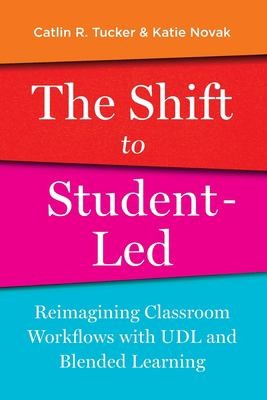
Combines Universal Design for Learning with blended workflows to shift instructional pacing from teacher-directed lectures to student-led agency, offering concrete routines for self-paced playlists, choice boards, and formative feedback.
Provides higher-education instructors with adaptable strategies for customizing assignments, scaffolding personalized feedback, and redesigning assessments so generative AI deepens individual inquiry rather than homogenizing student work.
Synthesizes modern neural architectures powering industrial personalization, spanning multi-task ranking networks, embedding retrieval, generative recommendation paradigms, and end-to-end serving infrastructure at internet scale.
Demystifies collaborative filtering, content-based matching, and hybrid personalization architectures for software developers, translating user-behavior logs into actionable recommendation engines without heavy academic formalism.
Equips product designers and UX researchers with pragmatic patterns for crafting adaptive AI interfaces, including copilots, dynamic search, digital twins, and value matrices that align automated personalization with human control.
Distinguishes personalization from mere differentiation or individualization by placing learners in charge of goals, pacing, and tools, offering practical design matrices for building learner-driven digital and blended environments.
Serves as an encyclopedic reference on personalization algorithms and human-computer interaction, detailing context-aware recommendations, trust-building explanation interfaces, privacy safeguards, and offline evaluation methodologies.
Challenges uncritical enthusiasm for algorithmic personalization by exposing how opaque relevance filters narrow intellectual exposure, equipping designers and educators to build customization systems that preserve serendipity and agency.
Reveals the psychological limits of unbounded customization through behavioral economics, explaining how excessive configurability triggers decision fatigue and regret so UX and curriculum designers curate meaningful, bounded choices.
Analyzes how enterprises implement customer-driven product configuration and co-design toolkits across manufacturing and digital commerce, distilling empirical lessons on solution-space design and modular postponement.
For more information about how these books relate to this course, visit:
OpenCourser.com/topic/57jh4k/customizatio

 Save