We may earn an affiliate commission when you visit our partners.

Environmental Impact

Save
May 1, 2024 Updated May 9, 2025 19 minute read
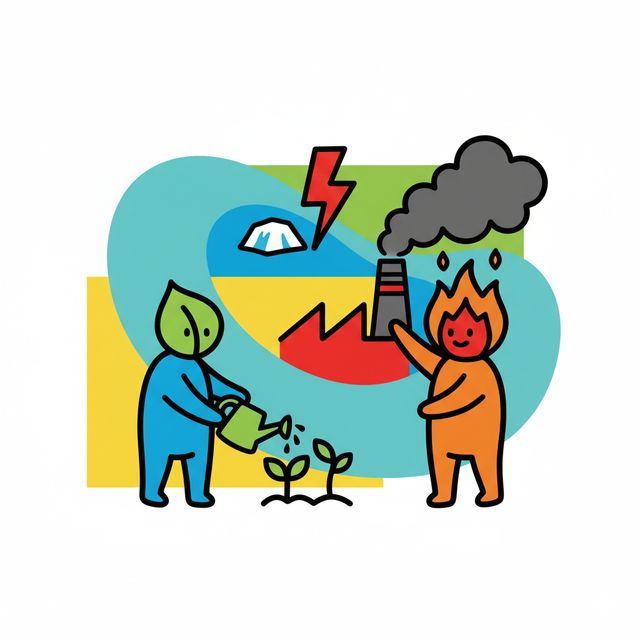
Environmental impact refers to any change to the environment, whether adverse or beneficial, that wholly or partially results from an organization's activities, products, or services. It encompasses the effects of human actions on the natural world, ranging from localized disturbances to global-scale alterations. Understanding environmental impact is crucial for fostering sustainable practices and ensuring the well-being of both ecosystems and human societies. This field of study and practice seeks to identify, predict, evaluate, and mitigate the consequences of human development on the biophysical environment, as well as on human health and well-being.

Working in the field of environmental impact can be deeply engaging. It offers the chance to contribute to solving some of the most pressing global challenges, such as climate change, biodiversity loss, and pollution. Professionals in this area often find fulfillment in developing and implementing solutions that protect natural resources and promote a healthier planet. The interdisciplinary nature of the work, which often involves collaboration with scientists, engineers, policymakers, and communities, can also be highly stimulating.

Introduction to Environmental Impact

This section provides a foundational understanding of environmental impact, its historical context, key terminology, and its global importance. It is designed to be accessible to a broad audience, including those new to the concept.

Defining the Scope of Environmental Impact

Environmental impact encompasses the broad spectrum of effects that human activities have on the natural world. These impacts can be direct, such as the destruction of habitat during construction, or indirect, like the downstream pollution from industrial discharge. The scope of environmental impact assessment involves evaluating these effects on various environmental components, including air, water, soil, flora, fauna, and human health. It also considers socio-economic factors and cultural heritage.

Path to Environmental Impact

Take the first step.
We've curated 24 courses to help you on your path to Environmental Impact. Use these to develop your skills, build background knowledge, and put what you learn to practice.
Sorted from most relevant to least relevant:

Share

Help others find this page about Environmental Impact: by sharing it with your friends and followers:

Reading list

We've selected 15 books that we think will supplement your learning. Use these to develop background knowledge, enrich your coursework, and gain a deeper understanding of the topics covered in Environmental Impact.
Classic work of environmental literature that helped to raise awareness of the dangers of pesticides. It is suitable for both undergraduate and graduate students.
Provides a comprehensive overview of the environmental impacts of climate change, covering topics such as sea level rise, extreme weather events, and the loss of biodiversity. It is suitable for both undergraduate and graduate students.
Comprehensive plan for reversing global warming. It is suitable for both undergraduate and graduate students.
Provides a comprehensive overview of the environmentalism of the poor, covering topics such as the history of environmental struggles in Latin America and the United States, the different types of environmental injustices, and the challenges of environmental justice activism. It is suitable for both undergraduate and graduate students.
Pulitzer Prize-winning novel that explores the relationship between humans and trees. It is suitable for both undergraduate and graduate students.
This textbook provides a comprehensive overview of environmental science, covering topics such as air and water pollution, climate change, and waste management. It is suitable for both undergraduate and graduate students.
Provides a comprehensive overview of environmental policy, covering topics such as the history of environmental policy, the different types of environmental policies, and the challenges of environmental policymaking. It is suitable for both undergraduate and graduate students.
This textbook provides a comprehensive overview of ecology, covering topics such as population ecology, community ecology, and ecosystem ecology. It is suitable for both undergraduate and graduate students.
Provides a comprehensive overview of pollution, covering topics such as air pollution, water pollution, and soil pollution. It is suitable for both undergraduate and graduate students.
Table of Contents
Our mission

OpenCourser helps millions of learners each year. People visit us to learn workspace skills, ace their exams, and nurture their curiosity.

Our extensive catalog contains over 50,000 courses and twice as many books. Browse by search, by topic, or even by career interests. We'll match you to the right resources quickly.

Find this site helpful? Tell a friend about us.

Affiliate disclosure

We're supported by our community of learners. When you purchase or subscribe to courses and programs or purchase books, we may earn a commission from our partners.

Your purchases help us maintain our catalog and keep our servers humming without ads.

Thank you for supporting OpenCourser.

© 2016 - 2025 OpenCourser
